
9780691180939 - the Work of the Dead: a Cultural History of Mortal Remains by Laqueur, Thomas W. (24 results)
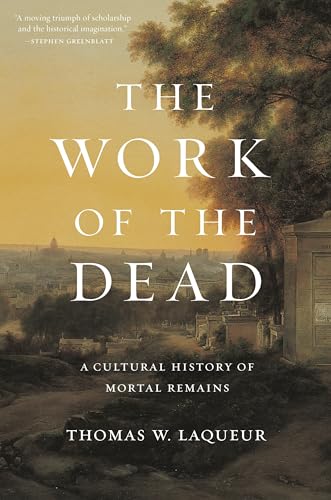
- Softcover
Seller: World of Books (was SecondSale), Montgomery, IL, U.S.A.World of Books (was SecondSale)
Contact seller5-star sellerCondition: Used - Very good
£ 21.50
Free ShippingShips within U.S.A.Quantity: 1 available
Condition: Very Good. Item in very good condition! Textbooks may not include supplemental items i.e. CDs, access codes etc.
- Softcover
Seller: INDOO, Avenel, NJ, U.S.A.INDOO
Contact seller5-star sellerCondition: Used - As new
£ 21.51
Free ShippingShips within U.S.A.Quantity: Over 20 available
Condition: As New. Unread copy in mint condition.
- Softcover
Seller: INDOO, Avenel, NJ, U.S.A.INDOO
Contact seller5-star sellerCondition: New
£ 21.58
Free ShippingShips within U.S.A.Quantity: Over 20 available
Condition: New. Brand New.

- Softcover
Seller: Rarewaves USA, OSWEGO, IL, U.S.A.Rarewaves USA
Contact seller5-star sellerCondition: New
£ 28.36
Free ShippingShips within U.S.A.Quantity: Over 20 available
Paperback. Condition: New. The meaning of our concern for mortal remains-from antiquity through the twentieth centuryThe Greek philosopher Diogenes said that when he died his body should be tossed over the city walls for beasts to scavenge. Why should he or anyone else care what became of his corpse? In The Work of the Dead, acc…laimed cultural historian Thomas Laqueur examines why humanity has universally rejected Diogenes's argument. No culture has been indifferent to mortal remains. Even in our supposedly disenchanted scientific age, the dead body still matters-for individuals, communities, and nations. A remarkably ambitious history, The Work of the Dead offers a compelling and richly detailed account of how and why the living have cared for the dead, from antiquity to the twentieth century.The book draws on a vast range of sources-from mortuary archaeology, medical tracts, letters, songs, poems, and novels to painting and landscapes in order to recover the work that the dead do for the living: making human communities that connect the past and the future. Laqueur shows how the churchyard became the dominant resting place of the dead during the Middle Ages and why the cemetery largely supplanted it during the modern period. He traces how and why since the nineteenth century we have come to gather the names of the dead on great lists and memorials and why being buried without a name has become so disturbing. And finally, he tells how modern cremation, begun as a fantasy of stripping death of its history, ultimately failed-and how even the ashes of the victims of the Holocaust have been preserved in culture.A fascinating chronicle of how we shape the dead and are in turn shaped by them, this is a landmark work of cultural history.
- Softcover
Seller: PBShop.store US, Wood Dale, IL, U.S.A.PBShop.store US
Contact seller5-star sellerCondition: New
£ 28.89
Free ShippingShips within U.S.A.Quantity: 15 available
PAP. Condition: New. New Book. Shipped from UK. Established seller since 2000.
- Softcover
Seller: PBShop.store UK, Fairford, GLOS, United KingdomPBShop.store UK
Contact seller5-star sellerCondition: New
£ 23.75
£ 5.87 shippingShips from United Kingdom to U.S.A.Quantity: 15 available
PAP. Condition: New. New Book. Shipped from UK. Established seller since 2000.

- Softcover
Seller: Rarewaves.com USA, London, LONDO, United KingdomRarewaves.com USA
Contact seller5-star sellerCondition: New
£ 35.26
Free ShippingShips from United Kingdom to U.S.A.Quantity: 14 available
Paperback. Condition: New. The meaning of our concern for mortal remains-from antiquity through the twentieth centuryThe Greek philosopher Diogenes said that when he died his body should be tossed over the city walls for beasts to scavenge. Why should he or anyone else care what became of his corpse? In The Work of the Dead, acc…laimed cultural historian Thomas Laqueur examines why humanity has universally rejected Diogenes's argument. No culture has been indifferent to mortal remains. Even in our supposedly disenchanted scientific age, the dead body still matters-for individuals, communities, and nations. A remarkably ambitious history, The Work of the Dead offers a compelling and richly detailed account of how and why the living have cared for the dead, from antiquity to the twentieth century.The book draws on a vast range of sources-from mortuary archaeology, medical tracts, letters, songs, poems, and novels to painting and landscapes in order to recover the work that the dead do for the living: making human communities that connect the past and the future. Laqueur shows how the churchyard became the dominant resting place of the dead during the Middle Ages and why the cemetery largely supplanted it during the modern period. He traces how and why since the nineteenth century we have come to gather the names of the dead on great lists and memorials and why being buried without a name has become so disturbing. And finally, he tells how modern cremation, begun as a fantasy of stripping death of its history, ultimately failed-and how even the ashes of the victims of the Holocaust have been preserved in culture.A fascinating chronicle of how we shape the dead and are in turn shaped by them, this is a landmark work of cultural history.
- Softcover
Seller: Kennys Bookshop and Art Galleries Ltd., Galway, GY, IrelandKennys Bookshop and Art Galleries Ltd.
Contact seller5-star sellerCondition: New
£ 27.46
£ 8.95 shippingShips from Ireland to U.S.A.Quantity: Over 20 available
Condition: New. 2018. Reprint. Paperback. . . . . .
- Softcover
Seller: Brook Bookstore On Demand, Napoli, NA, ItalyBrook Bookstore On Demand
Contact seller5-star sellerCondition: New
£ 28.52
£ 9.38 shippingShips from Italy to U.S.A.Quantity: Over 20 available
Condition: new.

Language: English
Published by Princeton University Press, New Jersey, 2018
- Softcover
Seller: Grand Eagle Retail, Bensenville, IL, U.S.A.Grand Eagle Retail
Contact seller5-star sellerCondition: New
£ 38.18
Free ShippingShips within U.S.A.Quantity: 1 available
Paperback. Condition: new. Paperback. The meaning of our concern for mortal remains-from antiquity through the twentieth centuryThe Greek philosopher Diogenes said that when he died his body should be tossed over the city walls for beasts to scavenge. Why should he or anyone else care what became of his corpse? In The Work of th…e Dead, acclaimed cultural historian Thomas Laqueur examines why humanity has universally rejected Diogenes's argument. No culture has been indifferent to mortal remains. Even in our supposedly disenchanted scientific age, the dead body still matters-for individuals, communities, and nations. A remarkably ambitious history, The Work of the Dead offers a compelling and richly detailed account of how and why the living have cared for the dead, from antiquity to the twentieth century.The book draws on a vast range of sources-from mortuary archaeology, medical tracts, letters, songs, poems, and novels to painting and landscapes in order to recover the work that the dead do for the living: making human communities that connect the past and the future. Laqueur shows how the churchyard became the dominant resting place of the dead during the Middle Ages and why the cemetery largely supplanted it during the modern period. He traces how and why since the nineteenth century we have come to gather the names of the dead on great lists and memorials and why being buried without a name has become so disturbing. And finally, he tells how modern cremation, begun as a fantasy of stripping death of its history, ultimately failed-and how even the ashes of the victims of the Holocaust have been preserved in culture.A fascinating chronicle of how we shape the dead and are in turn shaped by them, this is a landmark work of cultural history. The meaning of our concern for mortal remains-from antiquity through the twentieth centuryThe Greek philosopher Diogenes said that when he died his body should be tossed over the city walls for beasts to scavenge. Why should he or anyone else care what became of his corpse? In The Work of the Dead, acclaimed cultural historian Thomas Laqueur ex Shipping may be from multiple locations in the US or from the UK, depending on stock availability.
- Softcover
Seller: Kennys Bookstore, Olney, MD, U.S.A.Kennys Bookstore
Contact seller5-star sellerCondition: New
£ 32.40
£ 7.84 shippingShips within U.S.A.Quantity: Over 20 available
Condition: New. 2018. Reprint. Paperback. . . . . . Books ship from the US and Ireland.
- Softcover
Seller: Majestic Books, Hounslow, United KingdomMajestic Books
Contact seller4-star sellerCondition: New
£ 34.41
£ 6.50 shippingShips from United Kingdom to U.S.A.Quantity: 3 available
Condition: New. pp. 744.
- Softcover
Seller: Chiron Media, Wallingford, United KingdomChiron Media
Contact seller5-star sellerCondition: New
£ 24.92
£ 15.49 shippingShips from United Kingdom to U.S.A.Quantity: 3 available
paperback. Condition: New.
- Softcover
Seller: Ria Christie Collections, Uxbridge, United KingdomRia Christie Collections
Contact seller5-star sellerCondition: New
£ 29.10
£ 11.98 shippingShips from United Kingdom to U.S.A.Quantity: 3 available
Condition: New. In.
- Softcover
Seller: Revaluation Books, Exeter, United KingdomRevaluation Books
Contact seller5-star sellerCondition: New
£ 30.87
£ 12.50 shippingShips from United Kingdom to U.S.A.Quantity: 1 available
Paperback. Condition: Brand New. reprint edition. 711 pages. 9.50x6.00x2.00 inches. In Stock.
- Softcover
Seller: THE SAINT BOOKSTORE, Southport, United KingdomTHE SAINT BOOKSTORE
Contact seller5-star sellerCondition: New
£ 28.93
£ 21.95 shippingShips from United Kingdom to U.S.A.Quantity: Over 20 available
Paperback / softback. Condition: New. New copy - Usually dispatched within 4 working days.
- Softcover
Seller: Books Puddle, New York, NY, U.S.A.Books Puddle
Contact seller4-star sellerCondition: New
£ 52.45
£ 2.98 shippingShips within U.S.A.Quantity: 3 available
Condition: New. pp. 744 Reprint edition NO-PA16APR2015-KAP.
- Softcover
Seller: Speedyhen, Hertfordshire, United KingdomSpeedyhen
Contact seller5-star sellerCondition: New
£ 23.39
£ 41.00 shippingShips from United Kingdom to U.S.A.Quantity: 3 available
Condition: NEW.

- Softcover
Seller: Rarewaves USA United, OSWEGO, IL, U.S.A.Rarewaves USA United
Contact seller5-star sellerCondition: New
£ 28.98
£ 37.32 shippingShips within U.S.A.Quantity: Over 20 available
Paperback. Condition: New. The meaning of our concern for mortal remains-from antiquity through the twentieth centuryThe Greek philosopher Diogenes said that when he died his body should be tossed over the city walls for beasts to scavenge. Why should he or anyone else care what became of his corpse? In The Work of the Dead, acc…laimed cultural historian Thomas Laqueur examines why humanity has universally rejected Diogenes's argument. No culture has been indifferent to mortal remains. Even in our supposedly disenchanted scientific age, the dead body still matters-for individuals, communities, and nations. A remarkably ambitious history, The Work of the Dead offers a compelling and richly detailed account of how and why the living have cared for the dead, from antiquity to the twentieth century.The book draws on a vast range of sources-from mortuary archaeology, medical tracts, letters, songs, poems, and novels to painting and landscapes in order to recover the work that the dead do for the living: making human communities that connect the past and the future. Laqueur shows how the churchyard became the dominant resting place of the dead during the Middle Ages and why the cemetery largely supplanted it during the modern period. He traces how and why since the nineteenth century we have come to gather the names of the dead on great lists and memorials and why being buried without a name has become so disturbing. And finally, he tells how modern cremation, begun as a fantasy of stripping death of its history, ultimately failed-and how even the ashes of the victims of the Holocaust have been preserved in culture.A fascinating chronicle of how we shape the dead and are in turn shaped by them, this is a landmark work of cultural history.

- Softcover
Seller: moluna, Greven, Germanymoluna
Contact seller5-star sellerCondition: New
£ 32.27
£ 41.78 shippingShips from Germany to U.S.A.Quantity: 1 available
Kartoniert / Broschiert. Condition: New. The Greek philosopher Diogenes said that when he died his body should be tossed over the city walls for beasts to scavenge. Why should he or anyone else care what became of his corpse? In The Work of the Dead, acclaimed cultural historian Thomas Laqueur exa.

- Softcover
Seller: AHA-BUCH GmbH, Einbeck, GermanyAHA-BUCH GmbH
Contact seller5-star sellerCondition: New
£ 30.74
£ 55.17 shippingShips from Germany to U.S.A.Quantity: 1 available
Taschenbuch. Condition: Neu. Neuware - The Greek philosopher Diogenes said that when he died his body should be tossed over the city walls for beasts to scavenge. Why should he or anyone else care what became of his corpse In The Work of the Dead, acclaimed cultural historian Thomas Laqueur examines why humanity has universally…rejected Diogenes's argument. No culture has been indifferent to mortal remains. Even in our supposedly disenchanted scientific age, the dead body still matters- for individuals, communities, and nations. A remarkably ambitious history, The Work of the Dead offers a compelling and richly detailed account of how and why the living have cared for the dead, from antiquity to the twentieth century.

Language: English
Published by Princeton University Press, New Jersey, 2018
- Softcover
Seller: AussieBookSeller, Truganina, VIC, AustraliaAussieBookSeller
Contact seller5-star sellerCondition: New
£ 59.46
£ 27.62 shippingShips from Australia to U.S.A.Quantity: 1 available
Paperback. Condition: new. Paperback. The meaning of our concern for mortal remains-from antiquity through the twentieth centuryThe Greek philosopher Diogenes said that when he died his body should be tossed over the city walls for beasts to scavenge. Why should he or anyone else care what became of his corpse? In The Work of th…e Dead, acclaimed cultural historian Thomas Laqueur examines why humanity has universally rejected Diogenes's argument. No culture has been indifferent to mortal remains. Even in our supposedly disenchanted scientific age, the dead body still matters-for individuals, communities, and nations. A remarkably ambitious history, The Work of the Dead offers a compelling and richly detailed account of how and why the living have cared for the dead, from antiquity to the twentieth century.The book draws on a vast range of sources-from mortuary archaeology, medical tracts, letters, songs, poems, and novels to painting and landscapes in order to recover the work that the dead do for the living: making human communities that connect the past and the future. Laqueur shows how the churchyard became the dominant resting place of the dead during the Middle Ages and why the cemetery largely supplanted it during the modern period. He traces how and why since the nineteenth century we have come to gather the names of the dead on great lists and memorials and why being buried without a name has become so disturbing. And finally, he tells how modern cremation, begun as a fantasy of stripping death of its history, ultimately failed-and how even the ashes of the victims of the Holocaust have been preserved in culture.A fascinating chronicle of how we shape the dead and are in turn shaped by them, this is a landmark work of cultural history. The meaning of our concern for mortal remains-from antiquity through the twentieth centuryThe Greek philosopher Diogenes said that when he died his body should be tossed over the city walls for beasts to scavenge. Why should he or anyone else care what became of his corpse? In The Work of the Dead, acclaimed cultural historian Thomas Laqueur ex Shipping may be from our Sydney, NSW warehouse or from our UK or US warehouse, depending on stock availability.

- Softcover
Seller: preigu, Osnabrück, Germanypreigu
Contact seller5-star sellerCondition: New
£ 36.81
£ 59.69 shippingShips from Germany to U.S.A.Quantity: 1 available
Taschenbuch. Condition: Neu. The Work of the Dead | A Cultural History of Mortal Remains | Thomas W Laqueur | Taschenbuch | Einband - flex.(Paperback) | Englisch | 2018 | Princeton University Press | EAN 9780691180939 | Verantwortliche Person für die EU: Libri GmbH, Europaallee 1, 36244 Bad Hersfeld, gpsr[at]libri[dot]de | Anbie…ter: preigu.

- Softcover
Seller: Rarewaves.com UK, London, United KingdomRarewaves.com UK
Contact seller5-star sellerCondition: New
£ 31.38
£ 65.00 shippingShips from United Kingdom to U.S.A.Quantity: 14 available
Paperback. Condition: New. The meaning of our concern for mortal remains-from antiquity through the twentieth centuryThe Greek philosopher Diogenes said that when he died his body should be tossed over the city walls for beasts to scavenge. Why should he or anyone else care what became of his corpse? In The Work of the Dead, acc…laimed cultural historian Thomas Laqueur examines why humanity has universally rejected Diogenes's argument. No culture has been indifferent to mortal remains. Even in our supposedly disenchanted scientific age, the dead body still matters-for individuals, communities, and nations. A remarkably ambitious history, The Work of the Dead offers a compelling and richly detailed account of how and why the living have cared for the dead, from antiquity to the twentieth century.The book draws on a vast range of sources-from mortuary archaeology, medical tracts, letters, songs, poems, and novels to painting and landscapes in order to recover the work that the dead do for the living: making human communities that connect the past and the future. Laqueur shows how the churchyard became the dominant resting place of the dead during the Middle Ages and why the cemetery largely supplanted it during the modern period. He traces how and why since the nineteenth century we have come to gather the names of the dead on great lists and memorials and why being buried without a name has become so disturbing. And finally, he tells how modern cremation, begun as a fantasy of stripping death of its history, ultimately failed-and how even the ashes of the victims of the Holocaust have been preserved in culture.A fascinating chronicle of how we shape the dead and are in turn shaped by them, this is a landmark work of cultural history.


