
Aptroot Marion (54 results)

Leket: yidishe shtudyes haynt / Jiddistik heute / Yiddish Studies Today (Jiddistik Edition und Forschung / Yiddish Editions and Research / ?????? ?????????? ??? ?????????, 1) (German Edition)
Aptroot, Marion; Neuberg, Simon; Gruschka, Roland; Gal-Ed, Efrat
- Hardcover
Seller: HPB-Emerald, Dallas, TX, U.S.A.HPB-Emerald
Contact seller5-star sellerCondition: Used - Very good
£ 12.85
£ 2.83 shippingShips within U.S.A.Quantity: 1 available
hardcover. Condition: Very Good. Connecting readers with great books since 1972! Used books may not include companion materials, and may have some shelf wear or limited writing. We ship orders daily and Customer Service is our top priority.

Storm in the Community: Yiddish Polemical Pamphlets of Amsterdam Jewry, 1797-1798
Jozeph Michman and Marion Aptroot (Selected, translated, and introduced by)
Language: English
Published by Cinicinnati, OH: Hebrew Union College Press, 2002
- Hardcover
- First Edition
Seller: Riverow Bookshop, Owego, NY, U.S.A.Riverow Bookshop
Contact seller5-star sellerCondition: Used
£ 23.36
£ 4.91 shippingShips within U.S.A.Quantity: 1 available
Hardcover. Condition: Very Good/Very Good. 1st Edition. Cinicinnati, OH: Hebrew Union College Press. Very Good/Very Good. 2002. 1st Edition. Hardcover. In English and Hebrew. Book is in Very Good Plus condition with a small dent at the edge of the rear cover. Contents clean and tight. Appears unread. The dust jacket is slightly worn at the extremities with an old price sticker abrasion on the rear cover. A nice solid copy of a scarce book. .…

Language: English
Published by Hebrew Union College Press, Cincinnati, 2002
- Hardcover
Seller: Library of Religious Thought, Omaha, NE, U.S.A.Library of Religious Thought
Contact seller5-star sellerHardcover. Condition: New. Dust Jacket Condition: New. 527pp. In original shrinkwrap.
- Hardcover
- First Edition
Seller: ISD LLC, Bristol, CT, U.S.A.ISD LLC
Contact seller5-star sellerCondition: New
£ 38.89
Free ShippingShips within U.S.A.Quantity: 4 available
hardcover. Condition: New. 1st.

Condition: Used - Very good
£ 12.74
£ 8.60 shippingShips from Germany to U.S.A.Quantity: 3 available
Condition: very good. Gut/Very good: Buch bzw. Schutzumschlag mit wenigen Gebrauchsspuren an Einband, Schutzumschlag oder Seiten. / Describes a book or dust jacket that does show some signs of wear on either the binding, dust jacket or pages.
 More images
Published by Beck, München, 2010
- Softcover
Seller: terrahe.oswald, Gangkofen, Germanyterrahe.oswald
Contact seller5-star sellerCondition: Used
£ 8.86
£ 23.22 shippingShips from Germany to U.S.A.Quantity: 1 available
Add to basket191,(1) S., mit 12 Abbildungen und einer Karte. Orig.-Kartonage (Tb). Beck'sche reihe. - Ecken etwas bestoßen; Rückdeckel mit schwacher Knickfalte am oberen Eck.
- Softcover
Seller: Revaluation Books, Exeter, United KingdomRevaluation Books
Contact seller5-star sellerCondition: New
£ 15.55
£ 12.50 shippingShips from United Kingdom to U.S.A.Quantity: 2 available
Paperback. Condition: Brand New. 192 pages. German language. 7.60x4.80x0.47 inches. In Stock.

Published by Hebrew Union College Press, Cincinnati, 2002
- Hardcover
- First Edition
Seller: ERIC CHAIM KLINE, BOOKSELLER (ABAA ILAB), Santa Monica, CA, U.S.A.ERIC CHAIM KLINE, BOOKSELLER (ABAA ILAB)
Contact seller4-star sellerHardcover. Condition: New in publisher's shrink wrap. Dust Jacket Condition: new. First edition. Quarto. VII, [1], 527, [1]pp. Original pictorial wrappers over cloth with gold lettering on spine. Frontispiece. Written in Amsterdam Yiddish and full of colorful invective, these weekly dialogues in the satirical tradition of the English Spectator and similar periodicals allowed the breakaway community (the naye kille) to expose the inequalities and foibles of the establishment community (alte kille), which was heretofore supported by the government. In the wake of the reforms of the French Revolution, a Dutch Decree of Emancipation in 1796 meant that city governments could no longer intervene in internal affairs of the Jewish communities, and the newer community sought not only fuller civic rights for all Jews, but less community power and privileges for the corrupt rich men who dominated the affairs of the old community. Not content to ignore the upstarts, the old community fought back with its own weekly dialogues, using the same format and even the same characters. The resulting thirty-three eighteenth-century Diskursn, selections of which are translated and edited here for the first time, constitute a unique phenomenon in Jewish history and Jewish journalism. Wrappers, binding and interior as new in publishers shrinkwrap.…

Seller: Antiquariaat Spinoza, Amsterdam, NetherlandsAntiquariaat Spinoza
Contact seller5-star sellerCondition: Used
£ 8.51
£ 13.76 shippingShips from Netherlands to U.S.A.Quantity: 1 available
Amsterdam, Menasseh ben Israel Inst., 2016. 57 pp. Fine copy. Softcover. Contributions: Shlomo Berger:,Traditional and modern bilingualism: The languages of the Amsterdam Ashkenazim. Marion Aptroot, Dutch and Dutch influences in the Yiddish of Amsterdm jewry. Marc van Oostendorp, How Yiddish dissolved into the Dutch dialects.…

- Hardcover
Seller: Antiquariaat Schot, Hendrik-Ido-Ambacht, NetherlandsAntiquariaat Schot
Contact seller5-star sellerCondition: Used
£ 12.22
£ 21.50 shippingShips from Netherlands to U.S.A.Quantity: 1 available
Original publisher's paper-covered boards, pictorial frontcover, large 4to: 148pp. catalogue of 47 items depicted & described - with notes & references, 3 essays with illustrations - notes & references, credits illustrations. very fine copy - as new. Exhibition Landesbibliothek Düsseldorf & Erzbischöfliche Diözesan- und Dombibliothek Köln. …

- Softcover
Seller: artbook-service, Berlin, Germanyartbook-service
Contact seller5-star sellerCondition: New
£ 14.17
£ 19.77 shippingShips from Germany to U.S.A.Quantity: 1 available
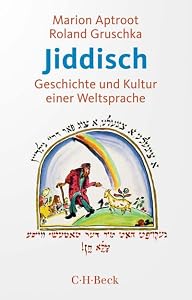
Taschenbuch. Condition: Neu. Neu -Die jiddische Sprache mit ihren deutschen, hebräischen und slawischen Bestandteilen ist ein faszinierendes Spiegelbild der langen Geschichte und Kultur der Juden in Europa. Das Buch beschreibt die Geschichte des Jiddischen von den ältesten mittelalterlichen Texten über die jiddischen Kulturen Osteuropas bis hin zu den großen jiddischen Romanen des 19. und 20. Jahrhunderts, zur Schoah und zum heutigen Jiddisch in den USA und Israel. Jiddisch war für fast tausend Jahre die Muttersprache der aschkenasischen Juden und als solche weit verbreitet. Wanderungen von Juden nach Osteuropa oder in die USA, Begegnungen mit anderen Sprachen und Kulturen sowie innerjüdische Entwicklungen haben verschiedene jiddische Kulturen entstehen lassen. Doch trotz dieser Vielfalt und obwohl die Sprache als verdorbene Variante des Deutschen verunglimpft wurde, entwickelte sich Jiddisch zu einer modernen Weltsprache, die große Schriftsteller wie Scholem Alejchem oder Isaac Bashevis Singer hervorgebracht hat. Bis heute ist Jiddisch eine lebendige Sprache, die ihren Sprechern und Liebhabern viel bedeutet, nicht nur die Erinnerung an das im Zweiten Weltkrieg vernichtete osteuropäische Judentum. 192 pp. Deutsch.…

- Softcover
Seller: Rheinberg-Buch Andreas Meier eK, Bergisch Gladbach, GermanyRheinberg-Buch Andreas Meier eK
Contact seller5-star sellerCondition: New
£ 14.17
£ 19.78 shippingShips from Germany to U.S.A.Quantity: 3 available
Taschenbuch. Condition: Neu. Neuware -DAS STANDARDWERK ZUM JIDDISCHEN Die jiddische Sprache mit ihren deutschen, hebräischen und slawischen Bestandteilen ist ein faszinierendes Spiegelbild der langen Geschichte und Kultur der Juden in Europa. Das kleine Standardwerk beschreibt die Geschichte des Jiddischen von den ältesten mittelalterlichen Texten über die jiddischen Kulturen Osteuropas bis hin zu den großen jiddischen Romanen des 19. und 20. Jahrhunderts, zur Schoah und zum heutigen Jiddisch in den USA und Israel.Dieses Buch bietet einen einzigartigen Überblick über die Geschichte des Jiddischen von den ältesten mittelalterlichen Texten über die jiddischen Kulturen Osteuropas bis hin zu den großen jiddischen Romanen des 19. und 20. Jahrhunderts, zur Schoah und zum heutigen Jiddisch in den USA und Isreal. Dabei geht es weit über eine reine Sprachgeschichte hinaus, denn die jiddische Sprache mit ihren deutschen, hebräischen und slawischen Bestandteilen ist ein faszinierendes Spiegelbild jüdischer Kultur und Geschichte: Wanderungen von Juden nach Osteuropa oder in die USA, Begegnungen mit anderen Sprachen und Kulturen sowie innerjüdische Entwicklungen haben im Jiddischen ihren Niederschlag gefunden und verschiedene kulturelle Strömungen entstehen lassen. Das Jiddische dient gleichermaßen als Sprache der Tradition und Religion wie als Sprache der Avantgarde und Moderne. Seit dem 19. Jahrhundert entwickelte sich Jiddisch zu einer modernen Welt- und Literatursprache und ist bist heute eine lebendige Sprache, die ihren Sprechern und Liebhabern mehr bedeutet als die nostalgische Erinnerung an das im Zweiten Weltkrieg vernichtete europäische Judentum. 192 pp. Deutsch.…

- Softcover
Seller: BuchWeltWeit Ludwig Meier e.K., Bergisch Gladbach, GermanyBuchWeltWeit Ludwig Meier e.K.
Contact seller5-star sellerCondition: New
£ 14.17
£ 19.78 shippingShips from Germany to U.S.A.Quantity: 2 available
Taschenbuch. Condition: Neu. Neuware -DAS STANDARDWERK ZUM JIDDISCHEN Die jiddische Sprache mit ihren deutschen, hebräischen und slawischen Bestandteilen ist ein faszinierendes Spiegelbild der langen Geschichte und Kultur der Juden in Europa. Das kleine Standardwerk beschreibt die Geschichte des Jiddischen von den ältesten mittelalterlichen Texten über die jiddischen Kulturen Osteuropas bis hin zu den großen jiddischen Romanen des 19. und 20. Jahrhunderts, zur Schoah und zum heutigen Jiddisch in den USA und Israel.Dieses Buch bietet einen einzigartigen Überblick über die Geschichte des Jiddischen von den ältesten mittelalterlichen Texten über die jiddischen Kulturen Osteuropas bis hin zu den großen jiddischen Romanen des 19. und 20. Jahrhunderts, zur Schoah und zum heutigen Jiddisch in den USA und Isreal. Dabei geht es weit über eine reine Sprachgeschichte hinaus, denn die jiddische Sprache mit ihren deutschen, hebräischen und slawischen Bestandteilen ist ein faszinierendes Spiegelbild jüdischer Kultur und Geschichte: Wanderungen von Juden nach Osteuropa oder in die USA, Begegnungen mit anderen Sprachen und Kulturen sowie innerjüdische Entwicklungen haben im Jiddischen ihren Niederschlag gefunden und verschiedene kulturelle Strömungen entstehen lassen. Das Jiddische dient gleichermaßen als Sprache der Tradition und Religion wie als Sprache der Avantgarde und Moderne. Seit dem 19. Jahrhundert entwickelte sich Jiddisch zu einer modernen Welt- und Literatursprache und ist bist heute eine lebendige Sprache, die ihren Sprechern und Liebhabern mehr bedeutet als die nostalgische Erinnerung an das im Zweiten Weltkrieg vernichtete europäische Judentum. 192 pp. Deutsch.…
- Hardcover
Seller: Kennys Bookshop and Art Galleries Ltd., Galway, GY, IrelandKennys Bookshop and Art Galleries Ltd.
Contact seller5-star sellerCondition: New
£ 53.86
£ 8.17 shippingShips from Ireland to U.S.A.Quantity: 2 available
Condition: New. This text presents satirical dialogues written in Amsterdam Yiddish between members of the established and the breakaway Jewish communities in 18th-century Amsterdam. These dialogues allowed the breakaway community to expose the inequalities and foibles of the establishment community. Editor(s): Michman, Jozeph; Aptroot, Marion. Num Pages: 325 pages. BIC Classification: 1DDN; 2ACY; 3JH; DNF; JFSR1. Category: (P) Professional & Vocational; (UP) Postgraduate, Research & Scholarly; (UU) Undergraduate. Dimension: 229 x 152 x 46. . . 2002. Bilingual. Hardcover. . . . .…

Seller: Antiquariaat Spinoza, Amsterdam, NetherlandsAntiquariaat Spinoza
Contact seller5-star sellerCondition: Used
£ 10.10
£ 13.76 shippingShips from Netherlands to U.S.A.Quantity: 1 available
Amsterdam, Menasseh ben Israel Inst., 2020. 64 pp.Softcover. English language. Contr. by Oren Cohen Roman, Astrid Lembke, Midiam Edlich-Muth. Yiddish literature is a Jewish literature. It is also a European literature and its literary materials and forms reflect contacts with Jewish and non-Jewish cultures. It is therefore not surprising that we find Yiddish texts about knights from the Middle Ages and early modern period. In the specialist lectures at this symposium, which will all be presented in English, we encounter epic poems and romances resulting from contact with Hebrew (biblical, midrashic), German and Italian literatures.…

Seller: Antiquariaat Spinoza, Amsterdam, NetherlandsAntiquariaat Spinoza
Contact seller5-star sellerCondition: Used
£ 10.10
£ 13.76 shippingShips from Netherlands to U.S.A.Quantity: 1 available
Amsterdam, Menasseh ben Israel Inst., 2016. 53 pp. New. Softcover. Proceedings. Efrat Gal-Ed: In a heylikn mitvokh. On a Holy Wednesday: Itzik Manger's Modernist Moves. Karolina Szymaniak: Settling the Score. Modernist Translingual Practice and the Dynamics of Polish-Yiddish Literary Contacts in the Interwar Period.…

Seller: Antiquariaat Spinoza, Amsterdam, NetherlandsAntiquariaat Spinoza
Contact seller5-star sellerCondition: Used
£ 10.10
£ 13.76 shippingShips from Netherlands to U.S.A.Quantity: 1 available
Add to basketAmsterdam, Düsseldorf, 2000. 64 pp. Illustr. Orig. wraps. Yiddish books and manuscripts from the Netherlands. Exhibition-catalogue. Text in German.
- Softcover
Seller: Wegmann1855, Zwiesel, GermanyWegmann1855
Contact seller5-star sellerCondition: New
£ 14.17
£ 22.32 shippingShips from Germany to U.S.A.Quantity: 2 available
Taschenbuch. Condition: Neu. Neuware -DAS STANDARDWERK ZUM JIDDISCHEN Die jiddische Sprache mit ihren deutschen, hebräischen und slawischen Bestandteilen ist ein faszinierendes Spiegelbild der langen Geschichte und Kultur der Juden in Europa. Das kleine Standardwerk beschreibt die Geschichte des Jiddischen von den ältesten mittelalterlichen Texten über die jiddischen Kulturen Osteuropas bis hin zu den großen jiddischen Romanen des 19. und 20. Jahrhunderts, zur Schoah und zum heutigen Jiddisch in den USA und Israel.Dieses Buch bietet einen einzigartigen Überblick über die Geschichte des Jiddischen von den ältesten mittelalterlichen Texten über die jiddischen Kulturen Osteuropas bis hin zu den großen jiddischen Romanen des 19. und 20. Jahrhunderts, zur Schoah und zum heutigen Jiddisch in den USA und Isreal. Dabei geht es weit über eine reine Sprachgeschichte hinaus, denn die jiddische Sprache mit ihren deutschen, hebräischen und slawischen Bestandteilen ist ein faszinierendes Spiegelbild jüdischer Kultur und Geschichte: Wanderungen von Juden nach Osteuropa oder in die USA, Begegnungen mit anderen Sprachen und Kulturen sowie innerjüdische Entwicklungen haben im Jiddischen ihren Niederschlag gefunden und verschiedene kulturelle Strömungen entstehen lassen. Das Jiddische dient gleichermaßen als Sprache der Tradition und Religion wie als Sprache der Avantgarde und Moderne. Seit dem 19. Jahrhundert entwickelte sich Jiddisch zu einer modernen Welt- und Literatursprache und ist bist heute eine lebendige Sprache, die ihren Sprechern und Liebhabern mehr bedeutet als die nostalgische Erinnerung an das im Zweiten Weltkrieg vernichtete europäische Judentum.…
- Hardcover
Seller: Kennys Bookstore, Olney, MD, U.S.A.Kennys Bookstore
Contact seller5-star sellerCondition: New
£ 64.75
£ 7.94 shippingShips within U.S.A.Quantity: 2 available
Condition: New. This text presents satirical dialogues written in Amsterdam Yiddish between members of the established and the breakaway Jewish communities in 18th-century Amsterdam. These dialogues allowed the breakaway community to expose the inequalities and foibles of the establishment community. Editor(s): Michman, Jozeph; Aptroot, Marion. Num Pages: 325 pages. BIC Classification: 1DDN; 2ACY; 3JH; DNF; JFSR1. Category: (P) Professional & Vocational; (UP) Postgraduate, Research & Scholarly; (UU) Undergraduate. Dimension: 229 x 152 x 46. . . 2002. Bilingual. Hardcover. . . . . Books ship from the US and Ireland.…

Language: German
Published by Hamburg, Helmut Buske Verlag,, 2002
- Hardcover
Seller: Antiquariat Werner Steinbeiß, München, GermanyAntiquariat Werner Steinbeiß
Contact seller5-star sellerCondition: Used
£ 31.01
£ 8.56 shippingShips from Germany to U.S.A.Quantity: 1 available
Add to basketGr.-8°, Orig. Pappband. XLII, 465 S. gut erhaltenes, sauberes Exemplar Sprache: Deutsch Gewicht in Gramm: 550.
- Hardcover
Seller: Antiquariaat Spinoza, Amsterdam, NetherlandsAntiquariaat Spinoza
Contact seller5-star sellerCondition: Used
£ 64.32
£ 13.76 shippingShips from Netherlands to U.S.A.Quantity: 1 available
Cincinnati, Hebrew Union College Press, 2002. 527 pp. New. Orig. cloth with dustjacket. Yiddish text and English translation on facing pages.

- Softcover
- First Edition
Seller: ANTIQUARIAT Franke BRUDDENBOOKS, Lübeck, GermanyANTIQUARIAT Franke BRUDDENBOOKS
Contact seller5-star sellerCondition: Used - As new
£ 37.21
£ 11.48 shippingShips from Germany to U.S.A.Quantity: 1 available
Broschur, 8°. Condition: Wie neu. 1. 282 S. Buch ist neu, aus priv. Vorbesitz, ungelesen. Das Buch ist in exzellentem, sauberen Zustand. Einband minimalst berieben. Sonst perfekt sauberes und wohlerhaltenes Exemplar. -----Inhalt. Textedition von Marion Aptroot und Roland Gruschka mit einleitenden Beiträgen von Marion Aptroot, Delphine Bechtel, Shmuel Feiner und Roland Gruschka. ISBN: 9783875483796 Due to new EU packaging regulations, we are currently unable to ship to many EU countries. Shipping to Germany, the Netherlands, Ireland, Finland, and the Baltic states is possible. Deliveries to border-based parcel lockers or cross-border parcel forwarding services remain possible. Shipping to all countries outside the EU also remains possible. Sprache: Deutsch Gewicht in Gramm: 439.…

- Hardcover
Seller: GreatBookPrices, Columbia, MD, U.S.A.GreatBookPrices
Contact seller5-star sellerCondition: New
£ 164.83
£ 2.00 shippingShips within U.S.A.Quantity: Over 20 available
Condition: New.

- Hardcover
Seller: GreatBookPricesUK, Woodford Green, United KingdomGreatBookPricesUK
Contact seller5-star sellerCondition: New
£ 152.23
£ 15.00 shippingShips from United Kingdom to U.S.A.Quantity: Over 20 available
Condition: New.

- Hardcover
Seller: GreatBookPrices, Columbia, MD, U.S.A.GreatBookPrices
Contact seller5-star sellerCondition: Used - As new
£ 187.12
£ 2.00 shippingShips within U.S.A.Quantity: Over 20 available
Condition: As New. Unread book in perfect condition.

- Hardcover
Seller: AHA-BUCH GmbH, Einbeck, GermanyAHA-BUCH GmbH
Contact seller5-star sellerCondition: New
£ 159.76
£ 30.10 shippingShips from Germany to U.S.A.Quantity: 1 available
Buch. Condition: Neu. Druck auf Anfrage Neuware - Printed after ordering - Yiddish Language Structures presents ten new studies on structural aspects of Yiddish in the light of modern linguistic theories which are of interest to linguists and philologists. The contributions are examples of data-based research. They address several levels of the language system including morphology, syntax and lexicology, and put special emphasis on mechanisms of internal and contact-induced language change spanning different epochs and societal and textual strata.…

- Hardcover
- First Edition
Seller: Rarewaves USA, HEBRON, KY, U.S.A.Rarewaves USA
Contact seller5-star sellerCondition: New
£ 192.73
Free ShippingShips within U.S.A.Quantity: Over 20 available
Hardback. Condition: New. 1st. Yiddish Language Structures presents ten new studies on structural aspects of Yiddish in the light of modern linguistic theories which are of interest to linguists and philologists. The contributions are examples of data-based research. They address several levels of the language system including morphology, syntax and lexicology, and put special emphasis on mechanisms of internal and contact-induced language change spanning different epochs and societal and textual strata.…

- Hardcover
Seller: GreatBookPricesUK, Woodford Green, United KingdomGreatBookPricesUK
Contact seller5-star sellerCondition: Used - As new
£ 181.84
£ 15.00 shippingShips from United Kingdom to U.S.A.Quantity: Over 20 available
Condition: As New. Unread book in perfect condition.

- Hardcover
Seller: Revaluation Books, Exeter, United KingdomRevaluation Books
Contact seller5-star sellerCondition: New
£ 193.64
£ 12.50 shippingShips from United Kingdom to U.S.A.Quantity: 2 available
Hardcover. Condition: Brand New. 299 pages. 9.50x6.60x1.10 inches. In Stock.

- Softcover
Seller: Mispah books, Redhill, SURRE, United KingdomMispah books
Contact seller4-star sellerCondition: New
£ 197.00
£ 25.00 shippingShips from United Kingdom to U.S.A.Quantity: 1 available
paperback. Condition: New. NEW. SHIPS FROM MULTIPLE LOCATIONS. book.


