
Spellman Barbara (31 results)
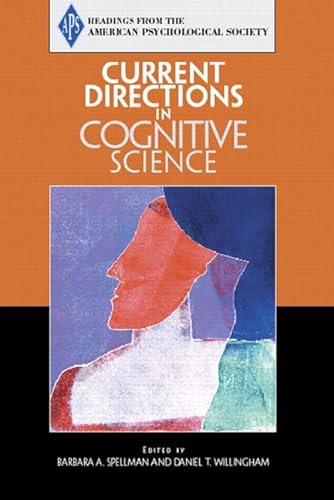
Current Directions In Cognitive Science
American Psychological Society, Association for Psychological Science, Spellman, Barbara A.
- Softcover
Seller: World of Books (was SecondSale), Montgomery, IL, U.S.A.World of Books (was SecondSale)
Contact seller5-star sellerCondition: Used - Good
£ 6.49
Free ShippingShips within U.S.A.Quantity: 2 available
Condition: Good. Item in good condition. Textbooks may not include supplemental items i.e. CDs, access codes etc.
- Softcover
Seller: ThriftBooks-Dallas, Dallas, TX, U.S.A.ThriftBooks-Dallas
Contact seller5-star sellerCondition: Used - Very good
£ 6.50
Free ShippingShips within U.S.A.Quantity: 1 available
Paperback. Condition: Very Good. No Jacket. May have limited writing in cover pages. Pages are unmarked. ~ ThriftBooks: Read More, Spend Less.

- Hardcover
Seller: Half Price Books Inc., Dallas, TX, U.S.A.Half Price Books Inc.
Contact seller5-star sellerCondition: Used - Very good
£ 4.60
£ 2.61 shippingShips within U.S.A.Quantity: 1 available
hardcover. Condition: Very Good. Connecting readers with great books since 1972! Used books may not include companion materials, and may have some shelf wear or limited writing. We ship orders daily and Customer Service is our top priority. Susan Spellman (illustrator).

- Softcover
Seller: Goodwill of Central and Coastal Virginia, Richmond, VA, U.S.A.Goodwill of Central and Coastal Virginia
Contact seller3-star sellerCondition: Used - Fair
£ 3.20
£ 4.29 shippingShips within U.S.A.Quantity: 1 available
Condition: acceptable.
Current Directions in Cognitive Science (APS) Association for Psychological Science; Spellman, Barbara A. and Willingham, Daniel T.
(APS) Association for Psychological Science; Spellman, Barbara A.; Willingham, Daniel T.
- Softcover
Seller: Textbookplaza, sugar land, TX, U.S.A.Textbookplaza
Contact seller4-star sellerCondition: New
£ 11.53
£ 5.97 shippingShips within U.S.A.Quantity: 1 available
Paperback. Condition: New. Need it urgently? Upgrade to Expedited. In stock and we ship daily on weekdays & Saturdays.
Language: English
Published by NYU Press, 2016
Series: Psychology and the Law, Book 2 of 5. Book 2 of 5 - Psychology and the Law
- Softcover
Seller: Oblivion Books, Seattle, WA, U.S.A.Oblivion Books
Contact seller4-star sellerCondition: Used - Very good
£ 16.70
£ 4.11 shippingShips within U.S.A.Quantity: 1 available
paperback. Condition: Very Good. Softcover. Clean text - NO writing, NO highlighting. Very good+ Oversized. Clean text -- NO writing, NO highlighting to text.ÂPLEASE NOTE: Domestic US media (standard) US orders ONLY. NO international orders.
Language: English
Published by NYU Press, 2016
Series: Psychology and the Law, Book 2 of 5. Book 2 of 5 - Psychology and the Law
- Softcover
Seller: eCampus, Lexington, KY, U.S.A.eCampus
Contact seller5-star sellerCondition: New
£ 19.40
£ 2.98 shippingShips within U.S.A.Quantity: 1 available
Condition: New.

Language: English
Published by Prentice Hall/Pearson, Upper Saddle River, NJ, 2005
- Softcover
Seller: PsychoBabel & Skoob Books, Didcot, United KingdomPsychoBabel & Skoob Books
Contact seller5-star sellerCondition: Used - Very good
£ 9.50
£ 12.50 shippingShips from United Kingdom to U.S.A.Quantity: 1 available
Paperback. Condition: Very Good. Paperback, very good condition. Minor wear to the covers with light surface marks and minor creasing at the edges. Internally excellent throughout. DP. Used.
Current Directions in Cognitive Science Association for Psychological Science (APS); Spellman, Barbara A. and Willingham, Daniel T.
Association for Psychological Science (APS); Spellman, Barbara A.; Willingham, Daniel T.
- Softcover
Seller: Textbookplaza, sugar land, TX, U.S.A.Textbookplaza
Contact seller4-star sellerCondition: New
£ 16.91
£ 5.97 shippingShips within U.S.A.Quantity: 1 available
Paperback. Condition: New. Need it urgently? Upgrade to Expedited. In stock and we ship daily on weekdays & Saturdays.
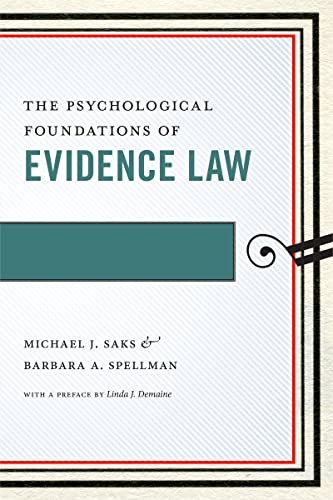
Psychological Foundations of Evidence Law
Saks, Michael J.; Spellman, Barbara A.; Demaine, Linda J. (FRW)
Language: English
Published by NYU Press, 2016
Series: Psychology and the Law, Book 2 of 5. Book 2 of 5 - Psychology and the Law
- Softcover
Seller: GreatBookPrices, Columbia, MD, U.S.A.GreatBookPrices
Contact seller5-star sellerCondition: Used - As new
£ 39.71
£ 1.97 shippingShips within U.S.A.Quantity: Over 20 available
Condition: As New. Unread book in perfect condition.
Psychological Foundations of Evidence Law
Saks, Michael J.; Spellman, Barbara A.; Demaine, Linda J. (FRW)
Language: English
Published by NYU Press, 2016
Series: Psychology and the Law, Book 2 of 5. Book 2 of 5 - Psychology and the Law
- Softcover
Seller: GreatBookPrices, Columbia, MD, U.S.A.GreatBookPrices
Contact seller5-star sellerCondition: New
£ 43.28
£ 1.97 shippingShips within U.S.A.Quantity: Over 20 available
Condition: New.
Language: English
Published by New York University Press, 2016
Series: Psychology and the Law, Book 2 of 5. Book 2 of 5 - Psychology and the Law
- Softcover
Seller: Majestic Books, Hounslow, United KingdomMajestic Books
Contact seller4-star sellerCondition: New
£ 45.95
£ 6.50 shippingShips from United Kingdom to U.S.A.Quantity: 3 available
Condition: New. pp. 320.
Psychological Foundations of Evidence Law
Saks, Michael J.; Spellman, Barbara A.; Demaine, Linda J. (FRW)
Language: English
Published by NYU Press, 2016
Series: Psychology and the Law, Book 2 of 5. Book 2 of 5 - Psychology and the Law
- Softcover
Seller: GreatBookPricesUK, Woodford Green, United KingdomGreatBookPricesUK
Contact seller5-star sellerCondition: New
£ 37.97
£ 15.00 shippingShips from United Kingdom to U.S.A.Quantity: Over 20 available
Condition: New.
Psychological Foundations of Evidence Law
Saks, Michael J.; Spellman, Barbara A.; Demaine, Linda J. (FRW)
Language: English
Published by NYU Press, 2016
Series: Psychology and the Law, Book 2 of 5. Book 2 of 5 - Psychology and the Law
- Softcover
Seller: GreatBookPricesUK, Woodford Green, United KingdomGreatBookPricesUK
Contact seller5-star sellerCondition: Used - As new
£ 41.15
£ 15.00 shippingShips from United Kingdom to U.S.A.Quantity: Over 20 available
Condition: As New. Unread book in perfect condition.
Language: English
Published by New York University Press NYU Press, 2016
Series: Psychology and the Law, Book 2 of 5. Book 2 of 5 - Psychology and the Law
- Softcover
Seller: Books Puddle, New York, NY, U.S.A.Books Puddle
Contact seller4-star sellerCondition: New
£ 55.17
£ 2.98 shippingShips within U.S.A.Quantity: 3 available
Condition: New. pp. 320.
Language: English
Published by NYU Press, 2016
Series: Psychology and the Law, Book 2 of 5. Book 2 of 5 - Psychology and the Law
- Softcover
Seller: Ria Christie Collections, Uxbridge, United KingdomRia Christie Collections
Contact seller5-star sellerCondition: New
£ 46.20
£ 11.98 shippingShips from United Kingdom to U.S.A.Quantity: Over 20 available
Condition: New. In.
Language: English
Published by New York Univ Pr, 2016
Series: Psychology and the Law, Book 2 of 5. Book 2 of 5 - Psychology and the Law
- Softcover
Seller: Revaluation Books, Exeter, United KingdomRevaluation Books
Contact seller5-star sellerCondition: New
£ 62.45
£ 10.00 shippingShips from United Kingdom to U.S.A.Quantity: 2 available
Paperback. Condition: Brand New. 325 pages. 8.75x5.75x0.75 inches. In Stock.

Published by New York: Kulchur Press Inc., 1963
- Softcover
- First Edition
Seller: Philip Smith, Bookseller, Berkeley, CA, U.S.A.Philip Smith, Bookseller
Contact seller5-star sellerCondition: Used - Very good
£ 46.14
£ 4.44 shippingShips within U.S.A.Quantity: 1 available
Soft cover. Condition: Very Good. Dust Jacket Condition: No Jacket (as issued). 1st edition. Near VG. 8vo, 104pp, printed wrappers. The ninth issue of this seminal sixties journal of avant-garde culture, a special number devoted to plays and the theatre. Unmarked copy with 1/2" surface chip loss to base of spine, small corner st…ain, and a bit of general wear. Not Signed.
Language: English
Published by NEW YORK UNIV PR, 2016
Series: Psychology and the Law, Book 2 of 5. Book 2 of 5 - Psychology and the Law
- Softcover
Seller: moluna, Greven, Germanymoluna
Contact seller5-star sellerCondition: New
£ 55.36
£ 41.85 shippingShips from Germany to U.S.A.Quantity: Over 20 available
Kartoniert / Broschiert. Condition: New. Über den AutorMichael J. Saks is Regents Professor at the Arizona State University where he is on the faculties of the Sandra Day O Connor College of Law and the Department of Psychology. He is the past co-editor of Modern Sc.
Language: English
Published by NYU Press, 2016
Series: Psychology and the Law, Book 2 of 5. Book 2 of 5 - Psychology and the Law
- Hardcover
Seller: GreatBookPrices, Columbia, MD, U.S.A.GreatBookPrices
Contact seller5-star sellerCondition: New
£ 100.27
£ 1.97 shippingShips within U.S.A.Quantity: 1 available
Condition: New.

Language: English
Published by New York University Press, US, 2016
Series: Psychology and the Law, Book 2 of 5. Book 2 of 5 - Psychology and the Law
- Hardcover
Seller: Rarewaves USA, OSWEGO, IL, U.S.A.Rarewaves USA
Contact seller5-star sellerCondition: New
£ 102.31
Free ShippingShips within U.S.A.Quantity: Over 20 available
Hardback. Condition: New. Identifies and evaluates the psychological choices implicit in the rules of evidence Evidence law is meant to facilitate trials that are fair, accurate, and efficient, and that encourage and protect important societal values and relationships. In pursuit of these often-conflicting goals, common law judg…es and modern drafting committees have had to perform as amateur applied psychologists. Their task has required them to employ what they think they know about the ability and motivations of witnesses to perceive, store, and retrieve information; about the effects of the litigation process on testimony and other evidence; and about our capacity to comprehend and evaluate evidence. These are the same phenomena that cognitive and social psychologists systematically study. The rules of evidence have evolved to restrain lawyers from using the most robust weapons of influence, and to direct judges to exclude certain categories of information, limit it, or instruct juries on how to think about it. Evidence law regulates the form of questions lawyers may ask, filters expert testimony, requires witnesses to take oaths, and aims to give lawyers and factfinders the tools they need to assess witnesses' reliability. But without a thorough grounding in psychology, is the "common sense" of the rulemakers as they create these rules always, or even usually, correct? And when it is not, how can the rules be fixed? Addressed to those in both law and psychology, The Psychological Foundations of Evidence Law draws on the best current psychological research-based knowledge to identify and evaluate the choices implicit in the rules of evidence, and to suggest alternatives that psychology reveals as better for accomplishing the law's goals.
Language: English
Published by NYU Press, 2016
Series: Psychology and the Law, Book 2 of 5. Book 2 of 5 - Psychology and the Law
- Hardcover
Seller: GreatBookPrices, Columbia, MD, U.S.A.GreatBookPrices
Contact seller5-star sellerCondition: Used - As new
£ 106.67
£ 1.97 shippingShips within U.S.A.Quantity: 1 available
Condition: As New. Unread book in perfect condition.
Language: English
Published by NYU Press, 2016
Series: Psychology and the Law, Book 2 of 5. Book 2 of 5 - Psychology and the Law
- Hardcover
Seller: GreatBookPricesUK, Woodford Green, United KingdomGreatBookPricesUK
Contact seller5-star sellerCondition: New
£ 97.18
£ 15.00 shippingShips from United Kingdom to U.S.A.Quantity: 1 available
Condition: New.
Language: English
Published by NYU Press, 2016
Series: Psychology and the Law, Book 2 of 5. Book 2 of 5 - Psychology and the Law
- Hardcover
Seller: Ria Christie Collections, Uxbridge, United KingdomRia Christie Collections
Contact seller5-star sellerCondition: New
£ 107.26
£ 11.98 shippingShips from United Kingdom to U.S.A.Quantity: Over 20 available
Condition: New. In.

Language: English
Published by NYU Press - IPS Jan 2016, 2016
Series: Psychology and the Law, Book 2 of 5. Book 2 of 5 - Psychology and the Law
- Softcover
Seller: AHA-BUCH GmbH, Einbeck, GermanyAHA-BUCH GmbH
Contact seller5-star sellerCondition: New
£ 67.67
£ 53.40 shippingShips from Germany to U.S.A.Quantity: 2 available
Taschenbuch. Condition: Neu. Neuware - Identifies and evaluates the psychological choices implicit in the rules of evidence Evidence law is meant to facilitate trials that are fair, accurate, and efficient, and that encourage and protect important societal values and relationships. In pursuit of these often-conflicting goals, co…mmon law judges and modern drafting committees have had to perform as amateur applied psychologists. Their task has required them to employ what they think they know about the ability and motivations of witnesses to perceive, store, and retrieve information; about the effects of the litigation process on testimony and other evidence; and about our capacity to comprehend and evaluate evidence. These are the same phenomena that cognitive and social psychologists systematically study. The rules of evidence have evolved to restrain lawyers from using the most robust weapons of influence, and to direct judges to exclude certain categories of information, limit it, or instruct juries on how to think about it. Evidence law regulates the form of questions lawyers may ask, filters expert testimony, requires witnesses to take oaths, and aims to give lawyers and factfinders the tools they need to assess witnesses' reliability. But without a thorough grounding in psychology, is the 'common sense' of the rulemakers as they create these rules always, or even usually, correct And when it is not, how can the rules be fixed Addressed to those in both law and psychology, The Psychological Foundations of Evidence Law draws on the best current psychological research-based knowledge to identify and evaluate the choices implicit in the rules of evidence, and to suggest alternatives that psychology reveals as better for accomplishing the law's goals.

Language: English
Published by NYU Press, 2016
Series: Psychology and the Law, Book 2 of 5. Book 2 of 5 - Psychology and the Law
- Hardcover
Seller: GreatBookPricesUK, Woodford Green, United KingdomGreatBookPricesUK
Contact seller5-star sellerCondition: Used - As new
£ 104.60
£ 15.00 shippingShips from United Kingdom to U.S.A.Quantity: 1 available
Condition: As New. Unread book in perfect condition.

Language: English
Published by New York University Press, US, 2016
Series: Psychology and the Law, Book 2 of 5. Book 2 of 5 - Psychology and the Law
- Hardcover
Seller: Rarewaves USA United, OSWEGO, IL, U.S.A.Rarewaves USA United
Contact seller5-star sellerCondition: New
£ 101.43
£ 37.33 shippingShips within U.S.A.Quantity: Over 20 available
Hardback. Condition: New. Identifies and evaluates the psychological choices implicit in the rules of evidence Evidence law is meant to facilitate trials that are fair, accurate, and efficient, and that encourage and protect important societal values and relationships. In pursuit of these often-conflicting goals, common law judg…es and modern drafting committees have had to perform as amateur applied psychologists. Their task has required them to employ what they think they know about the ability and motivations of witnesses to perceive, store, and retrieve information; about the effects of the litigation process on testimony and other evidence; and about our capacity to comprehend and evaluate evidence. These are the same phenomena that cognitive and social psychologists systematically study. The rules of evidence have evolved to restrain lawyers from using the most robust weapons of influence, and to direct judges to exclude certain categories of information, limit it, or instruct juries on how to think about it. Evidence law regulates the form of questions lawyers may ask, filters expert testimony, requires witnesses to take oaths, and aims to give lawyers and factfinders the tools they need to assess witnesses' reliability. But without a thorough grounding in psychology, is the "common sense" of the rulemakers as they create these rules always, or even usually, correct? And when it is not, how can the rules be fixed? Addressed to those in both law and psychology, The Psychological Foundations of Evidence Law draws on the best current psychological research-based knowledge to identify and evaluate the choices implicit in the rules of evidence, and to suggest alternatives that psychology reveals as better for accomplishing the law's goals.
Language: English
Published by NYU Press, 2016
Series: Psychology and the Law, Book 2 of 5. Book 2 of 5 - Psychology and the Law
- Hardcover
Seller: moluna, Greven, Germanymoluna
Contact seller5-star sellerCondition: New
£ 116.50
£ 41.85 shippingShips from Germany to U.S.A.Quantity: Over 20 available
Condition: New.
Language: English
Published by New York Univ Pr, 2016
Series: Psychology and the Law, Book 2 of 5. Book 2 of 5 - Psychology and the Law
- Hardcover
Seller: Revaluation Books, Exeter, United KingdomRevaluation Books
Contact seller5-star sellerCondition: New
£ 143.33
£ 12.50 shippingShips from United Kingdom to U.S.A.Quantity: 2 available
Hardcover. Condition: Brand New. 320 pages. 9.25x6.25x1.25 inches. In Stock.
Language: English
Published by New York Univ Pr, 2016
Series: Psychology and the Law, Book 2 of 5. Book 2 of 5 - Psychology and the Law
- Softcover
- Print on Demand
Seller: Revaluation Books, Exeter, United KingdomRevaluation Books
Contact seller5-star sellerCondition: New
£ 40.08
£ 10.00 shippingShips from United Kingdom to U.S.A.Quantity: 2 available
Paperback. Condition: Brand New. 325 pages. 8.75x5.75x0.75 inches. In Stock. This item is printed on demand.


