
Gilboa Raquel (22 results)

- Softcover
Seller: Powell's Bookstores Chicago, ABAA, Chicago, IL, U.S.A.Powell's Bookstores Chicago, ABAA
Contact seller5-star sellerCondition: Used
£ 12.07
£ 3.78 shippingShips within U.S.A.Quantity: 3 available
Paperback. Condition: Used-Like New. Clean copy. May have remainder mark.
- Softcover
Seller: Powell's Bookstores Chicago, ABAA, Chicago, IL, U.S.A.Powell's Bookstores Chicago, ABAA
Contact seller5-star sellerCondition: Used
£ 12.07
£ 3.78 shippingShips within U.S.A.Quantity: 1 available
Paperback. Condition: Used-Very Good. Pbk. 4to. Some shelf-wear. Profusely illus. Else bright, clean copy.
- Softcover
Seller: HPB-Emerald, Dallas, TX, U.S.A.HPB-Emerald
Contact seller5-star sellerCondition: Used - Very good
£ 13.71
£ 2.83 shippingShips within U.S.A.Quantity: 1 available
paperback. Condition: Very Good. Connecting readers with great books since 1972! Used books may not include companion materials, and may have some shelf wear or limited writing. We ship orders daily and Customer Service is our top priority.
- Softcover
- First Edition
Seller: Arundel Books, Seattle, WA, U.S.A.Arundel Books
Contact seller5-star sellerAssociation member: CBA
Condition: Used - Fine
£ 12.46
£ 4.35 shippingShips within U.S.A.Quantity: 1 available
Trade Paperback. Condition: Fine. First Edition. A fine copy of the first edition paperback.

- Softcover
Seller: WeBuyBooks, Rossendale, LANCS, United KingdomWeBuyBooks
Contact seller5-star sellerCondition: Used - Good
£ 12.50
£ 10.53 shippingShips from United Kingdom to U.S.A.Quantity: Over 20 available
paperback. Condition: Good. Most items will be dispatched the same or the next working day. A copy that has been read but remains in clean condition. All of the pages are intact and the cover is intact and the spine may show signs of wear. The book may have minor markings which are not specifically mentioned.…
 More images
- Softcover
- First Edition
Seller: Lost Horizon Bookstore, Santa Barbara, CA, U.S.A.Lost Horizon Bookstore
Contact seller5-star sellerCondition: Used - Good
£ 19.47
£ 5.29 shippingShips within U.S.A.Quantity: 1 available
Softcover. Condition: Good. First edition. 11'' X 9 1/2''. 208pp. Illustrated. General wear to covers.
- Softcover
Seller: Majestic Books, Hounslow, United KingdomMajestic Books
Contact seller4-star sellerCondition: New
£ 22.74
£ 6.50 shippingShips from United Kingdom to U.S.A.Quantity: 3 available
Condition: New. pp. 220 200 Illus.
- Softcover
Seller: PBShop.store UK, Fairford, GLOS, United KingdomPBShop.store UK
Contact seller5-star sellerCondition: New
£ 21.34
£ 7.63 shippingShips from United Kingdom to U.S.A.Quantity: 15 available
PAP. Condition: New. New Book. Shipped from UK. Established seller since 2000.
- Softcover
Seller: Kennys Bookshop and Art Galleries Ltd., Galway, GY, IrelandKennys Bookshop and Art Galleries Ltd.
Contact seller5-star sellerCondition: New
£ 21.30
£ 8.17 shippingShips from Ireland to U.S.A.Quantity: Over 20 available
Condition: New. Num Pages: 252 pages, black & white illustrations, figures. BIC Classification: AFKB. Category: (G) General (US: Trade). Dimension: 282 x 243 x 22. Weight in Grams: 1224. . 2014. Paperback. . . . .

- Softcover
Seller: Rarewaves.com USA, London, LONDO, United KingdomRarewaves.com USA
Contact seller5-star sellerCondition: New
£ 33.00
Free ShippingShips from United Kingdom to U.S.A.Quantity: 19 available
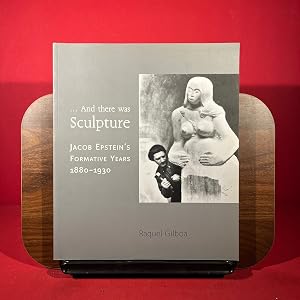
Paperback. Condition: New. As an American living in England, a conscious Jew who utilized Christian symbols, a skillful modeler who introduced direct carving into England, and a modernist who eventually came to dislike abstraction for its own sake, Epstein did not fit neatly into the artistic categories of his time. Apart from his still widely admired naturalistic bronze portraits, Epstein's oeuvre remains poorly understood and his reputation is dominated by his famous Rock Drill from before World War I. As this book shows, Epstein remained an avant-garde artist throughout his life, even if he ignored modernist dogma as well as man-in-the-street prudery. Gilboa's text reveals the man in all his genius, interpreting many works in the light of Epstein's personal circumstances. In an atmosphere of polarized attitudes to art and polite anti-Semitism at the end of the 1920s growing rather less polite thereafter, the outsider Jew Epstein deliberately became estranged from London's art world. He responded to society's attitude towards him in a series of bold projects - the monumental Genesis (1930) and Primeval Gods (1931-32); the smaller carvings Chimera and Elemental (1932); Behold the Man (1934-35); Consummatum Est (1938-39); Adam (1938) and Jacob and the Angel (1940); the bronze Lucifer (1944-45) and again a carving, Lazarus (1947). One cannot ignore the symbolic names of these sculptures. The discussion in this book will reveal that in each case the name has a definite relation to the sculpture's theme and essence, as well as to the personal concerns of the sculptor. Almost all of these sculptures that Epstein produced from the 1930s aroused a public outcry, causing one critic to state that "a new carving by Mr. Epstein - good, bad or indifferent - can still steal the headlines when criminal assault, private or political, is out of season". It was only during the 1950s, following the trauma and emotional shock of World War II, that new requirements for the expression of ideas and emotions rather than for mere forms with which to play renewed the demand for 'an Epstein' and his kind of 'content' sculpture, mainly in public commissions. Epstein, by then in his seventies, was flooded with work, and his sculpture - which employed Christian imagery to convey universal ideas of consolation and hope to a war-weary England - became newly relevant, gaining him the status of grand old master of English sculpture.…
- Softcover
Seller: Kennys Bookstore, Olney, MD, U.S.A.Kennys Bookstore
Contact seller5-star sellerCondition: New
£ 24.95
£ 7.94 shippingShips within U.S.A.Quantity: Over 20 available
Condition: New. Num Pages: 252 pages, black & white illustrations, figures. BIC Classification: AFKB. Category: (G) General (US: Trade). Dimension: 282 x 243 x 22. Weight in Grams: 1224. . 2014. Paperback. . . . . Books ship from the US and Ireland.
- Softcover
Seller: Grand Eagle Retail, Bensenville, IL, U.S.A.Grand Eagle Retail
Contact seller5-star sellerCondition: New
£ 35.32
Free ShippingShips within U.S.A.Quantity: 1 available
Paperback. Condition: new. Paperback. As an American living in England, a conscious Jew who utilized Christian symbols, a skillful modeler who introduced direct carving into England, and a modernist who eventually came to dislike abstraction for its own sake, Epstein did not fit neatly into the artistic categories of his time. Apart from his still widely admired naturalistic bronze portraits, Epstein's oeuvre remains poorly understood and his reputation is dominated by his famous Rock Drill from before World War I. As this book shows, Epstein remained an avant-garde artist throughout his life, even if he ignored modernist dogma as well as man-in-the-street prudery. Gilboa's text reveals the man in all his genius, interpreting many works in the light of Epstein's personal circumstances. In an atmosphere of polarized attitudes to art and polite anti-Semitism at the end of the 1920s growing rather less polite thereafter, the outsider Jew Epstein deliberately became estranged from London's art world. He responded to society's attitude towards him in a series of bold projects - the monumental Genesis (1930) and Primeval Gods (1931-32); the smaller carvings Chimera and Elemental (1932); Behold the Man (1934-35); Consummatum Est (1938-39); Adam (1938) and Jacob and the Angel (1940); the bronze Lucifer (1944-45) and again a carving, Lazarus (1947). One cannot ignore the symbolic names of these sculptures. The discussion in this book will reveal that in each case the name has a definite relation to the sculpture's theme and essence, as well as to the personal concerns of the sculptor. Almost all of these sculptures that Epstein produced from the 1930s aroused a public outcry, causing one critic to state that "a new carving by Mr. Epstein - good, bad or indifferent - can still steal the headlines when criminal assault, private or political, is out of season". It was only during the 1950s, following the trauma and emotional shock of World War II, that new requirements for the expression of ideas and emotions rather than for mere forms with which to play renewed the demand for 'an Epstein' and his kind of 'content' sculpture, mainly in public commissions. Epstein, by then in his seventies, was flooded with work, and his sculpture - which employed Christian imagery to convey universal ideas of consolation and hope to a war-weary England - became newly relevant, gaining him the status of grand old master of English sculpture. As an American living in England, a conscious Jew who utilized Christian symbols, a skillful modeler who introduced direct carving into England, Epstein did not fit neatly into the artistic categories of his time. Shipping may be from multiple locations in the US or from the UK, depending on stock availability.…
- Softcover
Seller: Revaluation Books, Exeter, United KingdomRevaluation Books
Contact seller5-star sellerCondition: New
£ 21.83
£ 15.00 shippingShips from United Kingdom to U.S.A.Quantity: 2 available
Paperback. Condition: Brand New. 252 pages. 11.25x9.55x0.80 inches. In Stock.
- Softcover
Seller: Ria Christie Collections, Uxbridge, United KingdomRia Christie Collections
Contact seller5-star sellerCondition: New
£ 23.53
£ 14.94 shippingShips from United Kingdom to U.S.A.Quantity: Over 20 available
Condition: New. In English.

- Softcover
Seller: Jackson Street Booksellers, Omaha, NE, U.S.A.Jackson Street Booksellers
Contact seller5-star sellerCondition: Used - Near fine
£ 35.04
£ 4.91 shippingShips within U.S.A.Quantity: 1 available
Soft cover. Condition: Near Fine. Near fine copy in softcover. Grey spine with white and black titles. 4to.
- Softcover
Seller: THE SAINT BOOKSTORE, Southport, United KingdomTHE SAINT BOOKSTORE
Contact seller5-star sellerCondition: New
£ 21.35
£ 23.20 shippingShips from United Kingdom to U.S.A.Quantity: Over 20 available
Paperback / softback. Condition: New. New copy - Usually dispatched within 4 working days.
- Softcover
Seller: Books Puddle, Woodside, NY, U.S.A.Books Puddle
Contact seller4-star sellerCondition: New
£ 44.62
£ 3.02 shippingShips within U.S.A.Quantity: 3 available
Condition: New. pp. 220.

- Softcover
Seller: Marcus Campbell Art Books, London, United KingdomMarcus Campbell Art Books
Contact seller4-star sellerCondition: Used
£ 40.00
£ 19.00 shippingShips from United Kingdom to U.S.A.Quantity: 1 available
Paperback. Condition: Good in wraps. 24 x 29cm 208pp good paperback. Sir Jacob Epstein KBE was an American and British sculptor who helped pioneer modern sculpture. He was born in the United States, and moved to Europe in 1902, becoming a British subject in 1910. Works shown in black and white reproduction.…
- Softcover
Seller: AussieBookSeller, Truganina, VIC, AustraliaAussieBookSeller
Contact seller5-star sellerCondition: New
£ 58.34
£ 27.97 shippingShips from Australia to U.S.A.Quantity: 1 available
Paperback. Condition: new. Paperback. As an American living in England, a conscious Jew who utilized Christian symbols, a skillful modeler who introduced direct carving into England, and a modernist who eventually came to dislike abstraction for its own sake, Epstein did not fit neatly into the artistic categories of his time. Apart from his still widely admired naturalistic bronze portraits, Epstein's oeuvre remains poorly understood and his reputation is dominated by his famous Rock Drill from before World War I. As this book shows, Epstein remained an avant-garde artist throughout his life, even if he ignored modernist dogma as well as man-in-the-street prudery. Gilboa's text reveals the man in all his genius, interpreting many works in the light of Epstein's personal circumstances. In an atmosphere of polarized attitudes to art and polite anti-Semitism at the end of the 1920s growing rather less polite thereafter, the outsider Jew Epstein deliberately became estranged from London's art world. He responded to society's attitude towards him in a series of bold projects - the monumental Genesis (1930) and Primeval Gods (1931-32); the smaller carvings Chimera and Elemental (1932); Behold the Man (1934-35); Consummatum Est (1938-39); Adam (1938) and Jacob and the Angel (1940); the bronze Lucifer (1944-45) and again a carving, Lazarus (1947). One cannot ignore the symbolic names of these sculptures. The discussion in this book will reveal that in each case the name has a definite relation to the sculpture's theme and essence, as well as to the personal concerns of the sculptor. Almost all of these sculptures that Epstein produced from the 1930s aroused a public outcry, causing one critic to state that "a new carving by Mr. Epstein - good, bad or indifferent - can still steal the headlines when criminal assault, private or political, is out of season". It was only during the 1950s, following the trauma and emotional shock of World War II, that new requirements for the expression of ideas and emotions rather than for mere forms with which to play renewed the demand for 'an Epstein' and his kind of 'content' sculpture, mainly in public commissions. Epstein, by then in his seventies, was flooded with work, and his sculpture - which employed Christian imagery to convey universal ideas of consolation and hope to a war-weary England - became newly relevant, gaining him the status of grand old master of English sculpture. As an American living in England, a conscious Jew who utilized Christian symbols, a skillful modeler who introduced direct carving into England, Epstein did not fit neatly into the artistic categories of his time. Shipping may be from our Sydney, NSW warehouse or from our UK or US warehouse, depending on stock availability.…

- Softcover
Seller: Rarewaves.com UK, London, United KingdomRarewaves.com UK
Contact seller5-star sellerCondition: New
£ 30.21
£ 65.00 shippingShips from United Kingdom to U.S.A.Quantity: 19 available
Paperback. Condition: New. As an American living in England, a conscious Jew who utilized Christian symbols, a skillful modeler who introduced direct carving into England, and a modernist who eventually came to dislike abstraction for its own sake, Epstein did not fit neatly into the artistic categories of his time. Apart from his still widely admired naturalistic bronze portraits, Epstein's oeuvre remains poorly understood and his reputation is dominated by his famous Rock Drill from before World War I. As this book shows, Epstein remained an avant-garde artist throughout his life, even if he ignored modernist dogma as well as man-in-the-street prudery. Gilboa's text reveals the man in all his genius, interpreting many works in the light of Epstein's personal circumstances. In an atmosphere of polarized attitudes to art and polite anti-Semitism at the end of the 1920s growing rather less polite thereafter, the outsider Jew Epstein deliberately became estranged from London's art world. He responded to society's attitude towards him in a series of bold projects - the monumental Genesis (1930) and Primeval Gods (1931-32); the smaller carvings Chimera and Elemental (1932); Behold the Man (1934-35); Consummatum Est (1938-39); Adam (1938) and Jacob and the Angel (1940); the bronze Lucifer (1944-45) and again a carving, Lazarus (1947). One cannot ignore the symbolic names of these sculptures. The discussion in this book will reveal that in each case the name has a definite relation to the sculpture's theme and essence, as well as to the personal concerns of the sculptor. Almost all of these sculptures that Epstein produced from the 1930s aroused a public outcry, causing one critic to state that "a new carving by Mr. Epstein - good, bad or indifferent - can still steal the headlines when criminal assault, private or political, is out of season". It was only during the 1950s, following the trauma and emotional shock of World War II, that new requirements for the expression of ideas and emotions rather than for mere forms with which to play renewed the demand for 'an Epstein' and his kind of 'content' sculpture, mainly in public commissions. Epstein, by then in his seventies, was flooded with work, and his sculpture - which employed Christian imagery to convey universal ideas of consolation and hope to a war-weary England - became newly relevant, gaining him the status of grand old master of English sculpture.…

Published by -Paul Holberton Publishing -, 2013
Seller: Paul Brown, Ramsgate, United KingdomPaul Brown
Contact seller4-star sellerCondition: Used
£ 16.00
£ 25.35 shippingShips from United Kingdom to U.S.A.Quantity: 1 available
Add to basketFirst edition first printing 2013. 252 pages. Illustrated in black and white throughout. Paperback. Fine. As an American living in England, a conscious Jew who utilized Christian symbols, a skillful modeler who introduced direct carving into England, and a modernist who eventually came to dislike abstraction for its own sake, Epstein did not fit neatly into the artistic categories of his time. Apart from his still widely admired naturalistic bronze portraits, Epstein's oeuvre remains poorly understood and his reputation is dominated by his famous Rock Drill from before World War I. As this book shows, Epstein remained an avant-garde artist throughout his life, even if he ignored modernist dogma as well as man-in-the-street prudery. Gilboa's text reveals the man in all his genius, interpreting many works in the light of Epstein's personal circumstances. In an atmosphere of polarized attitudes to art and polite anti-Semitism at the end of the 1920s growing rather less polite thereafter, the outsider Jew Epstein deliberately became estranged from London's art world. He responded to society's attitude towards him in a series of bold projects- the monumental Genesis (1930) and Primeval Gods (1931-32); the smaller carvings Chimera and Elemental (1932); Behold the Man (1934-35); Consummatum Est (1938-39); Adam (1938) and Jacob and the Angel (1940); the bronze Lucifer (1944-45) and again a carving, Lazarus (1947). One cannot ignore the symbolic names of these sculptures. The discussion in this book will reveal that in each case the name has a definite relation to the sculpture's theme and essence, as well as to the personal concerns of the sculptor. Almost all of these sculptures that Epstein produced from the 1930s aroused a public outcry, causing one critic to state that"a new carving by Mr. Epstein - good, bad or indifferent - can still steal the headlines when criminal assault, private or political, is out of season". It was only during the 1950s, following the trauma and emotional shock of World War II, that new requirements for the expression of ideas and emotions rather than for mere forms with which to play renewed the demand for `an Epstein' and his kind of `content' sculpture, mainly in public commissions. Epstein, by then in his seventies, was flooded with work, and his sculpture - which employed Christian imagery to convey universal ideas of consolation and hope to a war-weary England - became newly relevant, gaining him the status of grand old master of English sculpture. We are specialists in Artists Monographs, Catalogues and Illustrated items. All items are as described and dispatched within 24 hours in a secure package. We are professional booksellers with over 38 years experience, you may order with confidence. Other titles by this artist maybe in stock, please ask for our list or link.…
Seller: The Private Library, London, United KingdomThe Private Library
Contact seller5-star sellerCondition: Used
£ 48.00
£ 14.95 shippingShips from United Kingdom to U.S.A.Quantity: 1 available
Add to basket


