
Foucar Colonel (24 results)

- Softcover
Seller: PBShop.store US, Wood Dale, IL, U.S.A.PBShop.store US
Contact seller5-star sellerCondition: New
£ 18.52
Free ShippingShips within U.S.A.Quantity: 2 available
PAP. Condition: New. New Book. Shipped from UK. Established seller since 2000.

- Softcover
Seller: Rarewaves.com USA, London, LONDO, United KingdomRarewaves.com USA
Contact seller5-star sellerCondition: New
£ 19.25
Free ShippingShips from United Kingdom to U.S.A.Quantity: 1 available
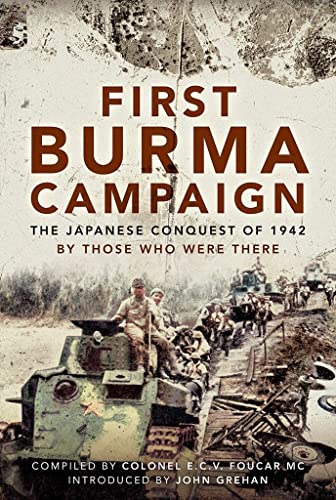
Paperback. Condition: New. Shortly after the British and Indian forces had withdrawn from Burma in the face of the Japanese onslaught in 1942, Colonel E.C.V. Foucar MC was instructed to undertake a 'special duty', namely seek out documentary material and information from the various officers involved in the First Burma Campaign.… The final element of Foucar's task was to write an account of the fighting, based on these many eyewitness accounts, for the Director of Military Training.This fascinating narrative sets out the challenging geographical, climatic and political conditions the British were faced with in Burma as war became an increasing possibility throughout 1940 and 1941, before turning its attention to the dramatic events when the Japanese launched their ground assault on the country in January 1942.There followed the 'Disaster' at Sittang Bridge, the fateful evacuation of Rangoon, and the march to the River Irrawaddy in an attempt to try and secure the north of Burma and its oilfields. But the loss of Rangoon meant the army was cut off from its supply base and the troops faced starving to death. With the Japanese closing in on the beleaguered British force, the decision was taken to abandon Burma and try to reach India. 'The odds were we might escape either the Japanese, the failure of our supplies, or the monsoon, but our chances of avoiding all three were slender,' declared General Alexander. His commander, General Wavell, wrote that, 'operations were now a race with the weather as with the Japanese and as much a fight against nature as against the enemy'.Along nothing more than rough country tracks up rugged hills and across rickety bridges constructed only of brushwood or bamboo the ragged, disease-ridden troops battled to reach India just as the monsoons broke. This, one of the most dramatic tales of the Second World War, was first described in detail by Colonel Foucar just after the events described and is now available for all to read.

- Softcover
Seller: Book Booth, Berea, OH, U.S.A.Book Booth
Contact seller5-star sellerCondition: Used - Good
£ 15.21
£ 4.36 shippingShips within U.S.A.Quantity: 1 available
Paperback. Condition: Good. Covers have minor wear and creasing. Corners lightly bumped. Binding tight. No writing. xviii + 366 pages including 5 appendixes. After the British and Indian forces withdrew from Burma, Colonel E. C. V. Foucar compiles a report based on eyewitness accounts of the First Burma Campaign during World War… II. Black and white illustrations. Size: 6.25 x 9.25.
- Softcover
Seller: PBShop.store UK, Fairford, GLOS, United KingdomPBShop.store UK
Contact seller5-star sellerCondition: New
£ 15.90
£ 4.16 shippingShips from United Kingdom to U.S.A.Quantity: 2 available
PAP. Condition: New. New Book. Shipped from UK. Established seller since 2000.
- Softcover
Seller: INDOO, Avenel, NJ, U.S.A.INDOO
Contact seller5-star sellerCondition: New
£ 20.18
Free ShippingShips within U.S.A.Quantity: Over 20 available
Condition: New. Brand New.

- Softcover
Seller: Rarewaves USA, OSWEGO, IL, U.S.A.Rarewaves USA
Contact seller5-star sellerCondition: New
£ 20.19
Free ShippingShips within U.S.A.Quantity: 1 available
Paperback. Condition: New. Shortly after the British and Indian forces had withdrawn from Burma in the face of the Japanese onslaught in 1942, Colonel E.C.V. Foucar MC was instructed to undertake a 'special duty', namely seek out documentary material and information from the various officers involved in the First Burma Campaign.… The final element of Foucar's task was to write an account of the fighting, based on these many eyewitness accounts, for the Director of Military Training.This fascinating narrative sets out the challenging geographical, climatic and political conditions the British were faced with in Burma as war became an increasing possibility throughout 1940 and 1941, before turning its attention to the dramatic events when the Japanese launched their ground assault on the country in January 1942.There followed the 'Disaster' at Sittang Bridge, the fateful evacuation of Rangoon, and the march to the River Irrawaddy in an attempt to try and secure the north of Burma and its oilfields. But the loss of Rangoon meant the army was cut off from its supply base and the troops faced starving to death. With the Japanese closing in on the beleaguered British force, the decision was taken to abandon Burma and try to reach India. 'The odds were we might escape either the Japanese, the failure of our supplies, or the monsoon, but our chances of avoiding all three were slender,' declared General Alexander. His commander, General Wavell, wrote that, 'operations were now a race with the weather as with the Japanese and as much a fight against nature as against the enemy'.Along nothing more than rough country tracks up rugged hills and across rickety bridges constructed only of brushwood or bamboo the ragged, disease-ridden troops battled to reach India just as the monsoons broke. This, one of the most dramatic tales of the Second World War, was first described in detail by Colonel Foucar just after the events described and is now available for all to read.
- Softcover
Seller: Grand Eagle Retail, Bensenville, IL, U.S.A.Grand Eagle Retail
Contact seller5-star sellerCondition: New
£ 21.29
Free ShippingShips within U.S.A.Quantity: 1 available
Paperback. Condition: new. Paperback. Shortly after the British and Indian forces had withdrawn from Burma in the face of the Japanese onslaught in 1942, Colonel E.C.V. Foucar MC was instructed to undertake a 'special duty', namely seek out documentary material and information from the various officers involved in the First Burm…a Campaign. The final element of Foucar's task was to write an account of the fighting, based on these many eyewitness accounts, for the Director of Military Training. This fascinating narrative sets out the challenging geographical, climatic and political conditions the British were faced with in Burma as war became an increasing possibility throughout 1940 and 1941, before turning its attention to the dramatic events when the Japanese launched their ground assault on the country in January 1942. There followed the 'Disaster' at Sittang Bridge, the fateful evacuation of Rangoon, and the march to the River Irrawaddy in an attempt to try and secure the north of Burma and its oilfields. But the loss of Rangoon meant the army was cut off from its supply base and the troops faced starving to death. With the Japanese closing in on the beleaguered British force, the decision was taken to abandon Burma and try to reach India. 'The odds were we might escape either the Japanese, the failure of our supplies, or the monsoon, but our chances of avoiding all three were slender,' declared General Alexander. His commander, General Wavell, wrote that, 'operations were now a race with the weather as with the Japanese and as much a fight against nature as against the enemy'. Along nothing more than rough country tracks up rugged hills and across rickety bridges constructed only of brushwood or bamboo the ragged, disease-ridden troops battled to reach India just as the monsoons broke. This, one of the most dramatic tales of the Second World War, was first described in detail by Colonel Foucar just after the events described and is now available for all to read. AUTHOR: Born in 1894, during the First World War Emile Charles Victor Foucar was serving in the London Regiment as a Second Lieutenant when he was awarded the Military Cross, this being announced in The London Gazette on 26 September 1917. After the war, Foucar returned to Burma where he as a lawyer based in Rangoon; he was the fourth generation of his family living in the country. Rejoining the Army in the Second World War, by 1942 had risen to the rank of Colonel. In October that year, he was appointed to a General Staff post for the purpose of assembling the records and writing a narrative of the First Burma Campaign. Shortly after the British and Indian forces had withdrawn from Burma in the face of the Japanese onslaught in 1942, Colonel E.C.V. Foucar MC was instructed to undertake a 'special duty', namely seek out documentary material and information from the various officers involved in the First Burma Campaign. Shipping may be from multiple locations in the US or from the UK, depending on stock availability.
- Softcover
Seller: WorldofBooks, Goring-By-Sea, WS, United KingdomWorldofBooks
Contact seller5-star sellerCondition: Used - Very good
£ 17.18
£ 5.60 shippingShips from United Kingdom to U.S.A.Quantity: 1 available
Paperback. Condition: Very Good. The book has been read, but is in excellent condition. Pages are intact and not marred by notes or highlighting. The spine remains undamaged.
- Softcover
Seller: Book Bunker USA, Havertown, PA, U.S.A.Book Bunker USA
Contact seller5-star sellerCondition: New
£ 20.63
£ 2.95 shippingShips within U.S.A.Quantity: Over 20 available
paperback. Condition: New. *Brand new* Ships from USA.
- Softcover
Seller: Revaluation Books, Exeter, United KingdomRevaluation Books
Contact seller5-star sellerCondition: New
£ 16.48
£ 10.00 shippingShips from United Kingdom to U.S.A.Quantity: 2 available
Paperback. Condition: Brand New. 288 pages. 0.36x0.24x9.21 inches. In Stock.
- Softcover
Seller: Ria Christie Collections, Uxbridge, United KingdomRia Christie Collections
Contact seller5-star sellerCondition: New
£ 16.69
£ 11.98 shippingShips from United Kingdom to U.S.A.Quantity: 2 available
Condition: New. In.
- Softcover
Seller: Chiron Media, Wallingford, United KingdomChiron Media
Contact seller5-star sellerCondition: New
£ 13.00
£ 15.49 shippingShips from United Kingdom to U.S.A.Quantity: 2 available
Paperback. Condition: New.
- Hardcover
Seller: World of Books (was SecondSale), Montgomery, IL, U.S.A.World of Books (was SecondSale)
Contact seller5-star sellerCondition: Used - Very good
£ 32.30
Free ShippingShips within U.S.A.Quantity: 1 available
Condition: Very Good. Item in very good condition! Textbooks may not include supplemental items i.e. CDs, access codes etc.

- Hardcover
Seller: Grand Eagle Retail, Bensenville, IL, U.S.A.Grand Eagle Retail
Contact seller5-star sellerCondition: New
£ 32.31
Free ShippingShips within U.S.A.Quantity: 1 available
Hardcover. Condition: new. Hardcover. Shortly after the British and Indian forces had withdrawn from Burma in the face of the Japanese onslaught in 1942, Colonel E.C.V. Foucar MC was instructed to undertake a "special duty", namely seek out documentary material and information from the various officers involved in the First Burm…a Campaign. The final element of Foucar's task was to write an account of the fighting, based on these many eyewitness accounts, for the Director of Military Training. This fascinating narrative sets out the challenging geographical, climatic and political conditions the British were faced with in Burma as war became an increasing possibility throughout 1940 and 1941, before turning its attention to the dramatic events when the Japanese launched their ground assault on the country in January 1942. There followed the "Disaster" at Sittang Bridge, the fateful evacuation of Rangoon, and the march to the River Irrawaddy in an attempt to try and secure the north of Burma and its oilfields. But the loss of Rangoon meant the army was cut off from its supply base and the troops faced starving to death. With the Japanese closing in on the beleaguered British force, the decision was taken to abandon Burma and try to reach India. "The odds were we might escape either the Japanese, the failure of our supplies, or the monsoon, but our chances of avoiding all three were slender," declared General Alexander. His commander, General Wavell, wrote that, "operations were now a race with the weather as with the Japanese and as much a fight against nature as against the enemy". Along nothing more than rough country tracks up rugged hills and across rickety bridges constructed only of brushwood or bamboo the ragged, disease-ridden troops battled to reach India just as the monsoons broke. This, one of the most dramatic tales of the Second World War, was first described in detail by Colonel Foucar just after the events described and is now available for all to read. AUTHOR: Born in 1894, during the First World War Emile Charles Victor Foucar was serving in the London Regiment as a Second Lieutenant when he was awarded the Military Cross, this being announced in The London Gazette on 26 September 1917. After the war, Foucar returned to Burma where he as a lawyer based in Rangoon; he was the fourth generation of his family living in the country. Rejoining the Army in the Second World War, by 1942 had risen to the rank of Colonel. In October that year, he was appointed to a General Staff post for the purpose of assembling the records and writing a narrative of the First Burma Campaign. 16 b/w illustrations Extensive coverage of the arrangements for the defence of Burma and the characteristics of the country. Describes the Japanese invasion, from Malaya and Thailand, in 1942. Shipping may be from multiple locations in the US or from the UK, depending on stock availability.
- Softcover
Seller: THE SAINT BOOKSTORE, Southport, United KingdomTHE SAINT BOOKSTORE
Contact seller5-star sellerCondition: New
£ 17.33
£ 16.01 shippingShips from United Kingdom to U.S.A.Quantity: 2 available
Paperback / softback. Condition: New. New copy - Usually dispatched within 3 working days.
- Softcover
Seller: Kennys Bookshop and Art Galleries Ltd., Galway, GY, IrelandKennys Bookshop and Art Galleries Ltd.
Contact seller5-star sellerCondition: New
£ 29.43
£ 8.89 shippingShips from Ireland to U.S.A.Quantity: 2 available
Condition: New. 2024. paperback. . . . . .
- Softcover
Seller: Kennys Bookstore, Olney, MD, U.S.A.Kennys Bookstore
Contact seller5-star sellerCondition: New
£ 35.41
£ 7.76 shippingShips within U.S.A.Quantity: 2 available
Condition: New. 2024. paperback. . . . . . Books ship from the US and Ireland.
- Softcover
Seller: AussieBookSeller, Truganina, VIC, AustraliaAussieBookSeller
Contact seller5-star sellerCondition: New
£ 24.64
£ 27.33 shippingShips from Australia to U.S.A.Quantity: 1 available
Paperback. Condition: new. Paperback. Shortly after the British and Indian forces had withdrawn from Burma in the face of the Japanese onslaught in 1942, Colonel E.C.V. Foucar MC was instructed to undertake a 'special duty', namely seek out documentary material and information from the various officers involved in the First Burm…a Campaign. The final element of Foucar's task was to write an account of the fighting, based on these many eyewitness accounts, for the Director of Military Training. This fascinating narrative sets out the challenging geographical, climatic and political conditions the British were faced with in Burma as war became an increasing possibility throughout 1940 and 1941, before turning its attention to the dramatic events when the Japanese launched their ground assault on the country in January 1942. There followed the 'Disaster' at Sittang Bridge, the fateful evacuation of Rangoon, and the march to the River Irrawaddy in an attempt to try and secure the north of Burma and its oilfields. But the loss of Rangoon meant the army was cut off from its supply base and the troops faced starving to death. With the Japanese closing in on the beleaguered British force, the decision was taken to abandon Burma and try to reach India. 'The odds were we might escape either the Japanese, the failure of our supplies, or the monsoon, but our chances of avoiding all three were slender,' declared General Alexander. His commander, General Wavell, wrote that, 'operations were now a race with the weather as with the Japanese and as much a fight against nature as against the enemy'. Along nothing more than rough country tracks up rugged hills and across rickety bridges constructed only of brushwood or bamboo the ragged, disease-ridden troops battled to reach India just as the monsoons broke. This, one of the most dramatic tales of the Second World War, was first described in detail by Colonel Foucar just after the events described and is now available for all to read. AUTHOR: Born in 1894, during the First World War Emile Charles Victor Foucar was serving in the London Regiment as a Second Lieutenant when he was awarded the Military Cross, this being announced in The London Gazette on 26 September 1917. After the war, Foucar returned to Burma where he as a lawyer based in Rangoon; he was the fourth generation of his family living in the country. Rejoining the Army in the Second World War, by 1942 had risen to the rank of Colonel. In October that year, he was appointed to a General Staff post for the purpose of assembling the records and writing a narrative of the First Burma Campaign. Shortly after the British and Indian forces had withdrawn from Burma in the face of the Japanese onslaught in 1942, Colonel E.C.V. Foucar MC was instructed to undertake a 'special duty', namely seek out documentary material and information from the various officers involved in the First Burma Campaign. Shipping may be from our Sydney, NSW warehouse or from our UK or US warehouse, depending on stock availability.
- Softcover
Seller: CitiRetail, Stevenage, United KingdomCitiRetail
Contact seller5-star sellerCondition: New
£ 15.99
£ 37.00 shippingShips from United Kingdom to U.S.A.Quantity: 1 available
Paperback. Condition: new. Paperback. Shortly after the British and Indian forces had withdrawn from Burma in the face of the Japanese onslaught in 1942, Colonel E.C.V. Foucar MC was instructed to undertake a 'special duty', namely seek out documentary material and information from the various officers involved in the First Burm…a Campaign. The final element of Foucar's task was to write an account of the fighting, based on these many eyewitness accounts, for the Director of Military Training. This fascinating narrative sets out the challenging geographical, climatic and political conditions the British were faced with in Burma as war became an increasing possibility throughout 1940 and 1941, before turning its attention to the dramatic events when the Japanese launched their ground assault on the country in January 1942. There followed the 'Disaster' at Sittang Bridge, the fateful evacuation of Rangoon, and the march to the River Irrawaddy in an attempt to try and secure the north of Burma and its oilfields. But the loss of Rangoon meant the army was cut off from its supply base and the troops faced starving to death. With the Japanese closing in on the beleaguered British force, the decision was taken to abandon Burma and try to reach India. 'The odds were we might escape either the Japanese, the failure of our supplies, or the monsoon, but our chances of avoiding all three were slender,' declared General Alexander. His commander, General Wavell, wrote that, 'operations were now a race with the weather as with the Japanese and as much a fight against nature as against the enemy'. Along nothing more than rough country tracks up rugged hills and across rickety bridges constructed only of brushwood or bamboo the ragged, disease-ridden troops battled to reach India just as the monsoons broke. This, one of the most dramatic tales of the Second World War, was first described in detail by Colonel Foucar just after the events described and is now available for all to read. AUTHOR: Born in 1894, during the First World War Emile Charles Victor Foucar was serving in the London Regiment as a Second Lieutenant when he was awarded the Military Cross, this being announced in The London Gazette on 26 September 1917. After the war, Foucar returned to Burma where he as a lawyer based in Rangoon; he was the fourth generation of his family living in the country. Rejoining the Army in the Second World War, by 1942 had risen to the rank of Colonel. In October that year, he was appointed to a General Staff post for the purpose of assembling the records and writing a narrative of the First Burma Campaign. Shortly after the British and Indian forces had withdrawn from Burma in the face of the Japanese onslaught in 1942, Colonel E.C.V. Foucar MC was instructed to undertake a 'special duty', namely seek out documentary material and information from the various officers involved in the First Burma Campaign. Shipping may be from our UK warehouse or from our Australian or US warehouses, depending on stock availability.

- Softcover
Seller: Rarewaves USA United, OSWEGO, IL, U.S.A.Rarewaves USA United
Contact seller5-star sellerCondition: New
£ 21.18
£ 36.93 shippingShips within U.S.A.Quantity: 1 available
Paperback. Condition: New. Shortly after the British and Indian forces had withdrawn from Burma in the face of the Japanese onslaught in 1942, Colonel E.C.V. Foucar MC was instructed to undertake a 'special duty', namely seek out documentary material and information from the various officers involved in the First Burma Campaign.… The final element of Foucar's task was to write an account of the fighting, based on these many eyewitness accounts, for the Director of Military Training.This fascinating narrative sets out the challenging geographical, climatic and political conditions the British were faced with in Burma as war became an increasing possibility throughout 1940 and 1941, before turning its attention to the dramatic events when the Japanese launched their ground assault on the country in January 1942.There followed the 'Disaster' at Sittang Bridge, the fateful evacuation of Rangoon, and the march to the River Irrawaddy in an attempt to try and secure the north of Burma and its oilfields. But the loss of Rangoon meant the army was cut off from its supply base and the troops faced starving to death. With the Japanese closing in on the beleaguered British force, the decision was taken to abandon Burma and try to reach India. 'The odds were we might escape either the Japanese, the failure of our supplies, or the monsoon, but our chances of avoiding all three were slender,' declared General Alexander. His commander, General Wavell, wrote that, 'operations were now a race with the weather as with the Japanese and as much a fight against nature as against the enemy'.Along nothing more than rough country tracks up rugged hills and across rickety bridges constructed only of brushwood or bamboo the ragged, disease-ridden troops battled to reach India just as the monsoons broke. This, one of the most dramatic tales of the Second World War, was first described in detail by Colonel Foucar just after the events described and is now available for all to read.

- Softcover
Seller: AHA-BUCH GmbH, Einbeck, GermanyAHA-BUCH GmbH
Contact seller5-star sellerCondition: New
£ 19.70
£ 52.95 shippingShips from Germany to U.S.A.Quantity: 2 available
Taschenbuch. Condition: Neu. Neuware - Shortly after the British and Indian forces had withdrawn from Burma in the face of the Japanese onslaught in 1942, Colonel E.C.V. Foucar MC was instructed to undertake a 'special duty', namely seek out documentary material and information from the various officers involved in the First Bur…ma Campaign. The final element of Foucar's task was to write an account of the fighting, based on these many eyewitness accounts, for the Director of Military Training.This fascinating narrative sets out the challenging geographical, climatic and political conditions the British were faced with in Burma as war became an increasing possibility throughout 1940 and 1941, before turning its attention to the dramatic events when the Japanese launched their ground assault on the country in January 1942.There followed the 'Disaster' at Sittang Bridge, the fateful evacuation of Rangoon, and the march to the River Irrawaddy in an attempt to try and secure the north of Burma and its oilfields. But the loss of Rangoon meant the army was cut off from its supply base and the troops faced starving to death. With the Japanese closing in on the beleaguered British force, the decision was taken to abandon Burma and try to reach India. 'The odds were we might escape either the Japanese, the failure of our supplies, or the monsoon, but our chances of avoiding all three were slender, ' declared General Alexander. His commander, General Wavell, wrote that, 'operations were now a race with the weather as with the Japanese and as much a fight against nature as against the enemy'.Along nothing more than rough country tracks up rugged hills and across rickety bridges constructed only of brushwood or bamboo the ragged, disease-ridden troops battled to reach India just as the monsoons broke. This, one of the most dramatic tales of the Second World War, was first described in detail by Colonel Foucar just after the events described and is now available for all to read.

- Hardcover
Seller: CitiRetail, Stevenage, United KingdomCitiRetail
Contact seller5-star sellerCondition: New
£ 40.99
£ 37.00 shippingShips from United Kingdom to U.S.A.Quantity: 1 available
Hardcover. Condition: new. Hardcover. Shortly after the British and Indian forces had withdrawn from Burma in the face of the Japanese onslaught in 1942, Colonel E.C.V. Foucar MC was instructed to undertake a "special duty", namely seek out documentary material and information from the various officers involved in the First Burm…a Campaign. The final element of Foucar's task was to write an account of the fighting, based on these many eyewitness accounts, for the Director of Military Training. This fascinating narrative sets out the challenging geographical, climatic and political conditions the British were faced with in Burma as war became an increasing possibility throughout 1940 and 1941, before turning its attention to the dramatic events when the Japanese launched their ground assault on the country in January 1942. There followed the "Disaster" at Sittang Bridge, the fateful evacuation of Rangoon, and the march to the River Irrawaddy in an attempt to try and secure the north of Burma and its oilfields. But the loss of Rangoon meant the army was cut off from its supply base and the troops faced starving to death. With the Japanese closing in on the beleaguered British force, the decision was taken to abandon Burma and try to reach India. "The odds were we might escape either the Japanese, the failure of our supplies, or the monsoon, but our chances of avoiding all three were slender," declared General Alexander. His commander, General Wavell, wrote that, "operations were now a race with the weather as with the Japanese and as much a fight against nature as against the enemy". Along nothing more than rough country tracks up rugged hills and across rickety bridges constructed only of brushwood or bamboo the ragged, disease-ridden troops battled to reach India just as the monsoons broke. This, one of the most dramatic tales of the Second World War, was first described in detail by Colonel Foucar just after the events described and is now available for all to read. AUTHOR: Born in 1894, during the First World War Emile Charles Victor Foucar was serving in the London Regiment as a Second Lieutenant when he was awarded the Military Cross, this being announced in The London Gazette on 26 September 1917. After the war, Foucar returned to Burma where he as a lawyer based in Rangoon; he was the fourth generation of his family living in the country. Rejoining the Army in the Second World War, by 1942 had risen to the rank of Colonel. In October that year, he was appointed to a General Staff post for the purpose of assembling the records and writing a narrative of the First Burma Campaign. 16 b/w illustrations Extensive coverage of the arrangements for the defence of Burma and the characteristics of the country. Describes the Japanese invasion, from Malaya and Thailand, in 1942. Shipping may be from our UK warehouse or from our Australian or US warehouses, depending on stock availability.

- Softcover
Seller: Rarewaves.com UK, London, United KingdomRarewaves.com UK
Contact seller5-star sellerCondition: New
£ 16.78
£ 65.00 shippingShips from United Kingdom to U.S.A.Quantity: 1 available
Paperback. Condition: New. Shortly after the British and Indian forces had withdrawn from Burma in the face of the Japanese onslaught in 1942, Colonel E.C.V. Foucar MC was instructed to undertake a 'special duty', namely seek out documentary material and information from the various officers involved in the First Burma Campaign.… The final element of Foucar's task was to write an account of the fighting, based on these many eyewitness accounts, for the Director of Military Training.This fascinating narrative sets out the challenging geographical, climatic and political conditions the British were faced with in Burma as war became an increasing possibility throughout 1940 and 1941, before turning its attention to the dramatic events when the Japanese launched their ground assault on the country in January 1942.There followed the 'Disaster' at Sittang Bridge, the fateful evacuation of Rangoon, and the march to the River Irrawaddy in an attempt to try and secure the north of Burma and its oilfields. But the loss of Rangoon meant the army was cut off from its supply base and the troops faced starving to death. With the Japanese closing in on the beleaguered British force, the decision was taken to abandon Burma and try to reach India. 'The odds were we might escape either the Japanese, the failure of our supplies, or the monsoon, but our chances of avoiding all three were slender,' declared General Alexander. His commander, General Wavell, wrote that, 'operations were now a race with the weather as with the Japanese and as much a fight against nature as against the enemy'.Along nothing more than rough country tracks up rugged hills and across rickety bridges constructed only of brushwood or bamboo the ragged, disease-ridden troops battled to reach India just as the monsoons broke. This, one of the most dramatic tales of the Second World War, was first described in detail by Colonel Foucar just after the events described and is now available for all to read.

- Hardcover
Seller: AussieBookSeller, Truganina, VIC, AustraliaAussieBookSeller
Contact seller5-star sellerCondition: New
£ 61.32
£ 27.33 shippingShips from Australia to U.S.A.Quantity: 1 available
Hardcover. Condition: new. Hardcover. Shortly after the British and Indian forces had withdrawn from Burma in the face of the Japanese onslaught in 1942, Colonel E.C.V. Foucar MC was instructed to undertake a "special duty", namely seek out documentary material and information from the various officers involved in the First Burm…a Campaign. The final element of Foucar's task was to write an account of the fighting, based on these many eyewitness accounts, for the Director of Military Training. This fascinating narrative sets out the challenging geographical, climatic and political conditions the British were faced with in Burma as war became an increasing possibility throughout 1940 and 1941, before turning its attention to the dramatic events when the Japanese launched their ground assault on the country in January 1942. There followed the "Disaster" at Sittang Bridge, the fateful evacuation of Rangoon, and the march to the River Irrawaddy in an attempt to try and secure the north of Burma and its oilfields. But the loss of Rangoon meant the army was cut off from its supply base and the troops faced starving to death. With the Japanese closing in on the beleaguered British force, the decision was taken to abandon Burma and try to reach India. "The odds were we might escape either the Japanese, the failure of our supplies, or the monsoon, but our chances of avoiding all three were slender," declared General Alexander. His commander, General Wavell, wrote that, "operations were now a race with the weather as with the Japanese and as much a fight against nature as against the enemy". Along nothing more than rough country tracks up rugged hills and across rickety bridges constructed only of brushwood or bamboo the ragged, disease-ridden troops battled to reach India just as the monsoons broke. This, one of the most dramatic tales of the Second World War, was first described in detail by Colonel Foucar just after the events described and is now available for all to read. AUTHOR: Born in 1894, during the First World War Emile Charles Victor Foucar was serving in the London Regiment as a Second Lieutenant when he was awarded the Military Cross, this being announced in The London Gazette on 26 September 1917. After the war, Foucar returned to Burma where he as a lawyer based in Rangoon; he was the fourth generation of his family living in the country. Rejoining the Army in the Second World War, by 1942 had risen to the rank of Colonel. In October that year, he was appointed to a General Staff post for the purpose of assembling the records and writing a narrative of the First Burma Campaign. 16 b/w illustrations Extensive coverage of the arrangements for the defence of Burma and the characteristics of the country. Describes the Japanese invasion, from Malaya and Thailand, in 1942. Shipping may be from our Sydney, NSW warehouse or from our UK or US warehouse, depending on stock availability.


