

Order Total (1 Item Items):
Shipping Destination:

Data Intensive Workflow Management by Oliveira Daniel (15 results)
Skip to main search results
Search filters
Product Type
- All Product Types
- Books (15)
- Magazines & Periodicals (No further results match this refinement)
- Comics (No further results match this refinement)
- Sheet Music (No further results match this refinement)
- Art, Prints & Posters (No further results match this refinement)
- Photographs (No further results match this refinement)
- Maps (No further results match this refinement)
- Manuscripts & Paper Collectibles (No further results match this refinement)
Condition Learn more
- New (13)
- As New, Fine or Near Fine (2)
- Very Good or Good (No further results match this refinement)
- Fair or Poor (No further results match this refinement)
- As Described (No further results match this refinement)
Binding
- All Bindings
- Hardcover (No further results match this refinement)
- Softcover (15)
Collectible Attributes
- First Edition (No further results match this refinement)
- Signed (No further results match this refinement)
- Dust Jacket (No further results match this refinement)
- Seller-Supplied Images (10)
- Not Print on Demand (12)
Language (1)
Free Shipping
- Free Shipping to U.S.A. (No further results match this refinement)
Seller Location
Seller Rating
-
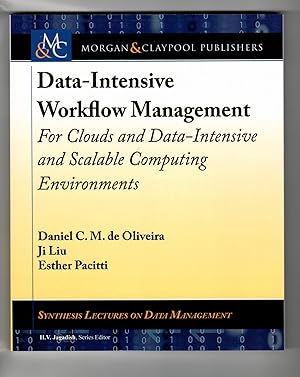
Data-Intensive Workflow Management: For Clouds and Data-Intensive and Scalable Computing Environments (Synthesis Lectures on Data Management)
Language: English
Published by Morgan & Claypool Publishers, 2019
ISBN 10: 1681735571 ISBN 13: 9781681735573
Soft cover. Condition: New. 8vo (23.5 cm), XVII, 161 pp. Laminated wrappers. Synopsis: Workflows may be defined as abstractions used to model the coherent flow of activities in the context of an in silico scientific experiment. They are employed in many domains of science such as bioinformatics, astronomy, and engineering. Such workflows usually present a considerable number of activities and activations (i.e., tasks associated with activities) and may need a long time for execution. Due to the continuous need to store and process data efficiently (making them data-intensive workflows), high-performance computing environments allied to parallelization techniques are used to run these workflows. At the beginning of the 2010s, cloud technologies emerged as a promising environment to run scientific workflows. By using clouds, scientists have expanded beyond single parallel computers to hundreds or even thousands of virtual machines. More recently, Data-Intensive Scalable Computing (DISC) frameworks (e.g., Apache Spark and Hadoop) and environments emerged and are being used to execute data-intensive workflows. DISC environments are composed of processors and disks in large-commodity computing clusters connected using high-speed communications switches and networks. The main advantage of DISC frameworks is that they support and grant efficient in-memory data management for large-scale applications, such as data-intensive workflows. However, the execution of workflows in cloud and DISC environments raise many challenges such as scheduling workflow activities and activations, managing produced data, collecting provenance data, etc. Several existing approaches deal with the challenges mentioned earlier. This way, there is a real need for understanding how to manage these workflows and various big data platforms that have been developed and introduced. As such, this book can help researchers understand how linking workflow management with Data-Intensive Scalable Computing can help in understanding and analyzing scientific big data. In this book, we aim to identify and distill the body of work on workflow management in clouds and DISC environments. We start by discussing the basic principles of data-intensive scientific workflows. Next, we present two workflows that are executed in a single site and multi-site clouds taking advantage of provenance. Afterward, we go towards workflow management in DISC environments, and we present, in detail, solutions that enable the optimized execution of the workflow using frameworks such as Apache Spark and its extensions.
-

Condition: New.
-

Condition: As New. Unread book in perfect condition.
-

Data-Intensive Workflow Management (Synthesis Lectures on Data Management)
Seller: Ria Christie Collections, Uxbridge, United Kingdom
Seller rating 5 out of 5 stars

£ 59.30
£ 11.98 shipping
Ships from United Kingdom to U.S.A.Quantity: Over 20 available
Add to basketCondition: New. In English.
-
PF. Condition: New.
-

Data-intensive Workflow Management
Seller: GreatBookPricesUK, Woodford Green, United Kingdom
Seller rating 5 out of 5 stars
Condition: New.
-
Data-intensive Workflow Management
Seller: Kennys Bookshop and Art Galleries Ltd., Galway, GY, Ireland
Seller rating 5 out of 5 stars
Condition: New.
-

Data-intensive Workflow Management
Seller: GreatBookPricesUK, Woodford Green, United Kingdom
Seller rating 5 out of 5 stars
Condition: As New. Unread book in perfect condition.
-
Condition: New.
-

Data-Intensive Workflow Management
Language: English
Published by Springer International Publishing, 2019
ISBN 10: 3031007441 ISBN 13: 9783031007446
Taschenbuch. Condition: Neu. Druck auf Anfrage Neuware - Printed after ordering - Workflows may be defined as abstractions used to model the coherent flow of activities in the context of an in silico scientific experiment. They are employed in many domains of science such as bioinformatics, astronomy, and engineering. Such workflows usually present a considerable number of activities and activations (i.e., tasks associated with activities) and may need a long time for execution. Due to the continuous need to store and process data efficiently (making them data-intensive workflows), high-performance computing environments allied to parallelization techniques are used to run these workflows. At the beginning of the 2010s, cloud technologies emerged as a promising environment to run scientific workflows. By using clouds, scientists have expanded beyond single parallel computers to hundreds or even thousands of virtual machines.More recently, Data-Intensive Scalable Computing (DISC) frameworks (e.g., Apache Spark and Hadoop) and environments emerged and are being used to execute data-intensive workflows. DISC environments are composed of processors and disks in large-commodity computing clusters connected using high-speed communications switches and networks. The main advantage of DISC frameworks is that they support and grant efficient in-memory data management for large-scale applications, such as data-intensive workflows. However, the execution of workflows in cloud and DISC environments raise many challenges such as scheduling workflow activities and activations, managing produced data, collecting provenance data, etc.Several existing approaches deal with the challenges mentioned earlier. This way, there is a real need for understanding how to manage these workflows and various big data platforms that have been developed and introduced. As such, this book can help researchers understand how linking workflow management with Data-Intensive Scalable Computing can help in understanding and analyzing scientific big data.In this book, we aim to identify and distill the body of work on workflow management in clouds and DISC environments. We start by discussing the basic principles of data-intensive scientific workflows. Next, we present two workflows that are executed in a single site and multi-site clouds taking advantage of provenance. Afterward, we go towards workflow management in DISC environments, and we present, in detail, solutions that enable the optimized execution of the workflow using frameworks such as Apache Spark and its extensions.
-

Data-Intensive Workflow Management
Language: English
Published by Springer International Publishing, Springer International Publishing Mai 2019, 2019
ISBN 10: 3031007441 ISBN 13: 9783031007446
Seller: buchversandmimpf2000, Emtmannsberg, BAYE, Germany
Seller rating 5 out of 5 stars
Taschenbuch. Condition: Neu. Neuware -Workflows may be defined as abstractions used to model the coherent flow of activities in the context of an in silico scientific experiment. They are employed in many domains of science such as bioinformatics, astronomy, and engineering. Such workflows usually present a considerable number of activities and activations (i.e., tasks associated with activities) and may need a long time for execution. Due to the continuous need to store and process data efficiently (making them data-intensive workflows), high-performance computing environments allied to parallelization techniques are used to run these workflows. At the beginning of the 2010s, cloud technologies emerged as a promising environment to run scientific workflows. By using clouds, scientists have expanded beyond single parallel computers to hundreds or even thousands of virtual machines.More recently, Data-Intensive Scalable Computing (DISC) frameworks (e.g., Apache Spark and Hadoop) and environments emerged and are being used to execute data-intensive workflows. DISC environments are composed of processors and disks in large-commodity computing clusters connected using high-speed communications switches and networks. The main advantage of DISC frameworks is that they support and grant efficient in-memory data management for large-scale applications, such as data-intensive workflows. However, the execution of workflows in cloud and DISC environments raise many challenges such as scheduling workflow activities and activations, managing produced data, collecting provenance data, etc.Several existing approaches deal with the challenges mentioned earlier. This way, there is a real need for understanding how to manage these workflows and various big data platforms that have been developed and introduced. As such, this book can help researchers understand how linking workflow management with Data-Intensive Scalable Computing can help in understanding and analyzing scientific big data.In this book, we aim to identify and distill the body of work on workflow management in clouds and DISC environments. We start by discussing the basic principles of data-intensive scientific workflows. Next, we present two workflows that are executed in a single site and multi-site clouds taking advantage of provenance. Afterward, we go towards workflow management in DISC environments, and we present, in detail, solutions that enable the optimized execution of the workflow using frameworks such as Apache Spark and its extensions.Springer Verlag GmbH, Tiergartenstr. 17, 69121 Heidelberg 180 pp. Englisch.
-
Data-Intensive Workflow Management
Language: English
Published by Springer International Publishing, 2019
ISBN 10: 3031007441 ISBN 13: 9783031007446
Taschenbuch. Condition: Neu. Data-Intensive Workflow Management | Daniel C. M. de Oliveira (u. a.) | Taschenbuch | xvii | Englisch | 2019 | Springer International Publishing | EAN 9783031007446 | Verantwortliche Person für die EU: Springer Verlag GmbH, Tiergartenstr. 17, 69121 Heidelberg, juergen[dot]hartmann[at]springer[dot]com | Anbieter: preigu.
-
Condition: new. Questo è un articolo print on demand.
-

Data-Intensive Workflow Management
Language: English
Published by Springer International Publishing Mai 2019, 2019
ISBN 10: 3031007441 ISBN 13: 9783031007446
Seller: BuchWeltWeit Ludwig Meier e.K., Bergisch Gladbach, Germany
Seller rating 5 out of 5 stars
Taschenbuch. Condition: Neu. This item is printed on demand - it takes 3-4 days longer - Neuware -Workflows may be defined as abstractions used to model the coherent flow of activities in the context of an in silico scientific experiment. They are employed in many domains of science such as bioinformatics, astronomy, and engineering. Such workflows usually present a considerable number of activities and activations (i.e., tasks associated with activities) and may need a long time for execution. Due to the continuous need to store and process data efficiently (making them data-intensive workflows), high-performance computing environments allied to parallelization techniques are used to run these workflows. At the beginning of the 2010s, cloud technologies emerged as a promising environment to run scientific workflows. By using clouds, scientists have expanded beyond single parallel computers to hundreds or even thousands of virtual machines.More recently, Data-Intensive Scalable Computing (DISC) frameworks (e.g., Apache Spark and Hadoop) and environments emerged and are being used to execute data-intensive workflows. DISC environments are composed of processors and disks in large-commodity computing clusters connected using high-speed communications switches and networks. The main advantage of DISC frameworks is that they support and grant efficient in-memory data management for large-scale applications, such as data-intensive workflows. However, the execution of workflows in cloud and DISC environments raise many challenges such as scheduling workflow activities and activations, managing produced data, collecting provenance data, etc.Several existing approaches deal with the challenges mentioned earlier. This way, there is a real need for understanding how to manage these workflows and various big data platforms that have been developed and introduced. As such, this book can help researchers understand how linking workflow management with Data-Intensive Scalable Computing can help in understanding and analyzing scientific big data.In this book, we aim to identify and distill the body of work on workflow management in clouds and DISC environments. We start by discussing the basic principles of data-intensive scientific workflows. Next, we present two workflows that are executed in a single site and multi-site clouds taking advantage of provenance. Afterward, we go towards workflow management in DISC environments, and we present, in detail, solutions that enable the optimized execution of the workflow using frameworks such as Apache Spark and its extensions. 180 pp. Englisch.
-

Data-Intensive Workflow Management
Language: English
Published by Springer, Berlin|Springer International Publishing|Morgan & Claypool|Springer, 2019
ISBN 10: 3031007441 ISBN 13: 9783031007446
Condition: New. Dieser Artikel ist ein Print on Demand Artikel und wird nach Ihrer Bestellung fuer Sie gedruckt. Workflows may be defined as abstractions used to model the coherent flow of activities in the context of an in silico scientific experiment. They are employed in many domains of science such as bioinformatics, astronomy, and engineering. Such workflows u.


