

Order Total (1 Item Items):
Shipping Destination:

Yogeshwar Singh (17 results)
Skip to main search results
Search filters
Product Type
- All Product Types
- Books (17)
- Magazines & Periodicals (No further results match this refinement)
- Comics (No further results match this refinement)
- Sheet Music (No further results match this refinement)
- Art, Prints & Posters (No further results match this refinement)
- Photographs (No further results match this refinement)
- Maps (No further results match this refinement)
- Manuscripts & Paper Collectibles (No further results match this refinement)
Condition Learn more
- New (17)
- As New, Fine or Near Fine (No further results match this refinement)
- Very Good or Good (No further results match this refinement)
- Fair or Poor (No further results match this refinement)
- As Described (No further results match this refinement)
Binding
Collectible Attributes
- First Edition (1)
- Signed (No further results match this refinement)
- Dust Jacket (1)
- Seller-Supplied Images (9)
- Not Print on Demand (8)
Language (2)
Free Shipping
Seller Location
Seller Rating
-

Climate Resilient Agriculture for Sustainable Production
Language: English
Published by Today & Tomorrows Printers and Publishers, 2023
ISBN 10: 9391734634 ISBN 13: 9789391734633
Hardcover. Condition: New. ISBN:9789391734633.
-

Modus Operandi: Life as We Don\ t Know It
Language: English
Published by INDEPENDENTLY PUBLISHED, 2018
ISBN 10: 1521501734 ISBN 13: 9781521501733
Condition: New.
-

Singh, T: MODUS OPERANDI
Language: English
Published by Amazon Digital Services LLC - KDP Print US, 2018
ISBN 10: 1521501734 ISBN 13: 9781521501733
Taschenbuch. Condition: Neu. Neuware.
-
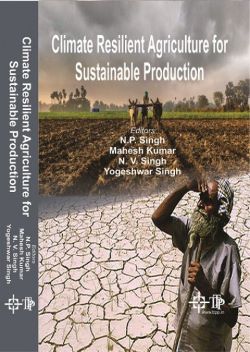
Climate Resilient Agriculture for Sustainable Production
Published by Today & Tomorrow's Printers and Publishers, 2023
ISBN 10: 9391734634 ISBN 13: 9789391734633
Hardcover. Condition: New. The vagaries of climate change and the associated production limiting abiotic stresses is a hard truth which the humanity has to face in near future. Drought, salinity, flood, nutrient imbalances and extremes temperature are among the major environmental constraints to crop productivity worldwide. The increasing climatic variability and associated stresses are likely to aggravate the problem of future food security and may lead to highly fragile agri-production systems. The climate resilient agriculture system is the need of the hour to have sustainable production and reduced green house gas emission with less environmental footprints of farming. This book deals with the highly pertinent and much discussed topic of climate change and related recommendations on eco-friendly adaptation and mitigation measures. This is an extensive compilation of latest scientific information having 19 very well drafted chapters written in a lucid manner by subject matter experts covering all facets of climate change and associated abiotic stresses. The chapters particularly deals with the impact of climate change on agri-production system, climate smart agriculture, Indian monsoon, eco-friendly and efficient resource utilization including water, conservation agriculture and agro-techniques for abiotic stress mitigation and adaptation strategies to have sustainable production. The book is also having additional information on mass spectrometry, chromatography and mushrooms for agro- business. The book is having easy to understand diagrams and pictorial depictions, which enhance the quality of publication. It is a complete package of information having immense utility to the scientific community, teachers, researchers, extension personnel and other stakeholders involved in climate resilient agri-production system.
-

Condition: New.
-

Buch. Condition: Neu. Druck auf Anfrage Neuware - Printed after ordering - Modern technology for sustainable agriculture is based primarily on three platforms, namely science, innovation and spatial technologies. These are considered as the three pioneer pillars of nation building. Spatial technologies play a vital role in improving soil quality, reducing the waste of water during irrigation and sharing agricultural information with farmers. With the help of terrestrial, aquatic, and aerial sensors, satellites and surveillance equipment, a large volume of geo-spatial data from diverse sources is collected, analyzed, and utilized for smart farming and shielding of crops. During last five decades, agricultural research and extension has focused on the development of higher productivity of crop varieties, increased fertilizer use and other production technologies. These have enabled the farmers to grow more food, but at the same time it over exploited the resources and resulted in decreasing farm productivity and profitability. To tackle such problems, harmonious use of inputs through integration of various land- based enterprises and their compounded responses needs further attention to make the agriculture more productive, profitable and sustainable. Many technologies have been identified to support sustainable use of resources and facilities, including Natural Resource Management (NRM), Resource Conservation Technologies (RCTs), Integrated Farming System (IFS), Integrated Crop Management (ICM), Integrated Nutrient Management (INM), protected cultivation practices, secondary agricultural practices and post-harvest technologies.
-

Modern Technology for Climate Change Agriculture : Climate Resilience and Climate Smart Agriculture
Language: English
Published by Springer, Berlin, Springer Nature Switzerland, 2026
ISBN 10: 3032210526 ISBN 13: 9783032210524
Buch. Condition: Neu. Druck auf Anfrage Neuware - Printed after ordering - As climate change increasingly disrupts agricultural systems worldwide, innovative technologies are emerging as vital tools for enhancing resilience, sustainability, and productivity. 'Modern Technology for Climate Change Agriculture Climate Resilience and Climate Smart Agriculture' builds on the foundation of the first volume, offering a comprehensive exploration of advanced solutions tailored to address the multifaceted challenges posed by climate variability. This volume is structured into four thematic sections, covering cutting-edge approaches such as precision agriculture, digital tools, and genetic innovations, alongside policy and financial strategies that promote climate-smart practices. Chapters delve into topics including Internet of Things (IoT) applications, gene editing for resilient crops, renewable energy integration, and soil fertility management in semi-arid regions. Other contributions explore aquaculture in changing environments, microbial technologies, vertical farming, and advanced irrigation systems, emphasizing their role in mitigating climate impacts while enhancing resource efficiency. By combining technical insights with practical case studies and addressing barriers to adoption, this book serves as a crucial resource for researchers, policymakers, and practitioners. The collaborative perspectives presented underscore the importance of interdisciplinary efforts in transforming agriculture into a sustainable, climate-resilient sector capable of meeting global food security demands amidst a rapidly changing environment.The primary aim of proposed book of earth observation in climate change agriculture is to advance the scientific understanding and application of technologies addressing a variety of areas related to food security within context of sustainable practices, crop modeling, irrigation practices, micro-irrigation, agricultural statistics, agricultural economics, climate change scenario, spatial modeling, farmers income and agricultural policy. This book would be beneficial for academician, scientists, environmentalists, meteorologists, environmental consultants, computing experts working in the areas of agricultural sciences.
-

Modus Operandi: Life as We Don't Know It
Language: English
Published by Independently Published, 2018
ISBN 10: 1521501734 ISBN 13: 9781521501733
Seller: THE SAINT BOOKSTORE, Southport, United Kingdom
Seller rating 5 out of 5 stars

£ 10.07
£ 13.24 shipping
Ships from United Kingdom to U.S.A.Quantity: Over 20 available
Add to basketPaperback / softback. Condition: New. This item is printed on demand. New copy - Usually dispatched within 5-9 working days.
-

Challenges and Prospective of Plant Abiotic Stress (2 Vols-Set)
Published by Today and Tomorrow, 2015
First Edition
Hardcover. Condition: New. Dust Jacket Condition: New. 1st Edition. Contents: Vol. I: 1. Plant tolerance to abiotic stress: a physiological approach/Kiran Bhagat, Ratnakumar P., Yogeshwar Singh, P. Suresh Kumar, Pranita Jondhale, Ashish Jondhale, Teekam Singh, Ajay V. Narwade, Poonam Kashyap, P.B. Taware, Pallavi P. Deokate and Anjali Kumari. 2. Abiotic stress signal perception: receptors and its role/Pruthvi and Rahul S. Lathe. 3. Role of transcription factors in abiotic stress management/Mukesh Kumar Kiran Bhagat, Preeti Goyal, Reena Devi and L.K. Chugh. 4. Proteomic approaches for the analysis of salt tolerance in plant/P.S. Sha Valli Khan, G.V. Nagamallaiah, K. Sergeant and J.F. Hausman. 5. Signaling and uptake Mechanisms of nitrogen and potassium under nutrient stress in plants/Lekshmy S and Vanita Jain. 6. Heat stress response in plants: insight into physiological and molecular mechanisms/Amolkumar U. Solanke, Raghavendrarao S. Kanika and D. Pattanayak. 7. Bio-engineering of osmolytes production in plants: a novel approach to counter abiotic stress/C. Appunu, T. Manjunatha, A. Anna Durai, K. Mohanraj, G. Suresha and R. Arun Kumar. 8. Genetic engineering of stay green traits for development of drought tolerant crops/Ajay Arora. 9. Role of microbes in mitigating effect of abiotic stress in agriculture/Kanika Amit K. Singh, Amolkumar U. Solanke and Tripti Dogra. 10. Abiotic stress in rice: Mechanism of adaptation/Teekam Singh, K.B. Pun, Kiran Bhagat, B. Lal, B.S. Satapathy, M.J. Sadawarti, J.L. Katara, S. Lenka and Priyanka Gautam. Vol. II: Drought adaptive traits in rice: need for comprehensive approach/Raju, B.R. Mathithumilan, B. Pratibha,M.D. Sheshshayee, M.S. Mohanraju, B. Haritha Bollinedi, Shashank, P.R. and Upendra Kumar. 12. Abiotic stresses and vegetable production in tropical islands/Shrawan Singh. 13. Genetic engineering of groundnut (Arachis Hypogaea L.) for abiotic stress tolerance: challenges and prospects/Jayanna Naik Banavath, Varakumar Pandit, Sravani Konduru, Krishna Kumar Guduru, Sudhakar Podha, Chandra Sekhar Akila and Chandra Obul Reddy Puli. 14. Abiotic stress response in sugarcane/Ajay V. Narwade, Kiran Bhagat, D.V. Patil, Anjali Kumari, Ban Yogesh G. Thakare Harish S. and Chandrakant Singh. 15. Cocoa (Theobroma cacao I.) towards climate resilient horticulture/S. Elain Apshara and D. Balasimha. 16. Abiotic stresses management and mitigation in fruit crops/Poonam Kashyap and Sudhir Kumar. 17. Physiological and breeding approaches for abiotic stress in cotton/Ajay V. Narwade, Kiran Bhagat, D.V. Patil, Anjali Kumari, Thakare Harish S, Chandrakant Singh and Ban Yogesh G. 18. Soil and water conservation measure in resource scarce dryland areas: a way to mitigate abiotic stresses in climate change scenario/P. Suresh Kumar, V.K. Choudhary, Yogeshwar Singh, D.D. Nangare, P. Ratnakumar, A. Sangeeta, Kiran Bhagat and P.B. Taware. Abiotic stress is the foremost factor adversely affecting crop growth and productivity globally. It cause changes in soil-plant-atmosphere continuum and is responsible for reduction in yield potential in many crops. Abiotic stresses provoke complex cellular responses that have been elucidated by progresses made in exploring and understanding plant abiotic responses at the whole-plant, physiological, biochemical, cellular and molecular levels. Plants respond to these environmental challenges through a number of homeostatic mechanisms that maintain the water balance and the integrity of tissues. Salinity levied short-term osmotic and long-term ionic stresses induces cellular adjustment associated with a perceptive reform of cell structure and metabolism. Owing to the significance of diverse receptor proteins in signal transduction, modulation of abiotic stress responsive receptors would be a one of new method for crop improvement. Though, there are many books available in the market on abiotic stress in plants, we tried our best to boost up the knowledge on abiotic stress in plants by embracing all vital aspects associated to abiotic stress with the.
-
Condition: Brand New. New. US edition. Print on demand title. Delivery takes 20-25 days.
-
Condition: new. Questo è un articolo print on demand.
-

Modern Technology for Sustainable Agriculture
Language: English
Published by Springer, Berlin, Springer Nature Switzerland, Springer, 2025
ISBN 10: 3031883950 ISBN 13: 9783031883958
Seller: BuchWeltWeit Ludwig Meier e.K., Bergisch Gladbach, Germany
Seller rating 5 out of 5 stars
Buch. Condition: Neu. This item is printed on demand - it takes 3-4 days longer - Neuware -Modern technology for sustainable agriculture is based primarily on three platforms, namely science, innovation and spatial technologies. These are considered as the three pioneer pillars of nation building. Spatial technologies play a vital role in improving soil quality, reducing the waste of water during irrigation and sharing agricultural information with farmers. With the help of terrestrial, aquatic, and aerial sensors, satellites and surveillance equipment, a large volume of geo-spatial data from diverse sources is collected, analyzed, and utilized for smart farming and shielding of crops. During last five decades, agricultural research and extension has focused on the development of higher productivity of crop varieties, increased fertilizer use and other production technologies. These have enabled the farmers to grow more food, but at the same time it over exploited the resources and resulted in decreasing farm productivity and profitability. To tackle such problems, harmonious use of inputs through integration of various land- based enterprises and their compounded responses needs further attention to make the agriculture more productive, profitable and sustainable. Many technologies have been identified to support sustainable use of resources and facilities, including Natural Resource Management (NRM), Resource Conservation Technologies (RCTs), Integrated Farming System (IFS), Integrated Crop Management (ICM), Integrated Nutrient Management (INM), protected cultivation practices, secondary agricultural practices and post-harvest technologies. 315 pp. Englisch.
-

Modern Technology for Climate Change Agriculture
Language: English
Published by Springer, Berlin, Springer Nature Switzerland Mai 2026, 2026
ISBN 10: 3032210526 ISBN 13: 9783032210524
Seller: BuchWeltWeit Ludwig Meier e.K., Bergisch Gladbach, Germany
Seller rating 5 out of 5 stars
Buch. Condition: Neu. This item is printed on demand - it takes 3-4 days longer - Neuware -As climate change increasingly disrupts agricultural systems worldwide, innovative technologies are emerging as vital tools for enhancing resilience, sustainability, and productivity. 'Modern Technology for Climate Change Agriculture Climate Resilience and Climate Smart Agriculture' builds on the foundation of the first volume, offering a comprehensive exploration of advanced solutions tailored to address the multifaceted challenges posed by climate variability. This volume is structured into four thematic sections, covering cutting-edge approaches such as precision agriculture, digital tools, and genetic innovations, alongside policy and financial strategies that promote climate-smart practices. Chapters delve into topics including Internet of Things (IoT) applications, gene editing for resilient crops, renewable energy integration, and soil fertility management in semi-arid regions. Other contributions explore aquaculture in changing environments, microbial technologies, vertical farming, and advanced irrigation systems, emphasizing their role in mitigating climate impacts while enhancing resource efficiency. By combining technical insights with practical case studies and addressing barriers to adoption, this book serves as a crucial resource for researchers, policymakers, and practitioners. The collaborative perspectives presented underscore the importance of interdisciplinary efforts in transforming agriculture into a sustainable, climate-resilient sector capable of meeting global food security demands amidst a rapidly changing environment.The primary aim of proposed book of earth observation in climate change agriculture is to advance the scientific understanding and application of technologies addressing a variety of areas related to food security within context of sustainable practices, crop modeling, irrigation practices, micro-irrigation, agricultural statistics, agricultural economics, climate change scenario, spatial modeling, farmers income and agricultural policy. This book would be beneficial for academician, scientists, environmentalists, meteorologists, environmental consultants, computing experts working in the areas of agricultural sciences. 397 pp. Englisch.
-

Buch. Condition: Neu. Modern Technology for Sustainable Agriculture | Arvind Kumar (u. a.) | Buch | xvii | Englisch | 2025 | Springer | EAN 9783031883958 | Verantwortliche Person für die EU: Springer Verlag GmbH, Tiergartenstr. 17, 69121 Heidelberg, juergen[dot]hartmann[at]springer[dot]com | Anbieter: preigu Print on Demand.
-

Modern Technology for Sustainable Agriculture
Language: English
Published by Springer, Springer Aug 2025, 2025
ISBN 10: 3031883950 ISBN 13: 9783031883958
Seller: buchversandmimpf2000, Emtmannsberg, BAYE, Germany
Seller rating 5 out of 5 stars
Buch. Condition: Neu. This item is printed on demand - Print on Demand Titel. Neuware -Modern technology for sustainable agriculture is based primarily on three platforms, namely science, innovation and spatial technologies. These are considered as the three pioneer pillars of nation building. Spatial technologies play a vital role in improving soil quality, reducing the waste of water during irrigation and sharing agricultural information with farmers. With the help of terrestrial, aquatic, and aerial sensors, satellites and surveillance equipment, a large volume of geo-spatial data from diverse sources is collected, analyzed, and utilized for smart farming and shielding of crops. During last five decades, agricultural research and extension has focused on the development of higher productivity of crop varieties, increased fertilizer use and other production technologies. These have enabled the farmers to grow more food, but at the same time it over exploited the resources and resulted in decreasing farm productivity and profitability. To tackle such problems, harmonious use of inputs through integration of various land- based enterprises and their compounded responses needs further attention to make the agriculture more productive, profitable and sustainable. Many technologies have been identified to support sustainable use of resources and facilities, including Natural Resource Management (NRM), Resource Conservation Technologies (RCTs), Integrated Farming System (IFS), Integrated Crop Management (ICM), Integrated Nutrient Management (INM), protected cultivation practices, secondary agricultural practices and post-harvest technologies.Springer-Verlag KG, Sachsenplatz 4-6, 1201 Wien 336 pp. Englisch.
-
Condition: New. Print on Demand.
-
Condition: New. PRINT ON DEMAND.


