

Order Total (1 Item Items):
Shipping Destination:

Mikulas Fabry (40 results)
Skip to main search results
Search filters
Product Type
- All Product Types
- Books (40)
- Magazines & Periodicals (No further results match this refinement)
- Comics (No further results match this refinement)
- Sheet Music (No further results match this refinement)
- Art, Prints & Posters (No further results match this refinement)
- Photographs (No further results match this refinement)
- Maps (No further results match this refinement)
- Manuscripts & Paper Collectibles (No further results match this refinement)
Condition Learn more
- New (33)
- As New, Fine or Near Fine (4)
- Very Good or Good (3)
- Fair or Poor (No further results match this refinement)
- As Described (No further results match this refinement)
Binding
Collectible Attributes
- First Edition (No further results match this refinement)
- Signed (No further results match this refinement)
- Dust Jacket (No further results match this refinement)
- Seller-Supplied Images (18)
- Not Print on Demand (30)
Language (1)
Free Shipping
Seller Location
Seller Rating
-
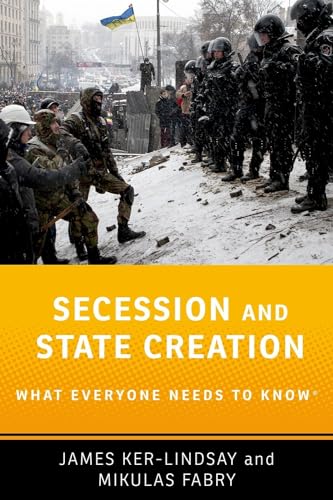
Secession and State Creation: What Everyone Needs to Know®
Language: English
Published by Oxford University Press, 2022
ISBN 10: 0190494042 ISBN 13: 9780190494049
Seller: Books From California, Simi Valley, CA, U.S.A.
Seller rating 4 out of 5 stars

paperback. Condition: Very Good.
-

Secession and State Creation
Language: English
Published by Oxford University Press, 2022
ISBN 10: 0190494042 ISBN 13: 9780190494049
Condition: New.
-
Secession and State Creation What Everyone Needs to Know (R) (What Everyone Needs To Know (R))
Language: English
Published by Oxford University Press, 2022
ISBN 10: 0190494042 ISBN 13: 9780190494049
Condition: New. Brand New! Not Overstocks or Low Quality Book Club Editions! Direct From the Publisher! We're not a giant, faceless warehouse organization! We're a small town bookstore that loves books and loves it's customers! Buy from Lakeside Books!
-

Secession and State Creation
Language: English
Published by Oxford University Press, 2022
ISBN 10: 0190494042 ISBN 13: 9780190494049
Condition: As New. Unread book in perfect condition.
-

Secession and State Creation
Language: English
Published by Oxford University Press Inc, US, 2023
ISBN 10: 0190494042 ISBN 13: 9780190494049
Seller: Rarewaves.com USA, London, LONDO, United Kingdom
Seller rating 5 out of 5 stars

Paperback. Condition: New. What makes a state? This question has attracted more and more attention in recent years with Catalan's illegal vote for independence from Spain and Palestine's ongoing search for international recognition. And while Scotland chose to remain with the United Kingdom, discussions of independence have only continued as the ramifications of the later Brexit vote begin to set in. As James Ker-Lindsay and Mikulas Fabry show in this new addition to the What Everyone Needs to Know® series, the road to statehood does not run smooth. Declaring independence is only the first step; gaining both local and global acceptance is necessary before a state can become truly independent. The prospect of losing territory is usually not welcomed by the parent state, and any such threat to an existing culture and its economy is often met with resistance--armed or otherwise. Beyond this immediate conflict, the international community often refuses to accept new states without proof of defined territory, a settled population, and effective government, which frequently translates to a democratic one with demonstrated respect for human rights. Covering the legal, political, and practical issues of secession and state creation, Ker-Lindsay and Fabry provide an essential guide to this timely topic.
-
Secession and State Creation: What Everyone Needs to Know®
Language: English
Published by Oxford University Press, 2022
ISBN 10: 0190494042 ISBN 13: 9780190494049
Condition: New.
-

Secession and State Creation (Paperback)
Language: English
Published by Oxford University Press Inc, New York, 2023
ISBN 10: 0190494042 ISBN 13: 9780190494049
Paperback. Condition: new. Paperback. What makes a state? This question has attracted more and more attention in recent years with Catalan's illegal vote for independence from Spain and Palestine's ongoing search for international recognition. And while Scotland chose to remain with the United Kingdom, discussions of independence have only continued as the ramifications of the Brexit vote begin to set in. Kosovo, South Sudan, and the situation in Ukraine--each in its way reveals the perils of creating anation separate from neighbors who have dominated it. As James Ker-Lindsay and Mikulas Fabry show in this new addition to the What Everyone Needs to Know series, the road tostatehood never did run smooth. Declaring independence is only the first step; gaining both local and global acceptance is necessary before a state can become truly independent. The prospect of losing territory is usually not welcomed by the parent state, and any such threat to an existing culture and its economy is often met with resistance--armed or otherwise. Beyond this immediate conflict, the international community often refuses to accept new states without proof of defined territory, asettled population, and effective government, which frequently translates to a democratic one with demonstrated respect for human rights. Covering the legal, political, and practical issues of secessionand state creation, Ker-Lindsay and Fabry provide a sure-footed guide to a complex topic. This short guide to the timely topic of state creation and secession illuminates the legal, poltical, and practical matters of secession and state creation on a global scale. Shipping may be from multiple locations in the US or from the UK, depending on stock availability.
-
Paperback. Condition: Brand New. 184 pages. 8.00x5.50x0.50 inches. In Stock.
-
Secession and State Creation: What Everyone Needs to Know?
Language: English
Published by Oxford University Press, 2022
ISBN 10: 0190494042 ISBN 13: 9780190494049
Condition: New. pp. 176.
-
Secession and State Creation: What Everyone Needs to Know®
Language: English
Published by Oxford University Press, 2022
ISBN 10: 0190494042 ISBN 13: 9780190494049
Seller: Ria Christie Collections, Uxbridge, United Kingdom
Seller rating 5 out of 5 stars
Condition: New. In.
-
Secession and State Creation: What Everyone Needs to Know?
Language: English
Published by Oxford University Press, 2022
ISBN 10: 0190494042 ISBN 13: 9780190494049
Condition: New. pp. 176.
-
Paperback. Condition: New.
-
Paperback. Condition: Brand New. 184 pages. 8.00x5.50x0.50 inches. In Stock.
-

Secession and State Creation
Language: English
Published by Oxford University Press, 2022
ISBN 10: 0190494042 ISBN 13: 9780190494049
Seller: GreatBookPricesUK, Woodford Green, United Kingdom
Seller rating 5 out of 5 stars
Condition: New.
-
Secession and State Creation: What Everyone Needs to Know?
Language: English
Published by Oxford University Press, 2022
ISBN 10: 0190494042 ISBN 13: 9780190494049
Condition: New. pp. 176.
-

Secession and State Creation
Language: English
Published by Oxford University Press, 2022
ISBN 10: 0190494042 ISBN 13: 9780190494049
Seller: GreatBookPricesUK, Woodford Green, United Kingdom
Seller rating 5 out of 5 stars
Condition: As New. Unread book in perfect condition.
-

Secession and State Creation: What Everyone Needs to Know(r)
Language: English
Published by Oxford University Press|OUP USA, 2023
ISBN 10: 0190494042 ISBN 13: 9780190494049
Condition: New. This short guide to the timely topic of state creation and secession illuminates the legal, poltical, and practical matters of secession and state creation on a global scale.What makes a state? This question has attracted more and more attention in .
-

Recognizing States: International Society and the Establishment of
Language: English
Published by Oxford University Press, 2010
ISBN 10: 0199564442 ISBN 13: 9780199564446
Seller: Optimon Books, Gravesend, KENT, United Kingdom
Seller rating 4 out of 5 stars
Hardcover. Condition: Good. The book is in good condition.
-
Hardcover. Condition: Good. No Jacket. Missing dust jacket; Pages can have notes/highlighting. Spine may show signs of wear. ~ ThriftBooks: Read More, Spend Less.
-

Secession and State Creation
Language: English
Published by Oxford University Press Inc, US, 2023
ISBN 10: 0190494042 ISBN 13: 9780190494049
Paperback. Condition: New. What makes a state? This question has attracted more and more attention in recent years with Catalan's illegal vote for independence from Spain and Palestine's ongoing search for international recognition. And while Scotland chose to remain with the United Kingdom, discussions of independence have only continued as the ramifications of the later Brexit vote begin to set in. As James Ker-Lindsay and Mikulas Fabry show in this new addition to the What Everyone Needs to Know® series, the road to statehood does not run smooth. Declaring independence is only the first step; gaining both local and global acceptance is necessary before a state can become truly independent. The prospect of losing territory is usually not welcomed by the parent state, and any such threat to an existing culture and its economy is often met with resistance--armed or otherwise. Beyond this immediate conflict, the international community often refuses to accept new states without proof of defined territory, a settled population, and effective government, which frequently translates to a democratic one with demonstrated respect for human rights. Covering the legal, political, and practical issues of secession and state creation, Ker-Lindsay and Fabry provide an essential guide to this timely topic.
-

Recognizing States : International Society and the Establishment of New States Since 1776
Language: English
Published by Oxford University Press, 2010
ISBN 10: 0199564442 ISBN 13: 9780199564446
Condition: New.
-
Recognizing States: International Society and the Establishment of New States Since 1776
Language: English
Published by Oxford University Press, 2010
ISBN 10: 0199564442 ISBN 13: 9780199564446
Seller: Ria Christie Collections, Uxbridge, United Kingdom
Seller rating 5 out of 5 stars
£ 93.51
£ 11.98 shipping
Ships from United Kingdom to U.S.A.Quantity: Over 20 available
Add to basketCondition: New. In.
-

Recognizing States : International Society and the Establishment of New States Since 1776
Language: English
Published by Oxford University Press, 2010
ISBN 10: 0199564442 ISBN 13: 9780199564446
Condition: As New. Unread book in perfect condition.
-

Recognizing States : International Society and the Establishment of New States Since 1776
Language: English
Published by Oxford University Press, 2010
ISBN 10: 0199564442 ISBN 13: 9780199564446
Seller: GreatBookPricesUK, Woodford Green, United Kingdom
Seller rating 5 out of 5 stars
Condition: New.
-

Recognizing States
Language: English
Published by Oxford University Press, GB, 2010
ISBN 10: 0199564442 ISBN 13: 9780199564446
Seller: Rarewaves.com USA, London, LONDO, United Kingdom
Seller rating 5 out of 5 stars
£ 124.70
Free Shipping
Ships from United Kingdom to U.S.A.Quantity: Over 20 available
Add to basketHardback. Condition: New. This book examines recognition of new states, the practice historically employed to regulate membership in international society. The last twenty years have witnessed new or lingering demands for statehood in different areas of the world. The claims of some, like those of Bosnia and Herzegovina, Eritrea, Croatia, Georgia and East Timor, have achieved general recognition; those of others, like Kosovo, Tamil Eelam, South Ossetia, Abkhazia and Somaliland, have not. However, even as most of these claims gave rise to major conflicts and international controversies, the criteria for acknowledgment of new states have elicited little systematic scholarship. Drawing upon writings of English School theorists, this study charts the practice from the late eighteenth century until the present. Its central argument is that for the past two hundred years state recognition has been tied to the idea of self-determination of peoples. Two versions of the idea have underpinned the practice throughout most of this period - self-determination as a negative and a positive right. The negative idea, dominant from 1815 to 1950, took state recognition to be acknowledgment of an achievement of de facto statehood by a people desiring independence. Self-determination was expressed through, and externally gauged by, self-attainment. The positive idea, prevalent since the 1950s, took state recognition to be acknowledgment of an entitlement to independence in international law. The development of self-determination as a positive international right, however, has not led to a disappearance of claims of statehood that stand outside of its confines. Groups that are deeply dissatisfied with the countries in which they presently find themselves continue to make demands for independence even though they may have no positive entitlement to it. The book concludes by expressing doubt that contemporary international society can find a sustainable basis for recognizing new states other than the original standard of de facto statehood.
-

Recognizing States : International Society and the Establishment of New States Since 1776
Language: English
Published by Oxford University Press, 2010
ISBN 10: 0199564442 ISBN 13: 9780199564446
Seller: GreatBookPricesUK, Woodford Green, United Kingdom
Seller rating 5 out of 5 stars
£ 106.60
£ 15 shipping
Ships from United Kingdom to U.S.A.Quantity: Over 20 available
Add to basketCondition: As New. Unread book in perfect condition.
-
Recognizing States: International Society and the Establishment of New States Since 1776
Language: English
Published by Oxford University Press, 2010
ISBN 10: 0199564442 ISBN 13: 9780199564446
Condition: New.
-

Recognizing States (Hardcover)
Language: English
Published by Oxford University Press, Oxford, 2010
ISBN 10: 0199564442 ISBN 13: 9780199564446
Hardcover. Condition: new. Hardcover. This book examines recognition of new states, the practice historically employed to regulate membership in international society. The last twenty years have witnessed new or lingering demands for statehood in different areas of the world. The claims of some, like those of Bosnia and Herzegovina, Eritrea, Croatia, Georgia and East Timor, have achieved general recognition; those of others, like Kosovo, Tamil Eelam, South Ossetia, Abkhazia and Somaliland, have not.However, even as most of these claims gave rise to major conflicts and international controversies, the criteria for acknowledgment of new states have elicited little systematic scholarship. Drawingupon writings of English School theorists, this study charts the practice from the late eighteenth century until the present. Its central argument is that for the past two hundred years state recognition has been tied to the idea of self-determination of peoples. Two versions of the idea have underpinned the practice throughout most of this period - self-determination as a negative and a positive right. The negative idea, dominant from 1815 to 1950, took state recognition to beacknowledgment of an achievement of de facto statehood by a people desiring independence. Self-determination was expressed through, and externally gauged by, self-attainment. The positive idea, prevalent sincethe 1950s, took state recognition to be acknowledgment of an entitlement to independence in international law. The development of self-determination as a positive international right, however, has not led to a disappearance of claims of statehood that stand outside of its confines. Groups that are deeply dissatisfied with the countries in which they presently find themselves continue to make demands for independence even though they may have no positive entitlement to it. The book concludesby expressing doubt that contemporary international society can find a sustainable basis for recognizing new states other than the original standard of de facto statehood. This book charts the historical practice of recognizing states since the late 18th century and examines a central question raised by the new, lingering demands for statehood in different parts of the world: Who qualifies for international recognition as a sovereign, independent state? Shipping may be from multiple locations in the US or from the UK, depending on stock availability.
-
Recognizing States
Language: English
Published by Oxford University Press OUP, 2010
ISBN 10: 0199564442 ISBN 13: 9780199564446
Condition: New. pp. 270.
-

Recognizing States
Language: English
Published by Oxford University Press, GB, 2010
ISBN 10: 0199564442 ISBN 13: 9780199564446
£ 114.08
£ 65 shipping
Ships from United Kingdom to U.S.A.Quantity: Over 20 available
Add to basketHardback. Condition: New. This book examines recognition of new states, the practice historically employed to regulate membership in international society. The last twenty years have witnessed new or lingering demands for statehood in different areas of the world. The claims of some, like those of Bosnia and Herzegovina, Eritrea, Croatia, Georgia and East Timor, have achieved general recognition; those of others, like Kosovo, Tamil Eelam, South Ossetia, Abkhazia and Somaliland, have not. However, even as most of these claims gave rise to major conflicts and international controversies, the criteria for acknowledgment of new states have elicited little systematic scholarship. Drawing upon writings of English School theorists, this study charts the practice from the late eighteenth century until the present. Its central argument is that for the past two hundred years state recognition has been tied to the idea of self-determination of peoples. Two versions of the idea have underpinned the practice throughout most of this period - self-determination as a negative and a positive right. The negative idea, dominant from 1815 to 1950, took state recognition to be acknowledgment of an achievement of de facto statehood by a people desiring independence. Self-determination was expressed through, and externally gauged by, self-attainment. The positive idea, prevalent since the 1950s, took state recognition to be acknowledgment of an entitlement to independence in international law. The development of self-determination as a positive international right, however, has not led to a disappearance of claims of statehood that stand outside of its confines. Groups that are deeply dissatisfied with the countries in which they presently find themselves continue to make demands for independence even though they may have no positive entitlement to it. The book concludes by expressing doubt that contemporary international society can find a sustainable basis for recognizing new states other than the original standard of de facto statehood.

