Order Total (1 Item Items):
Shipping Destination:

Gergely Papp (12 results)
Skip to main search results
Search filters
Product Type
- All Product Types
- Books (12)
- Magazines & Periodicals (No further results match this refinement)
- Comics (No further results match this refinement)
- Sheet Music (No further results match this refinement)
- Art, Prints & Posters (No further results match this refinement)
- Photographs (No further results match this refinement)
- Maps (No further results match this refinement)
- Manuscripts & Paper Collectibles (No further results match this refinement)
Condition Learn more
- New (9)
- As New, Fine or Near Fine (2)
- Very Good or Good (1)
- Fair or Poor (No further results match this refinement)
- As Described (No further results match this refinement)
Binding
- All Bindings
- Hardcover (No further results match this refinement)
- Softcover (12)
Collectible Attributes
- First Edition (No further results match this refinement)
- Signed (No further results match this refinement)
- Dust Jacket (No further results match this refinement)
- Seller-Supplied Images (6)
- Not Print on Demand (12)
Language (2)
Free Shipping
Seller Location
Seller Rating
-

Condition: New.
-

1938 - 1963 Ecsegfalva, Hungary
Seller: Rarewaves.com USA, London, LONDO, United Kingdom
Seller rating 5 out of 5 stars

Paperback. Condition: New. Enigmatic Hungarian photographer Gergely Papp (1922-2000) was born into a peasant family, on a farmstead in Pusztaecseg (now Ecsegfalva) in Eastern Hungary. He would live there for the rest of his life. In 1938, Papp learned the mechanics of photography from his brother and took to depicting life in the village: christenings, harvests, hunting, weddings, funerals and much more. Papp documented provincial life in Hungary before and throughout World War II, the communist regime and failed 1956 revolution. He eventually stopped taking photographs in early 1963. Distressed by the forced nationalization of the family's land, Papp went out, cut down his fruit trees and took a final self-portrait in the remains. The life and work of Gergely Papp was little known until his images were encountered by Hungarian art historian Tibor Miltenyi in the 1990s, shortly before Papp's death. While much of Papp's archive was destroyed by local vandals, the Archive of Modern Conflict has acquired the few surviving photographs; many appear here, published for the first time.
-

Condition: As New. Unread book in perfect condition.
-

PAP. Condition: New. New Book. Shipped from UK. Established seller since 2000.
-
1938 - 1963 Ecsegfalva, Hungary
Seller: PBShop.store UK, Fairford, GLOS, United Kingdom
Seller rating 5 out of 5 stars
PAP. Condition: New. New Book. Shipped from UK. Established seller since 2000.
-
Paperback. Condition: new. Paperback. Enigmatic Hungarian photographer Gergely Papp (19222000) was born into a peasant family, on a farmstead in Pusztaecseg (now Ecsegfalva) in Eastern Hungary. He would live there for the rest of his life. In 1938, Papp learned the mechanics of photography from his brother and took to depicting life in the village: christenings, harvests, hunting, weddings, funerals and much more. Papp documented provincial life in Hungary before and throughout World War II, the communist regime and failed 1956 revolution. He eventually stopped taking photographs in early 1963. Distressed by the forced nationalization of the familys land, Papp went out, cut down his fruit trees and took a final self-portrait in the remains. The life and work of Gergely Papp was little known until his images were encountered by Hungarian art historian Tibor Miltenyi in the 1990s, shortly before Papps death. While much of Papps archive was destroyed by local vandals, the Archive of Modern Conflict has acquired the few surviving photographs; many appear here, published for the first time. Shipping may be from multiple locations in the US or from the UK, depending on stock availability.
-
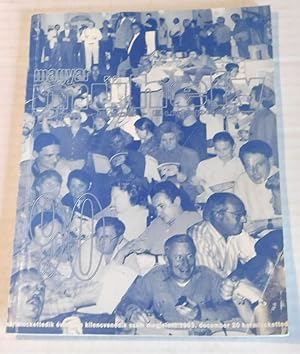
MAGYAR MUHELY: A Magyar Muhely Munkakozossege es a Magyar Muhely Barati Kor irodalmi es kritikai folyolrata: Parizs, Becs, Budapest.
Published by Budapest: 1993., 1993
Seller: Blue Mountain Books & Manuscripts, Ltd., Cadyville, NY, U.S.A.
Seller rating 5 out of 5 stars
Condition: Very good. - Small quarto [9-1/2 inches high by 7 inches wide], softcover bound in pictorial blue & white wraps. The wraps are lightly rubbed & their bottom corners are creased with soiling to the bottom corner of the rear wrap. 64 pages. Black-and-white illustrations. The bottom corners of the pages are creased. Very good. Inscribed to Dick Higgins of Something Else Press by Istvan Kilian at the head of his article on page 43. Kilian, an expert on Hungarian pattern poetry is here writing about the visual poems [called "Roses" because of their form] by an eighteenth century Protestant minister Mihaly Kozma.This issue also includes a short portrait of the Canadian sound poet Paul Dutton. The text is in Hungarian. A summary of the contents is printed in French and English on the inside rear wrap.
-
Paperback. Condition: Brand New. 120 pages. 9.00x6.00x0.25 inches. In Stock.
-
Gergely Papp : 1938?1963 Ecsegfalva, Hungary
Seller: GreatBookPricesUK, Woodford Green, United Kingdom
Seller rating 5 out of 5 stars
Condition: New.
-

Gergely Papp : 1938?1963 Ecsegfalva, Hungary
Seller: GreatBookPricesUK, Woodford Green, United Kingdom
Seller rating 5 out of 5 stars
Condition: As New. Unread book in perfect condition.
-
Paperback. Condition: new. Paperback. Enigmatic Hungarian photographer Gergely Papp (19222000) was born into a peasant family, on a farmstead in Pusztaecseg (now Ecsegfalva) in Eastern Hungary. He would live there for the rest of his life. In 1938, Papp learned the mechanics of photography from his brother and took to depicting life in the village: christenings, harvests, hunting, weddings, funerals and much more. Papp documented provincial life in Hungary before and throughout World War II, the communist regime and failed 1956 revolution. He eventually stopped taking photographs in early 1963. Distressed by the forced nationalization of the familys land, Papp went out, cut down his fruit trees and took a final self-portrait in the remains. The life and work of Gergely Papp was little known until his images were encountered by Hungarian art historian Tibor Miltenyi in the 1990s, shortly before Papps death. While much of Papps archive was destroyed by local vandals, the Archive of Modern Conflict has acquired the few surviving photographs; many appear here, published for the first time. Shipping may be from our Sydney, NSW warehouse or from our UK or US warehouse, depending on stock availability.
-

Paperback. Condition: New. Enigmatic Hungarian photographer Gergely Papp (1922-2000) was born into a peasant family, on a farmstead in Pusztaecseg (now Ecsegfalva) in Eastern Hungary. He would live there for the rest of his life. In 1938, Papp learned the mechanics of photography from his brother and took to depicting life in the village: christenings, harvests, hunting, weddings, funerals and much more. Papp documented provincial life in Hungary before and throughout World War II, the communist regime and failed 1956 revolution. He eventually stopped taking photographs in early 1963. Distressed by the forced nationalization of the family's land, Papp went out, cut down his fruit trees and took a final self-portrait in the remains. The life and work of Gergely Papp was little known until his images were encountered by Hungarian art historian Tibor Miltenyi in the 1990s, shortly before Papp's death. While much of Papp's archive was destroyed by local vandals, the Archive of Modern Conflict has acquired the few surviving photographs; many appear here, published for the first time.