
Geim S (5 results)
 More images
- Softcover
- First Edition
Seller: Rarewaves.com USA, London, LONDO, United KingdomRarewaves.com USA
Contact seller5-star sellerCondition: New
£ 22.61
Free ShippingShips from United Kingdom to U.S.A.Quantity: Over 20 available
Paperback. Condition: New. 1.

Seller: medimops, Berlin, Germanymedimops
Contact seller5-star sellerCondition: Used - Good
£ 10.62
£ 8.52 shippingShips from Germany to U.S.A.Quantity: 1 available
Condition: good. Befriedigend/Good: Durchschnittlich erhaltenes Buch bzw. Schutzumschlag mit Gebrauchsspuren, aber vollständigen Seiten. / Describes the average WORN book or dust jacket that has all the pages present.
 More images
- Softcover
- First Edition
Seller: Rarewaves.com UK, London, United KingdomRarewaves.com UK
Contact seller5-star sellerCondition: New
£ 19.72
£ 65.00 shippingShips from United Kingdom to U.S.A.Quantity: Over 20 available
Paperback. Condition: New. 1.

"Electric Field Effect in Atomically Thin Carbon Films " Discovery of Graphene. (Science 306 No. 5696 pp. 666-669, 22 October 2004)
Novoselov, K. [Konstantin] S.; Geim, A. [Andre] K.; Morozov, S. V.; Jiang, D.; Zhang, Y.; Dubonos, S. V.; Grigorieva, I. V.; Firsov, A. A.
Published by AAAS (American Association for the Advancement of Science), Washington DC, 2004
- Softcover
- First Edition
Seller: Old Professor's Bookshop, Belfast, ME, U.S.A.Old Professor's Bookshop
Contact seller4-star sellerWraps. Condition: Fine. First Edition. Very light scuffing to covers. Previous owner's address label on front cover, typical for a periodical delivered by mail. Clean and crisp within. Housed in a custom folding case with gold embossed titling to spine. "Watershed" paper in the discovery of Graphene, Nobel Physics 2010 for Andre… Geim and Konstantin Novoselov "for groundbreaking experiments regarding the two-dimensional material graphene".
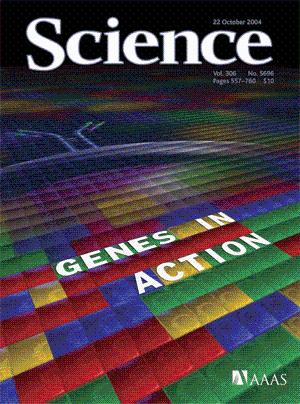
Electric Field Effect in Atomically Thin Carbon Films in Science 306 No. 5696 pp. 666-669, 22 October 2004 [NOBEL PRIZE WINNING DISCOVERY OF GRAPHENE. Original wrappers with no address label.]
Novoselov, K. [Konstantin] S.; Geim, A. [Andre] K.; Morozov, S. V.; Jiang, D.; Zhang, Y.; Dubonos, S. V.; Grigorieva, I. V.; Firsov, A. A.
Published by American Association for the Advancement of Science, Washington DC, 2004
- First Edition
Seller: Atticus Rare Books, West Branch, IA, U.S.A.Atticus Rare Books
Contact seller5-star seller1st Edition. FIRST EDITION IN ORIGINAL PAPER WRAPS OF THE NOBEL PRIZE WINNING DISCOVERY OF GRAPHENE, A FORM OF CARBON JUST ONE ATOM THICK ? THE THINNEST MATERIAL & FIRST TWO-DIMENSIONAL MATERIAL EVER DISCOVERED, AS WELL AS ONE OF THE STRONGEST MATERIALS IN THE UNIVERSE. In this paper, Dutch?Russian physicist Andre Konstantin Gei…m and the Russo?British physicist Konstantin Sergeevich Novoselov first announce their discovery and production of graphene. ?As a conductor of heat it outperforms all other known materials. It is almost completely transparent, yet so dense that not even helium, the smallest gas atom, can pass through it? (Nobel Foundation, Nobel Prize in Physics 2010 for Graphene ? ?Two-dimensional Material). ?Graphite has been a known quantity for a long time (humans have been using it since the Neolithic era). Its atomic structure is well documented, and for a long time, scientists pondered whether single layers of graphite could be isolated. Until recently, however, graphene was merely a theory, as scientists were unsure if it would ever be possible to slice graphite down to a single, atom-thin sheet. The first isolated sample of graphene was discovered in 2004 by Andre Geim and Konstantin Novoselov at the University of Manchester. One might expect that they isolated the fabled substance using some massive, expensive piece of machinery, but the tool they used was amusingly simple: A roll of scotch tape. ?When using tape to polish a large block of graphite, the researchers noticed exceptionally thin flakes on the tape. Continuing to peel layer and layer from the flakes of graphite, they eventually produced a sample as thin as possible. They had found graphene,? a flake of carbon just one atom thick (Nicol, What is graphene? Stronger than steel, thinner than paper, graphene could be the future of tech, Digital Trends, Nov. 1, 2019). ?The discovery was so bizarre, the scientific world was skeptical at first,? thinking it impossible for such thin crystalline materials to be stable (ibid). The popular journal Nature even rejected their paper on the experiment twice. Eventually, their research was published [in the paper offered here] and in 2010 Geim and Novoselov were awarded the Nobel Prize in Physics for their discovery (ibid). It is extremely unusual for a Nobel Prize to be awarded just 6 years after publication, but graphene is extraordinary. Beyond all the implausible yet actual properties already listed, ?physicists can now study a new class of two-dimensional materials with unique properties. Graphene makes experiments possible that give new twists to the phenomena in quantum physics. Also a vast variety of practical applications now appear possible including the creation of new materials and the manufacture of innovative electronics. Graphene transistors are predicted to be substantially faster than today?s silicon transistors and result in more efficient computers? (ibid). CONDITION & DETAILS: Washington DC: AAAS (American Association for the Advancement of Science), 2004. First Edition. 8vo. Original pictorial wrappers with NO ADDRESS LABEL. 8vo. Fine. Pristine condition inside and out.


