

Order Total (1 Item Items):
Shipping Destination:

Collapse Kyoto Protocol Struggle by Victor David (25 results)
Skip to main search results
Search filters
Product Type
- All Product Types
- Books (25)
- Magazines & Periodicals (No further results match this refinement)
- Comics (No further results match this refinement)
- Sheet Music (No further results match this refinement)
- Art, Prints & Posters (No further results match this refinement)
- Photographs (No further results match this refinement)
- Maps (No further results match this refinement)
- Manuscripts & Paper Collectibles (No further results match this refinement)
Condition Learn more
- New (10)
- As New, Fine or Near Fine (3)
- Very Good or Good (12)
- Fair or Poor (No further results match this refinement)
- As Described (No further results match this refinement)
Binding
Collectible Attributes
- First Edition (No further results match this refinement)
- Signed (No further results match this refinement)
- Dust Jacket (No further results match this refinement)
- Seller-Supplied Images (10)
- Not Print on Demand (21)
Language (2)
Free Shipping
Seller Location
Seller Rating
-

The Collapse of the Kyoto Protocol: And the Struggle to Slow Global Warming
Book 1 of 3: Council on Foreign RelationsLanguage: English
Published by Princeton University Press, 2004
ISBN 10: 0691120269 ISBN 13: 9780691120263
Paperback. Condition: Good. No Jacket. Pages can have notes/highlighting. Spine may show signs of wear. ~ ThriftBooks: Read More, Spend Less.
-

The Collapse of the Kyoto Protocol and the Struggle to Slow Global Warming
Book 1 of 3: Council on Foreign RelationsLanguage: English
Published by Princeton University Press, 2001
ISBN 10: 0691088705 ISBN 13: 9780691088709
Condition: Very Good. Pages intact with possible writing/highlighting. Binding strong with minor wear. Dust jackets/supplements may not be included. Stock photo provided. Product includes identifying sticker. Better World Books: Buy Books. Do Good.
-
The Collapse of the Kyoto Protocol and the Struggle to Slow Global Warming (Council on Foreign Relations Book)
Book 1 of 3: Council on Foreign RelationsLanguage: English
Published by Princeton University Press, 2001
ISBN 10: 0691088705 ISBN 13: 9780691088709
Seller: Wonder Book, Frederick, MD, U.S.A.
Seller rating 5 out of 5 stars

Condition: Good. Good condition. No Dust Jacket A copy that has been read but remains intact. May contain markings such as bookplates, stamps, limited notes and highlighting, or a few light stains.
-
The Collapse of the Kyoto Protocol and the Struggle to Slow Global Warming (Council on Foreign Relations Book)
Book 1 of 3: Council on Foreign RelationsLanguage: English
Published by Princeton University Press, 2001
ISBN 10: 0691088705 ISBN 13: 9780691088709
Hardcover. Condition: Very Good. No Jacket. Former library book; May have limited writing in cover pages. Pages are unmarked. ~ ThriftBooks: Read More, Spend Less.
-
The Collapse of the Kyoto Protocol and the Struggle to Slow Global Warming (Council on Foreign Relations Book)
Book 1 of 3: Council on Foreign RelationsLanguage: English
Published by Princeton University Press, 2001
ISBN 10: 0691088705 ISBN 13: 9780691088709
Hardcover. Condition: Very Good. No Jacket. Former library book; May have limited writing in cover pages. Pages are unmarked. ~ ThriftBooks: Read More, Spend Less.
-

The Collapse of the Kyoto Protocol & the Struggle to Slow Global Warming (Council on Foreign Relations Book)
Book 1 of 3: Council on Foreign RelationsLanguage: English
Published by Princeton University Press, 2001
ISBN 10: 0691088705 ISBN 13: 9780691088709
Condition: Good. Most items will be dispatched the same or the next working day. A copy that has been read but remains in clean condition. All of the pages are intact and the cover is intact and the spine may show signs of wear. The book may have minor markings which are not specifically mentioned. Ex library copy with usual stamps & stickers.
-
The Collapse of the Kyoto Protocol and the Struggle to Slow Global Warming
Book 1 of 3: Council on Foreign RelationsLanguage: English
Published by Princeton University Press, 2001
ISBN 10: 0691088705 ISBN 13: 9780691088709
Seller: Better World Books Ltd, Dunfermline, United Kingdom
Seller rating 5 out of 5 stars
Condition: Good. Former library copy. Pages intact with minimal writing/highlighting. The binding may be loose and creased. Dust jackets/supplements are not included. Includes library markings. Stock photo provided. Product includes identifying sticker. Better World Books: Buy Books. Do Good.
-
The Collapse of the Kyoto Protocol and the Struggle to Slow Global Warming
Book 1 of 3: Council on Foreign RelationsLanguage: English
Published by Princeton University Press, 2004
ISBN 10: 0691120269 ISBN 13: 9780691120263
Seller: Better World Books Ltd, Dunfermline, United Kingdom
Seller rating 5 out of 5 stars
Condition: Good. Former library copy. Pages intact with minimal writing/highlighting. The binding may be loose and creased. Dust jackets/supplements are not included. Includes library markings. Stock photo provided. Product includes identifying sticker. Better World Books: Buy Books. Do Good.
-
The Collapse of the Kyoto Protocol & the Struggle to Slow Global Warming (Council on Foreign Relations Book)
Book 1 of 3: Council on Foreign RelationsLanguage: English
Published by Princeton University Press, 2001
ISBN 10: 0691088705 ISBN 13: 9780691088709
Seller: WorldofBooks, Goring-By-Sea, WS, United Kingdom
Seller rating 5 out of 5 stars
Hardback. Condition: Very Good. The book has been read, but is in excellent condition. Pages are intact and not marred by notes or highlighting. The spine remains undamaged.
-
The Collapse of the Kyoto Protocol and the Struggle to Slow Global Warming (Council on Foreign Relations Book)
Book 1 of 3: Council on Foreign RelationsLanguage: English
Published by Princeton University Press, 2004
ISBN 10: 0691120269 ISBN 13: 9780691120263
Seller: Phatpocket Limited, Waltham Abbey, HERTS, United Kingdom
Seller rating 5 out of 5 stars
Condition: Good. Your purchase helps support Sri Lankan Children's Charity 'The Rainbow Centre'. Ex-library, so some stamps and wear, but in good overall condition. Our donations to The Rainbow Centre have helped provide an education and a safe haven to hundreds of children who live in appalling conditions.
-
The Collapse of the Kyoto Protocol and the Struggle to Slow Global Warming (Council on Foreign Relations Book)
Book 1 of 3: Council on Foreign RelationsLanguage: English
Published by Princeton University Press, 2001
ISBN 10: 0691088705 ISBN 13: 9780691088709
Seller: Phatpocket Limited, Waltham Abbey, HERTS, United Kingdom
Seller rating 5 out of 5 stars
Condition: Good. Your purchase helps support Sri Lankan Children's Charity 'The Rainbow Centre'. Ex-library, so some stamps and wear, but in good overall condition. Our donations to The Rainbow Centre have helped provide an education and a safe haven to hundreds of children who live in appalling conditions.
-
The Collapse of the Kyoto Protocol and the Struggle to Slow Global Warming (Council on Foreign Relations Book)
Book 1 of 3: Council on Foreign RelationsLanguage: English
Published by Princeton University Press, 2004
ISBN 10: 0691120269 ISBN 13: 9780691120263
Softcover. Condition: Très bon. Ancien livre de bibliothèque avec équipements. Edition 2004. Ammareal reverse jusqu'à 15% du prix net de cet article à des organisations caritatives. ENGLISH DESCRIPTION Book Condition: Used, Very good. Former library book. Edition 2004. Ammareal gives back up to 15% of this item's net price to charity organizations.
-

Collapse Of The Kyoto Protocol And The Struggle To Slow Global Warming
Book 1 of 3: Council on Foreign RelationsLanguage: English
Published by Princeton University Press, 2004
ISBN 10: 0691120269 ISBN 13: 9780691120263
Condition: New.
-

The Collapse of the Kyoto Protocol and the Struggle to Slow Global Warming
Book 1 of 3: Council on Foreign RelationsLanguage: English
Published by Princeton University Press, US, 2004
ISBN 10: 0691120269 ISBN 13: 9780691120263
Paperback. Condition: New. Even as the evidence of global warming mounts, the international response to this serious threat is coming unraveled. The United States has formally withdrawn from the 1997 Kyoto Protocol; other key nations are facing difficulty in meeting their Kyoto commitments; and developing countries face no limit on their emissions of the gases that cause global warming. In this clear and cogent book-reissued in paperback with an afterword that comments on recent events--David Victor explains why the Kyoto Protocol was never likely to become an effective legal instrument. He explores how its collapse offers opportunities to establish a more realistic alternative. Global warming continues to dominate environmental news as legislatures worldwide grapple with the process of ratification of the December 1997 Kyoto Protocol. The collapse of the November 2000 conference at the Hague showed clearly how difficult it will be to bring the Kyoto treaty into force. Yet most politicians, policymakers, and analysts hailed it as a vital first step in slowing greenhouse warming. David Victor was not among them. Kyoto's fatal flaw, Victor argues, is that it can work only if emissions trading works.The Protocol requires industrialized nations to reduce their emissions of greenhouse gases to specific targets. Crucially, the Protocol also provides for so-called "emissions trading," whereby nations could offset the need for rapid cuts in their own emissions by buying emissions credits from other countries. But starting this trading system would require creating emission permits worth two trillion dollars--the largest single invention of assets by voluntary international treaty in world history. Even if it were politically possible to distribute such astronomical sums, the Protocol does not provide for adequate monitoring and enforcement of these new property rights. Nor does it offer an achievable plan for allocating new permits, which would be essential if the system were expanded to include developing countries. The collapse of the Kyoto Protocol--which Victor views as inevitable--will provide the political space to rethink strategy. Better alternatives would focus on policies that control emissions, such as emission taxes. Though economically sensible, however, a pure tax approach is impossible to monitor in practice.Thus, the author proposes a hybrid in which governments set targets for both emission quantities and tax levels. This offers the important advantages of both emission trading and taxes without the debilitating drawbacks of each. Individuals at all levels of environmental science, economics, public policy, and politics-from students to professionals--and anyone else hoping to participate in the debate over how to slow global warming will want to read this book.
-

Collapse Of The Kyoto Protocol And The Struggle To Slow Global Warming
Book 1 of 3: Council on Foreign RelationsLanguage: English
Published by Princeton University Press, 2004
ISBN 10: 0691120269 ISBN 13: 9780691120263
Condition: As New. Unread book in perfect condition.
-
The Collapse of the Kyoto Protocol and the Struggle to Slow Global Warming (Council on Foreign Relations Book)
Book 1 of 3: Council on Foreign RelationsLanguage: English
Published by Princeton University Press, 2001
ISBN 10: 0691088705 ISBN 13: 9780691088709
Condition: New. Satisfaction Guaranteed or your money back.
-

Collapse Of The Kyoto Protocol And The Struggle To Slow Global Warming
Book 1 of 3: Council on Foreign RelationsLanguage: English
Published by Princeton University Press, 2004
ISBN 10: 0691120269 ISBN 13: 9780691120263
Seller: GreatBookPricesUK, Woodford Green, United Kingdom
Seller rating 5 out of 5 stars
Condition: New.
-

Collapse Of The Kyoto Protocol And The Struggle To Slow Global Warming
Book 1 of 3: Council on Foreign RelationsLanguage: English
Published by Princeton University Press, 2004
ISBN 10: 0691120269 ISBN 13: 9780691120263
Seller: GreatBookPricesUK, Woodford Green, United Kingdom
Seller rating 5 out of 5 stars
Condition: As New. Unread book in perfect condition.
-
Paperback. Condition: Brand New. 203 pages. 8.25x5.50x0.50 inches. In Stock.
-

The Collapse of the Kyoto Protocol and the Struggle to Slow Global Warming
Book 1 of 3: Council on Foreign RelationsLanguage: English
Published by Princeton University Press, US, 2004
ISBN 10: 0691120269 ISBN 13: 9780691120263
Paperback. Condition: New. Even as the evidence of global warming mounts, the international response to this serious threat is coming unraveled. The United States has formally withdrawn from the 1997 Kyoto Protocol; other key nations are facing difficulty in meeting their Kyoto commitments; and developing countries face no limit on their emissions of the gases that cause global warming. In this clear and cogent book-reissued in paperback with an afterword that comments on recent events--David Victor explains why the Kyoto Protocol was never likely to become an effective legal instrument. He explores how its collapse offers opportunities to establish a more realistic alternative. Global warming continues to dominate environmental news as legislatures worldwide grapple with the process of ratification of the December 1997 Kyoto Protocol. The collapse of the November 2000 conference at the Hague showed clearly how difficult it will be to bring the Kyoto treaty into force. Yet most politicians, policymakers, and analysts hailed it as a vital first step in slowing greenhouse warming. David Victor was not among them. Kyoto's fatal flaw, Victor argues, is that it can work only if emissions trading works.The Protocol requires industrialized nations to reduce their emissions of greenhouse gases to specific targets. Crucially, the Protocol also provides for so-called "emissions trading," whereby nations could offset the need for rapid cuts in their own emissions by buying emissions credits from other countries. But starting this trading system would require creating emission permits worth two trillion dollars--the largest single invention of assets by voluntary international treaty in world history. Even if it were politically possible to distribute such astronomical sums, the Protocol does not provide for adequate monitoring and enforcement of these new property rights. Nor does it offer an achievable plan for allocating new permits, which would be essential if the system were expanded to include developing countries. The collapse of the Kyoto Protocol--which Victor views as inevitable--will provide the political space to rethink strategy. Better alternatives would focus on policies that control emissions, such as emission taxes. Though economically sensible, however, a pure tax approach is impossible to monitor in practice.Thus, the author proposes a hybrid in which governments set targets for both emission quantities and tax levels. This offers the important advantages of both emission trading and taxes without the debilitating drawbacks of each. Individuals at all levels of environmental science, economics, public policy, and politics-from students to professionals--and anyone else hoping to participate in the debate over how to slow global warming will want to read this book.
-

The Collapse of the Kyoto Protocol and the Struggle to Glow Global Warming
Published by Princeton University Press
Seller: Robinson Street Books, IOBA, Binghamton, NY, U.S.A.
Association Member: IOBA
Seller rating 4 out of 5 stars

Hardcover (W/ Dust Jacket). Condition: Very Good. Prompt Shipment, shipped in Boxes, Tracking PROVIDED8Vo, 178 pgs, minor nics on jacket, great shape.
-
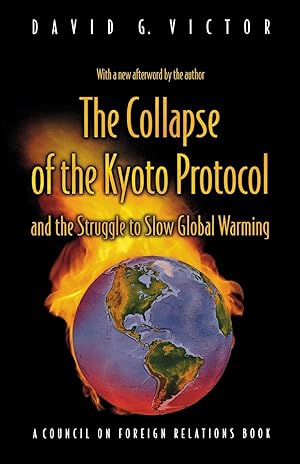
The Collapse of the Kyoto Protocol and the Struggle to Slow Global Warming
Book 1 of 3: Council on Foreign RelationsLanguage: English
Published by Princeton University Press, 2004
ISBN 10: 0691120269 ISBN 13: 9780691120263
Condition: New. Dieser Artikel ist ein Print on Demand Artikel und wird nach Ihrer Bestellung fuer Sie gedruckt. Explains why the Kyoto Protocol was never likely to become an effective legal instrument. This book explores how its collapse offers opportunities to establish a more realistic alternative. It proposes a hybrid in which governments set targets for both emis.
-
The Collapse of the Kyoto Protocol and the Struggle to Slow Global Warming (Paperback)
Book 1 of 3: Council on Foreign RelationsLanguage: English
Published by Princeton University Press, New Jersey, 2004
ISBN 10: 0691120269 ISBN 13: 9780691120263
Paperback. Condition: new. Paperback. Even as the evidence of global warming mounts, the international response to this serious threat is coming unraveled. The United States has formally withdrawn from the 1997 Kyoto Protocol; other key nations are facing difficulty in meeting their Kyoto commitments; and developing countries face no limit on their emissions of the gases that cause global warming. In this clear and cogent book-reissued in paperback with an afterword that comments on recent events--David Victor explains why the Kyoto Protocol was never likely to become an effective legal instrument. He explores how its collapse offers opportunities to establish a more realistic alternative. Global warming continues to dominate environmental news as legislatures worldwide grapple with the process of ratification of the December 1997 Kyoto Protocol. The collapse of the November 2000 conference at the Hague showed clearly how difficult it will be to bring the Kyoto treaty into force. Yet most politicians, policymakers, and analysts hailed it as a vital first step in slowing greenhouse warming. David Victor was not among them. Kyoto's fatal flaw, Victor argues, is that it can work only if emissions trading works.The Protocol requires industrialized nations to reduce their emissions of greenhouse gases to specific targets.Crucially, the Protocol also provides for so-called "emissions trading," whereby nations could offset the need for rapid cuts in their own emissions by buying emissions credits from other countries. But starting this trading system would require creating emission permits worth two trillion dollars--the largest single invention of assets by voluntary international treaty in world history. Even if it were politically possible to distribute such astronomical sums, the Protocol does not provide for adequate monitoring and enforcement of these new property rights. Nor does it offer an achievable plan for allocating new permits, which would be essential if the system were expanded to include developing countries. The collapse of the Kyoto Protocol--which Victor views as inevitable--will provide the political space to rethink strategy. Better alternatives would focus on policies that control emissions, such as emission taxes. Though economically sensible, however, a pure tax approach is impossible to monitor in practice.Thus, the author proposes a hybrid in which governments set targets for both emission quantities and tax levels.This offers the important advantages of both emission trading and taxes without the debilitating drawbacks of each. Individuals at all levels of environmental science, economics, public policy, and politics-from students to professionals--and anyone else hoping to participate in the debate over how to slow global warming will want to read this book. Explains why the Kyoto Protocol was never likely to become an effective legal instrument. This book explores how its collapse offers opportunities to establish a more realistic alternative. It proposes a hybrid in which governments set targets for both emission quantities and tax levels. This item is printed on demand. Shipping may be from our UK warehouse or from our Australian or US warehouses, depending on stock availability.
-

The Collapse of the Kyoto Protocol and the Struggle to Slow Global Warming
Book 1 of 3: Council on Foreign RelationsLanguage: English
Published by Princeton University Press, 2004
ISBN 10: 0691120269 ISBN 13: 9780691120263
Taschenbuch. Condition: Neu. The Collapse of the Kyoto Protocol and the Struggle to Slow Global Warming | David G. Victor | Taschenbuch | Einband - flex.(Paperback) | Englisch | 2004 | Princeton University Press | EAN 9780691120263 | Verantwortliche Person für die EU: Libri GmbH, Europaallee 1, 36244 Bad Hersfeld, gpsr[at]libri[dot]de | Anbieter: preigu Print on Demand.
-

The Collapse of the Kyoto Protocol and the Struggle to Slow Global Warming
Book 1 of 3: Council on Foreign RelationsLanguage: English
Published by Princeton University Press, 2004
ISBN 10: 0691120269 ISBN 13: 9780691120263
Taschenbuch. Condition: Neu. nach der Bestellung gedruckt Neuware - Printed after ordering - Even as the evidence of global warming mounts, the international response to this serious threat is coming unraveled. The United States has formally withdrawn from the 1997 Kyoto Protocol; other key nations are facing difficulty in meeting their Kyoto commitments; and developing countries face no limit on their emissions of the gases that cause global warming. In this clear and cogent book-reissued in paperback with an afterword that comments on recent events--David Victor explains why the Kyoto Protocol was never likely to become an effective legal instrument. He explores how its collapse offers opportunities to establish a more realistic alternative.Global warming continues to dominate environmental news as legislatures worldwide grapple with the process of ratification of the December 1997 Kyoto Protocol. The collapse of the November 2000 conference at the Hague showed clearly how difficult it will be to bring the Kyoto treaty into force. Yet most politicians, policymakers, and analysts hailed it as a vital first step in slowing greenhouse warming. David Victor was not among them.Kyoto's fatal flaw, Victor argues, is that it can work only if emissions trading works. The Protocol requires industrialized nations to reduce their emissions of greenhouse gases to specific targets. Crucially, the Protocol also provides for so-called 'emissions trading,' whereby nations could offset the need for rapid cuts in their own emissions by buying emissions credits from other countries. But starting this trading system would require creating emission permits worth two trillion dollars--the largest single invention of assets by voluntary international treaty in world history. Even if it were politically possible to distribute such astronomical sums, the Protocol does not provide for adequate monitoring and enforcement of these new property rights. Nor does it offer an achievable plan for allocating new permits, which would be essential if the system were expanded to include developing countries.The collapse of the Kyoto Protocol--which Victor views as inevitable--will provide the political space to rethink strategy. Better alternatives would focus on policies that control emissions, such as emission taxes. Though economically sensible, however, a pure tax approach is impossible to monitor in practice. Thus, the author proposes a hybrid in which governments set targets for both emission quantities and tax levels. This offers the important advantages of both emission trading and taxes without the debilitating drawbacks of each.Individuals at all levels of environmental science, economics, public policy, and politics-from students to professionals--and anyone else hoping to participate in the debate over how to slow global warming will want to read this book.


