

Order Total (1 Item Items):
Shipping Destination:

Cartesian Empiricisms (27 results)
Skip to main search results
Search filters
Product Type
- All Product Types
- Books (27)
- Magazines & Periodicals (No further results match this refinement)
- Comics (No further results match this refinement)
- Sheet Music (No further results match this refinement)
- Art, Prints & Posters (No further results match this refinement)
- Photographs (No further results match this refinement)
- Maps (No further results match this refinement)
- Manuscripts & Paper Collectibles (No further results match this refinement)
Condition Learn more
- New (23)
- As New, Fine or Near Fine (4)
- Very Good or Good (No further results match this refinement)
- Fair or Poor (No further results match this refinement)
- As Described (No further results match this refinement)
Binding
Collectible Attributes
- First Edition (No further results match this refinement)
- Signed (No further results match this refinement)
- Dust Jacket (No further results match this refinement)
- Seller-Supplied Images (8)
- Not Print on Demand (17)
Language (1)
Price
- Any Price
- Under £ 20 (No further results match this refinement)
- £ 20 to £ 35 (No further results match this refinement)
- Over £ 35
Free Shipping
- Free Shipping to U.S.A. (No further results match this refinement)
Seller Location
Seller Rating
-

-

Cartesian Empiricisms (Studies in History and Philosophy of Science, 31)
Book 30 of 51: Studies in History and Philosophy of ScienceSeller: Ria Christie Collections, Uxbridge, United Kingdom
Seller rating 5 out of 5 stars

£ 96.88
£ 11.98 shipping
Ships from United Kingdom to U.S.A.Quantity: Over 20 available
Add to basketCondition: New. In.
-
Cartesian Empiricisms (Studies in History and Philosophy of Science, 31)
Book 30 of 51: Studies in History and Philosophy of ScienceSeller: Ria Christie Collections, Uxbridge, United Kingdom
Seller rating 5 out of 5 stars
£ 96.88
£ 11.98 shipping
Ships from United Kingdom to U.S.A.Quantity: Over 20 available
Add to basketCondition: New. In.
-
-
-

Cartesian Empiricisms
Book 30 of 51: Studies in History and Philosophy of ScienceLanguage: English
Published by Springer Netherlands, 2013
ISBN 10: 9400776896 ISBN 13: 9789400776890
Gebunden. Condition: New.
-

Cartesian Empiricisms
Book 30 of 51: Studies in History and Philosophy of ScienceLanguage: English
Published by Springer Netherlands, 2016
ISBN 10: 9402405801 ISBN 13: 9789402405804
Condition: New.
-
Condition: New. pp. 339 Softcover reprint of the original 1st ed. 2013 edition NO-PA16APR2015-KAP.
-
Condition: New. pp. 342.
-
Hardcover. Condition: Brand New. 2013 edition. 326 pages. 9.25x6.25x0.75 inches. In Stock.
-

Buch. Condition: Neu. Druck auf Anfrage Neuware - Printed after ordering - Cartesian Empiricisms considers the role Cartesians played in the acceptance of experiment in natural philosophy during the seventeenth century. It aims to correct a partial image of Cartesian philosophers as paradigmatic system builders who failed to meet challenges posed by the new science's innovative methods. Studies in this volume argue that far from being strangers to experiment, many Cartesians used and integrated it into their natural philosophies. Chapter 1 reviews the historiographies of early modern philosophy, science, and Cartesianism and their recent critiques. The first part of the volume explores various Cartesian contexts of experiment: the impact of French condemnations of Cartesian philosophy in the second half of the seventeenth century; the relation between Cartesian natural philosophy and the Parisian academies of the 1660s; the complex interplay between Cartesianism and Newtonianism in the Dutch Republic; the Cartesian influence on medical teaching at theUniversity of Duisburg; and the challenges chemistry posed to the Cartesian theory of matter. The second part of the volume examines the work of particular Cartesians, such as Henricus Regius, Robert Desgabets, Jacques Rohault, Burchard de Volder, Antoine Le Grand, and Balthasar Bekker. Together these studies counter scientific revolution narratives that take rationalism and empiricism to be two mutually exclusive epistemological and methodological paradigms. The volume is thus a helpful instrument for anyone interested both in the histories of early modern philosophy and science, as well as for scholars interested in new evaluations of the historiographical tools that framed our traditional narratives.
-

Taschenbuch. Condition: Neu. Druck auf Anfrage Neuware - Printed after ordering - Cartesian Empiricisms considers the role Cartesians played in the acceptance of experiment in natural philosophy during the seventeenth century. It aims to correct a partial image of Cartesian philosophers as paradigmatic system builders who failed to meet challenges posed by the new science's innovative methods. Studies in this volume argue that far from being strangers to experiment, many Cartesians used and integrated it into their natural philosophies. Chapter 1 reviews the historiographies of early modern philosophy, science, and Cartesianism and their recent critiques. The first part of the volume explores various Cartesian contexts of experiment: the impact of French condemnations of Cartesian philosophy in the second half of the seventeenth century; the relation between Cartesian natural philosophy and the Parisian academies of the 1660s; the complex interplay between Cartesianism and Newtonianism in the Dutch Republic; the Cartesian influence on medical teaching at theUniversity of Duisburg; and the challenges chemistry posed to the Cartesian theory of matter. The second part of the volume examines the work of particular Cartesians, such as Henricus Regius, Robert Desgabets, Jacques Rohault, Burchard de Volder, Antoine Le Grand, and Balthasar Bekker. Together these studies counter scientific revolution narratives that take rationalism and empiricism to be two mutually exclusive epistemological and methodological paradigms. The volume is thus a helpful instrument for anyone interested both in the histories of early modern philosophy and science, as well as for scholars interested in new evaluations of the historiographical tools that framed our traditional narratives.
-
Paperback. Condition: Brand New. reprint edition. 340 pages. 9.25x6.10x0.77 inches. In Stock.
-
Hardcover. Condition: Like New. Like New. book.
-
Condition: As New. Unread book in perfect condition.
-
Paperback. Condition: Like New. Like New. book.
-
Condition: As New. Unread book in perfect condition.
-
Condition: new. Questo è un articolo print on demand.
-
Condition: new. Questo è un articolo print on demand.
-
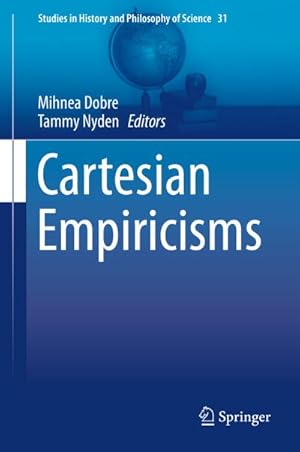
Cartesian Empiricisms
Book 30 of 51: Studies in History and Philosophy of ScienceLanguage: English
Published by Springer Netherlands Dez 2013, 2013
ISBN 10: 9400776896 ISBN 13: 9789400776890
Seller: BuchWeltWeit Ludwig Meier e.K., Bergisch Gladbach, Germany
Seller rating 5 out of 5 stars
Buch. Condition: Neu. This item is printed on demand - it takes 3-4 days longer - Neuware -Cartesian Empiricisms considers the role Cartesians played in the acceptance of experiment in natural philosophy during the seventeenth century. It aims to correct a partial image of Cartesian philosophers as paradigmatic system builders who failed to meet challenges posed by the new science's innovative methods. Studies in this volume argue that far from being strangers to experiment, many Cartesians used and integrated it into their natural philosophies. Chapter 1 reviews the historiographies of early modern philosophy, science, and Cartesianism and their recent critiques. The first part of the volume explores various Cartesian contexts of experiment: the impact of French condemnations of Cartesian philosophy in the second half of the seventeenth century; the relation between Cartesian natural philosophy and the Parisian academies of the 1660s; the complex interplay between Cartesianism and Newtonianism in the Dutch Republic; the Cartesian influence on medical teaching at the University of Duisburg; and the challenges chemistry posed to the Cartesian theory of matter. The second part of the volume examines the work of particular Cartesians, such as Henricus Regius, Robert Desgabets, Jacques Rohault, Burchard de Volder, Antoine Le Grand, and Balthasar Bekker. Together these studies counter scientific revolution narratives that take rationalism and empiricism to be two mutually exclusive epistemological and methodological paradigms. The volume is thus a helpful instrument for anyone interested both in the histories of early modern philosophy and science, as well as for scholars interested in new evaluations of the historiographical tools that framed our traditional narratives. 340 pp. Englisch.
-

Cartesian Empiricisms
Book 30 of 51: Studies in History and Philosophy of ScienceLanguage: English
Published by Springer Netherlands Sep 2016, 2016
ISBN 10: 9402405801 ISBN 13: 9789402405804
Seller: BuchWeltWeit Ludwig Meier e.K., Bergisch Gladbach, Germany
Seller rating 5 out of 5 stars
Taschenbuch. Condition: Neu. This item is printed on demand - it takes 3-4 days longer - Neuware -Cartesian Empiricisms considers the role Cartesians played in the acceptance of experiment in natural philosophy during the seventeenth century. It aims to correct a partial image of Cartesian philosophers as paradigmatic system builders who failed to meet challenges posed by the new science's innovative methods. Studies in this volume argue that far from being strangers to experiment, many Cartesians used and integrated it into their natural philosophies. Chapter 1 reviews the historiographies of early modern philosophy, science, and Cartesianism and their recent critiques. The first part of the volume explores various Cartesian contexts of experiment: the impact of French condemnations of Cartesian philosophy in the second half of the seventeenth century; the relation between Cartesian natural philosophy and the Parisian academies of the 1660s; the complex interplay between Cartesianism and Newtonianism in the Dutch Republic; the Cartesian influence on medical teaching at the University of Duisburg; and the challenges chemistry posed to the Cartesian theory of matter. The second part of the volume examines the work of particular Cartesians, such as Henricus Regius, Robert Desgabets, Jacques Rohault, Burchard de Volder, Antoine Le Grand, and Balthasar Bekker. Together these studies counter scientific revolution narratives that take rationalism and empiricism to be two mutually exclusive epistemological and methodological paradigms. The volume is thus a helpful instrument for anyone interested both in the histories of early modern philosophy and science, as well as for scholars interested in new evaluations of the historiographical tools that framed our traditional narratives. 340 pp. Englisch.
-
Condition: New. Print on Demand pp. 339.
-
Condition: New. PRINT ON DEMAND pp. 339.
-
Condition: New. Print on Demand pp. 342 52:B&W 6.14 x 9.21in or 234 x 156mm (Royal 8vo) Case Laminate on White w/Gloss Lam.
-

Cartesian Empiricisms
Book 30 of 51: Studies in History and Philosophy of ScienceLanguage: English
Published by Springer, Springer Dez 2013, 2013
ISBN 10: 9400776896 ISBN 13: 9789400776890
Seller: buchversandmimpf2000, Emtmannsberg, BAYE, Germany
Seller rating 5 out of 5 stars
Buch. Condition: Neu. This item is printed on demand - Print on Demand Titel. Neuware -Cartesian Empiricisms considers the role Cartesians played in the acceptance of experiment in natural philosophy during the seventeenth century. It aims to correct a partial image of Cartesian philosophers as paradigmatic system builders who failed to meet challenges posed by the new science¿s innovative methods. Studies in this volume argue that far from being strangers to experiment, many Cartesians used and integrated it into their natural philosophies. Chapter 1 reviews the historiographies of early modern philosophy, science, and Cartesianism and their recent critiques. The first part of the volume explores various Cartesian contexts of experiment: the impact of French condemnations of Cartesian philosophy in the second half of the seventeenth century; the relation between Cartesian natural philosophy and the Parisian academies of the 1660s; the complex interplay between Cartesianism and Newtonianism in the Dutch Republic; the Cartesian influence on medical teaching at theUniversity of Duisburg; and the challenges chemistry posed to the Cartesian theory of matter. The second part of the volume examines the work of particular Cartesians, such as Henricus Regius, Robert Desgabets, Jacques Rohault, Burchard de Volder, Antoine Le Grand, and Balthasar Bekker. Together these studies counter scientific revolution narratives that take rationalism and empiricism to be two mutually exclusive epistemological and methodological paradigms. The volume is thus a helpful instrument for anyone interested both in the histories of early modern philosophy and science, as well as for scholars interested in new evaluations of the historiographical tools that framed our traditional narratives.Springer-Verlag KG, Sachsenplatz 4-6, 1201 Wien 340 pp. Englisch.
-

Cartesian Empiricisms
Book 30 of 51: Studies in History and Philosophy of ScienceLanguage: English
Published by Springer, Springer Sep 2016, 2016
ISBN 10: 9402405801 ISBN 13: 9789402405804
Seller: buchversandmimpf2000, Emtmannsberg, BAYE, Germany
Seller rating 5 out of 5 stars
Taschenbuch. Condition: Neu. This item is printed on demand - Print on Demand Titel. Neuware -Cartesian Empiricisms considers the role Cartesians played in the acceptance of experiment in natural philosophy during the seventeenth century. It aims to correct a partial image of Cartesian philosophers as paradigmatic system builders who failed to meet challenges posed by the new science¿s innovative methods. Studies in this volume argue that far from being strangers to experiment, many Cartesians used and integrated it into their natural philosophies. Chapter 1 reviews the historiographies of early modern philosophy, science, and Cartesianism and their recent critiques. The first part of the volume explores various Cartesian contexts of experiment: the impact of French condemnations of Cartesian philosophy in the second half of the seventeenth century; the relation between Cartesian natural philosophy and the Parisian academies of the 1660s; the complex interplay between Cartesianism and Newtonianism in the Dutch Republic; the Cartesian influence on medical teaching at theUniversity of Duisburg; and the challenges chemistry posed to the Cartesian theory of matter. The second part of the volume examines the work of particular Cartesians, such as Henricus Regius, Robert Desgabets, Jacques Rohault, Burchard de Volder, Antoine Le Grand, and Balthasar Bekker. Together these studies counter scientific revolution narratives that take rationalism and empiricism to be two mutually exclusive epistemological and methodological paradigms. The volume is thus a helpful instrument for anyone interested both in the histories of early modern philosophy and science, as well as for scholars interested in new evaluations of the historiographical tools that framed our traditional narratives.Springer-Verlag KG, Sachsenplatz 4-6, 1201 Wien 340 pp. Englisch.
-
Condition: New. PRINT ON DEMAND pp. 342.

