

Order Total (1 Item Items):
Shipping Destination:

9780596006549 - Aspectj Cookbook by Miles, Russ (22 results)
Skip to main search results
Search filters
Product Type
- All Product Types
- Books (22)
- Magazines & Periodicals (No further results match this refinement)
- Comics (No further results match this refinement)
- Sheet Music (No further results match this refinement)
- Art, Prints & Posters (No further results match this refinement)
- Photographs (No further results match this refinement)
- Maps (No further results match this refinement)
- Manuscripts & Paper Collectibles (No further results match this refinement)
Condition Learn more
- New (15)
- As New, Fine or Near Fine (2)
- Very Good or Good (5)
- Fair or Poor (No further results match this refinement)
- As Described (No further results match this refinement)
Binding
- All Bindings
- Hardcover (No further results match this refinement)
- Softcover (22)
Collectible Attributes
- First Edition (1)
- Signed (No further results match this refinement)
- Dust Jacket (No further results match this refinement)
- Seller-Supplied Images (12)
- Not Print on Demand (20)
Language (1)
Free Shipping
Seller Location
Seller Rating
-

AspectJ Cookbook: Aspect Oriented Solutions to Real-World Problems
Seller: Bay State Book Company, North Smithfield, RI, U.S.A.
Seller rating 5 out of 5 stars

Condition: very_good.
-

Condition: good. A copy that has been read, remains in good condition. All pages are intact, and the cover is intact. The spine and cover show signs of wear. Pages can include notes and highlighting and show signs of wear, and the copy can include "From the library of" labels or previous owner inscriptions. 100% GUARANTEE! Shipped with delivery confirmation, if you're not satisfied with purchase please return item! Ships via media mail.
-

Paperback. Condition: Good. No Jacket. Pages can have notes/highlighting. Spine may show signs of wear. ~ ThriftBooks: Read More, Spend Less.
-
Condition: very good. Gut/Very good: Buch bzw. Schutzumschlag mit wenigen Gebrauchsspuren an Einband, Schutzumschlag oder Seiten. / Describes a book or dust jacket that does show some signs of wear on either the binding, dust jacket or pages.
-
paperback. Condition: Very Good. Connecting readers with great books since 1972! Used books may not include companion materials, and may have some shelf wear or limited writing. We ship orders daily and Customer Service is our top priority!
-

Condition: As New. Unread book in perfect condition.
-
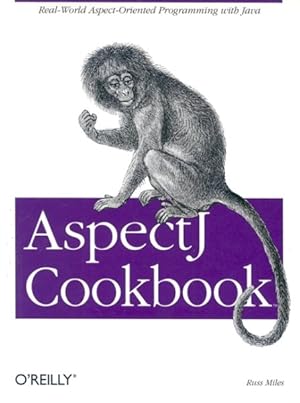
Condition: New.
-

AspectJ Cookbook
Seller: Rarewaves.com USA, London, LONDO, United Kingdom
Seller rating 5 out of 5 stars
Paperback. Condition: New. When Object Oriented programming (OO) first appeared, it was a revelation. OO gave developers the ability to create software that was more flexible and robust, but as time went on and applications became more sophisticated, too, certain areas of "traditional" OO architectures were found wanting. Aspect-oriented programming (AOP) addresses those issues by extending the OO approach even further. Many developers are interested in AOP--especially in AspectJ, the open source extension of the Java programming language that explicitly supports the AOP approach. Yet, although AspectJ is included with Eclipse, the increasingly popular open source IDE for Java, finding a practical and non-theoretical way to learn this language and other AOP tools and techniques has been a real problem. Until now. The AspectJ Cookbook offers a hands-on solution--in fact, several--with a wide variety of code recipes for solving day-to-day design and coding problems using AOP's unique approach. AOP allows the global properties of a program to determine how it's compiled into an executable program. Before AOP, important program design decisions were difficult to capture in actual code.Instead, the implementation of those design decisions--known as "aspects"--were scattered throughout, resulting in "tangled" code that was hard to develop and maintain. AOP has been compared to the manufacturing of cloth, in which threads are automatically interwoven. Without AOP, programmers must stitch the threads by hand. The AspectJ Cookbook shows readers why, and how, common Java development problems can be solved by using AOP techniques. With our popular problem-solution-discussion format, the book presents real world examples to demonstrate that AOP is more than just a concept; it's a development process that will benefit users in an immediate and visible manner. If you're interested in how AOP is changing the way software is developed, and how you can use AspectJ to make code more modular, easier to develop, maintain, evolve and deploy, this is the book that really delivers.
-

Paperback. Condition: New. When Object Oriented programming (OO) first appeared, it was a revelation. OO gave developers the ability to create software that was more flexible and robust, but as time went on and applications became more sophisticated, too, certain areas of "traditional" OO architectures were found wanting. Aspect-oriented programming (AOP) addresses those issues by extending the OO approach even further. Many developers are interested in AOP--especially in AspectJ, the open source extension of the Java programming language that explicitly supports the AOP approach. Yet, although AspectJ is included with Eclipse, the increasingly popular open source IDE for Java, finding a practical and non-theoretical way to learn this language and other AOP tools and techniques has been a real problem. Until now. The AspectJ Cookbook offers a hands-on solution--in fact, several--with a wide variety of code recipes for solving day-to-day design and coding problems using AOP's unique approach. AOP allows the global properties of a program to determine how it's compiled into an executable program. Before AOP, important program design decisions were difficult to capture in actual code.Instead, the implementation of those design decisions--known as "aspects"--were scattered throughout, resulting in "tangled" code that was hard to develop and maintain. AOP has been compared to the manufacturing of cloth, in which threads are automatically interwoven. Without AOP, programmers must stitch the threads by hand. The AspectJ Cookbook shows readers why, and how, common Java development problems can be solved by using AOP techniques. With our popular problem-solution-discussion format, the book presents real world examples to demonstrate that AOP is more than just a concept; it's a development process that will benefit users in an immediate and visible manner. If you're interested in how AOP is changing the way software is developed, and how you can use AspectJ to make code more modular, easier to develop, maintain, evolve and deploy, this is the book that really delivers.
-
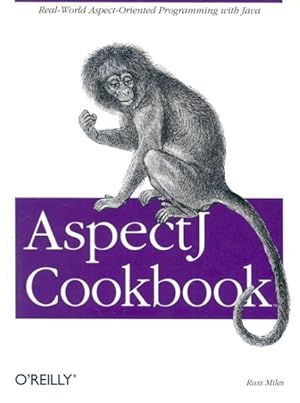
Aspectj Cookbook
Seller: GreatBookPricesUK, Woodford Green, United Kingdom
Seller rating 5 out of 5 stars
Condition: As New. Unread book in perfect condition.
-
AspectJ Cookbook
Language: English
Published by O'Reilly Media, Inc, USA, 2004
ISBN 10: 0596006543 ISBN 13: 9780596006549
Seller: Kennys Bookshop and Art Galleries Ltd., Galway, GY, Ireland
Seller rating 5 out of 5 stars
First Edition
Condition: New. This hands-on book shows readers why and how common Java development problems can be solved by using new Aspect-oriented programming (AOP) techniques. With a wide variety of code recipes for solving day-to-day design and coding problems using AOP's unique approach, 'AspectJ Cookbook' demonstrates that AOP is more than just a concept. Num Pages: 354 pages, Illustrations, BIC Classification: UMW. Category: (P) Professional & Vocational; (U) Tertiary Education (US: College). Dimension: 232 x 178 x 22. Weight in Grams: 576. . 2004. 1st Edition. Paperback. . . . .
-
Aspectj Cookbook
Seller: GreatBookPricesUK, Woodford Green, United Kingdom
Seller rating 5 out of 5 stars
Condition: New.
-
AspectJ Cookbook
Language: English
Published by O'Reilly Media, Inc, USA, 2005
ISBN 10: 0596006543 ISBN 13: 9780596006549
Seller: THE SAINT BOOKSTORE, Southport, United Kingdom
Seller rating 5 out of 5 stars
Paperback / softback. Condition: New. New copy - Usually dispatched within 4 working days.
-

Aspectj Cookbook (Paperback or Softback)
Language: English
Published by O'Reilly Media 12/30/2004, 2004
ISBN 10: 0596006543 ISBN 13: 9780596006549
Paperback or Softback. Condition: New. Aspectj Cookbook. Book.
-
AspectJ Cookbook
Language: English
Published by O'Reilly Media, Inc, USA, 2005
ISBN 10: 0596006543 ISBN 13: 9780596006549
Condition: New. This hands-on book shows readers why and how common Java development problems can be solved by using new Aspect-oriented programming (AOP) techniques. With a wide variety of code recipes for solving day-to-day design and coding problems using AOP's unique approach, 'AspectJ Cookbook' demonstrates that AOP is more than just a concept. Num Pages: 354 pages, Illustrations, BIC Classification: UMW. Category: (P) Professional & Vocational; (U) Tertiary Education (US: College). Dimension: 232 x 178 x 22. Weight in Grams: 576. . 2004. 1st Edition. Paperback. . . . . Books ship from the US and Ireland.
-
Aspectj Cookbook
Language: English
Published by Oreilly & Associates Inc, 2005
ISBN 10: 0596006543 ISBN 13: 9780596006549
Paperback. Condition: Brand New. illustrated edition. 354 pages. 9.00x7.00x1.25 inches. In Stock.
-

Paperback. Condition: New. When Object Oriented programming (OO) first appeared, it was a revelation. OO gave developers the ability to create software that was more flexible and robust, but as time went on and applications became more sophisticated, too, certain areas of "traditional" OO architectures were found wanting. Aspect-oriented programming (AOP) addresses those issues by extending the OO approach even further. Many developers are interested in AOP--especially in AspectJ, the open source extension of the Java programming language that explicitly supports the AOP approach. Yet, although AspectJ is included with Eclipse, the increasingly popular open source IDE for Java, finding a practical and non-theoretical way to learn this language and other AOP tools and techniques has been a real problem. Until now. The AspectJ Cookbook offers a hands-on solution--in fact, several--with a wide variety of code recipes for solving day-to-day design and coding problems using AOP's unique approach. AOP allows the global properties of a program to determine how it's compiled into an executable program. Before AOP, important program design decisions were difficult to capture in actual code.Instead, the implementation of those design decisions--known as "aspects"--were scattered throughout, resulting in "tangled" code that was hard to develop and maintain. AOP has been compared to the manufacturing of cloth, in which threads are automatically interwoven. Without AOP, programmers must stitch the threads by hand. The AspectJ Cookbook shows readers why, and how, common Java development problems can be solved by using AOP techniques. With our popular problem-solution-discussion format, the book presents real world examples to demonstrate that AOP is more than just a concept; it's a development process that will benefit users in an immediate and visible manner. If you're interested in how AOP is changing the way software is developed, and how you can use AspectJ to make code more modular, easier to develop, maintain, evolve and deploy, this is the book that really delivers.
-

Condition: New. This hands-on book shows readers why and how common Java development problems can be solved by using new Aspect-oriented programming (AOP) techniques. With a wide variety of code recipes for solving day-to-day design and coding problems using AOP s unique a.
-

Paperback. Condition: New. When Object Oriented programming (OO) first appeared, it was a revelation. OO gave developers the ability to create software that was more flexible and robust, but as time went on and applications became more sophisticated, too, certain areas of "traditional" OO architectures were found wanting. Aspect-oriented programming (AOP) addresses those issues by extending the OO approach even further. Many developers are interested in AOP--especially in AspectJ, the open source extension of the Java programming language that explicitly supports the AOP approach. Yet, although AspectJ is included with Eclipse, the increasingly popular open source IDE for Java, finding a practical and non-theoretical way to learn this language and other AOP tools and techniques has been a real problem. Until now. The AspectJ Cookbook offers a hands-on solution--in fact, several--with a wide variety of code recipes for solving day-to-day design and coding problems using AOP's unique approach. AOP allows the global properties of a program to determine how it's compiled into an executable program. Before AOP, important program design decisions were difficult to capture in actual code.Instead, the implementation of those design decisions--known as "aspects"--were scattered throughout, resulting in "tangled" code that was hard to develop and maintain. AOP has been compared to the manufacturing of cloth, in which threads are automatically interwoven. Without AOP, programmers must stitch the threads by hand. The AspectJ Cookbook shows readers why, and how, common Java development problems can be solved by using AOP techniques. With our popular problem-solution-discussion format, the book presents real world examples to demonstrate that AOP is more than just a concept; it's a development process that will benefit users in an immediate and visible manner. If you're interested in how AOP is changing the way software is developed, and how you can use AspectJ to make code more modular, easier to develop, maintain, evolve and deploy, this is the book that really delivers.
-

Aspectj Cookbook
Language: English
Published by O'reilly Media Jan 2005, 2005
ISBN 10: 0596006543 ISBN 13: 9780596006549
Taschenbuch. Condition: Neu. Neuware - When Object Oriented programming (OO) first appeared, it was a revelation. OO gave developers the ability to create software that was more flexible and robust, but as time went on and applications became more sophisticated, too, certain areas of 'traditional' OO architectures were found wanting. Aspect-oriented programming (AOP) addresses those issues by extending the OO approach even further.Many developers are interested in AOP--especially in AspectJ, the open source extension of the Java programming language that explicitly supports the AOP approach. Yet, although AspectJ is included with Eclipse, the increasingly popular open source IDE for Java, finding a practical and non-theoretical way to learn this language and other AOP tools and techniques has been a real problem.Until now. The AspectJ Cookbook offers a hands-on solution--in fact, several--with a wide variety of code recipes for solving day-to-day design and coding problems using AOP's unique approach.AOP allows the global properties of a program to determine how it's compiled into an executable program. Before AOP, important program design decisions were difficult to capture in actual code. Instead, the implementation of those design decisions--known as 'aspects'--were scattered throughout, resulting in 'tangled' code that was hard to develop and maintain. AOP has been compared to the manufacturing of cloth, in which threads are automatically interwoven. Without AOP, programmers must stitch the threads by hand.The AspectJ Cookbook shows readers why, and how, common Java development problems can be solved by using AOP techniques. With our popular problem-solution-discussion format, the book presents real world examples to demonstrate that AOP is more than just a concept; it's a development process that will benefit users in an immediate and visible manner.If you're interested in how AOP is changing the way softwareis developed, and how you can use AspectJ to make code more modular, easier to develop, maintain, evolve and deploy, this is the book that really delivers.
-
Aspectj Cookbook
Language: English
Published by Oreilly & Associates Inc, 2005
ISBN 10: 0596006543 ISBN 13: 9780596006549
Paperback. Condition: Brand New. illustrated edition. 354 pages. 9.00x7.00x1.25 inches. In Stock. This item is printed on demand.
-
AspectJ Cookbook
Language: English
Published by O'Reilly Media, Inc, USA, 2005
ISBN 10: 0596006543 ISBN 13: 9780596006549
Seller: THE SAINT BOOKSTORE, Southport, United Kingdom
Seller rating 5 out of 5 stars
£ 45.37
£ 15.75 shipping
Ships from United Kingdom to U.S.A.Quantity: Over 20 available
Add to basketPaperback / softback. Condition: New. This item is printed on demand. New copy - Usually dispatched within 5-9 working days.
