

Order Total (1 Item Items):
Shipping Destination:

Zuidam N J (24 results)
Skip to main search results
Search filters
Product Type
- All Product Types
- Books (24)
- Magazines & Periodicals (No further results match this refinement)
- Comics (No further results match this refinement)
- Sheet Music (No further results match this refinement)
- Art, Prints & Posters (No further results match this refinement)
- Photographs (No further results match this refinement)
- Maps (No further results match this refinement)
- Manuscripts & Paper Collectibles (No further results match this refinement)
Condition Learn more
- New (18)
- As New, Fine or Near Fine (5)
- Very Good or Good (1)
- Fair or Poor (No further results match this refinement)
- As Described (No further results match this refinement)
Binding
Collectible Attributes
- First Edition (No further results match this refinement)
- Signed (No further results match this refinement)
- Dust Jacket (No further results match this refinement)
- Seller-Supplied Images (13)
- Not Print on Demand (15)
Language (1)
Price
- Any Price
- Under £ 20 (No further results match this refinement)
- £ 20 to £ 35 (No further results match this refinement)
- Over £ 35
Free Shipping
- Free Shipping to U.S.A. (No further results match this refinement)
Seller Location
Seller Rating
-

hardcover. Condition: Good. Connecting readers with great books since 1972! Used textbooks may not include companion materials such as access codes, etc. May have some wear or writing/highlighting. We ship orders daily and Customer Service is our top priority!
-
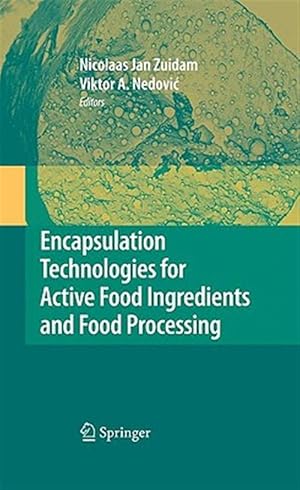
Encapsulation Technologies for Active Food Ingredients and Food Processing
Language: English
Published by Springer-Verlag Publishing, 2009
ISBN 10: 1441910077 ISBN 13: 9781441910073
Condition: Like New. Fine/As New; Hardcover; Covers are still glossy with "sharp" edge-corners; Unblemished textblock edges; The endpapers and all text pages are bright and unmarked; Binding is tight with a straight spine; This book will be stored and delivered in a sturdy cardboard box with foam padding; Medium Format (8.5" - 9.75" tall); Green and orange covers with title in white lettering; 2009, Springer-Verlag Publishing; 400 pages; "Encapsulation Technologies for Active Food Ingredients and Food Processing," by N.J. Zuidam & Viktor Nedovic.
-

Encapsulation Technologies for Active Food Ingredients and Food Processing
Seller: GreatBookPricesUK, Woodford Green, United Kingdom
Seller rating 5 out of 5 stars

£ 144.82
£ 15 shipping
Ships from United Kingdom to U.S.A.Quantity: Over 20 available
Add to basketCondition: New.
-

-

Gebunden. Condition: New.
-

-
Condition: New. pp. 412.
-

Condition: New. pp. 412.
-
Taschenbuch. Condition: Neu. Encapsulation Technologies for Active Food Ingredients and Food Processing | Viktor Nedovic (u. a.) | Taschenbuch | xii | Englisch | 2014 | Springer US | EAN 9781489983497 | Verantwortliche Person für die EU: Springer Verlag GmbH, Tiergartenstr. 17, 69121 Heidelberg, juergen[dot]hartmann[at]springer[dot]com | Anbieter: preigu.
-

Encapsulation Technologies for Active Food Ingredients and Food Processing
Language: English
Published by Springer New York, Springer US, 2014
ISBN 10: 148998349X ISBN 13: 9781489983497
Taschenbuch. Condition: Neu. Druck auf Anfrage Neuware - Printed after ordering - Consumers prefer food products that are tasty, healthy, and convenient. Encapsulation is an important way to meet these demands by delivering food ingredients at the right time and right place. For example, encapsulates may allow flavor retention, mask bad tasting or bad smelling components, stabilize food ingredients, and increase their bioavailability. Encapsulation may also be used to immobilize cells or enzymes in the production of food materials or products, such as fermentation or metabolite production. This book provides a detailed overview of the encapsulation technologies available for use in food products, food processing, and food production. The book aims to inform those who work in academia or R&D about both the delivery of food compounds via encapsulation and food processing using immobilized cells or enzymes. The structure of the book is according to the use of encapsulates for a specific application. Emphasis is placed on strategy, since encapsulation technologies may change. Most chapters include application possibilities of the encapsulation technologies in specific food products or processes. The first part of the book reviews general technologies, food-grade materials, and characterization methods for encapsulates.The second part discusses encapsulates of active ingredients (e.g., aroma, fish oil, minerals, vitamins, peptides, proteins, probiotics) for specific food applications.The last part describes immobilization technologies of cells and enzymes for use within food fermentation processes (e.g., beer, wine, dairy, meat), and food production (e.g., sugar conversion, production of organic acids or amino acids, hydrolysis of triglycerides).Edited by two leading experts in the field, Encapsulation Technologies for Food Active Ingredients and Food Processing will be a valuable reference source for those working in the academia or food industry. The editors work in both industry oracademia, and they have brought together in this book contributions from both fields.
-

Buch. Condition: Neu. Druck auf Anfrage Neuware - Printed after ordering - Consumers prefer food products that are tasty, healthy, and convenient. Encapsulation is an important way to meet these demands by delivering food ingredients at the right time and right place. For example, encapsulates may allow flavor retention, mask bad tasting or bad smelling components, stabilize food ingredients, and increase their bioavailability. Encapsulation may also be used to immobilize cells or enzymes in the production of food materials or products, such as fermentation or metabolite production. This book provides a detailed overview of the encapsulation technologies available for use in food products, food processing, and food production. The book aims to inform those who work in academia or R&D about both the delivery of food compounds via encapsulation and food processing using immobilized cells or enzymes. The structure of the book is according to the use of encapsulates for a specific application. Emphasis is placed on strategy, since encapsulation technologies may change. Most chapters include application possibilities of the encapsulation technologies in specific food products or processes. The first part of the book reviews general technologies, food-grade materials, and characterization methods for encapsulates.The second part discusses encapsulates of active ingredients (e.g., aroma, fish oil, minerals, vitamins, peptides, proteins, probiotics) for specific food applications.The last part describes immobilization technologies of cells and enzymes for use within food fermentation processes (e.g., beer, wine, dairy, meat), and food production (e.g., sugar conversion, production of organic acids or amino acids, hydrolysis of triglycerides).Edited by two leading experts in the field, Encapsulation Technologies for Food Active Ingredients and Food Processing will be a valuable reference source for those working in the academia or food industry. The editors work in both industry oracademia, and they have brought together in this book contributions from both fields.
-

Encapsulation Technologies for Active Food Ingredients and Food Processing
Seller: GreatBookPricesUK, Woodford Green, United Kingdom
Seller rating 5 out of 5 stars
£ 198.99
£ 15 shipping
Ships from United Kingdom to U.S.A.Quantity: Over 20 available
Add to basketCondition: As New. Unread book in perfect condition.
-
Hardcover. Condition: Like New. Like New. book.
-
Condition: As New. Unread book in perfect condition.
-
Paperback. Condition: Like New. LIKE NEW. SHIPS FROM MULTIPLE LOCATIONS. book.
-
Condition: new. Questo è un articolo print on demand.
-
Condition: new. Questo è un articolo print on demand.
-

Encapsulation Technologies for Active Food Ingredients and Food Processing
Language: English
Published by Springer New York Nov 2014, 2014
ISBN 10: 148998349X ISBN 13: 9781489983497
Seller: BuchWeltWeit Ludwig Meier e.K., Bergisch Gladbach, Germany
Seller rating 5 out of 5 stars
Taschenbuch. Condition: Neu. This item is printed on demand - it takes 3-4 days longer - Neuware -Consumers prefer food products that are tasty, healthy, and convenient. Encapsulation is an important way to meet these demands by delivering food ingredients at the right time and right place. For example, encapsulates may allow flavor retention, mask bad tasting or bad smelling components, stabilize food ingredients, and increase their bioavailability. Encapsulation may also be used to immobilize cells or enzymes in the production of food materials or products, such as fermentation or metabolite production. This book provides a detailed overview of the encapsulation technologies available for use in food products, food processing, and food production. The book aims to inform those who work in academia or R&D about both the delivery of food compounds via encapsulation and food processing using immobilized cells or enzymes. The structure of the book is according to the use of encapsulates for a specific application. Emphasis is placed on strategy, since encapsulation technologies may change. Most chapters include application possibilities of the encapsulation technologies in specific food products or processes. The first part of the book reviews general technologies, food-grade materials, and characterization methods for encapsulates.The second part discusses encapsulates of active ingredients (e.g., aroma, fish oil, minerals, vitamins, peptides, proteins, probiotics) for specific food applications.The last part describes immobilization technologies of cells and enzymes for use within food fermentation processes (e.g., beer, wine, dairy, meat), and food production (e.g., sugar conversion, production of organic acids or amino acids, hydrolysis of triglycerides).Edited by two leading experts in the field, Encapsulation Technologies for Food Active Ingredients and Food Processing will be a valuable reference source for those working in the academia or food industry. The editors work in both industry or academia, and they have brought together in this book contributions from both fields. 412 pp. Englisch.
-

Encapsulation Technologies for Active Food Ingredients and Food Processing
Language: English
Published by SPRINGER NATURE Nov 2009, 2009
ISBN 10: 1441910077 ISBN 13: 9781441910073
Seller: BuchWeltWeit Ludwig Meier e.K., Bergisch Gladbach, Germany
Seller rating 5 out of 5 stars
Buch. Condition: Neu. This item is printed on demand - it takes 3-4 days longer - Neuware -Consumers prefer food products that are tasty, healthy, and convenient. Encapsulation is an important way to meet these demands by delivering food ingredients at the right time and right place. For example, encapsulates may allow flavor retention, mask bad tasting or bad smelling components, stabilize food ingredients, and increase their bioavailability. Encapsulation may also be used to immobilize cells or enzymes in the production of food materials or products, such as fermentation or metabolite production. This book provides a detailed overview of the encapsulation technologies available for use in food products, food processing, and food production. The book aims to inform those who work in academia or R&D about both the delivery of food compounds via encapsulation and food processing using immobilized cells or enzymes. The structure of the book is according to the use of encapsulates for a specific application. Emphasis is placed on strategy, since encapsulation technologies may change. Most chapters include application possibilities of the encapsulation technologies in specific food products or processes. The first part of the book reviews general technologies, food-grade materials, and characterization methods for encapsulates.The second part discusses encapsulates of active ingredients (e.g., aroma, fish oil, minerals, vitamins, peptides, proteins, probiotics) for specific food applications.The last part describes immobilization technologies of cells and enzymes for use within food fermentation processes (e.g., beer, wine, dairy, meat), and food production (e.g., sugar conversion, production of organic acids or amino acids, hydrolysis of triglycerides).Edited by two leading experts in the field, Encapsulation Technologies for Food Active Ingredients and Food Processing will be a valuable reference source for those working in the academia or food industry. The editors work in both industry or academia, and they have brought together in this book contributions from both fields. 400 pp. Englisch.
-
Condition: New. Print on Demand pp. 412 Illus.
-
Condition: New. Print on Demand pp. 412.
-

Encapsulation Technologies for Active Food Ingredients and Food Processing
Language: English
Published by Springer New York, Springer US Nov 2014, 2014
ISBN 10: 148998349X ISBN 13: 9781489983497
Seller: buchversandmimpf2000, Emtmannsberg, BAYE, Germany
Seller rating 5 out of 5 stars
Taschenbuch. Condition: Neu. This item is printed on demand - Print on Demand Titel. Neuware -Consumers prefer food products that are tasty, healthy, and convenient. Encapsulation is an important way to meet these demands by delivering food ingredients at the right time and right place. For example, encapsulates may allow flavor retention, mask bad tasting or bad smelling components, stabilize food ingredients, and increase their bioavailability. Encapsulation may also be used to immobilize cells or enzymes in the production of food materials or products, such as fermentation or metabolite production.This book provides a detailed overview of the encapsulation technologies available for use in food products, food processing, and food production. The book aims to inform those who work in academia or R&D about both the delivery of food compounds via encapsulation and food processing using immobilized cells or enzymes. The structure of the book is according to the use of encapsulates for a specific application. Emphasis is placed on strategy, since encapsulation technologies may change. Most chapters include application possibilities of the encapsulation technologies in specific food products or processes.The first part of the book reviews general technologies, food-grade materials, and characterization methods for encapsulates.The second part discusses encapsulates of active ingredients (e.g., aroma, fish oil, minerals, vitamins, peptides, proteins, probiotics) for specific food applications.The last part describes immobilization technologies of cells and enzymes for use within food fermentation processes (e.g.,beer, wine, dairy, meat), and food production (e.g., sugar conversion, production of organic acids or amino acids,hydrolysis of triglycerides).Edited by two leading experts in the field, Encapsulation Technologies for Food Active Ingredients and Food Processing will be a valuable reference source for those working in the academia or food industry. The editors workin bothindustry oracademia, and they have brought together in this book contributions from both fields.Springer Verlag GmbH, Tiergartenstr. 17, 69121 Heidelberg 412 pp. Englisch.
-
Condition: New. PRINT ON DEMAND pp. 412.
-
Condition: New. PRINT ON DEMAND pp. 412.


