

Order Total (1 Item Items):
Shipping Destination:

Stroh Cornelia Urdze Aina (31 results)
Skip to main search results
Search filters
Product Type
- All Product Types
- Books (31)
- Magazines & Periodicals (No further results match this refinement)
- Comics (No further results match this refinement)
- Sheet Music (No further results match this refinement)
- Art, Prints & Posters (No further results match this refinement)
- Photographs (No further results match this refinement)
- Maps (No further results match this refinement)
- Manuscripts & Paper Collectibles (No further results match this refinement)
Condition Learn more
- New (23)
- As New, Fine or Near Fine (4)
- Very Good or Good (3)
- Fair or Poor (No further results match this refinement)
- As Described (1)
Binding
Collectible Attributes
- First Edition (No further results match this refinement)
- Signed (No further results match this refinement)
- Dust Jacket (No further results match this refinement)
- Seller-Supplied Images (14)
- Not Print on Demand (29)
Language (2)
Free Shipping
Seller Location
Seller Rating
-
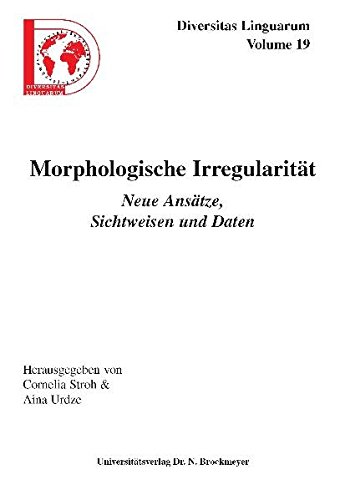
Morphologische Irregularität - Neue Ansätze, Sichtweisen und Daten
Language: German
Published by Universitätsverlag Brockmeyer, Bochum, 2008
ISBN 10: 3819607064 ISBN 13: 9783819607066
Seller: Der Ziegelbrenner - Medienversand, Bremen, Germany
Seller rating 5 out of 5 stars

sehr guter Zustand, 149 S., kart. Beiträge von Antje Dammel, Wolfgang U. Dressler/ Marianne Kilani-Schoch, Katrin Mutz, Damaris Nübling, Thomas Stolz. Diversitas Linguarum Volume 19 Gramm 600.
-

Split Possession: An areal-linguistic study of the alienability correlation and related phenomena in the languages of Europe (Studies in Language Companion Series)
Language: English
Published by John Benjamins Publishing Compan, 2008
ISBN 10: 902720568X ISBN 13: 9789027205681
Seller: Books From California, Simi Valley, CA, U.S.A.
Seller rating 4 out of 5 stars

Hardcover. Condition: Fine. Brand New! Sealed in publisher's shrinkwrap. Never opened! No signs of wear.
-
Split Possession: An Areal-linguistic Study of the Alienability Correlation and Related Phenomena in the Languages of Europe
Language: English
Published by John Benjamins Pub Co, 2008
ISBN 10: 902720568X ISBN 13: 9789027205681
Hardcover. Condition: Brand New. 546 pages. 10.00x7.00x1.50 inches. In Stock.
-

On Comitatives and Related Categories: A Typological Study With Special Focus on the Languages of Europe (Emprical Approaches to Language Typology 33) (Emprical Approaches to Language Typology)
Book 1 of 46: Empirical Approaches to Language Typology [EALT]Seller: Books From California, Simi Valley, CA, U.S.A.
Seller rating 4 out of 5 stars
Hardcover. Condition: Very Good. sealed in protective plastic.
-
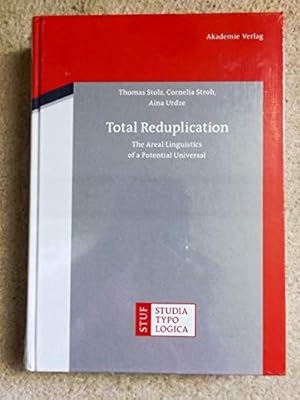
Total Reduplication: The Areal Linguistics of a Potential Universal (Studia Typologica)
Seller: Bluesparrowhawk Books, Chestfield, KENT, United Kingdom
Seller rating 5 out of 5 stars
Hardcover. Condition: New. No Jacket. De Gruyter, 2011. Heavy hardback, no dustjacket. Unread copy. New & sealed. book.
-
![Stock image for Total Reduplication: The Areal Linguistics of a Potential Universal (Studia Typologica [STTYP], 8) for sale by Ria Christie Collections](https://pictures.abebooks.com/isbn/9783050051734-uk-300.jpg)
Total Reduplication: The Areal Linguistics of a Potential Universal (Studia Typologica [STTYP], 8)
Seller: Ria Christie Collections, Uxbridge, United Kingdom
Seller rating 5 out of 5 stars
£ 160.19
£ 11.98 shipping
Ships from United Kingdom to U.S.A.Quantity: Over 20 available
Add to basketCondition: New. In.
-

-

Hardback. Condition: New.
-
On Comitatives and Related Categories - A Typological Study with Special Focus on the Languages of Europe. / Stolz, Thomas; Stroh, Cornelia; Urdze, Aina.
Book 1 of 46: Empirical Approaches to Language Typology [EALT]Seller: BUCHSERVICE / ANTIQUARIAT Lars Lutzer, Wahlstedt, Germany
Seller rating 5 out of 5 stars
Condition: gut. On Comitatives and Related Categories - A Typological Study with Special Focus on the Languages of Europe. In deutscher Sprache. pages.
-

Total Reduplication : The Areal Linguistics of a Potential Universal
Seller: GreatBookPricesUK, Woodford Green, United Kingdom
Seller rating 5 out of 5 stars
£ 192.32
£ 15 shipping
Ships from United Kingdom to U.S.A.Quantity: Over 20 available
Add to basketCondition: New.
-
On Comitatives and Related Categories: A Typological Study with Special Focus on the Languages of Europe (Empirical Approaches to Language Typology [EALT], 33)
Book 1 of 46: Empirical Approaches to Language Typology [EALT]Seller: Ria Christie Collections, Uxbridge, United Kingdom
Seller rating 5 out of 5 stars
£ 204.41
£ 11.98 shipping
Ships from United Kingdom to U.S.A.Quantity: Over 20 available
Add to basketCondition: New. In.
-

Condition: As New. Unread book in perfect condition.
-

Hardback. Condition: New.
-

Total Reduplication : The Areal Linguistics of a Potential Universal
Seller: GreatBookPricesUK, Woodford Green, United Kingdom
Seller rating 5 out of 5 stars
£ 220.88
£ 15 shipping
Ships from United Kingdom to U.S.A.Quantity: Over 20 available
Add to basketCondition: As New. Unread book in perfect condition.
-
Condition: New.
-

On Comitatives and Related Categories
Book 1 of 46: Empirical Approaches to Language Typology [EALT]Seller: Rarewaves.com USA, London, LONDO, United Kingdom
Seller rating 5 out of 5 stars
£ 258.01
Free Shipping
Ships from United Kingdom to U.S.A.Quantity: Over 20 available
Add to basketHardback. Condition: New. This is the first book-length functional-typologically inspired crosslinguistic study of comitatives and related categories such as the instrumental. On the basis of data drawn from 400 languages world-wide (covering all major phyla and areas), the authors test and revise a variety of general linguistic hypotheses about the grammar and cognitive foundations of comitatives. Three types of languages are identified according to the morphological treatment of the comitative and its syncretistic association with other concepts. It is shown that the structural behaviour of comitatives is areally biassed and that the languages of Europe tend to diverge from the majority of the world's languages. This has important repercussions for a language-independent definition of the comitative. The supposed conceptual closeness of comitative and instrumental is discussed in some detail and a semantic map of the comitative is put forward. Markedness is the crucial concept for the evaluation of the relation that ties comitatives and instrumentals to each other. In a separate chapter, the diachrony of comitatives is looked into from the perspective of grammaticalisation research. Throughout the book, the argumentation is richly documented by empirical data. The book contains three case-studies of the comitative in Icelandic, Latvian and Maltese - each of which represents one of the three language types identified earlier in the text. For the purpose of comparing the languages of Europe, a chapter is devoted to the analysis of a large parallel literary corpus (covering 64 languages) which reveals that the parameters of genetic affiliation, areal location and typological classification interact in intricate ways when it comes to predicting whether or not two languages of the sample behave similarly as to the use to which they put their comitative morphemes. With a view to determining the degree of similarity between the languages of the European sub-sample, methods of quantitative typology are employed. General linguists with an interest in case, functional typologists, grammaticalisation researchers and experts of markedness issues will value this book as an important contribution to their respective fields of interest. We regret that, due to a PDF problem, the figure on page 111 is partly shown in black. Please find the correct table here.
-
Condition: New.
-
On Comitatives and Related Categories
Book 1 of 46: Empirical Approaches to Language Typology [EALT]Language: English
Published by Walter de Gruyter, Incorporated, 2006
ISBN 10: 3110185873 ISBN 13: 9783110185874
Condition: New. pp. xiii + 551.
-
Hardcover. Condition: Brand New. new title edition. 551 pages. German language. 9.00x6.25x1.50 inches. In Stock.
-
On Comitatives and Related Categories
Book 1 of 46: Empirical Approaches to Language Typology [EALT]Language: English
Published by Walter de Gruyter, Incorporated, 2006
ISBN 10: 3110185873 ISBN 13: 9783110185874
Condition: New. pp. xiii + 551.
-
Total Reduplication: The Areal Linguistics of a Potential Universal
Language: English
Published by De Gruyter Akademie Forschung, 2011
ISBN 10: 3050051736 ISBN 13: 9783050051734
Seller: Kennys Bookshop and Art Galleries Ltd., Galway, GY, Ireland
Seller rating 5 out of 5 stars
Condition: New. 2011. Hardcover. . . . . .
-

On Comitatives and Related Categories
Book 1 of 46: Empirical Approaches to Language Typology [EALT]£ 236.73
£ 65 shipping
Ships from United Kingdom to U.S.A.Quantity: Over 20 available
Add to basketHardback. Condition: New. This is the first book-length functional-typologically inspired crosslinguistic study of comitatives and related categories such as the instrumental. On the basis of data drawn from 400 languages world-wide (covering all major phyla and areas), the authors test and revise a variety of general linguistic hypotheses about the grammar and cognitive foundations of comitatives. Three types of languages are identified according to the morphological treatment of the comitative and its syncretistic association with other concepts. It is shown that the structural behaviour of comitatives is areally biassed and that the languages of Europe tend to diverge from the majority of the world's languages. This has important repercussions for a language-independent definition of the comitative. The supposed conceptual closeness of comitative and instrumental is discussed in some detail and a semantic map of the comitative is put forward. Markedness is the crucial concept for the evaluation of the relation that ties comitatives and instrumentals to each other. In a separate chapter, the diachrony of comitatives is looked into from the perspective of grammaticalisation research. Throughout the book, the argumentation is richly documented by empirical data. The book contains three case-studies of the comitative in Icelandic, Latvian and Maltese - each of which represents one of the three language types identified earlier in the text. For the purpose of comparing the languages of Europe, a chapter is devoted to the analysis of a large parallel literary corpus (covering 64 languages) which reveals that the parameters of genetic affiliation, areal location and typological classification interact in intricate ways when it comes to predicting whether or not two languages of the sample behave similarly as to the use to which they put their comitative morphemes. With a view to determining the degree of similarity between the languages of the European sub-sample, methods of quantitative typology are employed. General linguists with an interest in case, functional typologists, grammaticalisation researchers and experts of markedness issues will value this book as an important contribution to their respective fields of interest. We regret that, due to a PDF problem, the figure on page 111 is partly shown in black. Please find the correct table here.
-

Hardback. Condition: New. This is the first book-length functional-typologically inspired crosslinguistic study of comitatives and related categories such as the instrumental. On the basis of data drawn from 400 languages world-wide (covering all major phyla and areas), the authors test and revise a variety of general linguistic hypotheses about the grammar and cognitive foundations of comitatives. Three types of languages are identified according to the morphological treatment of the comitative and its syncretistic association with other concepts. It is shown that the structural behaviour of comitatives is areally biassed and that the languages of Europe tend to diverge from the majority of the world's languages. This has important repercussions for a language-independent definition of the comitative. The supposed conceptual closeness of comitative and instrumental is discussed in some detail and a semantic map of the comitative is put forward. Markedness is the crucial concept for the evaluation of the relation that ties comitatives and instrumentals to each other. In a separate chapter, the diachrony of comitatives is looked into from the perspective of grammaticalisation research. Throughout the book, the argumentation is richly documented by empirical data. The book contains three case-studies of the comitative in Icelandic, Latvian and Maltese - each of which represents one of the three language types identified earlier in the text. For the purpose of comparing the languages of Europe, a chapter is devoted to the analysis of a large parallel literary corpus (covering 64 languages) which reveals that the parameters of genetic affiliation, areal location and typological classification interact in intricate ways when it comes to predicting whether or not two languages of the sample behave similarly as to the use to which they put their comitative morphemes. With a view to determining the degree of similarity between the languages of the European sub-sample, methods of quantitative typology are employed. General linguists with an interest in case, functional typologists, grammaticalisation researchers and experts of markedness issues will value this book as an important contribution to their respective fields of interest. We regret that, due to a PDF problem, the figure on page 111 is partly shown in black. Please find the correct table here.
-
On Comitatives and Related Categories: A Typological Study with Special Focus on the Languages of Europe
Book 1 of 46: Empirical Approaches to Language Typology [EALT]Seller: Kennys Bookshop and Art Galleries Ltd., Galway, GY, Ireland
Seller rating 5 out of 5 stars
Condition: New. 2006. Hardcover. . . . . .
-
Total Reduplication: The Areal Linguistics of a Potential Universal
Language: English
Published by De Gruyter Akademie Forschung, 2011
ISBN 10: 3050051736 ISBN 13: 9783050051734
Condition: New. 2011. Hardcover. . . . . . Books ship from the US and Ireland.
-

Hardback. Condition: New. This is the first book-length functional-typologically inspired crosslinguistic study of comitatives and related categories such as the instrumental. On the basis of data drawn from 400 languages world-wide (covering all major phyla and areas), the authors test and revise a variety of general linguistic hypotheses about the grammar and cognitive foundations of comitatives. Three types of languages are identified according to the morphological treatment of the comitative and its syncretistic association with other concepts. It is shown that the structural behaviour of comitatives is areally biassed and that the languages of Europe tend to diverge from the majority of the world's languages. This has important repercussions for a language-independent definition of the comitative. The supposed conceptual closeness of comitative and instrumental is discussed in some detail and a semantic map of the comitative is put forward. Markedness is the crucial concept for the evaluation of the relation that ties comitatives and instrumentals to each other. In a separate chapter, the diachrony of comitatives is looked into from the perspective of grammaticalisation research. Throughout the book, the argumentation is richly documented by empirical data. The book contains three case-studies of the comitative in Icelandic, Latvian and Maltese - each of which represents one of the three language types identified earlier in the text. For the purpose of comparing the languages of Europe, a chapter is devoted to the analysis of a large parallel literary corpus (covering 64 languages) which reveals that the parameters of genetic affiliation, areal location and typological classification interact in intricate ways when it comes to predicting whether or not two languages of the sample behave similarly as to the use to which they put their comitative morphemes. With a view to determining the degree of similarity between the languages of the European sub-sample, methods of quantitative typology are employed. General linguists with an interest in case, functional typologists, grammaticalisation researchers and experts of markedness issues will value this book as an important contribution to their respective fields of interest. We regret that, due to a PDF problem, the figure on page 111 is partly shown in black. Please find the correct table here.
-
Condition: New. 2006. Hardcover. . . . . . Books ship from the US and Ireland.
-

Morphologische Irregularität: Neue Ansätze, Sichtweisen und Daten. (= Diversitas Linguarum, Vol. 19).
Language: German
Published by Bochum, N. Brockmeyer, 2008
ISBN 10: 3819607064 ISBN 13: 9783819607066
OKt. Condition: Wie neu. 149 S. Wie neu - (NP 34,90) 05-30600 9783819607066 + + + Versand noch am gleichen Tag bei Bestelleingang werktags bis 15 Uhr + + + Alle Preise inkl. MWSt. + + + Sprache: Deutsch Gewicht in Gramm: 243.
-

BIB-KOM-TYP : Die Bibliographie zur Komitativ-Typologie Oxana Schwarz, Cornelia Stroh, Aina Urdze & al.
Seller: BUCHSERVICE / ANTIQUARIAT Lars Lutzer, Wahlstedt, Germany
Seller rating 5 out of 5 stars
Softcover. Condition: gut. 2001. BIB-KOM-TYP : Die Bibliographie zur Komitativ-Typologie In deutscher Sprache. pages.
-

Hardcover. Condition: New. Dieser Artikel ist ein Print on Demand Artikel und wird nach Ihrer Bestellung fuer Sie gedruckt. Thomas Stolz, University of Bremen, Germany. Cornelia Stroh, University of Bremen, Germany. Aina Urdze, University.

