

Order Total (1 Item Items):
Shipping Destination:

Morgan Granger Jon Peha (22 results)
Skip to main search results
Search filters
Product Type
- All Product Types
- Books (22)
- Magazines & Periodicals (No further results match this refinement)
- Comics (No further results match this refinement)
- Sheet Music (No further results match this refinement)
- Art, Prints & Posters (No further results match this refinement)
- Photographs (No further results match this refinement)
- Maps (No further results match this refinement)
- Manuscripts & Paper Collectibles (No further results match this refinement)
Condition Learn more
- New (14)
- As New, Fine or Near Fine (4)
- Very Good or Good (4)
- Fair or Poor (No further results match this refinement)
- As Described (No further results match this refinement)
Binding
- All Bindings
- Hardcover (No further results match this refinement)
- Softcover (22)
Collectible Attributes
- First Edition (No further results match this refinement)
- Signed (No further results match this refinement)
- Dust Jacket (No further results match this refinement)
- Seller-Supplied Images (10)
- Not Print on Demand (21)
Language (2)
Free Shipping
Seller Location
Seller Rating
-
Science and Technology Advice for Congress
Seller: Mobilis Books, Geneva, FL, U.S.A.
Association Member: FABA IOBA PBFA
Seller rating 5 out of 5 stars

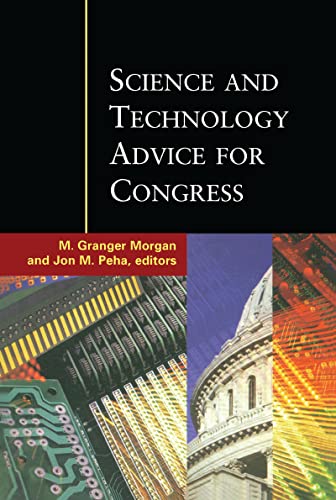
Condition: As New. As new. No marks. The elimination of the Office of Technology Assessment (OTA) in 1995 came during a storm of budget cutting and partisan conflict. Operationally, it left Congress without an institutional arrangement to bring expert scientific and technological advice into the process of legislative decisionmaking. This deficiency has become increasingly critical, as more and more of the decisions faced by Congress and society require judgments based on highly specialized technical information. Offering perspectives from scholars and scientists with diverse academic backgrounds and extensive experience within the policy process, Science and Technology Advice for Congress breaks from the politics of the OTA and its contentious aftermath. Granger Morgan and Jon Peha begin with an overview of the use of technical information in framing policy issues, crafting legislation, and the overall process of governing. They note how, as nonexperts, legislators must make decisions in the face of scientific uncertainty and competing scientific claims from stakeholders. The contributors continue with a discussion of why OTA was created. They draw lessons from OTA's demise, and compare the use of science and technological information in Europe with the United States. The second part of the book responds to requests from congressional leaders for practical solutions. Among the options discussed are expanded functions within existing agencies such as the General Accounting or Congressional Budget Offices; an independent, NGO- administrated analysis group; and a dedicated successor to OTA within Congress. The models emphasize flexibility--and the need to make political feasibility a core component of design.
-
paperback. Condition: Good. Connecting readers with great books since 1972! Used textbooks may not include companion materials such as access codes, etc. May have some wear or writing/highlighting. We ship orders daily and Customer Service is our top priority!
-
Science and Technology Advice for Congress
Seller: Wonder Book, Frederick, MD, U.S.A.
Seller rating 5 out of 5 stars
Condition: As New. Like New condition. A near perfect copy that may have very minor cosmetic defects.
-
Paperback. Condition: Good. No Jacket. Pages can have notes/highlighting. Spine may show signs of wear. ~ ThriftBooks: Read More, Spend Less.
-
paperback. Condition: Good. Ex-library book with typical stickers and stampings. Priority Mail is available on this item. No international shipping.
-

Condition: As New. Unread book in perfect condition.
-

Condition: New.
-

Science and Technology Advice for Congress
Language: English
Published by Taylor and Francis Inc, US, 2003
ISBN 10: 1891853740 ISBN 13: 9781891853746
Seller: Rarewaves.com USA, London, LONDO, United Kingdom
Seller rating 5 out of 5 stars
Paperback. Condition: New. The elimination of the Office of Technology Assessment (OTA) in 1995 came during a storm of budget cutting and partisan conflict. Operationally, it left Congress without an institutional arrangement to bring expert scientific and technological advice into the process of legislative decisionmaking. This deficiency has become increasingly critical, as more and more of the decisions faced by Congress and society require judgments based on highly specialized technical information. Offering perspectives from scholars and scientists with diverse academic backgrounds and extensive experience within the policy process, Science and Technology Advice for Congress breaks from the politics of the OTA and its contentious aftermath. Granger Morgan and Jon Peha begin with an overview of the use of technical information in framing policy issues, crafting legislation, and the overall process of governing. They note how, as nonexperts, legislators must make decisions in the face of scientific uncertainty and competing scientific claims from stakeholders. The contributors continue with a discussion of why OTA was created. They draw lessons from OTA's demise, and compare the use of science and technological information in Europe with the United States. The second part of the book responds to requests from congressional leaders for practical solutions. Among the options discussed are expanded functions within existing agencies such as the General Accounting or Congressional Budget Offices; an independent, NGO- administrated analysis group; and a dedicated successor to OTA within Congress. The models emphasize flexibility--and the need to make political feasibility a core component of design.
-

Science and Technology Advice for Congress
Seller: GreatBookPricesUK, Woodford Green, United Kingdom
Seller rating 5 out of 5 stars
Condition: New.
-

Science and Technology Advice for Congress
Language: English
Published by Taylor and Francis Inc, US, 2003
ISBN 10: 1891853740 ISBN 13: 9781891853746
Paperback. Condition: New. The elimination of the Office of Technology Assessment (OTA) in 1995 came during a storm of budget cutting and partisan conflict. Operationally, it left Congress without an institutional arrangement to bring expert scientific and technological advice into the process of legislative decisionmaking. This deficiency has become increasingly critical, as more and more of the decisions faced by Congress and society require judgments based on highly specialized technical information. Offering perspectives from scholars and scientists with diverse academic backgrounds and extensive experience within the policy process, Science and Technology Advice for Congress breaks from the politics of the OTA and its contentious aftermath. Granger Morgan and Jon Peha begin with an overview of the use of technical information in framing policy issues, crafting legislation, and the overall process of governing. They note how, as nonexperts, legislators must make decisions in the face of scientific uncertainty and competing scientific claims from stakeholders. The contributors continue with a discussion of why OTA was created. They draw lessons from OTA's demise, and compare the use of science and technological information in Europe with the United States. The second part of the book responds to requests from congressional leaders for practical solutions. Among the options discussed are expanded functions within existing agencies such as the General Accounting or Congressional Budget Offices; an independent, NGO- administrated analysis group; and a dedicated successor to OTA within Congress. The models emphasize flexibility--and the need to make political feasibility a core component of design.
-
Science and Technology Advice for Congress
Language: English
Published by Routledge 2003-09-08, 2003
ISBN 10: 1891853740 ISBN 13: 9781891853746
Paperback. Condition: New.
-
Science and Technology Advice for Congress
Seller: Ria Christie Collections, Uxbridge, United Kingdom
Seller rating 5 out of 5 stars
Condition: New. In.
-
Condition: New. pp. 228.
-

Science and Technology Advice for Congress
Seller: GreatBookPricesUK, Woodford Green, United Kingdom
Seller rating 5 out of 5 stars
Condition: As New. Unread book in perfect condition.
-
Science and Technology Advice for Congress
Language: English
Published by Resources for the Future, 2003
ISBN 10: 1891853740 ISBN 13: 9781891853746
Paperback. Condition: Brand New. illustrated edition. 288 pages. 9.00x6.00x0.50 inches. In Stock.
-
Condition: New. pp. 228.
-
Science and Technology Advice for Congress
Language: English
Published by Resources for the Future, 2003
ISBN 10: 1891853740 ISBN 13: 9781891853746
Paperback. Condition: Brand New. illustrated edition. 288 pages. 9.00x6.00x0.50 inches. In Stock.
-

Science and Technology Advice for Congress
Language: English
Published by Taylor and Francis Inc, US, 2003
ISBN 10: 1891853740 ISBN 13: 9781891853746
Paperback. Condition: New. The elimination of the Office of Technology Assessment (OTA) in 1995 came during a storm of budget cutting and partisan conflict. Operationally, it left Congress without an institutional arrangement to bring expert scientific and technological advice into the process of legislative decisionmaking. This deficiency has become increasingly critical, as more and more of the decisions faced by Congress and society require judgments based on highly specialized technical information. Offering perspectives from scholars and scientists with diverse academic backgrounds and extensive experience within the policy process, Science and Technology Advice for Congress breaks from the politics of the OTA and its contentious aftermath. Granger Morgan and Jon Peha begin with an overview of the use of technical information in framing policy issues, crafting legislation, and the overall process of governing. They note how, as nonexperts, legislators must make decisions in the face of scientific uncertainty and competing scientific claims from stakeholders. The contributors continue with a discussion of why OTA was created. They draw lessons from OTA's demise, and compare the use of science and technological information in Europe with the United States. The second part of the book responds to requests from congressional leaders for practical solutions. Among the options discussed are expanded functions within existing agencies such as the General Accounting or Congressional Budget Offices; an independent, NGO- administrated analysis group; and a dedicated successor to OTA within Congress. The models emphasize flexibility--and the need to make political feasibility a core component of design.
-

Kartoniert / Broschiert. Condition: New. M. Granger Morgan is professor and head of the Department of Engineering and Public Policy, Lord Chair Professor in Engineering, professor in the Department of Electrical and Computer Engineering, and professor in the H. John Heinz III School of Public Poli.
-
Science and Technology Advice for Congress
Language: English
Published by Taylor and Francis Inc, US, 2003
ISBN 10: 1891853740 ISBN 13: 9781891853746
Paperback. Condition: New. The elimination of the Office of Technology Assessment (OTA) in 1995 came during a storm of budget cutting and partisan conflict. Operationally, it left Congress without an institutional arrangement to bring expert scientific and technological advice into the process of legislative decisionmaking. This deficiency has become increasingly critical, as more and more of the decisions faced by Congress and society require judgments based on highly specialized technical information. Offering perspectives from scholars and scientists with diverse academic backgrounds and extensive experience within the policy process, Science and Technology Advice for Congress breaks from the politics of the OTA and its contentious aftermath. Granger Morgan and Jon Peha begin with an overview of the use of technical information in framing policy issues, crafting legislation, and the overall process of governing. They note how, as nonexperts, legislators must make decisions in the face of scientific uncertainty and competing scientific claims from stakeholders. The contributors continue with a discussion of why OTA was created. They draw lessons from OTA's demise, and compare the use of science and technological information in Europe with the United States. The second part of the book responds to requests from congressional leaders for practical solutions. Among the options discussed are expanded functions within existing agencies such as the General Accounting or Congressional Budget Offices; an independent, NGO- administrated analysis group; and a dedicated successor to OTA within Congress. The models emphasize flexibility--and the need to make political feasibility a core component of design.
-

Science and Technology Advice For Congress
Published by Resources For The Future, 2003
Seller: Robinson Street Books, IOBA, Binghamton, NY, U.S.A.
Association Member: IOBA
Seller rating 4 out of 5 stars

Paperback. Condition: Good. Prompt Shipment, shipped in Boxes, Tracking PROVIDEDGood, paperback, clean pages, 236 pages, 8vo.
-
Condition: New. pp. 228 This item is printed on demand.

