

Order Total (1 Item Items):
Shipping Destination:

Mark Pearce John Bintliff (13 results)
Skip to main search results
Search filters
Product Type
- All Product Types
- Books (13)
- Magazines & Periodicals (No further results match this refinement)
- Comics (No further results match this refinement)
- Sheet Music (No further results match this refinement)
- Art, Prints & Posters (No further results match this refinement)
- Photographs (No further results match this refinement)
- Maps (No further results match this refinement)
- Manuscripts & Paper Collectibles (No further results match this refinement)
Condition Learn more
- New (6)
- As New, Fine or Near Fine (3)
- Very Good or Good (4)
- Fair or Poor (No further results match this refinement)
- As Described (No further results match this refinement)
Binding
- All Bindings
- Hardcover (No further results match this refinement)
- Softcover (13)
Collectible Attributes
- First Edition (No further results match this refinement)
- Signed (No further results match this refinement)
- Dust Jacket (No further results match this refinement)
- Seller-Supplied Images (4)
- Not Print on Demand (13)
Language (1)
Free Shipping
Seller Location
Seller Rating
-

Condition: Very Good. Most items will be dispatched the same or the next working day. A copy that has been read, but is in excellent condition. Pages are intact and not marred by notes or highlighting. The spine remains undamaged.
-
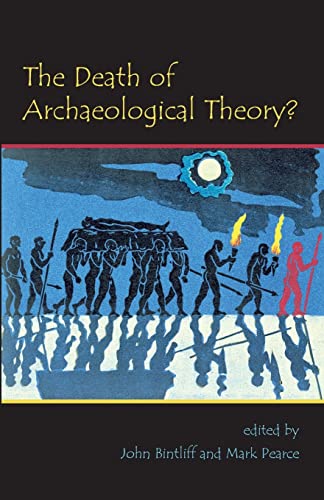
paperback. Condition: Good. Connecting readers with great books since 1972! Used textbooks may not include companion materials such as access codes, etc. May have some wear or writing/highlighting. We ship orders daily and Customer Service is our top priority!
-
The Death of Archaeological Theory?: 1 (Oxbow Insights in Archaeology)
Seller: WorldofBooks, Goring-By-Sea, WS, United Kingdom
Seller rating 5 out of 5 stars

Paperback. Condition: Fine.
-
Paperback. Condition: Very Good. No Jacket. May have limited writing in cover pages. Pages are unmarked. ~ ThriftBooks: Read More, Spend Less.
-
The Death of Archaeological Theory?
Language: English
Published by Oxbow Books, Limited, 2011
ISBN 10: 1842174460 ISBN 13: 9781842174463
Seller: Better World Books Ltd, Dunfermline, United Kingdom
Seller rating 5 out of 5 stars
Condition: Good. Pages intact with minimal writing/highlighting. The binding may be loose and creased. Dust jackets/supplements are not included. Stock photo provided. Product includes identifying sticker. Better World Books: Buy Books. Do Good.
-
Paperback. Condition: New. *Brand new* Ships from USA.
-

Condition: As New. Unread book in perfect condition.
-

Condition: New.
-
Paperback. Condition: new. Paperback. The Death of Archaeological Theory? addresses the provocative subject of whether it is time to discount the burden of somewhat dogmatic theory and ideology that has defined archaeological debate and shaped archaeology over the last 25 years. Seven chapters meet this controversial subject head on, also assessing where archaeological theory is now, and future directions. John Bintliff questions what theory is and argues that archaeologists should be freed from 'Ideopraxists', or those who preach that a single approach or model is right to the exclusion of all others. Marc Pluciennik again questions what we mean by archaeological theory and argues that the role of intellectual fashion is underestimated. He predicts pressure from outside archaeology to redirect our dominant theories towards genetic and human impact theory. Kristian Kristiansen argues that theory cannot die, but it can change direction and sees signs of a retreat from the present post-modern and post-processual cycle towards a more science based, rationalistic cycle of revived modernity. To Mark Pearce the most striking thing about the present state of archaeological theory is that there is no emerging paradigm to be discerned; he proposes that Theory is not dead, but has instead become more eclectic and nuanced. Two papers offer a different perspective from other areas of the world; Alexander Gramsch examines the issue from the German tradition and shows that in Central and Eastern Europe not only has Anglo-American Theory had limited impact, but current discussions on the future of method and theory offer a broader view of the discipline in which older traditions are seen to form the foundation. Kent Flannery and Joyce Marcus demonstrate that American archaeologists do not foresee the death of a genuinely archaeological theory (which they believe has never existed) but fear the real catastrophe would be the death of anthropological theory, because some anthropology today has become decidedly anti-scientific, rejecting not only the controlled comparison and contrast of cultures, but also the use of generalisation, both of which are crucial to theories and models and without which the longue duree will always be invisible. The Death of Archaeological Theory? addresses the provocative subject of whether it is time to discount the burden of somewhat dogmatic theory and ideology that has defined archaeological debate and shaped archaeology over the last 25 years. Shipping may be from multiple locations in the US or from the UK, depending on stock availability.
-
The Death of Archaeological Theory? (Oxbow Insights in Archaeology)
Seller: Carmarthenshire Rare Books, Carmarthen, United Kingdom
Seller rating 5 out of 5 stars
Paperback. Condition: Fine. No Jacket. Reprint. 2012 reprint,paperback,87 pages,a fine clean copy.Shelf B26.
-
The Death of Archaeological Theory?
Seller: Kennys Bookshop and Art Galleries Ltd., Galway, GY, Ireland
Seller rating 5 out of 5 stars
Condition: New. 2011. Paperback. . . . . .
-
Condition: New. 2011. Paperback. . . . . . Books ship from the US and Ireland.
-
Paperback. Condition: new. Paperback. The Death of Archaeological Theory? addresses the provocative subject of whether it is time to discount the burden of somewhat dogmatic theory and ideology that has defined archaeological debate and shaped archaeology over the last 25 years. Seven chapters meet this controversial subject head on, also assessing where archaeological theory is now, and future directions. John Bintliff questions what theory is and argues that archaeologists should be freed from 'Ideopraxists', or those who preach that a single approach or model is right to the exclusion of all others. Marc Pluciennik again questions what we mean by archaeological theory and argues that the role of intellectual fashion is underestimated. He predicts pressure from outside archaeology to redirect our dominant theories towards genetic and human impact theory. Kristian Kristiansen argues that theory cannot die, but it can change direction and sees signs of a retreat from the present post-modern and post-processual cycle towards a more science based, rationalistic cycle of revived modernity. To Mark Pearce the most striking thing about the present state of archaeological theory is that there is no emerging paradigm to be discerned; he proposes that Theory is not dead, but has instead become more eclectic and nuanced. Two papers offer a different perspective from other areas of the world; Alexander Gramsch examines the issue from the German tradition and shows that in Central and Eastern Europe not only has Anglo-American Theory had limited impact, but current discussions on the future of method and theory offer a broader view of the discipline in which older traditions are seen to form the foundation. Kent Flannery and Joyce Marcus demonstrate that American archaeologists do not foresee the death of a genuinely archaeological theory (which they believe has never existed) but fear the real catastrophe would be the death of anthropological theory, because some anthropology today has become decidedly anti-scientific, rejecting not only the controlled comparison and contrast of cultures, but also the use of generalisation, both of which are crucial to theories and models and without which the longue duree will always be invisible. The Death of Archaeological Theory? addresses the provocative subject of whether it is time to discount the burden of somewhat dogmatic theory and ideology that has defined archaeological debate and shaped archaeology over the last 25 years. Shipping may be from our Sydney, NSW warehouse or from our UK or US warehouse, depending on stock availability.
