Order Total (1 Item Items):
Shipping Destination:

Iarc Working Group Evaluation Carcinogenic (35 results)
Skip to main search results
Search filters
Product Type
- All Product Types
- Books (35)
- Magazines & Periodicals (No further results match this refinement)
- Comics (No further results match this refinement)
- Sheet Music (No further results match this refinement)
- Art, Prints & Posters (No further results match this refinement)
- Photographs (No further results match this refinement)
- Maps (No further results match this refinement)
- Manuscripts & Paper Collectibles (No further results match this refinement)
Condition Learn more
- New (29)
- As New, Fine or Near Fine (4)
- Very Good or Good (1)
- Fair or Poor (1)
- As Described (No further results match this refinement)
Binding
- All Bindings
- Hardcover (No further results match this refinement)
- Softcover (35)
Collectible Attributes
- First Edition (4)
- Signed (No further results match this refinement)
- Dust Jacket (No further results match this refinement)
- Seller-Supplied Images (10)
- Not Print on Demand (34)
Language (2)
Free Shipping
Seller Location
Seller Rating
-
IARC Monographs on the Evaluation of the Carcinogenic Risk of Chemicals to Humans - 24: Some Pharmaceutical Drugs
Language: English
Published by World Health Organization, 1980
ISBN 10: 928321224X ISBN 13: 9789283212249
Softcover. Condition: Fair. Beschriftungen / Markierungen bis 20 %; Leichte Rillen / Abschürfungen / Risse / Knicke. Evaluates the carcinogenic risk to humans posed by exposure to some Pharmaceutical Drugs.
-

Some Pharmaceutical Drugs
Language: English
Published by World Health Organization, 1996
ISBN 10: 9283212665 ISBN 13: 9789283212669
Condition: As New. Unread book in perfect condition.
-

Printing Processes and Printing Inks, Carbon Black and Some Nitro Compounds
Language: English
Published by World Health Organization, 1996
ISBN 10: 9283212657 ISBN 13: 9789283212652
Condition: As New. Unread book in perfect condition.
-

Some Pharmaceutical Drugs
Language: English
Published by World Health Organization, 1996
ISBN 10: 9283212665 ISBN 13: 9789283212669
Condition: New.
-

Printing Processes and Printing Inks, Carbon Black and Some Nitro Compounds
Language: English
Published by World Health Organization, 1996
ISBN 10: 9283212657 ISBN 13: 9789283212652
Condition: New.
-

Paperback. Condition: new. Paperback. This volume of the IARC Monographs provides evaluations of the carcinogenicity of isobutyl nitrite, Beta-picoline, methyl acrylate, ethyl acrylate, 2-ethylhexyl acrylate, and trimethylolpropane triacrylate.The four acrylates evaluated are chemicals with a high production volume that are produced worldwide. Methyl acrylate is used in the production of acrylic fibres and fire-retardant fabrics. Ethyl acrylate is one of the principal monomers used worldwide in the production of styrene-based polymers, which can be used for medical and dental items. Ethyl acrylate is also used in surface coatings for textiles, paper, leather, and food contact materials, and as a food flavouring agent. 2-Ethylhexyl acrylate is used as a plasticizing co-monomer in the production of resins for pressure-sensitive adhesives, latex paints, reactive diluent/cross-linking agents, textile and leather finishes, and coatings for paper. Trimethylolpropane triacrylate, available as a technical-grade product that also contains incomplete reaction products, is used primarily in production of ultraviolet-curable inks, paint additives, coatings, and adhesives. Beta-Picoline, a methyl pyridine, is widely used as a starting material for pesticides (e.g. chlorpyrifos) and pharmaceuticals (e.g. vitamin B3). It is also used as a flavouring substance in foods and beverages. Isobutyl nitrite is used an intermediate in the syntheses of solvents and fuels, and exposures also occur through its use as a recreational drug.Exposure to all six agents considered may occur in the general population as well as in various occupational settings. An IARC Monographs Working Group reviewed epidemiological evidence, animal bioassays, and mechanistic and other relevant data to reach conclusions as to the carcinogenic hazard to humans of environmental or occupational exposure to these agents. Shipping may be from multiple locations in the US or from the UK, depending on stock availability.
-
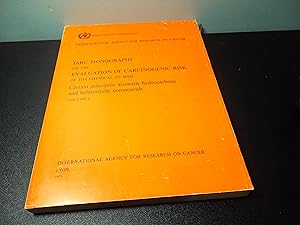
Certain Polycyclic Aromatic Hydrocarbons and Heterocyclic Compounds - IARC Monographs on the Evaluation of Carcinogenic Risk of Chemical to Man Volume 3
Published by International Agency for Research on Cancer, Lyon, 1973
Soft cover. Condition: Good +. No Jacket. Good+ Orange wraps with black titles. 1973. Wear to edges and a bit of scuffing to covers. Corners and spine ends with minor bumping. All wear is exterior - text clean, tight and unmarked. 271 pp. IARC is a division of the World Health Organization and this volume represents meeting contents from the 1972 workshop. 8vo - over 7¾" - 9¾" tall. Book.
-
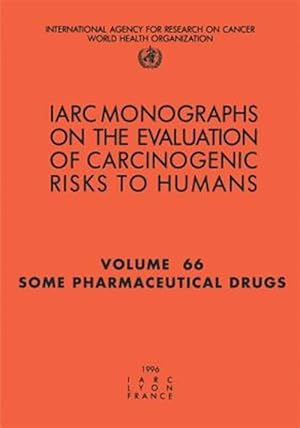
Some Pharmaceutical Drugs
Language: English
Published by World Health Organization, 1996
ISBN 10: 9283212665 ISBN 13: 9789283212669
Seller: GreatBookPricesUK, Woodford Green, United Kingdom
Seller rating 5 out of 5 stars

Condition: New.
-

Printing Processes and Printing Inks, Carbon Black and Some Nitro Compounds
Language: English
Published by World Health Organization, 1996
ISBN 10: 9283212657 ISBN 13: 9789283212652
Seller: GreatBookPricesUK, Woodford Green, United Kingdom
Seller rating 5 out of 5 stars
Condition: New.
-

Paperback. Condition: new. Paperback. This volume presents an evaluation of the carcinogenicity of benzene, updating with new data the most recent evaluation provided in Volume 100F of the IARC Monographs. Benzene, a simple aromatic hydrocarbon, occurs naturally and as a result of human activity, notably as a result of combustion, and it is a high-volume chemical now used mostly as a chemical intermediate. Human exposure to benzene is widespread through the air, in consumer products, and in industry. An IARC Monographs Working Group reviewed epidemiological studies, animal cancer bioassays, and mechanistic data to assess the carcinogenicity of benzene and conducted quantitative analyses of data on genotoxicity and human cancer risks. Shipping may be from multiple locations in the US or from the UK, depending on stock availability.
-

Printing Processes and Printing Inks, Carbon Black and Some Nitro Compounds
Language: English
Published by World Health Organization, 1996
ISBN 10: 9283212657 ISBN 13: 9789283212652
Seller: GreatBookPricesUK, Woodford Green, United Kingdom
Seller rating 5 out of 5 stars
Condition: As New. Unread book in perfect condition.
-

Some Pharmaceutical Drugs
Language: English
Published by World Health Organization, 1996
ISBN 10: 9283212665 ISBN 13: 9789283212669
Seller: GreatBookPricesUK, Woodford Green, United Kingdom
Seller rating 5 out of 5 stars
Condition: As New. Unread book in perfect condition.
-

Paperback. Condition: new. Paperback. This volume of the IARC Monographs provides evaluations of the carcinogenicity of perfluorooctanoic acid, tetrafluoroethylene, 1,2-dichloropropane, dichloromethane, and 1,3-propane sultone. Perfluorooctanoic acid is a fluorinated chemical that persists in the environment, having been detected in air, water, dust, and food. It is particularly important for the production of fluoropolymers such as polytetrafluoroethylene, which has a wide range of uses in industrial and consumer products, including non-stick coatings on cookware and waterproof clothing. Tetrafluoroethylene is a fluorinated monomer that is used mainly as an intermediate in the production of polytetrafluoroethylene. The chlorinated solvent 1,2-dichloropropane is used primarily as a production intermediate, but also in paint stripping and, until 2012, in printing-press cleaning in Japan. Dichloromethane is a chlorinated solvent that is used in paint stripping, aerosols, polycarbonate plastic and hydrofluorocarbon manufacture, metal and printing-press cleaning, and refrigerant production. Industrial use of the alkylating agent 1,3-propane sultone was largely discontinued in the 1960s, but it has been used recently in the manufacture of lithium batteries, and for chemical synthesis in the laboratory. Exposure to all five agents considered occurs in the general population as well as in different occupational settings. An IARC Monographs Working Group reviewed epidemiological evidence, animal bioassays, and mechanistic and other relevant data to reach conclusions as to the carcinogenic hazard to humans of environmental or occupational exposure to these agents. Shipping may be from multiple locations in the US or from the UK, depending on stock availability.
-

Bitumens and bitumen emissions, and some N- and S-heterocyclic polycyclic aromatic hydrocarbons (Paperback)
Language: English
Published by International Agency for Research on Cancer, Lyon, 2014
ISBN 10: 9283213262 ISBN 13: 9789283213260
Paperback. Condition: new. Paperback. This one-hundred-and-third volume of the IARC Monographs contains evaluations of the carcinogenic hazard to humans of bitumens and bitumen emissions and of some N- and S-heterocyclic polycyclic aromatic hydrocarbons (referred to as azaarenes and thiaarenes respectively). This volume is the fourth in a series of IARC Monograph volumes evaluating exposures related to air pollution. Indeed the IARC Monographs Advisory Group that met in 2004 recommended that IARC develop such series in recognition of the large contribution of air pollution to the global burden of cancer. Agents and related exposures evaluated thus far according to this recommendation include nonheterocyclic polycyclic aromatic hydrocarbons in Volume 92 (IARC 2010a); particles and fibres in Volume 93 (IARC 2010b) and indoor air pollution in Volumes 95 and 100E (IARC 2010c 2012). This Monograph concerns only bitumens produced by petroleum refining and not naturally occurring bitumens. Thus the term bitumens as used in this volume refers to the products derived from residues resulting from vacuum distillation of selected petroleum crude oils.These materials are called asphalt petroleum asphalt or asphalt cement in North America; in this volume the term asphalt is used to describe mixtures of bitumen and mineral matter. Bitumens must be distinguished from coal tars which are products of the destructive distillation of coals and also from coal-tar pitches which are residues from the distillation of coal tars. Shipping may be from multiple locations in the US or from the UK, depending on stock availability.
-

Paperback. Condition: new. Paperback. This volume of the IARC Monographs provides an assessment of the carcinogenicity of 14 drugs and herbal products.The IARC Monographs Working Group relied mainly on epidemiological studies to evaluate the carcinogenic hazard to humans exposed to the drugs digoxin (widely prescribed for the treatment of chronic heart failure), pioglitazone (used for the treatment of type 2 diabetes mellitus), and hydrochlorothiazide (used to treat hypertension). Other agents evaluated included the drugs primidone, sulfasalazine, pentosan polysulfate sodium, and triamterene, and five herbal products (or their components): Aloe vera whole leaf extract, goldenseal root powder, Ginkgo biloba leaf extract, kava extract, and pulegone. In view of the limited agent-specific information available from epidemiological studies, assessments of these agents relied mainly on carcinogenicity bioassays to reach conclusions as to the carcinogenic hazard to exposed humans. Shipping may be from multiple locations in the US or from the UK, depending on stock availability.
-

Paperback. Condition: new. Paperback. This volume of the IARC Monographs provides an assessment of the carcinogenicity of fluoro-edenite fibrous amphibole, silicon carbide fibres and whiskers, and carbon nanotubes, including single-walled and multiwalled types. None of these agents had been assessed previously by the IARC Monographs Working Group. The Working Group relied mainly on epidemiological studies to evaluate the carcinogenic hazard to humans exposed to fluoro-edenite fibrous amphibole, an environmental contaminant that was reported to cause mesothelioma in the regional population of Biancavilla, Sicily, Italy. Silicon carbide fibres are by-products of the manufacture of silicon carbide particles by the Acheson process; silicon carbide whiskers are produced by other processes. The evaluations of the fibres and of the occupational exposures associated with the Acheson process were mainly based on epidemiological studies, whereas the assessment of the whiskers - in the absence of epidemiological data - was based on carcinogenicity bioassays and consideration of their physical properties. In view of the absence of epidemiological studies on carbon nanotubes and the limited information available from mechanistic data, the evaluations of single-walled and multiwalled carbon nanotubes relied essentially on carcinogenicity bioassays. Shipping may be from multiple locations in the US or from the UK, depending on stock availability.
-

Non-ionizing radiation (Paperback)
Language: English
Published by International Agency for Research on Cancer, Lyon, 2014
ISBN 10: 9283213254 ISBN 13: 9789283213253
Paperback. Condition: new. Paperback. This one-hundred-and-second volume of the IARC Monographs contains evaluations of the carcinogenic hazard to humans of radiofrequency electromagnetic fields. This is the second volume on non-ionizing radiation after Volume 80 (Static and Extremely Low-Frequency (ELF) Electric and Magnetic Fields; IARC 2002) and the fourth and last in a series on physical agents after Volume 75 (Ionizing Radiation Part 1: X- and Gamma-radiation and Neutrons; IARC 2000) and Volume 78 (Ionizing Radiation Part 2: Some Internally Deposited Radionuclides; IARC 2001). Solar radiation and ultraviolet radiation were evaluated in Volume 55 (IARC 1992). The types of radiation evaluated as human carcinogens (Group 1) were revisited in Volume 100D (IARC 2012). The topic of this Monograph is the evaluation of the carcinogenicity of radiation in the radiofrequency (RF) range (30 kHz to 300 GHz) of the electromagnetic spectrum. This type of radiation is emitted by devices used in wireless telecommunication including mobile phones and by many other sources in occupational and general environmental settings.Exposures are ubiquitous in more developed countries and rapidly increasing in the developing world in particular with respect to the use of mobile phones. There is rising concern as to whether exposure to RF radiation emitted by a mobile phone affects human health and specifically whether mobile-phone use increases the risk of cancer of the brain. The general public manufacturers regulatory authorities and public health agencies are seeking evidence on the safety of mobile-phone use. Consequently there has been intense interest in the development and outcome of this IARC Monograph. This interest reflects the high prevalence of exposure (which increasingly extends to children) the vast scope of the telecommunications industry the findings of some epidemiological studies that suggest an increased risk of cancer and a high level of media coverage of the topic of mobile phones and cancer.Although the preparation of this Monograph had been scheduled so as to include the results of the large international case-control study INTERPHONE on mobile-phone use (conducted in 2000-2004; published in 2010) it should be emphasized that the evaluations in this volume address the general question of whether RF radiation causes cancer in humans or in experimental animals: it does not specifically or exclusively consider mobile phones but rather the type of radiation emitted by mobile phones and various other sources. Furthermore this Monograph is focused on the potential for an increased risk of cancer among those exposed to RF radiation but does not provide a quantitative assessment of any cancer risk nor does it discuss or evaluate any other potential health effects of RF radiation. "This publication represents the views and expert opinions of an IARC working group on the evaluation of carcinogenic risks to humans, which met in Lyon, 24-31 May 2011." Shipping may be from multiple locations in the US or from the UK, depending on stock availability.
-

Paperback. Condition: new. Paperback. Evaluates the carcinogenic risk to humans posed by man-made mineral fibres and radon. Evaluates the carcinogenic risk to humans posed by man-made mineral fibres and radon. Shipping may be from multiple locations in the US or from the UK, depending on stock availability.
-

Paperback. Condition: new. Paperback. Most of the materials evaluated in this volume are poorly soluble solid materials that are deposited in particulate form in the lung where they may be retained for long periods. In this respect, they should be considered as 'particulate toxicants'. Cobalt and cobalt compounds were formerly evaluated as being possibly carcinogenic to humans and the evidence was inadequate. Since that time, new epidemiological studies have been conducted and are evaluated here. No new studies in experimental animals were available for cobalt compounds used in the hard metal industry. Nevertheless, this volume re-evaluates some of the experimental evidence for cobalt that was presented previously. The Working Group questioned the relevance of the routes of administration used in some of the animal carcinogenesis bioassays for the evaluation of carcinogenicity of cobalt metal and cobalt alloys. The bioassays were reviewed again in this volume. Cobalt and cobalt compounds were formerly evaluated as being possibly carcinogenic to humans and the evidence was inadequate. This book questions the relevance of the routes of administration used in some of the animal carcinogenesis bioassays for the evaluation of carcinogenicity of cobalt metal and cobalt alloys. Shipping may be from multiple locations in the US or from the UK, depending on stock availability.
-

Paperback. Condition: new. Paperback. In 1988, IARC classified diesel exhaust as probably carcinogenic to humans (Group 2A). An Advisory Group which reviews and recommends future priorities for the IARC Monographs Program had recommended diesel exhaust as a high priority for re-evaluation since 1998. There has been mounting concern about the cancer-causing potential of diesel exhaust, particularly based on findings in epidemiological studies of workers exposed in various settings. This was re-emphasized by the publication in March 2012 of the results of a large US National Cancer Institute/National Institute for Occupational Safety and Health study of occupational exposure to such emissions in underground miners, which showed an increased risk of death from lung cancer in exposed workers. The scientific evidence was reviewed thoroughly by the Working Group and overall it was concluded that there was sufficient evidence in humans for the carcinogenicity of diesel exhaust. The Working Group found that diesel exhaust is a cause of lung cancer (sufficient evidence) and also noted a positive association (limited evidence) with an increased risk of bladder cancer (Group 1).The Working Group concluded that gasoline exhaust was possibly carcinogenic to humans (Group 2B), a finding unchanged from the previous evaluation in 1989. Shipping may be from multiple locations in the US or from the UK, depending on stock availability.
-
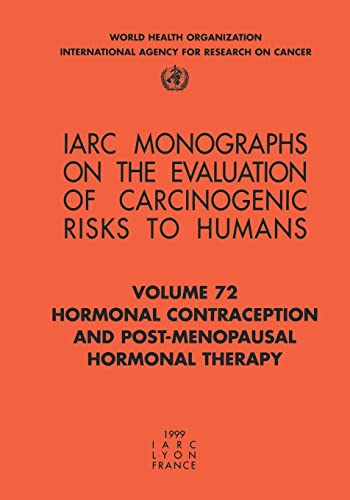
Paperback. Condition: new. Paperback. Evaluates evidence for an increased risk of cancer in women using combined oral contraceptives, progestogen-only hormonal contraceptives, post-menopausal oestrogen therapy, and post-menopausal oestrogen-progestogen therapy. Although the carcinogenicity of these preparations has been extensively investigated, the book stresses the many complex methodological issues that must be considered when interpreting findings and weighing results. Evidence of an association between use of these preparations and positive effects on health, including a reduced risk of some cancers, is also critically assessed. The first and most extensive monograph evaluates evidence of an association between the use of combined oral contraceptives and cancer at nine sites. Concerning breast cancer, the evaluation concludes that, even if the association is causal, the excess risk for breast cancer associated with patterns of use that are typical today is very small. Studies of predominantly high-dose preparations found an increased risk of hepatocellular carcinoma in the absence of hepatitis viruses.Citing these findings, the evaluation concludes that there is sufficient evidence in humans for the carcinogenicity of combined oral contraceptives. The evaluation also found sufficient evidence for the carcinogenicity of some, but not all, combined preparations in animals. Combined oral contraceptives were classified as carcinogenic to humans. The evaluation also cites conclusive evidence that these agents have a protective effect against cancers of the ovary and endometrium. Progestogen-only contraceptives are evaluated in the second monograph, which considers the association with cancer at six sites. The evaluation found no evidence of an increased risk for breast cancer. Although the evaluation found sufficient evidence in animals for the carcinogenicity of medroxyprogesterone acetate, evidence for the carcinogenicity of progestogen-only contraceptives in humans was judged inadequate. Progestogen-only contraceptives were classified as possibly carcinogenic to humans. The third monograph, on post-menopausal oestrogen therapy, considers evidence of an association with cancer at eight sites.Findings from a large number of epidemiological studies indicate a small increase in the risk of breast cancer in women who have used these preparations for five years or more. Studies consistently show an association between use of post-menopausal oestrogen therapy and an increased risk for endometrial cancer. Data on the association with other cancers were either inconclusive or suggested no effect on risk. The evaluation concludes that post-menopausal oestrogen therapy is carcinogenic to humans. The final monograph evaluates the association between the use of post-menopausal oestrogen-progestogen therapy and cancer at four sites. The evaluation of limited data on breast cancer found an increased relative risk observed with long-term use. Data were judged insufficient to assess the effects of past use and of different progestogen compounds, doses, and treatment schedules. For endometrial cancer, the evaluation found an increase in risk relative to non-users when the progestogen was added to the cycle for 10 days or fewer. Post-menopausal oestrogen-progestogen therapy was classified as possibly carcinogenic to humans.Concerning post-menopausal therapy in general, the book notes that evidence of carcinogenic risks must be placed in perspective of potential benefits. The prevention of osteoporotic fractures is cited as the best-established benefit. Evidence also suggests that oestrogen prevents heart disease and may prevent memory loss and dementia. Evaluates evidence for an increased risk of cancer in women using combined oral contraceptives progestogen-only hormonal contraceptives post-menopausal oestrogen therapy and post-menopausal oestrogen-progestogen therapy. Al Shipping may be from multiple locations in the US or from the UK, depending on stock availability.
-
![Stock image for Malaria and some polyomaviruses [SV40, BK, JC and Merkel Cell Viruses] (Paperback) for sale by Grand Eagle Retail](https://pictures.abebooks.com/isbn/9789283213277-uk-300.jpg)
Malaria and some polyomaviruses [SV40, BK, JC and Merkel Cell Viruses] (Paperback)
Language: English
Published by International Agency for Research on Cancer, Lyon, 2015
ISBN 10: 9283213270 ISBN 13: 9789283213277
Paperback. Condition: new. Paperback. This one-hundred-and-fourth volume of the IARC Monographs on the Evaluation of Carcinogenic Risks to Humans is the eighth volume devoted to infectious biological agents. Several have been recognized as major risk factors involved in the burden of cancer. In Volume 104, the IARC Monographs consider the following agents for the first time: malaria (a disease caused by infection with the Plasmodium parasite) and four polyomaviruses: the simian virus SV40, and the BK, JC, and Merkel cell polyomaviruses. Infection by these microorganisms concerns a very large proportion of the world population. Shipping may be from multiple locations in the US or from the UK, depending on stock availability.
-
Paperback. Condition: new. Paperback. This volume of the IARC Monographs provides evaluations of the carcinogenicity of isobutyl nitrite, Beta-picoline, methyl acrylate, ethyl acrylate, 2-ethylhexyl acrylate, and trimethylolpropane triacrylate.The four acrylates evaluated are chemicals with a high production volume that are produced worldwide. Methyl acrylate is used in the production of acrylic fibres and fire-retardant fabrics. Ethyl acrylate is one of the principal monomers used worldwide in the production of styrene-based polymers, which can be used for medical and dental items. Ethyl acrylate is also used in surface coatings for textiles, paper, leather, and food contact materials, and as a food flavouring agent. 2-Ethylhexyl acrylate is used as a plasticizing co-monomer in the production of resins for pressure-sensitive adhesives, latex paints, reactive diluent/cross-linking agents, textile and leather finishes, and coatings for paper. Trimethylolpropane triacrylate, available as a technical-grade product that also contains incomplete reaction products, is used primarily in production of ultraviolet-curable inks, paint additives, coatings, and adhesives. Beta-Picoline, a methyl pyridine, is widely used as a starting material for pesticides (e.g. chlorpyrifos) and pharmaceuticals (e.g. vitamin B3). It is also used as a flavouring substance in foods and beverages. Isobutyl nitrite is used an intermediate in the syntheses of solvents and fuels, and exposures also occur through its use as a recreational drug.Exposure to all six agents considered may occur in the general population as well as in various occupational settings. An IARC Monographs Working Group reviewed epidemiological evidence, animal bioassays, and mechanistic and other relevant data to reach conclusions as to the carcinogenic hazard to humans of environmental or occupational exposure to these agents. Shipping may be from our Sydney, NSW warehouse or from our UK or US warehouse, depending on stock availability.
-
Paperback. Condition: new. Paperback. This volume presents an evaluation of the carcinogenicity of benzene, updating with new data the most recent evaluation provided in Volume 100F of the IARC Monographs. Benzene, a simple aromatic hydrocarbon, occurs naturally and as a result of human activity, notably as a result of combustion, and it is a high-volume chemical now used mostly as a chemical intermediate. Human exposure to benzene is widespread through the air, in consumer products, and in industry. An IARC Monographs Working Group reviewed epidemiological studies, animal cancer bioassays, and mechanistic data to assess the carcinogenicity of benzene and conducted quantitative analyses of data on genotoxicity and human cancer risks. Shipping may be from our Sydney, NSW warehouse or from our UK or US warehouse, depending on stock availability.
-
Paperback. Condition: new. Paperback. Evaluates the carcinogenic risk to humans posed by man-made mineral fibres and radon. Evaluates the carcinogenic risk to humans posed by man-made mineral fibres and radon. Shipping may be from our Sydney, NSW warehouse or from our UK or US warehouse, depending on stock availability.
-
Paperback. Condition: new. Paperback. Most of the materials evaluated in this volume are poorly soluble solid materials that are deposited in particulate form in the lung where they may be retained for long periods. In this respect, they should be considered as 'particulate toxicants'. Cobalt and cobalt compounds were formerly evaluated as being possibly carcinogenic to humans and the evidence was inadequate. Since that time, new epidemiological studies have been conducted and are evaluated here. No new studies in experimental animals were available for cobalt compounds used in the hard metal industry. Nevertheless, this volume re-evaluates some of the experimental evidence for cobalt that was presented previously. The Working Group questioned the relevance of the routes of administration used in some of the animal carcinogenesis bioassays for the evaluation of carcinogenicity of cobalt metal and cobalt alloys. The bioassays were reviewed again in this volume. Cobalt and cobalt compounds were formerly evaluated as being possibly carcinogenic to humans and the evidence was inadequate. This book questions the relevance of the routes of administration used in some of the animal carcinogenesis bioassays for the evaluation of carcinogenicity of cobalt metal and cobalt alloys. Shipping may be from our Sydney, NSW warehouse or from our UK or US warehouse, depending on stock availability.
-
Paperback. Condition: new. Paperback. This volume of the IARC Monographs provides evaluations of the carcinogenicity of perfluorooctanoic acid, tetrafluoroethylene, 1,2-dichloropropane, dichloromethane, and 1,3-propane sultone. Perfluorooctanoic acid is a fluorinated chemical that persists in the environment, having been detected in air, water, dust, and food. It is particularly important for the production of fluoropolymers such as polytetrafluoroethylene, which has a wide range of uses in industrial and consumer products, including non-stick coatings on cookware and waterproof clothing. Tetrafluoroethylene is a fluorinated monomer that is used mainly as an intermediate in the production of polytetrafluoroethylene. The chlorinated solvent 1,2-dichloropropane is used primarily as a production intermediate, but also in paint stripping and, until 2012, in printing-press cleaning in Japan. Dichloromethane is a chlorinated solvent that is used in paint stripping, aerosols, polycarbonate plastic and hydrofluorocarbon manufacture, metal and printing-press cleaning, and refrigerant production. Industrial use of the alkylating agent 1,3-propane sultone was largely discontinued in the 1960s, but it has been used recently in the manufacture of lithium batteries, and for chemical synthesis in the laboratory. Exposure to all five agents considered occurs in the general population as well as in different occupational settings. An IARC Monographs Working Group reviewed epidemiological evidence, animal bioassays, and mechanistic and other relevant data to reach conclusions as to the carcinogenic hazard to humans of environmental or occupational exposure to these agents. Shipping may be from our Sydney, NSW warehouse or from our UK or US warehouse, depending on stock availability.
-
Paperback. Condition: new. Paperback. This volume of the IARC Monographs provides an assessment of the carcinogenicity of fluoro-edenite fibrous amphibole, silicon carbide fibres and whiskers, and carbon nanotubes, including single-walled and multiwalled types. None of these agents had been assessed previously by the IARC Monographs Working Group. The Working Group relied mainly on epidemiological studies to evaluate the carcinogenic hazard to humans exposed to fluoro-edenite fibrous amphibole, an environmental contaminant that was reported to cause mesothelioma in the regional population of Biancavilla, Sicily, Italy. Silicon carbide fibres are by-products of the manufacture of silicon carbide particles by the Acheson process; silicon carbide whiskers are produced by other processes. The evaluations of the fibres and of the occupational exposures associated with the Acheson process were mainly based on epidemiological studies, whereas the assessment of the whiskers - in the absence of epidemiological data - was based on carcinogenicity bioassays and consideration of their physical properties. In view of the absence of epidemiological studies on carbon nanotubes and the limited information available from mechanistic data, the evaluations of single-walled and multiwalled carbon nanotubes relied essentially on carcinogenicity bioassays. Shipping may be from our Sydney, NSW warehouse or from our UK or US warehouse, depending on stock availability.
-
Bitumens and bitumen emissions, and some N- and S-heterocyclic polycyclic aromatic hydrocarbons (Paperback)
Language: English
Published by International Agency for Research on Cancer, Lyon, 2014
ISBN 10: 9283213262 ISBN 13: 9789283213260
Paperback. Condition: new. Paperback. This one-hundred-and-third volume of the IARC Monographs contains evaluations of the carcinogenic hazard to humans of bitumens and bitumen emissions and of some N- and S-heterocyclic polycyclic aromatic hydrocarbons (referred to as azaarenes and thiaarenes respectively). This volume is the fourth in a series of IARC Monograph volumes evaluating exposures related to air pollution. Indeed the IARC Monographs Advisory Group that met in 2004 recommended that IARC develop such series in recognition of the large contribution of air pollution to the global burden of cancer. Agents and related exposures evaluated thus far according to this recommendation include nonheterocyclic polycyclic aromatic hydrocarbons in Volume 92 (IARC 2010a); particles and fibres in Volume 93 (IARC 2010b) and indoor air pollution in Volumes 95 and 100E (IARC 2010c 2012). This Monograph concerns only bitumens produced by petroleum refining and not naturally occurring bitumens. Thus the term bitumens as used in this volume refers to the products derived from residues resulting from vacuum distillation of selected petroleum crude oils.These materials are called asphalt petroleum asphalt or asphalt cement in North America; in this volume the term asphalt is used to describe mixtures of bitumen and mineral matter. Bitumens must be distinguished from coal tars which are products of the destructive distillation of coals and also from coal-tar pitches which are residues from the distillation of coal tars. Shipping may be from our Sydney, NSW warehouse or from our UK or US warehouse, depending on stock availability.
-
Paperback. Condition: new. Paperback. This volume of the IARC Monographs provides an assessment of the carcinogenicity of 14 drugs and herbal products.The IARC Monographs Working Group relied mainly on epidemiological studies to evaluate the carcinogenic hazard to humans exposed to the drugs digoxin (widely prescribed for the treatment of chronic heart failure), pioglitazone (used for the treatment of type 2 diabetes mellitus), and hydrochlorothiazide (used to treat hypertension). Other agents evaluated included the drugs primidone, sulfasalazine, pentosan polysulfate sodium, and triamterene, and five herbal products (or their components): Aloe vera whole leaf extract, goldenseal root powder, Ginkgo biloba leaf extract, kava extract, and pulegone. In view of the limited agent-specific information available from epidemiological studies, assessments of these agents relied mainly on carcinogenicity bioassays to reach conclusions as to the carcinogenic hazard to exposed humans. Shipping may be from our Sydney, NSW warehouse or from our UK or US warehouse, depending on stock availability.