Search preferences
Skip to main search results

Search filters

Product Type

  • All Product Types 
  • Books (1)
  • Magazines & Periodicals (No further results match this refinement)
  • Comics (No further results match this refinement)
  • Sheet Music (No further results match this refinement)
  • Art, Prints & Posters (No further results match this refinement)
  • Photographs (No further results match this refinement)
  • Maps (No further results match this refinement)
  • Manuscripts & Paper Collectibles (No further results match this refinement)

Condition Learn more

  • New (1)
  • As New, Fine or Near Fine (No further results match this refinement)
  • Very Good or Good (No further results match this refinement)
  • Fair or Poor (No further results match this refinement)
  • As Described (No further results match this refinement)

Binding

Collectible Attributes

  • First Edition (No further results match this refinement)
  • Signed (No further results match this refinement)
  • Dust Jacket (No further results match this refinement)
  • Seller-Supplied Images (No further results match this refinement)
  • Not Print on Demand (1)

Language (1)

Price

  • Any Price 
  • Under £ 20 (No further results match this refinement)
  • £ 20 to £ 35 (No further results match this refinement)
  • Over £ 35 
Custom price range (£)

Free Shipping

  • Free Shipping to U.S.A. (No further results match this refinement)

Seller Location

  • ed. by J. Harff, G. Bailey and F. Lüth

    Language: English

    Published by London ; Geological Society, 2016

    ISBN 10: 1862396914 ISBN 13: 9781862396913

    Seller: Joseph Burridge Books, Dagenham, United Kingdom

    Seller rating 5 out of 5 stars 5-star rating, Learn more about seller ratings

    Contact seller

    £ 100

    £ 23 shipping
    Ships from United Kingdom to U.S.A.

    Quantity: 2 available

    Add to basket

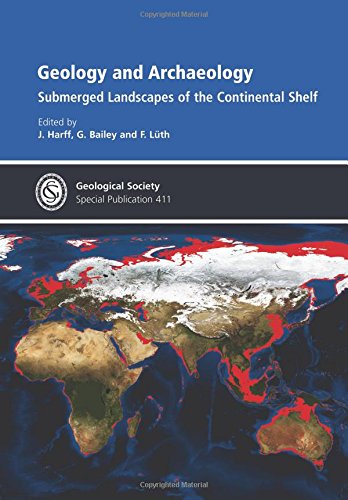
    Hardcover. Condition: New. 294 pages : 25 cm. Sea-level change has influenced human population globally since prehistoric times. Even in early phases of cultural development human populations were faced with marine regression and transgression as a result of changing climate and corresponding glacio-isostatic adjustment. Global marine regression during the last glaciation changed the palaeogeography of the continental shelf, converting former marine environments to attractive terrestrial habitats for prehistoric humans. These areas of the shelf were used as hunting and gathering areas, as migration routes between continents, and most probably witnessed the earliest developments in seafaring and marine exploitation, until the postglacial transgression re-submerged these palaeo-landscapes. Based on modern marine research technologies and the integration of large databases, proxy data are increasingly available for the reconstruction of Quaternary submerged landscapes. Also, prehistoric archaeological remains from the recent sea bottom are shedding new light on human prehistoric development driven by rapidly changing climate and environment. This publication contributes to the exchange of ideas and new results in this young and challenging field of underwater palaeoenvironmental investigation.