Order Total (1 Item Items):
Shipping Destination:

Georges Tournon (6 results)
Skip to main search results
Search filters
Product Type
- All Product Types
- Books (2)
- Magazines & Periodicals (No further results match this refinement)
- Comics (No further results match this refinement)
- Sheet Music (No further results match this refinement)
- Art, Prints & Posters (4)
- Photographs (No further results match this refinement)
- Maps (No further results match this refinement)
- Manuscripts & Paper Collectibles (No further results match this refinement)
Condition Learn more
- New (No further results match this refinement)
- As New, Fine or Near Fine (2)
- Very Good or Good (No further results match this refinement)
- Fair or Poor (No further results match this refinement)
- As Described (4)
Binding
- All Bindings
- Hardcover (No further results match this refinement)
- Softcover (2)
Collectible Attributes
- First Edition (4)
- Signed (6)
- Dust Jacket (No further results match this refinement)
- Seller-Supplied Images (6)
- Not Print on Demand (6)
Language (1)
Price
- Any Price
- Under £ 20 (No further results match this refinement)
- £ 20 to £ 40 (No further results match this refinement)
- Over £ 40
Free Shipping
- Free Shipping to U.S.A. (No further results match this refinement)
Seller Location
Seller Rating
-

POURQUOI PLEURES TU ? PIECE DRAMATIQUE EN TROIS ACTES + ENVOI DE L'AUTEUR.
Published by MARRIMPOUEY JEUNE, 1932
Signed
Couverture souple. Condition: bon. R240093317: 1932. In-12. Broché. Bon état, Couv. convenable, Dos satisfaisant, Non coupé. 113 pages - envoi de l'auteur en début d'ouvrage - 2 photos disponibles. . . . Classification Dewey : 97.2-Dédicace, envoi.
-

L'ESPION ALSACIEN - PIECE DRAMATIQUE ET PATRIOTIQUE EN 4 ACTES
Published by SUD-EST, 1912
Signed
Couverture souple. Condition: bon. RO20177059: 1912. In-12. Broché. Etat d'usage, Couv. convenable, Dos satisfaisant, Intérieur frais. 116 pages - HOMMAGE DE L'AUTEUR. . . . Classification Dewey : 97.2-Dédicace, envoi.
-
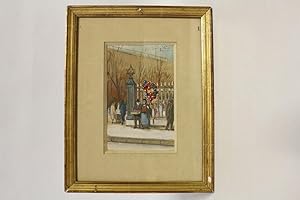
Dessin original signé au fusain et rehauts de gouache : vendeurs de ballons au Jardin des Plantes
Publication Date: 1932
Seller: Librairie Le Feu Follet, Paris, France
Association Member: ILAB
Seller rating 5 out of 5 stars

Art / Print / Poster First Edition Signed
Pas de couverture. Paris 1932 | 15 x 9.50 cm | une feuille | Dessin original du peintre et dessinateur Georges Tournon, au fusain rehaussé de gouache, signé "G. Tournon Jardin des plantes Paris 1932". "Georges Tournon devait être un artiste parisien qui avait acquis une dextérité certaine dans l'art de croquer le petit peuple de la rue. Il avait une réelle prédilection pour repérer et dessiner d'après-nature des personnages de la misère d'entre les deux guerres. Clochards recroquevillés par le froid et la faim, couples de vieux assis sur un banc, vagabonds errants. il associait à ces exclus «au bout du rouleau», des vendeurs de «quasi-rien», qui, contre quelques sous, cédaient aux passants des fleurs, du mimosa, des plumeaux. ou jouaient de l'orgue de barbarie portatif à la sonorité si déchirante qu'on ne l'oublie pas une fois qu'on l'a entendue." (Elisabeth Poulain) | [ENGLISH DESCRIPTION FOLLOWS] Original drawing of the painter and draftsman Georges Tournon, in charcoal enhanced with gouache, signed "G. Tournon Jardin des plantes Paris 1932". "Georges Tournon was to be a Parisian artist who had acquired a certain dexterity in the art of chewing the street people, he had a real predilection to identify and draw from the nature of characters misery among the two wars: tramps curled up by the cold and hunger, couples of old people sitting on a bench, stray wanderers . he associated with those excluded "at the end of the roll", sellers of "almost nothing", which, against a few cents, yielded to the passers-by flowers, mimosa, feather duster . or played the portable barbaric organ with a sound so heart-rending that one does not forget it once it has been heard. " (Elisabeth Poulain) *.
-
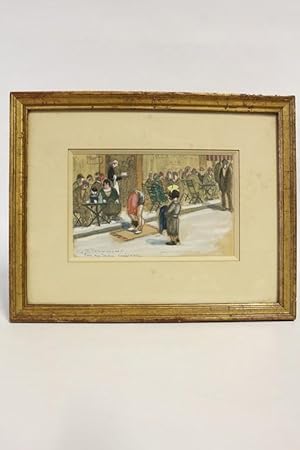
Dessin original signé au fusain et rehauts de gouache : contorsionniste à la fête du Trône
Publication Date: 1932
Seller: Librairie Le Feu Follet, Paris, France
Association Member: ILAB
Seller rating 5 out of 5 stars
Art / Print / Poster First Edition Signed
Pas de couverture. Paris 1932 | 15 x 9.50 cm | une feuille | Dessin original du peintre et dessinateur Georges Tournon, au fusain rehaussé de gouache, signé "G. Tournon Fête du trône Paris 1932". "Georges Tournon devait être un artiste parisien qui avait acquis une dextérité certaine dans l'art de croquer le petit peuple de la rue. Il avait une réelle prédilection pour repérer et dessiner d'après-nature des personnages de la misère d'entre les deux guerres. Clochards recroquevillés par le froid et la faim, couples de vieux assis sur un banc, vagabonds errants. il associait à ces exclus «au bout du rouleau», des vendeurs de «quasi-rien», qui, contre quelques sous, cédaient aux passants des fleurs, du mimosa, des plumeaux. ou jouaient de l'orgue de barbarie portatif à la sonorité si déchirante qu'on ne l'oublie pas une fois qu'on l'a entendue." (Elisabeth Poulain) | [ENGLISH DESCRIPTION FOLLOWS] Original drawing of the painter and draftsman Georges Tournon, in charcoal enhanced with gouache, signed "G. Tournon Feast of the throne Paris 1932". "Georges Tournon was to be a Parisian artist who had acquired a certain dexterity in the art of chewing the street people, he had a real predilection to identify and draw from the nature of characters misery among the two wars: tramps curled up by the cold and hunger, couples of old people sitting on a bench, stray wanderers . he associated with those excluded "at the end of the roll", sellers of "almost nothing", which, against a few cents, yielded to the passers-by flowers, mimosa, feather duster . or played the portable barbaric organ with a sound so heart-rending that one does not forget it once it has been heard. " (Elisabeth Poulain) *.
-
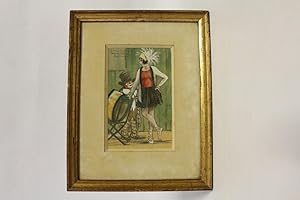
Dessin original signé au fusain et rehauts de gouache : danseuse de cabaret et petit clown
Publication Date: 1932
Seller: Librairie Le Feu Follet, Paris, France
Association Member: ILAB
Seller rating 5 out of 5 stars
Art / Print / Poster First Edition Signed
Pas de couverture. Paris 1932 | 15 x 9.50 cm | une feuille | Dessin original du peintre et dessinateur Georges Tournon, au fusain rehaussé de gouache, signé "G. Tournon Fête du Trône Paris 1932". "Georges Tournon devait être un artiste parisien qui avait acquis une dextérité certaine dans l'art de croquer le petit peuple de la rue. Il avait une réelle prédilection pour repérer et dessiner d'après-nature des personnages de la misère d'entre les deux guerres. Clochards recroquevillés par le froid et la faim, couples de vieux assis sur un banc, vagabonds errants. il associait à ces exclus «au bout du rouleau», des vendeurs de «quasi-rien», qui, contre quelques sous, cédaient aux passants des fleurs, du mimosa, des plumeaux. ou jouaient de l'orgue de barbarie portatif à la sonorité si déchirante qu'on ne l'oublie pas une fois qu'on l'a entendue." (Elisabeth Poulain) | [ENGLISH DESCRIPTION FOLLOWS] Original drawing of the painter and draftsman Georges Tournon, in charcoal enhanced with gouache, signed "G. Tournon Feast of the Throne Paris 1932". "Georges Tournon was to be a Parisian artist who had acquired a certain dexterity in the art of chewing the street people, he had a real predilection to identify and draw from the nature of characters misery among the two wars: tramps curled up by the cold and hunger, couples of old people sitting on a bench, stray wanderers . he associated with those excluded "at the end of the roll", sellers of "almost nothing", which, against a few cents, yielded to the passers-by flowers, mimosa, feather duster . or played the portable barbaric organ with a sound so heart-rending that one does not forget it once it has been heard. " (Elisabeth Poulain) *.
-
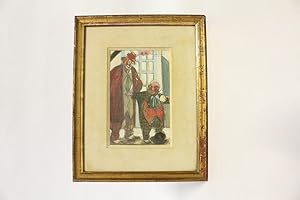
Dessin original signé au fusain et rehauts de gouache : un clown et un nain à la fête du Trône
Publication Date: 1932
Seller: Librairie Le Feu Follet, Paris, France
Association Member: ILAB
Seller rating 5 out of 5 stars
Art / Print / Poster First Edition Signed
Pas de couverture. Paris 1932 | 15 x 9.50 cm | une feuille | Dessin original du peintre et dessinateur Georges Tournon, au fusain rehaussé de gouache, signé "G. Tournon Fête du Trône Paris 1932". "Georges Tournon devait être un artiste parisien qui avait acquis une dextérité certaine dans l'art de croquer le petit peuple de la rue. Il avait une réelle prédilection pour repérer et dessiner d'après-nature des personnages de la misère d'entre les deux guerres. Clochards recroquevillés par le froid et la faim, couples de vieux assis sur un banc, vagabonds errants. il associait à ces exclus «au bout du rouleau», des vendeurs de «quasi-rien», qui, contre quelques sous, cédaient aux passants des fleurs, du mimosa, des plumeaux. ou jouaient de l'orgue de barbarie portatif à la sonorité si déchirante qu'on ne l'oublie pas une fois qu'on l'a entendue." (Elisabeth Poulain) | [ENGLISH DESCRIPTION FOLLOWS] Original drawing of the painter and draftsman Georges Tournon, in charcoal enhanced with gouache, signed "G. Tournon Feast of the Throne Paris 1932". "Georges Tournon was to be a Parisian artist who had acquired a certain dexterity in the art of chewing the street people, he had a real predilection to identify and draw from the nature of characters misery among the two wars: tramps curled up by the cold and hunger, couples of old people sitting on a bench, stray wanderers . he associated with those excluded "at the end of the roll", sellers of "almost nothing", which, against a few cents, yielded to the passers-by flowers, mimosa, feather duster . or played the portable barbaric organ with a sound so heart-rending that one does not forget it once it has been heard. " (Elisabeth Poulain) *.