Order Total (1 Item Items):
Shipping Destination:

David Maisel Michael Roth Geoff (3 results)
Skip to main search results
Search filters
Product Type
- All Product Types
- Books (3)
- Magazines & Periodicals (No further results match this refinement)
- Comics (No further results match this refinement)
- Sheet Music (No further results match this refinement)
- Art, Prints & Posters (No further results match this refinement)
- Photographs (No further results match this refinement)
- Maps (No further results match this refinement)
- Manuscripts & Paper Collectibles (No further results match this refinement)
Condition Learn more
- New (No further results match this refinement)
- As New, Fine or Near Fine (1)
- Very Good or Good (2)
- Fair or Poor (No further results match this refinement)
- As Described (No further results match this refinement)
Binding
- All Bindings
- Hardcover (3)
- Softcover (No further results match this refinement)
Collectible Attributes
- First Edition (3)
- Signed (No further results match this refinement)
- Dust Jacket (No further results match this refinement)
- Seller-Supplied Images (3)
- Not Print on Demand (3)
Language (2)
Price
- Any Price
- Under £ 20 (No further results match this refinement)
- £ 20 to £ 35 (No further results match this refinement)
- Over £ 35
Free Shipping
- Free Shipping to U.S.A. (No further results match this refinement)
Seller Location
Seller Rating
-
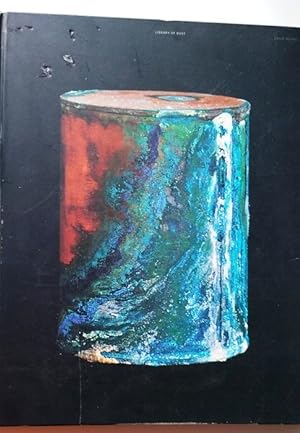
David Maisel - Library of Dust
Language: English
Published by Chronicle Books, San Francisco, 2008
ISBN 10: 0811863336 ISBN 13: 9780811863339
First Edition
Hardcover. Condition: Good. 1st Edition. 108 pp colour plates throughout, large format hardback with illustrated covers. Edges to covers rubbed, corners a little bumped, some indentations and scratches to front cover, pages clean and firmly held. Heavy book will need extra postage outside UK.
-
Library of Dust; The West Shore, January 1889
Language: English
Published by Chonicle Books, 2008
Seller: Structure, Verses, Agency Books, Spray, OR, U.S.A.
Seller rating 5 out of 5 stars

First Edition
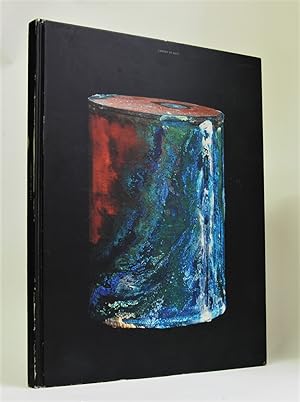
Hardcover. Condition: Fine. First Edition. This is a lot of two (2) items, the second being a Very Good condition copy housed in a Mylar sleeve of The West Shore magazine for January of 1889, and that features duotone illustrations of both "Salem, Oregon - Asylum of the Insane" and "Oregon - State Penitentiary, Salem," and suffuse with articles and news about Oregon and especially the Willamette Valley and the Oregon Coast. Simple brown printed wraps, chipping at spine bottom, stapled prior dealer's For Salem card inside front flap. News about the genealogy of the State of Oregon and of Oakland, Newberg, Baker, Salem, McMinnville and other Oregon towns and villages. Library of Dust is one of "those" books that will dent your psyche (in a good way). "Dust is a peculiar substance. Less a material in its own right, with its own characteristics or color, dust is a condition . . . Dust is a potpourri of ingredients, varied to the point of indefinability. Dust includes 'dead insect parts, flakes of human skin, shreds of fabric, and other unpleasing materials'" (Geoff Manaugh quoting Joseph Amato). Library of Dust is a somber, sobering, fascinating, photographic, right-thinking rumination in humane terms on a non-human, perhaps even inhumane collection: the decomposing copper canisters that carried the cremated remains of the former Oregon State Hospital inmates that had gone unclaimed. Library of Dust is comprised of four stellar essays and arresting, full color, full page photographs of the copper-coated tins, oceanic of appearance, encrusted in unique patinas of color and texture, that somehow invoke perhaps the former human beings captured inside them. Bound handsomely in illustrated black pictorial boards in folio hardcover format, measuring 17 1/2" x 13 1/4" in height and width, respectively. (Note: what appear to be scuffings of and rubbings to tips and extremities are in fact not so, but rather, a faithful mimesis of the burnishings of the canisters themselves, according to a publisher rep.). Miniscule, faint title font at front cover, slightly larger at spine and at endpapers is just as meaningful--barely there, but necessary. The heavy black card stock endpapers, however, feature a sort of typographic constellation: each tiny number (from a single number to four numbers) appears in dark space so as to denote a former human being. Assembled jointly by David Maisel and three interlocutors, and with apparent editorial freedom from the publisher. Essays by Geoff Manaugh ("Mineral Kinship"), Terry Toedtemeier ("The Soul Remains: a mineralogical account of the remarkable transformation of the cremation canisters at the Oregon State Hospital") and Michael S. Roth ("Graves of the Insane, Decorated"), then Maisel's "The Library and its Self-Contained Double." Most of them being being larger at their bases than at their heads, the copper canisters are not unlovely but have, instead, a worker-like, handmade quality to them. Some are burnished brightly; others are depressingly dull. From some of them bloom colorful corrosion, and some of the seams are well-nigh unto splitting. Some have numbers stamped into them, like shotgun shell casings, and yet others have abraded paper labels still affixed to them. The lowest number registered is 01, and the highest is 5,121. Uncommon in this fine state.Member, I.O.B.A., C.B.A., and adherent to the highest ethical standards. Additional postage may be required for oversize or especially heavy volumes, and for sets.
-
Library of Dust
Published by Chronicle Books, San Francisco, 2008
Seller: Henry Pordes Books Ltd, London, United Kingdom
Association Member: PBFA
Seller rating 5 out of 5 stars
First Edition
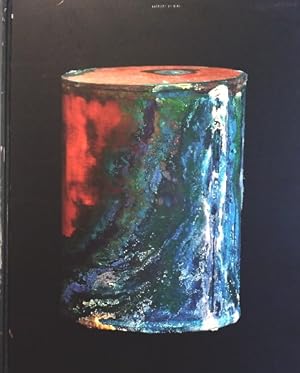
Hardcover. Condition: Good. 1st Edition. Folio. 108pp. Pictorial boards. Illustrated throughout; 71 colour reproductions of Maisel's work. Some moderate rubbing to boards' edges. Internally pristine. The following is a quote from The New York Times' 2008 review: "Library of Dust, from the photographer David Maisel, may well be this years most haunting book of images. It is a collection of photographs of copper canisters, each containing the unclaimed remains of a patient from a psychiatric hospital in Oregon (the same one used for filming One Flew Over the Cuckoos Nest). Rivulets of chemical corrosion, almost oceanic in their intense coloring, run down the sides. Mr. Maisels book is a fevered meditation on memory, loss, and the uncanny monuments we sometimes recover about what has gone before." Scarce.