

Order Total (1 Item Items):
Shipping Destination:

Crewdson Gregory Deborah Aaronson (1 results)
Skip to main search results
Search filters
Product Type
- All Product Types
- Books (1)
- Magazines & Periodicals (No further results match this refinement)
- Comics (No further results match this refinement)
- Sheet Music (No further results match this refinement)
- Art, Prints & Posters (No further results match this refinement)
- Photographs (No further results match this refinement)
- Maps (No further results match this refinement)
- Manuscripts & Paper Collectibles (No further results match this refinement)
Condition Learn more
- New (No further results match this refinement)
- As New, Fine or Near Fine (No further results match this refinement)
- Very Good or Good (No further results match this refinement)
- Fair or Poor (No further results match this refinement)
- As Described (1)
Binding
- All Bindings
- Hardcover (No further results match this refinement)
- Softcover (No further results match this refinement)
Collectible Attributes
- First Edition (No further results match this refinement)
- Signed (No further results match this refinement)
- Dust Jacket (No further results match this refinement)
- Seller-Supplied Images (1)
- Not Print on Demand (1)
Language (1)
Price
- Any Price
- Under £ 20 (No further results match this refinement)
- £ 20 to £ 35
- Over £ 35 (No further results match this refinement)
Free Shipping
- Free Shipping to U.S.A. (No further results match this refinement)
Seller Location
Seller Rating
-
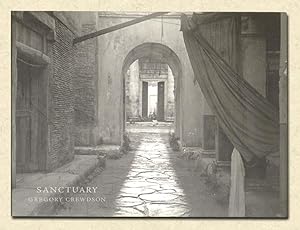
Landscape folio; hardcover, with blind-stamped spine and upper board title and black endpapers; 96pp. with many monochrome photographic illustrations. Very minor wear. Dustwrapper very lightly rubbed. Near fine. Postage quoted is for a standard format octavo book. Final charges may vary depending on size and weight. "Known for capturing the alienation and anxiety of small-town America in series such as 'Beneath the Roses', Crewdson photographed 'Sanctuary' at the Cinecitta studios, Rome, producing a body of work outside of the US for the first time. When Crewdson first visited Cinecitta he found the labyrinthine lots of the legendary studio devoid of human presence, in a state suspended between grandeur and ruin. The site was haunted by the architectural ghosts of ancient Rome, historical New York, and medieval Italy, among other settings and places, all remnants of past productions. Abandoned by the actors and crews that brought the sets to life, each building and street was eerily quiet, a network of ephemeral facades and dead ends that was so evocative it scarcely needed the artist's intervention. 'In these pictures', comments Crewdson, 'I draw upon the inherent quietness and uncanny aspects of the empty sets.' Crewdson has in previous series used locations and characters in order to create pictures charged with narrative portent, but for 'Sanctuary' Crewdson decided to make the film sets themselves the subject of the photographs. Despite this change of direction, the artist's vision persists: 'As with much of my work', suggests Crewdson, 'I looked at the blurred lines between reality and fiction, nature and artifice, and beauty and decay.' A photograph might depict what appears to be the corner of a Roman structure, topped by the statue of a proud emperor, and yet a network of scaffolding supports this supposedly timeless ruin. In another picture, a series of large wooden buildings stretches across the horizon like the background to a cartoon western, yet they are all marked by gaping holes, as if an entire townscape were about to collapse. Nature seems to overcome the sets in some pictures, with trees, vines and weeds engulfing the majestic vistas and brittle buildings. The cool monochrome and intimate scale of the prints lend the pictures an ageless and elegiac intensity, and yet in these empty studio lots Crewdson has found a poignant symbol of our persistent longing for permanence." - White Cube.
