

Order Total (1 Item Items):
Shipping Destination:

Baum Matthew Groeling Tim (13 results)
Skip to main search results
Search filters
Product Type
- All Product Types
- Books (13)
- Magazines & Periodicals (No further results match this refinement)
- Comics (No further results match this refinement)
- Sheet Music (No further results match this refinement)
- Art, Prints & Posters (No further results match this refinement)
- Photographs (No further results match this refinement)
- Maps (No further results match this refinement)
- Manuscripts & Paper Collectibles (No further results match this refinement)
Condition Learn more
- New (7)
- As New, Fine or Near Fine (3)
- Very Good or Good (3)
- Fair or Poor (No further results match this refinement)
- As Described (No further results match this refinement)
Binding
- All Bindings
- Hardcover (No further results match this refinement)
- Softcover (13)
Collectible Attributes
- First Edition (No further results match this refinement)
- Signed (No further results match this refinement)
- Dust Jacket (No further results match this refinement)
- Seller-Supplied Images (6)
- Not Print on Demand (13)
Language (1)
Free Shipping
Seller Location
Seller Rating
-

War Stories: The Causes and Consequences of Public Views of War
Language: English
Published by Princeton University Press, 2010
ISBN 10: 0691138591 ISBN 13: 9780691138596
Paperback. Condition: Very Good. No Jacket. May have limited writing in cover pages. Pages are unmarked. ~ ThriftBooks: Read More, Spend Less.
-
War Stories: The Causes and Consequences of Public Views of War
Language: English
Published by Princeton University Press, 2010
ISBN 10: 0691138591 ISBN 13: 9780691138596
paperback. Condition: Very Good. Connecting readers with great books since 1972! Used books may not include companion materials, and may have some shelf wear or limited writing. We ship orders daily and Customer Service is our top priority!
-
War Stories : The Causes and Consequences of Public Views of War
Language: English
Published by Princeton University Press, 2010
ISBN 10: 0691138591 ISBN 13: 9780691138596
Seller: Better World Books Ltd, Dunfermline, United Kingdom
Seller rating 5 out of 5 stars

Condition: Good. Former library copy. Pages intact with minimal writing/highlighting. The binding may be loose and creased. Dust jackets/supplements are not included. Includes library markings. Stock photo provided. Product includes identifying sticker. Better World Books: Buy Books. Do Good.
-
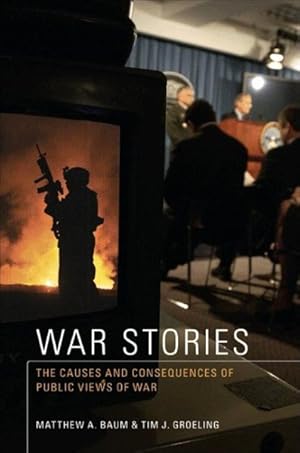
War Stories : The Causes and Consequences of Public Views of War
Language: English
Published by Princeton University Press, 2010
ISBN 10: 0691138591 ISBN 13: 9780691138596
Condition: New.
-
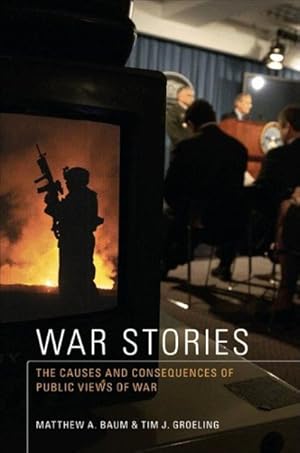
War Stories : The Causes and Consequences of Public Views of War
Language: English
Published by Princeton University Press, 2010
ISBN 10: 0691138591 ISBN 13: 9780691138596
Condition: As New. Unread book in perfect condition.
-
War Stories The Causes and Consequences of Public Views of War Format: Paperback
Language: English
Published by Princeton University Press, 2010
ISBN 10: 0691138591 ISBN 13: 9780691138596
Condition: As New. Unread copy in mint condition.
-
War Stories The Causes and Consequences of Public Views of War Format: Paperback
Language: English
Published by Princeton University Press, 2010
ISBN 10: 0691138591 ISBN 13: 9780691138596
Condition: New. Brand New.
-

War Stories
Language: English
Published by Princeton University Press, US, 2010
ISBN 10: 0691138591 ISBN 13: 9780691138596
Seller: Rarewaves.com USA, London, LONDO, United Kingdom
Seller rating 5 out of 5 stars
Paperback. Condition: New. How does the American public formulate its opinions about U.S. foreign policy and military engagement abroad? War Stories argues that the media systematically distort the information the public vitally needs to determine whether to support such initiatives, for reasons having more to do with journalists' professional interests than the merits of the policies, and that this has significant consequences for national security. Matthew Baum and Tim Groeling develop a "strategic bias" theory that explains the foreign-policy communication process as a three-way interaction among the press, political elites, and the public, each of which has distinct interests, biases, and incentives. Do media representations affect public support for the president and faithfully reflect events in times of diplomatic crisis and war? How do new media--especially Internet news and more partisan outlets--shape public opinion, and how will they alter future conflicts? In answering such questions, Baum and Groeling take an in-depth look at media coverage, elite rhetoric, and public opinion during the Iraq war and other U.S. conflicts abroad.They trace how traditional and new media select stories, how elites frame and sometimes even distort events, and how these dynamics shape public opinion over the course of a conflict. Most of us learn virtually everything we know about foreign policy from media reporting of elite opinions. In War Stories, Baum and Groeling reveal precisely what this means for the future of American foreign policy.
-

War Stories
Language: English
Published by Princeton University Press, US, 2010
ISBN 10: 0691138591 ISBN 13: 9780691138596
Paperback. Condition: New. How does the American public formulate its opinions about U.S. foreign policy and military engagement abroad? War Stories argues that the media systematically distort the information the public vitally needs to determine whether to support such initiatives, for reasons having more to do with journalists' professional interests than the merits of the policies, and that this has significant consequences for national security. Matthew Baum and Tim Groeling develop a "strategic bias" theory that explains the foreign-policy communication process as a three-way interaction among the press, political elites, and the public, each of which has distinct interests, biases, and incentives. Do media representations affect public support for the president and faithfully reflect events in times of diplomatic crisis and war? How do new media--especially Internet news and more partisan outlets--shape public opinion, and how will they alter future conflicts? In answering such questions, Baum and Groeling take an in-depth look at media coverage, elite rhetoric, and public opinion during the Iraq war and other U.S. conflicts abroad.They trace how traditional and new media select stories, how elites frame and sometimes even distort events, and how these dynamics shape public opinion over the course of a conflict. Most of us learn virtually everything we know about foreign policy from media reporting of elite opinions. In War Stories, Baum and Groeling reveal precisely what this means for the future of American foreign policy.
-
War Stories : The Causes and Consequences of Public Views of War
Language: English
Published by Princeton University Press, 2010
ISBN 10: 0691138591 ISBN 13: 9780691138596
Seller: GreatBookPricesUK, Woodford Green, United Kingdom
Seller rating 5 out of 5 stars
Condition: New.
-

War Stories
Language: English
Published by Princeton University Press, US, 2010
ISBN 10: 0691138591 ISBN 13: 9780691138596
Paperback. Condition: New. How does the American public formulate its opinions about U.S. foreign policy and military engagement abroad? War Stories argues that the media systematically distort the information the public vitally needs to determine whether to support such initiatives, for reasons having more to do with journalists' professional interests than the merits of the policies, and that this has significant consequences for national security. Matthew Baum and Tim Groeling develop a "strategic bias" theory that explains the foreign-policy communication process as a three-way interaction among the press, political elites, and the public, each of which has distinct interests, biases, and incentives. Do media representations affect public support for the president and faithfully reflect events in times of diplomatic crisis and war? How do new media--especially Internet news and more partisan outlets--shape public opinion, and how will they alter future conflicts? In answering such questions, Baum and Groeling take an in-depth look at media coverage, elite rhetoric, and public opinion during the Iraq war and other U.S. conflicts abroad.They trace how traditional and new media select stories, how elites frame and sometimes even distort events, and how these dynamics shape public opinion over the course of a conflict. Most of us learn virtually everything we know about foreign policy from media reporting of elite opinions. In War Stories, Baum and Groeling reveal precisely what this means for the future of American foreign policy.
-
War Stories : The Causes and Consequences of Public Views of War
Language: English
Published by Princeton University Press, 2010
ISBN 10: 0691138591 ISBN 13: 9780691138596
Seller: GreatBookPricesUK, Woodford Green, United Kingdom
Seller rating 5 out of 5 stars
Condition: As New. Unread book in perfect condition.
-

War Stories
Language: English
Published by Princeton University Press, US, 2010
ISBN 10: 0691138591 ISBN 13: 9780691138596
Paperback. Condition: New. How does the American public formulate its opinions about U.S. foreign policy and military engagement abroad? War Stories argues that the media systematically distort the information the public vitally needs to determine whether to support such initiatives, for reasons having more to do with journalists' professional interests than the merits of the policies, and that this has significant consequences for national security. Matthew Baum and Tim Groeling develop a "strategic bias" theory that explains the foreign-policy communication process as a three-way interaction among the press, political elites, and the public, each of which has distinct interests, biases, and incentives. Do media representations affect public support for the president and faithfully reflect events in times of diplomatic crisis and war? How do new media--especially Internet news and more partisan outlets--shape public opinion, and how will they alter future conflicts? In answering such questions, Baum and Groeling take an in-depth look at media coverage, elite rhetoric, and public opinion during the Iraq war and other U.S. conflicts abroad.They trace how traditional and new media select stories, how elites frame and sometimes even distort events, and how these dynamics shape public opinion over the course of a conflict. Most of us learn virtually everything we know about foreign policy from media reporting of elite opinions. In War Stories, Baum and Groeling reveal precisely what this means for the future of American foreign policy.

