
Items related to Dan Flavin (German Edition): Lights
Synopsis
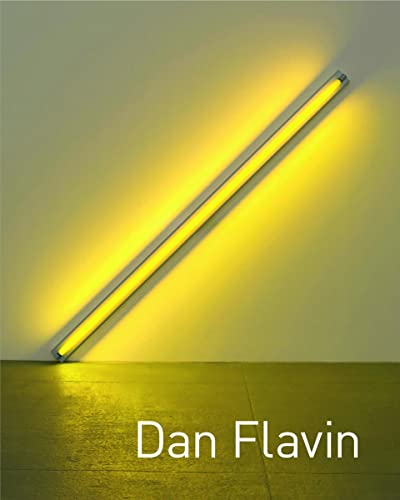
Transforming color into light is one of the great themes of painting. Dan Flavin (1933–1996) used light as color and material. Employing ordinary neon light tubes, he developed a radical new form of art that freed the “picture” from its frame and turned it into a luminous, space-consuming color object. Expanding the wall painting by turning it into a light installation corresponded with the liberation of light from its traditionally spiritual meaning. Flavin’s works recall neon signs from urban nightlife or commonplace living-room lamps. Viewers find themselves immersed in a splendid play of light and color that allows the physical experience of unrestrained art. This publication elucidates the development of Flavin’s oeuvre―from the visual objects, the so-called Icons, to the spatial installations with neon tubes―and explains their genesis based on drawings and prints, an independent group of works that testifies to the artist’s visual sensitivity. (German edition ISBN 978-3-7757-3522-3) Exhibition schedule: mumok. museum moderner kunst stiftung ludwig, Vienna, October 13, 2012–February 3, 2013 | Kunstmuseum St. Gallen, March 16–August 18, 2013
"synopsis" may belong to another edition of this title.
From the Back Cover
An extensive monograph featuring the oeuvre by the Minimal Art pioneer who works with light.
Transforming color into light is one of the great themes of painting. Dan Flavin (1933-1996) used light as color and material. Employing ordinary neon light tubes, he developed a radical new form of art that freed the "painting" from its framework and turned it into a luminous color object with a three-dimensional appearance. Expanding the wall painting by turning it into a light installation corresponded with the liberation of light from its traditionally spiritual meanings. Flavin's works recall neon signs from urban nightlife or banal living room lamps. The viewer finds himself immersed in a splendid play of light and color that allows a physical experience of an unlimited kind of art. This publication discusses how the painted objects, the so-called Icons, eventually developed into the three-dimensional neon tubes, and uses examples of drawings and prints-which, as an independent group of works, testify to Flavin's visual sensibility.
"About this title" may belong to another edition of this title.
Search results for Dan Flavin (German Edition): Lights

Stock Image
DAN FLAVIN, LIGHTS
Seller: O.o.l.p., Torino, TO, Italy
Seller rating 3 out of 5 stars

Seller Inventory # 9783775735230
Stock Image
Dan Flavin
Seller: ThriftBooks-Dallas, Dallas, TX, U.S.A.
Seller rating 5 out of 5 stars

Hardcover. Condition: As New. No Jacket. Pages are clean and are not marred by notes or folds of any kind. ~ ThriftBooks: Read More, Spend Less. Seller Inventory # G3775735232I2N00
Seller Image
Dan Flavin. LIghts : Catalogue of the Exhibition at mumok. Museum Moderner Kunst Stiftung Ludwig Wien, 2012/2013 and at Kunstmuseum St.Gallen, 2013
Seller: AHA-BUCH GmbH, Einbeck, Germany
Seller rating 5 out of 5 stars
Gebundene Ausgabe. Condition: Sehr gut. Gebraucht - Sehr gut sg - ungelesenes mängelexemplar, gestempelt, mit leichten lagerspuren - Die Verwandlung von Farbe in Licht zählt zu den großen Themen der Malerei. Dan Flavin (1933-1996) nutzte Licht als Farbe und Werkstoff. Mittels profaner Leuchtstoffröhren entwickelte er eine radikal neue Kunstform, die das 'Bild' aus seinem Rahmen befreite und zum erhellenden Farbobjekt von raumgreifender Erscheinung machte. Die Erweiterung des Wandbildes zur Lichtinstallation korrespondiert mit der Befreiung des Lichts aus seiner spirituellen Bedeutungstradition. Flavins Arbeiten erinnern an die Leuchtreklamen des städtischen Nachtlebens oder an triviale Zimmerlampen. Der Betrachter findet sich in ein farbenprächtiges Lichtspiel eingebunden, das zur leibhaftigen Erfahrung einer entgrenzten Kunst wird. Die Publikation verdeutlicht die Entwicklung von den Bildobjekten, den sogenannten Icons, zu den raumbezogenen Leuchtstoffröhren und zeigt deren Entstehung anhand von Zeichnungen und Grafiken, die als eigenständige Werkgruppe Flavins bildnerische Sensitivität bezeugen. (Deutsche Ausgabe ISBN 978-3-7757-3522-3). Seller Inventory # INF1000439410
Seller Image
Dan Flavin. LIghts : Catalogue of the Exhibition at mumok. Museum Moderner Kunst Stiftung Ludwig Wien, 2012/2013 and at Kunstmuseum St.Gallen, 2013
Seller: AHA-BUCH GmbH, Einbeck, Germany
Seller rating 5 out of 5 stars
Gebundene Ausgabe. Condition: Neu. Neu Neuware auf Lager, Sofortversand - Die Verwandlung von Farbe in Licht zählt zu den großen Themen der Malerei. Dan Flavin (1933-1996) nutzte Licht als Farbe und Werkstoff. Mittels profaner Leuchtstoffröhren entwickelte er eine radikal neue Kunstform, die das 'Bild' aus seinem Rahmen befreite und zum erhellenden Farbobjekt von raumgreifender Erscheinung machte. Die Erweiterung des Wandbildes zur Lichtinstallation korrespondiert mit der Befreiung des Lichts aus seiner spirituellen Bedeutungstradition. Flavins Arbeiten erinnern an die Leuchtreklamen des städtischen Nachtlebens oder an triviale Zimmerlampen. Der Betrachter findet sich in ein farbenprächtiges Lichtspiel eingebunden, das zur leibhaftigen Erfahrung einer entgrenzten Kunst wird. Die Publikation verdeutlicht die Entwicklung von den Bildobjekten, den sogenannten Icons, zu den raumbezogenen Leuchtstoffröhren und zeigt deren Entstehung anhand von Zeichnungen und Grafiken, die als eigenständige Werkgruppe Flavins bildnerische Sensitivität bezeugen. (Deutsche Ausgabe ISBN 978-3-7757-3522-3). Seller Inventory # INF1000439411
Stock Image
Dan Flavin : Lights
Seller: BWS BKS, Ferndale, NY, U.S.A.
Seller rating 2 out of 5 stars

Hardcover. Condition: New. Seller Inventory # 104897