
Items related to Alleviating Poverty Through Profitable Partnerships:...
Alleviating Poverty Through Profitable Partnerships: Globalization, Markets, and Economic Well-Being - Softcover
Synopsis
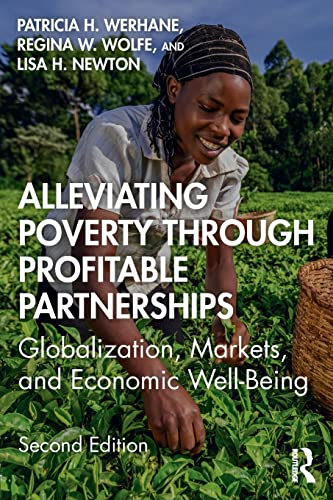
Poverty is an unnecessary form of human degradation and badly conceived economics. Our thesis is that poverty can be reduced, if not eradicated, both locally and globally. But this will occur only if we change our shared narratives about global free enterprise, remind ourselves that poverty is a system, and conceive of poverty alleviation as a "bottom-up" project. There is no "one size fits all" for poverty reduction. Rather, poverty is a system and must be addressed locally. It is our aim, as it is the aim of the United Nations, the World Bank, and many other organizations, to erase it from our vocabulary and from this planet.
With a series of case studies that accompany each chapter, this book should assist readers in thinking about poverty alleviation from a number of perspectives, from bottom-up entrepreneurial projects, local-corporate ventures, with public–private partnerships, from focused philanthropy, with education and health care initiatives, and agriculture reforms in rural communities, all with the aim of creating a win-win result for local and partnership individuals, organizations, and communities.
The book should be useful in various undergraduate and graduate courses on ethics, applied ethics, developing economic systems, and poverty.
"synopsis" may belong to another edition of this title.
About the Author
Patricia H. Werhane, Ph.D., is the Wicklander Chair Emerita at DePaul University and Ruffin Professor Emerita at the University of Virginia. Werhane was founding editor of Business Ethics Quarterly, a Rockefeller Fellow at Dartmouth, and Visiting Professor at the University of Cambridge. In 2008 she was listed as one of the 100 most influential people in business ethics by Ethisphere Magazine. She is the author or editor of over 30 books including Adam Smith and his Legacy for Modern Capitalism and Moral Imagination and Management Decision-Making. She is also the co-producer of an Emmy award-winning documentary series, Big Questions.
Regina W. Wolfe , Ph.D., is Professor Emerita of Catholic Theological Ethics at the Catholic Theological Union in Chicago and Senior Wicklander Fellow, DePaul University Institute for Business and Professional Ethics. She is co-author of Global Women Leaders: Breaking Boundaries and co-editor of Systems Thinking and Moral Imagination.
Lisa H. Newton, Ph.D., is Professor Emerita in Philosophy at Fairfield University, Connecticut. Her books include Ethics and Sustainability: Sustainable Development and the Moral Life (2002), Business Ethics and the Natural Environment (2005), several editions of Watersheds (cases in environmental ethics), Wake-Up Calls (with David Schmidt; cases in business ethics), and Taking Sides (ed., with Elaine Englehardt and Michael Pritchard, controversies in business ethics). A study in agricultural ethics, Urban Agriculture, is forthcoming in 2020.
"About this title" may belong to another edition of this title.
Search results for Alleviating Poverty Through Profitable Partnerships:...

Stock Image
Alleviating Poverty Through Profitable Partnerships
Seller: Michael Knight, Bookseller, Forest Grove, OR, U.S.A.
Seller rating 5 out of 5 stars

paperback. Condition: Good. 2nd edition. Paperback. Highlighting and pencil markings to pages. Binding solid. Seller Inventory # mon0000015208
Seller Image
Alleviating Poverty Through Profitable Partnerships : Globalization, Markets, and Economic Well-Being
Seller: GreatBookPrices, Columbia, MD, U.S.A.
Seller rating 5 out of 5 stars
Condition: As New. Unread book in perfect condition. Seller Inventory # 38679167
Seller Image
Alleviating Poverty Through Profitable Partnerships : Globalization, Markets, and Economic Well-Being
Seller: GreatBookPrices, Columbia, MD, U.S.A.
Seller rating 5 out of 5 stars
Condition: New. Seller Inventory # 38679167-n
Stock Image
Alleviating Poverty Through Profitable Partnerships (Paperback)
Published by
Taylor & Francis Ltd, London, 2020
ISBN 10: 1138313645
ISBN 13: 9781138313644
New
Paperback
Seller: Grand Eagle Retail, Bensenville, IL, U.S.A.
Seller rating 5 out of 5 stars
Paperback. Condition: new. Paperback. Poverty is an unnecessary form of human degradation and badly conceived economics. Our thesis is that poverty can be reduced, if not eradicated, both locally and globally. But this will occur only if we change our shared narratives about global free enterprise, remind ourselves that poverty is a system, and conceive of poverty alleviation as a "bottom-up" project. There is no "one size fits all" for poverty reduction. Rather, poverty is a system and must be addressed locally. It is our aim, as it is the aim of the United Nations, the World Bank, and many other organizations, to erase it from our vocabulary and from this planet.With a series of case studies that accompany each chapter, this book should assist readers in thinking about poverty alleviation from a number of perspectives, from bottom-up entrepreneurial projects, local-corporate ventures, with publicprivate partnerships, from focused philanthropy, with education and health care initiatives, and agriculture reforms in rural communities, all with the aim of creating a win-win result for local and partnership individuals, organizations, and communities.The book should be useful in various undergraduate and graduate courses on ethics, applied ethics, developing economic systems, and poverty. Our thesis is that poverty can be reduced, if not eradicated, both locally and globally if we change our shared narratives about global free enterprise, and conceive of poverty alleviation as a "bottom up" project. Shipping may be from multiple locations in the US or from the UK, depending on stock availability. Seller Inventory # 9781138313644
Stock Image
Alleviating Poverty Through Profitable Partnerships: Globalization, Markets, and Economic Well-Being
Seller: Majestic Books, Hounslow, United Kingdom
Seller rating 4 out of 5 stars

Condition: New. pp. 202. Seller Inventory # 385871855
Buy New
£ 48.31
£ 6.50 shipping
Ships from United Kingdom to U.S.A.
Ships from United Kingdom to U.S.A.
Quantity: 3 available
Stock Image
Alleviating Poverty Through Profitable Partnerships: Globalization, Markets, and Economic Well-being
Print on DemandSeller: Revaluation Books, Exeter, United Kingdom
Seller rating 5 out of 5 stars
Paperback. Condition: Brand New. 2nd new edition. 192 pages. 8.75x6.00x0.50 inches. In Stock. This item is printed on demand. Seller Inventory # __1138313645
Buy New
£ 45.56
£ 10 shipping
Ships from United Kingdom to U.S.A.
Ships from United Kingdom to U.S.A.
Quantity: 1 available
Stock Image
Alleviating Poverty Through Profitable Partnerships
Seller: California Books, Miami, FL, U.S.A.
Seller rating 5 out of 5 stars
Condition: New. Seller Inventory # I-9781138313644
Stock Image
Alleviating Poverty Through Profitable Partnerships: Globalization, Markets, and Economic Well-Being
Published by
Taylor & Francis Ltd, 2020
ISBN 10: 1138313645
ISBN 13: 9781138313644
New
Paperback / softback
Seller: THE SAINT BOOKSTORE, Southport, United Kingdom
Seller rating 5 out of 5 stars
Paperback / softback. Condition: New. New copy - Usually dispatched within 4 working days. Seller Inventory # B9781138313644
Buy New
£ 46.59
£ 12.84 shipping
Ships from United Kingdom to U.S.A.
Ships from United Kingdom to U.S.A.
Quantity: 1 available
Stock Image
Alleviating Poverty Through Profitable Partnerships: Globalization, Markets, and Economic Well-Being
Seller: Books Puddle, Woodside, NY, U.S.A.
Seller rating 4 out of 5 stars
Condition: New. pp. 202. Seller Inventory # 26378032176
Seller Image
Alleviating Poverty Through Profitable Partnerships : Globalization, Markets, and Economic Well-Being
Seller: GreatBookPricesUK, Woodford Green, United Kingdom
Seller rating 5 out of 5 stars
Condition: As New. Unread book in perfect condition. Seller Inventory # 38679167
Buy Used
£ 46.27
£ 15 shipping
Ships from United Kingdom to U.S.A.
Ships from United Kingdom to U.S.A.
Quantity: Over 20 available