
Items related to From Sails to Satellites: Origin and Development of...
Synopsis
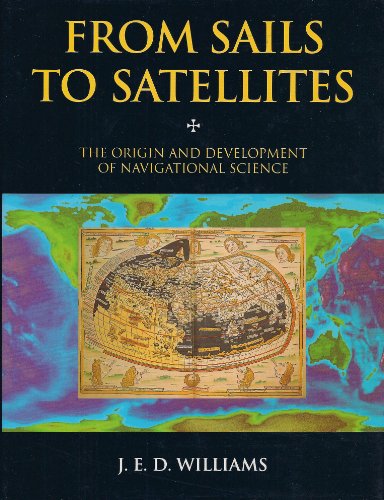
Developments in navigational science can be traced from beginnings 23 centuries ago when the Greeks tried to calculate latitude to the present when satellite systems can easily pinpoint positions to within millimetres. The history of navigational science offers vivid insights into the areas of human endeavour which have driven it: the need for discoverers such as Columbus to locate and claim distant lands for their sovereigns and paymasters; the need of merchants in a world of expanding horizons and trade for efficient and reliable shipping; the new an durgent needs of rapidly developing air travel where safety demands accurate and quick navigation in very difficult conditions; the deadly needs of the military in targetting missiles and sailing submarines in radio silence. In servicing these needs navigational science has made use of very diverse scientific discoveries: simple geometry and calculations in dead-reckoning and the use of magnetic compasses; more complicated mathematics and more accurate mechanisms in astronomical navigation; the properties of radio waves in homing and direction-finding systems; the self-contained world of gyros and inertial guidance systems; and most recently the combination of computing power, micro-electronics, and satellites to give the startling millimetre-accuracy of current systems.
"synopsis" may belong to another edition of this title.
About the Author
About the Author:
J.E.D. Williams has been Chief Navigator of Argentine Airlines and El Al Airlines, the managing director of Britannia Airways, and a past president of the Royal Institute of Navigation.
"About this title" may belong to another edition of this title.
Search results for From Sails to Satellites: Origin and Development of...

Stock Image
From Sails to Satellites: The Origin and Development of Navigational Science
Published by
Oxford University Press (edition ), 1993
ISBN 10: 0198563876
ISBN 13: 9780198563877
Used
Hardcover
Seller: BooksRun, Philadelphia, PA, U.S.A.
Seller rating 5 out of 5 stars

Hardcover. Condition: Very Good. With dust jacket. It's a well-cared-for item that has seen limited use. The item may show minor signs of wear. All the text is legible, with all pages included. It may have slight markings and/or highlighting. Seller Inventory # 0198563876-11-1-29
Seller Image
From Sails to Satellites: The Origin and Development of Navigational Science
Published by
Oxford University Press, 1993
ISBN 10: 0198563876
ISBN 13: 9780198563877
Used
Hardcover
Seller: Zoom Books Company, Lynden, WA, U.S.A.
Seller rating 5 out of 5 stars
Condition: very_good. Book is in very good condition and may include minimal underlining highlighting. The book can also include "From the library of" labels. May not contain miscellaneous items toys, dvds, etc. . We offer 100% money back guarantee and 24 7 customer service. Seller Inventory # ZBV.0198563876.VG
Stock Image
From Sails to Satellites: The Origin and Development of Navigational Science
Published by
Oxford University Press, 1993
ISBN 10: 0198563876
ISBN 13: 9780198563877
Used
Hardcover
Seller: ThriftBooks-Atlanta, AUSTELL, GA, U.S.A.
Seller rating 5 out of 5 stars
Hardcover. Condition: Good. No Jacket. Former library book; Pages can have notes/highlighting. Spine may show signs of wear. ~ ThriftBooks: Read More, Spend Less. Seller Inventory # G0198563876I3N10
Stock Image
From Sails to Satellites: The Origin and Development of Navigational Science
Published by
Oxford University Press, 1993
ISBN 10: 0198563876
ISBN 13: 9780198563877
Used
Hardcover
Seller: HPB Inc., Dallas, TX, U.S.A.
Seller rating 5 out of 5 stars
hardcover. Condition: Very Good. Connecting readers with great books since 1972! Used books may not include companion materials, and may have some shelf wear or limited writing. We ship orders daily and Customer Service is our top priority! Seller Inventory # S_451165052
Stock Image
From Sails to Satellites: The Origin and Development of Navigational Science
Published by
Oxford University Press, 1993
ISBN 10: 0198563876
ISBN 13: 9780198563877
Used
Hardcover
Seller: Half Price Books Inc., Dallas, TX, U.S.A.
Seller rating 5 out of 5 stars
hardcover. Condition: Very Good. Connecting readers with great books since 1972! Used books may not include companion materials, and may have some shelf wear or limited writing. We ship orders daily and Customer Service is our top priority! Seller Inventory # S_481494937
Stock Image
From Sails to Satellites: Origin and Development of Navigational Science
Published by
Oxford University Press, 1993
ISBN 10: 0198563876
ISBN 13: 9780198563877
Used
Hardcover
Seller: WorldofBooks, Goring-By-Sea, WS, United Kingdom
Seller rating 5 out of 5 stars
Hardback. Condition: Very Good. The book has been read, but is in excellent condition. Pages are intact and not marred by notes or highlighting. The spine remains undamaged. Seller Inventory # GOR005442808
Buy Used
£ 2.80
£ 5.60 shipping
Ships from United Kingdom to U.S.A.
Ships from United Kingdom to U.S.A.
Quantity: 4 available
Stock Image
From Sails to Satellites: The Origin and Development of Navigational Science
Published by
Oxford University Press, 1993
ISBN 10: 0198563876
ISBN 13: 9780198563877
Used
Hardcover
Seller: WorldofBooks, Goring-By-Sea, WS, United Kingdom
Seller rating 5 out of 5 stars
Hardback. Condition: Good. The book has been read but remains in clean condition. All pages are intact and the cover is intact. Some minor wear to the spine. Seller Inventory # GOR005204183
Buy Used
£ 2.80
£ 5.60 shipping
Ships from United Kingdom to U.S.A.
Ships from United Kingdom to U.S.A.
Quantity: 1 available
Stock Image
From Sails to Satellites: The Origin and Development of Navigational Science
Published by
Oxford University Press, USA March 1993, 1993
ISBN 10: 0198563876
ISBN 13: 9780198563877
Used
Hardcover
Seller: Dunaway Books, St. Louis, MO, U.S.A.
Seller rating 5 out of 5 stars
Hardcover. Condition: Near Fine. Dust Jacket Condition: Near Fine. Pages are very clean and bright with no markings. Binding is tight and square. Trivial shelving wear. Overall in great condition. Seller Inventory # 339309
Stock Image
From Sails to Satellites: The Origin and Development of Navigational Science
Published by
Oxford University Press, 1992
ISBN 10: 0198563876
ISBN 13: 9780198563877
Used
Hardcover
First Edition
Seller: Jeff Stark, Barstow, CA, U.S.A.
Seller rating 5 out of 5 stars
Hardcover. Condition: Fine. Dust Jacket Condition: Near Fine. 1st Edition. Fine with no wear or markings. The jacket is near fine due to light edge wear. Looks about new. Seller Inventory # 066252
Stock Image
From Sails to Satellites: The Origin and Development of Navigational Science
Published by
Oxford University Press, 1993
ISBN 10: 0198563876
ISBN 13: 9780198563877
Used
Hardcover
Seller: medimops, Berlin, Germany
Seller rating 5 out of 5 stars
Condition: good. Befriedigend/Good: Durchschnittlich erhaltenes Buch bzw. Schutzumschlag mit Gebrauchsspuren, aber vollständigen Seiten. / Describes the average WORN book or dust jacket that has all the pages present. Seller Inventory # M00198563876-G