
Items related to Changing Faces Jesus (Compass)
Synopsis
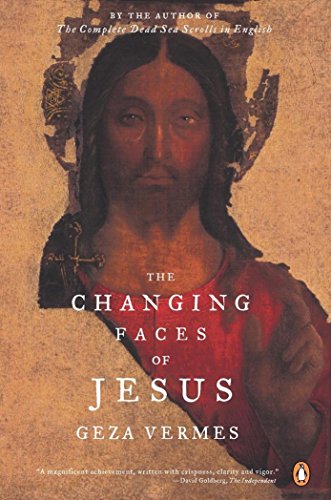
Who was the real Jesus? How was this Palestinian charismatic transformed by later generations into the heavenly savior who is the focus of the Christian Church? Did Jesus's own teachings lead to his divine characterization? Or did the church-centered needs of gentile Christianity hide his true face, obscuring the religion he preached and practiced? With unique authority, sensitivity, and insight, renowned scholar Geza Vermes explores these difficult questions by examining the New Testament writings, placing them in the context of the Jewish civilization of the first century. Starting with the elevated, divine figure of Christ presented in the most recent Gospel, the Gospel of John, Vermes travels back through earlier accounts of Jesus's life to reveal the true historical figure.
"synopsis" may belong to another edition of this title.
About the Author
Geza Vermes's pioneering work on the Dead Sea Scrolls and the historical Jesus led to his appointment as the first professor of Jewish studies at Oxford University, where he is now professor emeritus. He is the author of several books, including The Authentic Gospel of Jesus.
Excerpt. © Reprinted by permission. All rights reserved.
The Changing Faces of Jesus
By Geza VermesCompass Books
Copyright © 2002 Geza VermesAll right reserved.
ISBN: 9780142196021
Chapter One
John
The Odd Man Out Among the Evangelists
* * *
Over the last quarter of a century, in addition to my academic lecturesI have had many opportunities to address nonspecialist groups of educatedmen and women, young and older, on my work on Jesus. My purposehas always been to portray "Jesus the Jew," that is, the historicalfigure that stands behind the doctrinal elaborations of two millennia ofChristian belief, worship, and speculation. My nontheological sketchusually received sympathetic hearing from liberally minded Christians,as wall as from those in the auditorium who did not belong to church orchapel, while Jews listened to it with amazement and curiosity. However,it provoked, simultaneously and regularly, puzzled incomprehensionamong the conventional, especially evangelical or fundamentalistChristian members of the audience who believed that they were familiarwith the Gospels. "Did I hear you saying," I was often asked, "thatthere is no evidence in Scripture stating that Jesus was the Messiah orthat he was God? But didn't he explicitly assert the opposite, namelythat he was the Messiah and the Son of God? Did he not proclaim tothe Jews in the Temple of Jerusalem that he and the Father were one?"And so on.
Nine times out of ten, the traditionalists' bewildered question derivesfrom some passage in the Fourth Gospel. My customary reply,which echoes the conclusions of most critical scholars, leaves them asa rule somewhat confused, but ultimately unimpressed. They cannotswallow the view that the so-called Gospel of John is something specialand reflects not the authentic message of Jesus or even the thinkingabout him of his immediate followers but the highly evolvedtheology of a Christian writer who lived three generations after Jesusand completed his Gospel in the opening years of the second centuryA.D. For the average believer, the last Gospel is naturally the best andthe most reliable of the four. They hold it to be the work of the apostleand eyewitness of the life of Jesus whom he cherished so much thatshortly before dying on the cross he named him his heir and theguardian of his mother, Mary.
It is obvious to anyone acquainted with the doctrinal tradition ofthe church that the theological understanding of Jesus?who he wasand what he did?by historic Christianity ultimately depends on theGospel of John and the letters of Paul. Paul, the apostle of the Gentiles,is primarily responsible for the church's teaching on Christ, the Redeemerof mankind; faith in the divinity of the Son of God and the divorcebetween Christianity and Judaism, on the other hand, derivefirst and foremost from the influence of the Fourth Gospel. John's pictureof the truly divine Jesus Christ constitutes, it may be said, the climaxin the evolution of Christian dogma in the New Testament, itsmost polished and ultimate expression. For this reason John is chosenas the best point of departure in our historical-spiritual journey. To bemore explicit, we shall begin with the doctrinally most evolved stage inour search for the historical reality which lies hidden behind and beneaththe earliest stages of the church's belief in the celestial Christ.
Anyone well versed in history knows that the Fourth Gospel is aunique phenomenon. It is unlike the first three Gospels, and comparisonreveals that it stands out as truly sui generis, of its own peculiarkind. Mark, Matthew, and Luke, the Synoptic Gospels, follow the samestory line and generally can be set out in parallel columns in a so-calledGospel synopsis. They only differ at the beginning and the end ofthe life of Jesus. The story of his birth and the apparition accounts afterhis death are all missing from Mark, the earliest of the three,whereas both Matthew and Luke record them, though each in his ownway. By contrast, John has his own special vision, aim, and structure.The theological canvas painted by this evangelist, his chronology, andthe style of teaching and actual message he attributes to Jesus arelargely unparalleled in the Synoptics, and sometimes flatly contradicttheir testimony.
This view of the Gospels is that of a scholar, of a detached historian,in search of information embedded in the surviving sources. Religiousauthorities do not like to be faced with contradictory evidence; theystrive for reconciliation and harmony. Modern Old Testament researchhas distinguished four layers or sources in the "Law of Moses," but ancientJewish tradition managed to amalgamate these into a single unifiedaccount, the books of the Pentateuch, the first five books of theHebrew Bible, as we have them. Perturbed by the differences and dissonancein the four records of the life of Jesus, the Christian churchalso made two kinds of attempt at ironing out discrepancies. The firstinstinctively imitated ancient Judaism, which had converted the fourpreexisting "sources" into the single Mosaic Law. Likewise the earlychurch sought to replace the four separate Gospels with one narrativeincorporating all the details of Matthew, Mark, Luke, and John, thuseliminating all the differences. This effort ultimately failed, but for awhile a brilliantly conceived Gospel harmony, known as the Diatessaron,or the Four-in-One, attributed to the mid-second-century Christianapologist Tatian, had considerable success in the churches of Syria,where it almost managed to eclipse the individual Gospels. However,from the fifth century onward it was consigned to near oblivion. Thesecond line of defense has succeeded and survives to this day. It representsJohn as the supreme biographer of Jesus, the author of the spiritualGospel. Familiar with the works of his predecessors, he is said tohave deliberately avoided repeating most of their story, apart from thePassion account, to have restricted himself to supplementing and enrichingtheir records with entire speeches attributed to Jesus, and ingeneral doctrinally developing and improving their narratives.
No critical reading of the four Gospels justifies such an understandingof John. For it is obvious to any religiously unbiased reader that ifthe Fourth Evangelist is right, his forerunners must be mistaken orvice versa. The Synoptics and John cannot be simultaneously correctwhen the former assign to Jesus a public career lasting a year, whileJohn stretches it to two or three years by mentioning two or possiblythree consecutive Passover festivals during Jesus' ministry in Galileeand Judaea. Likewise, if John's dating of the crucifixion to the day beforethe Passover, i.e., 14 Nisan, is accurate, the Synoptics who depictthe last supper as a Passover dinner and place the events leading to theexecution of Jesus on 15 Nisan must be in error. Or to Hebraize andsuitably adapt the English proverb to the Passover situation, you can'thave your unleavened bread and eat it!
When and by whom was the Fourth Gospel written? The oldestknown manuscript fragments of John belong to sometime betweenA.D. 125 and 150, and equally the oldest references to John's Gospel inearly Christian literature come from the mid-second century. So thework was completed before those dates. On the other hand, the highlyevolved doctrine of John points to a period posterior to the redaction ofthe Synoptic Gospels, which is estimated to have taken place in thecourse of the last quarter of the first century A.D. Likewise the split reflectedin John between Judaism and Christianity, with followers of Jesusbeing expelled from the synagogue, is hardly conceivable beforethe turn of the first century A.D. I subscribe therefore to the opinionheld by mainstream New Testament scholarship that the work waspublished in the early second century, probably between the years 100and 110. This chronological hypothesis best fits the evidence availableto us and is preferable to the dating of the Fourth Gospel, advanced bysome serious experts, to A.D. 150 or beyond.
The same majority opinion considers the identity of the authorunascertainable. Apart from the title "according to John," which is ambiguous?whichJohn??and was only later attached to the composition,the Gospel itself from chapter 1 to chapter 20 mentions noauthor. In chapter 21, appended by someone distinct from the evangelist(cf. verse 24), an attempt is made to identify him with "the beloveddisciple of Jesus," who is tacitly assumed to be the Galilean fishermanJohn, the son of Zebedee.
Now, according to a garbled version of traditions current amongChristians in the second century A.D., the famous church father Irenaeus,bishop of Lyons, reported ca. A.D. 180 that the apostle John livedto a great age in Ephesus (western Asiatic Turkey) and produced therethe Fourth Gospel. However, no early evidence connects John withEphesus. He is last mentioned in the Acts of the Apostles (8:14) asleading the evangelization of Samaria in the company of Peter. Paulalso characterizes him in the company of James, the brother of theLord, and Peter as one of the three pillars of the Jerusalem church (Gal.2:9). No one testifies in the first century A.D. to John's move to the fartheredge of Asia Minor. The martyr bishop Ignatius of Antioch had asplendid opportunity but failed to do so. In his letter to the membersof the church of Ephesus, written in ca. A.D. 110, he referred to the Ephesiansas the people of Paul, without mentioning that just a few yearsearlier the great apostle and evangelist John had been residing amongthem!
To complicate matters further, there seems to have been a number ofmen named John active in that region. One of these was "John the Elder,"a disciple of the Lord according to Papias, bishop of Hierapolis (inAsia Minor), who died around A.D. 130. Incidentally, the author of thesecond and third letters of John also identifies himself simply as "theElder." The first letter is not attributed to any named person in the textitself.
Finally, to envisage as the author of the Fourth Gospel an "uneducatedand common" Galilean fisherman (Acts 4:13), who was a centenariangive or take a few years yet not only still creative but fully athome in Hellenistic philosophical and mystical speculation, requires aleap of imagination which seems to be beyond the reasonable.
In sum, one can just as well pull a name out of a hat. Candidates inaddition to John the apostle could be a presbyter or elder called John;John Mark, Paul's companion (Acts 15:37), referred to by the churchfather Clement of Alexandria; Lazarus, the friend whom Jesus loved("the beloved disciple"?); or whomsoever you fancy. The total irreconcilabilityof the Fourth Gospel with the Synoptics, combined with thelate date of its composition, would strongly militate against an authorwho was an eyewitness of the historical Jesus.
Recent attempts to advance the redaction of the Fourth Gospelnearer to the mid-first century A.D. strike me as historically unsoundand theologically quasi-impossible; they are inconsistent with the totalityof the evidence. Judging from his work, John was either an educatedJew of mystical leanings who also had some acquaintance withHellenistic mysticism, or, considering the evangelist's violent detestationof the Jews, a cultured Greek who first toyed with Judaism andsubsequently embraced Christianity. The fact that some of the mostcommon Hebrew words (for example, rabbi or rabbouni) are regularlytranslated into Greek in this Gospel shows that it was primarily intendedfor a non-Jewish readership. Matthew and Mark, unlike John,assume that their public would understand.
The portrait of Jesus and the message ascribed to him in the FourthGospel will be treated in the next chapter. They will be shown to besubstantially in advance of the Synoptic Gospels. My main purposehere is to indicate that this discrepancy is not surprising; it is indeed tobe expected, bearing in mind that we are dealing with the odd man outamong the evangelists.
As I have noted, everything in this Gospel?its story, chronology,and structure?is sui generis. Although John and the Synoptics purportto recount the life and teaching of the same individual, they have preciouslittle in common. So little, in fact, that the straight correspondencesare limited to a single chapter, precisely to the first twenty-fiveverses of John, chapter 6. They represent three consecutive episodes:the miraculous feeding of five thousand people; Jesus walking on theLake of Galilee; and his entry into a boat heading toward the oppositeshore. These accounts are roughly paralleled in Mark and Matthew, themain difference consisting in John's silence on the healing activity ofJesus in the land of Gennesaret (cf. Mark 6:32-56; Matt. 14:13-36).
Some of the prominent features of Jesus' portrait in the Synopticsare either completely absent from the Fourth Gospel, or their significanceis greatly diminished. Thus one of the chief aspects of Jesus'function as a healer in the Synoptics, namely, the casting out ofdemons who were blamed for every kind of illness, is completely missingfrom John. Such a practice smacked of popular religion, if not ofmagic, and as such was considered unworthy of the Johannine Jesus.Even the performance of cures, perhaps the dominant feature of theportrait of Jesus in the earlier Gospels, lost its centrality in John. Fromamong the many healing miracles listed in the Synoptics, only a singleone survives in this Gospel, and that in a somewhat remanipulatedform. The Synoptic story of the Roman centurion's servant healed byJesus in absentia is turned by John, as I will show presently, into thecuring of a Herodian official's son.
The Fourth Evangelist describes only two additional therapeuticepisodes: the healing of the paralytic at the pool of Bethesda (5:2-9)and the restoration of sight to a man who was blind from birth(9:1-7). The former was made to recover simply by a verbal command,"Rise, take up your pallet and walk!" (5:8), but for the latter Jesus hadrecourse to a medicinal substance, mud prepared from clay mixed withhis saliva. The method is reminiscent of the healing of a deaf and dumbperson (Mark 7:33), and of a blind man (Mark 8:23) by the spittle ofJesus. These are the only explicit stories, but John also alludes moregenerally to "doing signs on those who were diseased" (John 6:2; cf.Mark 6:53-56 and Matt. 14:34-36).
Faint echoes of the Synoptics can be detected in a number of Johanninepassages, although in a different context, or with a changed storyline. The alterations always seem to be motivated by the more elevateddoctrinal concepts of the Fourth Gospel. In other words, even literaryconsiderations alone inescapably lead to the conclusion that, comparedwith Mark, Matthew, and Luke who stand between the historical Jesusand the earliest formulations of Christianity, John reflects the fully developedform of the primitive belief, the end product of the earlychurch's thinking about Jesus.
For example, in the Synoptic Gospels Jesus expels the money changersand traders in sacrificial animals from the courtyard of the Jerusalemsanctuary a few days before his crucifixion. The episode ispresented as the ultimate cause triggering his downfall, and as suchpossesses great historical probability. John, by contrast, sets the so-calledcleansing of the Temple to the beginning of Jesus' activity(2:14-16) and invests it with a prophetic and theological significance.It is an act symbolically alluding to the destruction and subsequent rebuildingof the holy place, itself the prefiguration of Jesus' death andresurrection as is manifest in the words "Destroy this temple, and inthree days I will raise it up" (2:19).
Similarly, in the scenario followed by the Synoptics, the only healingact performed by Jesus from a distance benefited the servant of aGentile army officer retired to Capernaum. The aim of the story was tobring into relief the faith of a non-Jew (Matt. 8:5-13; Luke 7:1-10). Inthe Fourth Gospel the father of the sick person is not a veteran Romansoldier, but a Jewish royal official, no doubt from Tiberias, where thecourt of Herod Antipas, tetrarch of Galilee, resided. In short, Jesus wasfacing a Jewish, not a Gentile, suppliant, and true to the spirit of theJohannine Gospel he immediately rebuked the man, reproaching himwith the Jewish sin of greed for miracles. Nevertheless, hearing themoving plea of the distressed father Jesus relented and complied withhis prayer (John 4:46-53).
Take again the various Gospel narratives depicting the anointing ofJesus' feet by a woman in Bethany. According to John (12:1-8), six daysbefore Passover Jesus spent the evening in the house of his friend therisen Lazarus whose sister, Mary, then proceeded with the ceremony ofanointing. She was criticized by Judas, not for the immodesty of usingher hair as a towel, but for wasting the precious aromatic balsam thecost of which might have helped the poor! This story is made up of elementsderived from at least two original traditions. The anointing ofJesus' hair (not his feet) by an anonymous woman in Bethany two (notsix) days before Passover is reported by Mark (14:3-9) and Matthew(26:6-13). However, the episode is said to have happened in the houseof the otherwise unknown Simon the Leper, and not in Lazarus' home.The woman's generous and loving gesture is qualified as a waste bysome of those present (Mark), or by the "disciples" (Matthew). A parallelaccount is missing from Luke, who nevertheless records in a differentcontext (Luke 7:36-50)?in the house of Simon surnamed thePharisee (not the Leper) and much earlier in the Gospel story?that aprostitute ("a woman of the city who was a sinner") entered the roomuninvited and washed Jesus' feet with her tears, wiped them with herhair, kissed them, and poured ointment on them from an alabasterflask. Reading disapproval on Simon's face, Jesus turned the story intoa lesson of repentance and forgiveness. The same Luke mentions Jesus'visit in an unnamed (Galilean) village to two sisters, Martha and Mary,but with no mention of a brother called Lazarus or of any anointing ofJesus. The Fourth Evangelist produces here a garbled and conflated traditionwith the significant twist that the anointing is criticized, not bythe disciples who are thus put in favorable light, but by Judas, a traitorand a thief.
Again, to put into relief the difference between the Synoptics andJohn, consider the two episodes where in the Fourth Gospel the Baptistand Jesus are brought together. The description of the first encounterbetween the two at the Jordan is quite similar in John(1:29-37) and the corresponding Synoptic passages. John's phrase,"Behold, the Lamb of God," recalls in the Synoptics the heavenly voiceintroducing Jesus as God's "beloved Son." (Note that not unlike "kid" inEnglish, the Aramaic "lamb" [talya] is used metaphorically for a child.)But there are also crucial differences. Matthew, Mark, and Luke firmlyassert that Jesus humbly sought to be baptized by John. The FourthGospel cannot tolerate such self-abasement, and accordingly this evangelistprefers to keep silent on the baptism of Jesus. He thus avoids anypossible insinuation that the baptizer John might be superior to thebaptized Jesus. The appropriateness of the latter's wish to undergosuch a baptism of penitence had already been indirectly queried by thetradition recorded in Matt. 3:14-15. There John is supposed to have remarkedin a surprised and apologetic tone: "I need to be baptized byyou, and do you come to me?" A little further on (3:22-30; 4:1-2), andcontrary to the respect and harmony implied to have existed betweenJesus and the Baptist, the evangelist alludes to strained relations revealedby a rivalry and quarrel between their disciples. Also, to underplaythe significance of kinship between the two masters, which ifclearly stated might imply that they were at least of similar standing,John makes no reference to the fact, testified to by Luke (1:25-56),that their mothers, Elizabeth and Mary, were related.
This mention of the mother of Jesus helps to recall another strikingdifference between the Synoptics and John. In the Synoptics Jesus isportrayed as showing reserve, verging on hostility, toward his family,including Mary. Mark (3:21) bluntly reports that his relatives held himto be crazy; they wanted to seize him and remove him from the publicarena. Elsewhere we are told that his mother and brothers expected,but failed to receive, preferential treatment from Jesus. They reckonedthat he would interrupt his teaching when informed that they had arrived.But Jesus rebuffed them: "Who are my mother and my brothers?"he asked. Then, pointing toward his disciples, he declared themto be metaphorically his "mother" and his "brothers" (Mark 3:31-35;Matt. 12:46-50; Luke 8:19-21). Apart from the Nazareth episodewhere Jesus, the son of Mary, is described as "the carpenter" or "the carpenter'sson," the Synoptic story loses sight of the family of Jesus. Onehas to turn to the Acts of the Apostles (1:14) for the next appearanceof "Mary, the mother of Jesus and ... his brothers" in the company of"the women," and of the apostles, eleven in number after the defectionof Judas Iscariot. Later on we learn also from the Acts of the Apostlesthat James, "the brother of the Lord," became the leader of the Jerusalemchurch. Moreover Jude, another of Jesus' four brothers, is presumedto be the author of one of the minor letters of the NewTestament. So in time at least part of the family joined the Jesus party.
To return to Mary: the passage in Acts just quoted marks a turningpoint, the beginning of a favorable attitude toward her, which culminatesin the Fourth Gospel. Whereas John is still negative toward the"brothers" of Jesus who "did not believe in him" (John 7:5), he has apositive message about the mother of Jesus.
John, in common with the Synoptics, knows the father of Jesus asJoseph (Mark 6:3; Matt. 13:55); both he and Jesus' mother are depictedas well-known citizens of Nazareth (1:45, 6:42). John, however, neveruses the name Mary. The "mother of Jesus," as the Fourth Evangelistcalls her, first appears in this Gospel as a guest, together with Jesus andhis disciples, at a wedding in the village of Cana, close to Nazareth.Noticing that the wine is running out, she urges Jesus, seated next toher, to do something about the embarrassing situation (2:1-3). Maryignores his evasive answer, and secure in the knowledge that Jesus willnot resist her wishes, instructs the servants to follow his orders(2:4-5). After the miracle, the family group?mother, son, and brothers?andthe disciples leave together and go to Capernaum (2:12).John's sketch presupposes closeness and warmth between mother andson, so different from the cold and unfriendly attitude toward the interferingfamily discernible in the Synoptic account. The same lovingatmosphere surrounds the scene of the crucifixion, too. In contrast tothe accounts of Mark and Matthew where some named women, butnot the mother of Jesus, were witnessing the events from a distance(Mark 15:40; Matt. 27:56), Mary according to the Fourth Evangeliststood beside the cross where the dying Jesus entrusted to each other'scare his mother and his beloved disciple (19:26-27).
Another major feature distinguishing the Fourth Gospel from theSynoptics resides in their respective understanding of the miracles ofJesus. The first three evangelists consider these as "mighty works," thatis to say, acts such as curing the sick, performed for their own sake,which struck the onlookers as miraculous. Jesus is said to have generallyand explicitly disapproved of "signs" intended to demonstrate thesupernatural power of the person who executed them. He refused tocomply with the demand for a "sign" or a "sign from heaven" addressedto him by Jewish notables, Pharisees, scribes, or Sadducees (Mark 8:11;Matt. 12:38; 16:1). He rebuffed them by the comment that only thosewho belong to an "evil and adulterous generation" (Matt. 12:39; 16:4;Luke 11:29) needed "signs." In the Synoptics, the conclusion drawnfrom the performance of wonders is that Jesus was a prophet, a traditionalelement twice echoed in John (6:14; 9:17). Or else the presenceof the miraculous indicates, as does the expulsion of demons "by virtueof the finger of God" (Matt. 12:28; Luke 11:20), that the Kingdom ofGod or the messianic age was approaching or indeed that it had alreadyarrived.
Go and tell John [the Baptist] what you hear and see: the blind receive theirsight and the lame walk, lepers are cleansed and the deaf hear, and the deadare raised up, and the poor have good news preached to them. (Matt.11:4-5)
The context of such happenings recalls the Messianic Apocalypse(4Q521) from Qumran, possibly an Essene composition, where Messiah,healing, resurrection of the dead, and Kingdom of God are mentionedin a single breath.
[the hea]vens and the earth will listen to His Messiah ... He [the Lord] willglorify the pious on the throne of the eternal Kingdom, He who liberates thecaptives, restores sight to the blind, straightens the b[ent] ... For He willheal the wounded, and revive the dead and bring good news to the poor.
Continues...
Excerpted from The Changing Faces of Jesusby Geza Vermes Copyright © 2002 by Geza Vermes. Excerpted by permission.
All rights reserved. No part of this excerpt may be reproduced or reprinted without permission in writing from the publisher.
Excerpts are provided by Dial-A-Book Inc. solely for the personal use of visitors to this web site.
"About this title" may belong to another edition of this title.
Search results for Changing Faces Jesus (Compass)

Stock Image
The Changing Faces of Jesus
Seller: World of Books (was SecondSale), Montgomery, IL, U.S.A.
Seller rating 5 out of 5 stars

Paperback. Condition: Good. Who was the real Jesus? How was this Palestinian charismatic transformed by later generations into the heavenly savior who is the focus of the Christian Church? Did Jesus's own teachings lead to his divine characterization? Or did the church-centered needs of gentile Christianity hide his true face, obscuring the religion he preached and practiced? With unique authority, sensitivity, and insight, renowned scholar Geza Vermes explores these difficult questions by examining the New Testament writings, placing them in the context of the Jewish civilization of the first century. Starting with the elevated, divine figure of Christ presented in the most recent Gospel, the Gospel of John, Vermes travels back through earlier accounts of Jesus's life to reveal the true historical figure. Seller Inventory # 00095651789
Stock Image
The Changing Faces of Jesus
Seller: World of Books (was SecondSale), Montgomery, IL, U.S.A.
Seller rating 5 out of 5 stars
Paperback. Condition: Fair. Who was the real Jesus? How was this Palestinian charismatic transformed by later generations into the heavenly savior who is the focus of the Christian Church? Did Jesus's own teachings lead to his divine characterization? Or did the church-centered needs of gentile Christianity hide his true face, obscuring the religion he preached and practiced? With unique authority, sensitivity, and insight, renowned scholar Geza Vermes explores these difficult questions by examining the New Testament writings, placing them in the context of the Jewish civilization of the first century. Starting with the elevated, divine figure of Christ presented in the most recent Gospel, the Gospel of John, Vermes travels back through earlier accounts of Jesus's life to reveal the true historical figure. Seller Inventory # 00099601988
Stock Image
The Changing Faces of Jesus (Compass)
Published by
Penguin Publishing Group (edition Reissue), 2002
ISBN 10: 0142196029
ISBN 13: 9780142196021
Used
Paperback
Seller: BooksRun, Philadelphia, PA, U.S.A.
Seller rating 5 out of 5 stars
Paperback. Condition: Very Good. Reissue. It's a well-cared-for item that has seen limited use. The item may show minor signs of wear. All the text is legible, with all pages included. It may have slight markings and/or highlighting. Seller Inventory # 0142196029-11-1
Seller Image
The Changing Faces of Jesus (Compass)
Published by
Penguin Publishing Group, 2002
ISBN 10: 0142196029
ISBN 13: 9780142196021
Used
Softcover
Seller: Greenworld Books, Arlington, TX, U.S.A.
Seller rating 5 out of 5 stars
Condition: very_good. Fast Free Shipping â" Very Good condition book with a firm cover and clean pages. Shows normal use and some light wear or limited notes markings. A solid, nice copy to enjoy. Seller Inventory # GWV.0142196029.VG
Seller Image
The Changing Faces of Jesus (Compass)
Published by
Penguin Publishing Group, 2002
ISBN 10: 0142196029
ISBN 13: 9780142196021
Used
Softcover
Seller: Windflower Bookstore, Rockford, IL, U.S.A.
Seller rating 4 out of 5 stars

Condition: very_good. Seller Inventory # WFBV.0142196029.VG
Stock Image
The Changing Faces of Jesus
Published by
Penguin Publishing Group, 2002
ISBN 10: 0142196029
ISBN 13: 9780142196021
Used
Paperback
Seller: ThriftBooks-Dallas, Dallas, TX, U.S.A.
Seller rating 5 out of 5 stars
Paperback. Condition: Fair. No Jacket. Readable copy. Pages may have considerable notes/highlighting. ~ ThriftBooks: Read More, Spend Less. Seller Inventory # G0142196029I5N00
Stock Image
The Changing Faces of Jesus
Published by
Penguin Publishing Group, 2002
ISBN 10: 0142196029
ISBN 13: 9780142196021
Used
Paperback
Seller: ThriftBooks-Atlanta, AUSTELL, GA, U.S.A.
Seller rating 5 out of 5 stars
Paperback. Condition: Fair. No Jacket. Readable copy. Pages may have considerable notes/highlighting. ~ ThriftBooks: Read More, Spend Less. Seller Inventory # G0142196029I5N00
Stock Image
The Changing Faces of Jesus
Published by
Penguin Publishing Group, 2002
ISBN 10: 0142196029
ISBN 13: 9780142196021
Used
Paperback
Seller: ThriftBooks-Dallas, Dallas, TX, U.S.A.
Seller rating 5 out of 5 stars
Paperback. Condition: Very Good. No Jacket. May have limited writing in cover pages. Pages are unmarked. ~ ThriftBooks: Read More, Spend Less. Seller Inventory # G0142196029I4N00
Stock Image
The Changing Faces of Jesus
Published by
Penguin Publishing Group, 2002
ISBN 10: 0142196029
ISBN 13: 9780142196021
Used
Paperback
Seller: ThriftBooks-Dallas, Dallas, TX, U.S.A.
Seller rating 5 out of 5 stars
Paperback. Condition: Good. No Jacket. Pages can have notes/highlighting. Spine may show signs of wear. ~ ThriftBooks: Read More, Spend Less. Seller Inventory # G0142196029I3N00
Stock Image
The Changing Faces of Jesus
Published by
Penguin Publishing Group, 2002
ISBN 10: 0142196029
ISBN 13: 9780142196021
Used
Paperback
Seller: ThriftBooks-Atlanta, AUSTELL, GA, U.S.A.
Seller rating 5 out of 5 stars
Paperback. Condition: As New. No Jacket. Pages are clean and are not marred by notes or folds of any kind. ~ ThriftBooks: Read More, Spend Less. Seller Inventory # G0142196029I2N00