
Items related to The Prince: Niccolo Machiavelli (Penguin Classics)
Synopsis
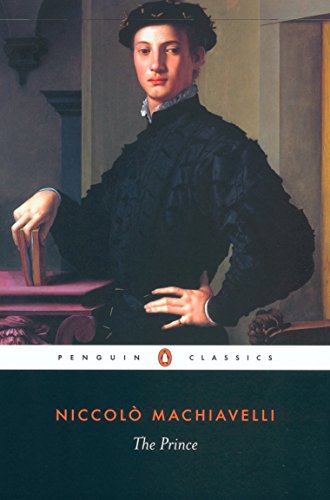
Niccolò Machiavelli's ruthless manual for aspiring rulers, this Penguin Classics edition of The Prince is translated with notes by George Bull and an introduction by Anthony Grafton.
The Prince shocked Europe on publication with its ruthless tactics for gaining absolute power and its abandonment of conventional morality. Niccolò Machiavelli came to be regarded as some by an agent of the Devil and his name taken for the intriguer 'Machevill' of Jacobean tragedy. For his treatise on statecraft Machiavelli drew upon his own experience of office under the turbulent Florentine republic, rejecting traditional values of political theory and recognizing the complicated, transient nature of political life. Concerned not with lofty ideals, but with a regime that would last, The Prince has become the Bible of realpolitik, and still retains its power to alarm and to instruct.
In this edition Machiavelli's tough-minded and pragmatic Italian is preserved in George Bull's clear, unambiguous translation, while Anthony Grafton's introduction depicts Machiavelli's world of power struggles and intrigue, and discusses his role as political teacher of Europe.
Niccolò Machiavelli (1469-1527) was born in Florence, and served the Florentine republic as a secretary and second chancellor, as ambassador and foreign policy-maker. When the Medici family returned to power in 1512 he was suspected of conspiracy, imprisoned and tortured and forced to retire from public life. His most famous work, The Prince, was written in an attempt to gain favour with the Medicis and return to politics.
If you enjoyed The Prince, you might like Plato's Republic, also available in Penguin Classics.
"synopsis" may belong to another edition of this title.
About the Author
Niccoló Machiavelli (1469-1527) was appointed secretary and Second Chancellor to the Florentine Republic in 1498. He was dismissed from his post in 1512 and forced to withdraw from public life, after which time he wrote THE PRINCE, a handbook for rulers. GEORGE BULL translated widely from the Italian, including for Penguin Classics including Cellini's 'Autobiography' and Vasari's 'Lives of the Artists'. ANTHONY GRAFTON teaches European intellectual history at Princeton University.
From the Back Cover
The Prince shocked Europe on publication with its ruthless tactics for gaining absolute power and its abandonment of conventional morality. Niccolo Machiavelli (1469-1527) came to be regarded as some by an agent of the Devil and his name taken for the intriguer 'Machevill' of Jacobean tragedy. For his treatise on statecraft Machiavelli drew upon his own experience of office under the turbulent Florentine republic, rejecting traditional values of political theory and recognizing the complicated, transient nature of political life. Concerned not with lofty ideals, but with a regime that would last, The Prince has become the Bible of realpolitik, and still retains its power to alarm and to instruct.
Excerpt. © Reprinted by permission. All rights reserved.
Seventeenth Chapter: Concerning Cruelty and Clemency, and Whether It Is Better to Be Loved Than Feared
...Upon this a question arises: whether it be better to be loved than feared or feared than loved? It may be answered that one should wish to be both, but, because it is difficult to unite them in one person, it is much safer to be feared than loved, when, of the two, either must be dispensed with. Because this is to be asserted in general of men, that they are ungrateful, fickle, false, cowardly, covetous, and as long as you succeed, they are yours entirely; they will offer you their blood, property, life, and children, as is said above, when the need is far distant; but when it approaches they turn against you. And that prince, who, relying entirely on their promises, has neglected other precautions, is ruined; because friendships that are obtained by payments, and not by greatness or by nobility of mind, may indeed be earned, but they are not secured, and in time of need cannot be relied upon; and men have less scruple in offending one who is beloved than one who is feared, for love is preserved by the link of obligation which, owing to the baseness of men, is broken at every opportunity for their advantage; but fear preserves you by a dread of punishment which never fails....
Twenty-First Chapter: How a Prince Should Conduct Himself So as to Gain Renown
...A prince is also respected when he is either a true friend or a downright enemy, that is to say, when, without any reservation, he declares himself in favour of one party against the other; which course will always be more advantageous than standing neutral; because if two of your powerful neighbours come to blows, they are of such a character that, if one of them conquers, you have either to fear him or not. In either case it will always be more advantageous for you to declare yourself and to make war strenously; because, in the first case, if you do not declare yourself, you will invariably fall a prey to the conqueror, to the pleasure and satisfaction of his who has been conquered, and you will have no reasons to offer, nor anything to protect or to shelter you. Because he who conquers does not want doubtful friends who will not aid him in the time of trial; and he who loses will not harbour you because you did not willingly, sword in hand, court his fate....
The Prince
By Niccolo Machiavelli, George Bull, Anthony GraftonPenguin Publishing Group
Copyright © 2003 Niccolo Machiavelli
All rights reserved.
ISBN: 978-0-14-044915-0All rights reserved.
Contents
ChronologyMapIntroductionTranslator's NoteSelected BooksMachiavelli's Principal WorksLetter to the Magnificent Lorenzo de Medici1IHow many kinds of principality there are and the ways in which they are acquired5IIHereditary principalities5IIIComposite principalities6IVWhy the kingdom of Darius conquered by Alexander did not rebel against his successors after his death13VHow cities or principalities which lived under their own laws should be administered after being conquered16VINew principalities acquired by one's own arms and prowess17VIINew principalities acquired with the help of fortune and foreign arms20VIIIThose who come to power by crime27IXThe constitutional principality31XHow the strength of every principality should be measured34XIEcclesiastical principalities36XIIMilitary organization and mercenary troops39XIIIAuxiliary, composite, and native troops43XIVHow a prince should organize his militia47XVThe things for which men, and especially princes, are praised or blamed49XVIGenerosity and parsimony51XVIICruelty and compassion; and whether it is better to be loved than feared, or the reverse53XVIIIHow princes should honour their word56XIXThe need to avoid contempt and hatred58XXWhether fortresses and many of the other present-day expedients to which princes have recourse are useful or not67XXIHow a prince must act to win honour71XXIIA prince's personal staff75XXIIIHow flatterers must be shunned76XXIVWhy the Italian princes have lost their states78XXVHow far human affairs are governed by fortune, and how fortune can be opposed79XXVIExhortation to liberate Italy from the barbarians82Glossary of Proper Names86Notes99
Seventeenth Chapter: Concerning Cruelty and Clemency, and Whether It Is Better to Be Loved Than Feared
...Upon this a question arises: whether it be better to be loved than feared or feared than loved? It may be answered that one should wish to be both, but, because it is difficult to unite them in one person, it is much safer to be feared than loved, when, of the two, either must be dispensed with. Because this is to be asserted in general of men, that they are ungrateful, fickle, false, cowardly, covetous, and as long as you succeed, they are yours entirely; they will offer you their blood, property, life, and children, as is said above, when the need is far distant; but when it approaches they turn against you. And that prince, who, relying entirely on their promises, has neglected other precautions, is ruined; because friendships that are obtained by payments, and not by greatness or by nobility of mind, may indeed be earned, but they are not secured, and in time of need cannot be relied upon; and men have less scruple in offending one who is beloved than one who is feared, for love is preserved by the link of obligation which, owing to the baseness of men, is broken at every opportunity for their advantage; but fear preserves you by a dread of punishment which never fails....
Twenty-First Chapter: How a Prince Should Conduct Himself So as to Gain Renown
...A prince is also respected when he is either a true friend or a downright enemy, that is to say, when, without any reservation, he declares himself in favour of one party against the other; which course will always be more advantageous than standing neutral; because if two of your powerful neighbours come to blows, they are of such a character that, if one of them conquers, you have either to fear him or not. In either case it will always be more advantageous for you to declare yourself and to make war strenously; because, in the first case, if you do not declare yourself, you will invariably fall a prey to the conqueror, to the pleasure and satisfaction of his who has been conquered, and you will have no reasons to offer, nor anything to protect or to shelter you. Because he who conquers does not want doubtful friends who will not aid him in the time of trial; and he who loses will not harbour you because you did not willingly, sword in hand, court his fate....
(Continues...)
Excerpted from The Prince by Niccolo Machiavelli, George Bull, Anthony Grafton. Copyright © 2003 Niccolo Machiavelli. Excerpted by permission of Penguin Publishing Group.
All rights reserved. No part of this excerpt may be reproduced or reprinted without permission in writing from the publisher.
Excerpts are provided by Dial-A-Book Inc. solely for the personal use of visitors to this web site.
"About this title" may belong to another edition of this title.
Search results for The Prince: Niccolo Machiavelli (Penguin Classics)

Seller Image
The Prince (Penguin Classics)
Seller: Dream Books Co., Denver, CO, U.S.A.
Seller rating 5 out of 5 stars

Condition: acceptable. This copy has clearly been enjoyedâ"expect noticeable shelf wear and some minor creases to the cover. Binding is strong, and all pages are legible. May contain previous library markings or stamps. Seller Inventory # DBV.0140449159.A
Seller Image
The Prince (Penguin Classics)
Seller: Goodwill, Brooklyn Park, MN, U.S.A.
Seller rating 4 out of 5 stars

Condition: good. All pages and cover are intact including the dust cover, if applicable . Spine may show signs of wear. Pages may include limited notes and highlighting. May include "From the library of" labels. Shrink wrap, dust covers, or boxed set case may be missing. Item may be missing bundled media. Seller Inventory # MINV.0140449159.G
Stock Image
The Prince
Seller: ThriftBooks-Reno, Reno, NV, U.S.A.
Seller rating 5 out of 5 stars
Paperback. Condition: Very Good. No Jacket. Former library book; May have limited writing in cover pages. Pages are unmarked. ~ ThriftBooks: Read More, Spend Less. Seller Inventory # G0140449159I4N10
Stock Image
The Prince
Seller: ThriftBooks-Phoenix, Phoenix, AZ, U.S.A.
Seller rating 5 out of 5 stars
Paperback. Condition: Fair. No Jacket. Former library book; Readable copy. Pages may have considerable notes/highlighting. ~ ThriftBooks: Read More, Spend Less. Seller Inventory # G0140449159I5N10
Stock Image
The Prince
Seller: ThriftBooks-Atlanta, AUSTELL, GA, U.S.A.
Seller rating 5 out of 5 stars
Paperback. Condition: Fair. No Jacket. Former library book; Readable copy. Pages may have considerable notes/highlighting. ~ ThriftBooks: Read More, Spend Less. Seller Inventory # G0140449159I5N10
Stock Image
The Prince
Seller: ThriftBooks-Reno, Reno, NV, U.S.A.
Seller rating 5 out of 5 stars
Paperback. Condition: Good. No Jacket. Pages can have notes/highlighting. Spine may show signs of wear. ~ ThriftBooks: Read More, Spend Less. Seller Inventory # G0140449159I3N00
Stock Image
The Prince
Seller: ThriftBooks-Dallas, Dallas, TX, U.S.A.
Seller rating 5 out of 5 stars
Paperback. Condition: Good. No Jacket. Pages can have notes/highlighting. Spine may show signs of wear. ~ ThriftBooks: Read More, Spend Less. Seller Inventory # G0140449159I3N00
Stock Image
The Prince
Seller: ThriftBooks-Reno, Reno, NV, U.S.A.
Seller rating 5 out of 5 stars
Paperback. Condition: Good. No Jacket. Former library book; Pages can have notes/highlighting. Spine may show signs of wear. ~ ThriftBooks: Read More, Spend Less. Seller Inventory # G0140449159I3N10
Stock Image
The Prince
Seller: ThriftBooks-Dallas, Dallas, TX, U.S.A.
Seller rating 5 out of 5 stars
Paperback. Condition: Fair. No Jacket. Readable copy. Pages may have considerable notes/highlighting. ~ ThriftBooks: Read More, Spend Less. Seller Inventory # G0140449159I5N00
Stock Image
The Prince
Seller: ThriftBooks-Phoenix, Phoenix, AZ, U.S.A.
Seller rating 5 out of 5 stars
Paperback. Condition: Good. No Jacket. Pages can have notes/highlighting. Spine may show signs of wear. ~ ThriftBooks: Read More, Spend Less. Seller Inventory # G0140449159I3N00