
Items related to The Science of Discworld
Synopsis
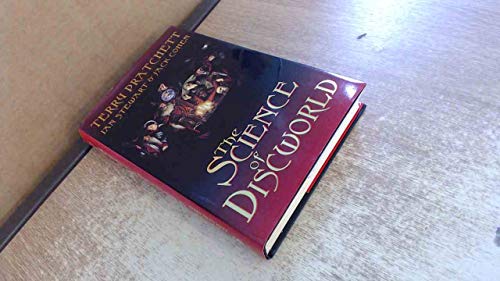
Everyone from the fantasy universe of Discworld knows that the world is flat, and that a million-in-one chance crops up 90per cent of the time. In our world, science tells us that our more "logical" universe does not obey common sense at all. This book uses Discworld science to illuminate our science.
"synopsis" may belong to another edition of this title.
Review
Terry Pratchett needs no introduction. Ian Stewart has written fine nonfiction books on mathematics, and he and Jack Cohen collaborated on the quirkily inventive pop-science titles The Collapse of Chaos and Figments of Reality. What on earth, or on Discworld, are they all doing in the same book? Pratchett provides a very funny 30,000-word novella about Discworld science, beginning in the High Energy Magic faculty of Unseen University and leading his eccentric wizards to investigate an alien cosmos where there's no magic to keep things going. This is the Roundworld universe--ours. The key point: much that's true only on Discworld (eg: that suns orbit planets and not vice-versa) was once believed on Earth and the wizards' comic misunderstandings echo the history of real science ... Unusually, Pratchett's story is split into chapters and in between his chapters Stewart and Cohen wittily discuss the concepts underlying the fiction, from the Big Bang through stellar formation to life and evolution. Much of the science we know, they cheerfully insist, is "lies-to-children": good stories that are mostly untrue, like thinking of atoms as tiny solar systems. Discworld operates by narrative plausibility and so does human thought even when our Roundworld universe disagrees. Between the laughs, The Science of Discworld is a provocative, informative book that'll make you think about what you think you know. --David Langford
Review
‘The hard science is as gripping as the fiction’ -- The Times
"About this title" may belong to another edition of this title.
Search results for The Science of Discworld

Stock Image
The Science of Discworld
Seller: WorldofBooks, Goring-By-Sea, WS, United Kingdom
Seller rating 5 out of 5 stars

Hardback. Condition: Very Good. The book has been read, but is in excellent condition. Pages are intact and not marred by notes or highlighting. The spine remains undamaged. Seller Inventory # GOR001223385
Buy Used
£ 3.26
£ 5.60 shipping
Ships from United Kingdom to U.S.A.
Ships from United Kingdom to U.S.A.
Quantity: 12 available
Stock Image
The Science of Discworld
Seller: Books From California, Simi Valley, CA, U.S.A.
Seller rating 4 out of 5 stars

hardcover. Condition: Good. Seller Inventory # mon0003980466
Stock Image
The Science of Discworld
Seller: Phatpocket Limited, Waltham Abbey, HERTS, United Kingdom
Seller rating 5 out of 5 stars
Condition: Good. Your purchase helps support Sri Lankan Children's Charity 'The Rainbow Centre'. Shows some signs of wear but in good overall condition. Our donations to The Rainbow Centre have helped provide an education and a safe haven to hundreds of children who live in appalling conditions. Seller Inventory # Z1-K-020-02582
Buy Used
£ 3.25
£ 10.64 shipping
Ships from United Kingdom to U.S.A.
Ships from United Kingdom to U.S.A.
Quantity: 1 available
Seller Image
The Science of Discworld
Seller: Hamelyn, Madrid, M, Spain
Seller rating 5 out of 5 stars
Condition: Fair. : En este fascinante libro, Terry Pratchett, junto con Ian Stewart y Jack Cohen, exploran la intersección entre el mundo de fantasía de Discworld y la ciencia de nuestro propio universo. A través de una narrativa ingeniosa y accesible, los autores desentrañan conceptos científicos complejos, utilizando el peculiar mundo de Discworld como un espejo para reflejar y comprender mejor las leyes que rigen nuestra realidad. Una lectura imprescindible para los amantes de la ciencia y la fantasía por igual. EAN: 9780091865153 Tipo: Libros Categoría: Ciencia Ficción|Ciencias Título: The Science of Discworld Autor: Terry Pratchett| Ian Stewart| Jack Cohen Editorial: Ebury Press Idioma: en Páginas: 336 Formato: tapa dura. Seller Inventory # Happ-2025-12-18-8bb0a74f
Stock Image
The Science of Discworld
Seller: medimops, Berlin, Germany
Seller rating 5 out of 5 stars
Condition: good. Befriedigend/Good: Durchschnittlich erhaltenes Buch bzw. Schutzumschlag mit Gebrauchsspuren, aber vollständigen Seiten. / Describes the average WORN book or dust jacket that has all the pages present. Seller Inventory # M00091865158-G
Stock Image
The Science of Discworld
Seller: Greener Books, London, United Kingdom
Seller rating 4 out of 5 stars
Hardcover. Condition: Used; Very Good. **SHIPPED FROM UK** We believe you will be completely satisfied with our quick and reliable service. All orders are dispatched as swiftly as possible! Buy with confidence! Greener Books. Seller Inventory # 2841410
Buy Used
£ 5.86
£ 20 shipping
Ships from United Kingdom to U.S.A.
Ships from United Kingdom to U.S.A.
Quantity: 1 available
Stock Image
The Science of Discworld
Published by
Ebury Press, London, 1999
ISBN 10: 0091865158
ISBN 13: 9780091865153
Used
Hardcover
First Edition
Seller: Richard Thornton Books PBFA, Clitheroe, LANCA, United Kingdom
Seller rating 4 out of 5 stars
Hardcover. Condition: Very Good+. Dust Jacket Condition: Very Good+. First Edition. This is a Very Good + Copy of this book in Hardcover Cloth in a Very Good + Dust-Jacket.Not price clipped with NO former names present.There is some tanning to the page edges,8vo 336pp First Edition 1st Impression [1999]. Seller Inventory # 85530
Buy Used
£ 10
£ 15.95 shipping
Ships from United Kingdom to U.S.A.
Ships from United Kingdom to U.S.A.
Quantity: 1 available
Stock Image
The Science Of Discworld (With Ian Stewart and Jack Cohen)
Published by
Ebury Press 1999 First Edition First Printing, 1999
ISBN 10: 0091865158
ISBN 13: 9780091865153
Used
Hardcover
First Edition
Seller: Porcupine Books, Ilford, United Kingdom
Seller rating 5 out of 5 stars
Hardcover. Condition: Near Fine. Dust Jacket Condition: Near Fine. Ebury Press 1999 First Edition First Printing Slightly bumped at top and base of spine and page edges lightly age-darkened else Fine book in lightly creased Dust Jacket. ''. uses the magic of Discworld to illuminate the scientific rules that govern our world. When a wizardly experiment goes adrift, the wizards of Unseen University find themselves with a pocket universe on their hands: Roundworld, where neither magic nor common sense seems to stand a chance against logic. ''. Book. Seller Inventory # 121885
Buy Used
£ 12.50
£ 18.23 shipping
Ships from United Kingdom to U.S.A.
Ships from United Kingdom to U.S.A.
Quantity: 1 available
Seller Image
The Science of Discworld
Published by
Ebury Press., United Kingdom, 1999
ISBN 10: 0091865158
ISBN 13: 9780091865153
Used
Hardcover
First Edition
Seller: Kaybooks., Lymm., UK, United Kingdom
Seller rating 2 out of 5 stars

Hardcover. Condition: Very Good. Dust Jacket Condition: Very Good. 1st Edition. 1st edition 1999. Very good condition in a very good unclipped wrapper. Seller Inventory # 310
Buy Used
£ 7
£ 32.15 shipping
Ships from United Kingdom to U.S.A.
Ships from United Kingdom to U.S.A.
Quantity: 1 available
Stock Image
The Science of Discworld
Published by
Ebury Press, U.K., 1998
ISBN 10: 0091865158
ISBN 13: 9780091865153
Used
Hardcover
First Edition
Seller: Collector's Corner, WORTHING, United Kingdom
Seller rating 2 out of 5 stars
Hardcover. Condition: As New. Dust Jacket Condition: Fine. 1st Edition. Ebury Press;, 1999. 8vo. Hardback. First edition, First Impression. 336pp. Some edge wear, otherwise a Fine copy with no inscriptions, in a Near Fine unclipped dust-wrapper. No foxing. Shipping is normally same day from the UK. All books ordered are wrapped in bubble-wrapped and sent in a strong box. PLEASE CONTACT US BEFORE ORDERING THIS BOOK TO CONFIRM BOOK CONDITION AND EDITION (most of our books are 1st editions). We can send you photos of this book with a detailed description. No foxing. Shipping is normally same day from the UK. "UK BASED SELLER ALL OVERSEAS SHIPPING VIA AIRMAIL". If you do not want this service please make it clear to Abebooks you wish by Ship. In Stock.- THANKS! We do not stock ex-library or Book Club editions. Contact us if you have any questions. Bookseller Inventory # O. 031916112154. Seller Inventory # 001126
Buy Used
£ 18.75
£ 33.20 shipping
Ships from United Kingdom to U.S.A.
Ships from United Kingdom to U.S.A.
Quantity: 1 available