
Synopsis
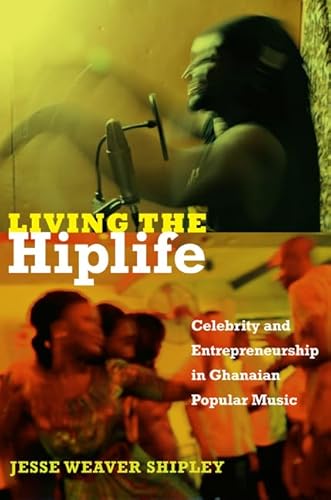
Hiplife is a popular music genre in Ghana that mixes hip-hop beatmaking and rap with highlife music, proverbial speech, and Akan storytelling. In the 1990s, young Ghanaian musicians were drawn to hip-hop's dual ethos of black masculine empowerment and capitalist success. They made their underground sound mainstream by infusing carefree bravado with traditional respectful oratory and familiar Ghanaian rhythms. Living the Hiplife is an ethnographic account of hiplife in Ghana and its diaspora, based on extensive research among artists and audiences in Accra, Ghana's capital city; New York; and London. Jesse Weaver Shipley examines the production, consumption, and circulation of hiplife music, culture, and fashion in relation to broader cultural and political shifts in neoliberalizing Ghana.
Shipley shows how young hiplife musicians produce and transform different kinds of value-aesthetic, moral, linguistic, economic-using music to gain social status and wealth, and to become respectable public figures. In this entrepreneurial age, youth use celebrity as a form of currency, aligning music-making with self-making and aesthetic pleasure with business success. Registering both the globalization of electronic, digital media and the changing nature of African diasporic relations to Africa, hiplife links collective Pan-Africanist visions with individualist aspiration, highlighting the potential and limits of social mobility for African youth.
The author has also directed a film entitled Living the Hiplife and with two DJs produced mixtapes that feature the music in the book available for free download.
"synopsis" may belong to another edition of this title.
About the Author
Jesse Weaver Shipley is Associate Professor of Anthropology at Haverford College.
Excerpt. © Reprinted by permission. All rights reserved.
LIVING THE Hiplife
Celebrity and Entrepreneurship in Ghanaian Popular MusicBy JESSE WEAVER SHIPLEYDuke University Press
Copyright © 2013 Duke University PressAll right reserved.
ISBN: 978-0-8223-5352-2
Contents
LIST OF ILLUSTRATIONS.......................................................................................ixACKNOWLEDGMENTS.............................................................................................xiINTRODUCTION Aesthetics and Aspiration......................................................................11. Soul to Soul: Value Transformations and Disjunctures of Diaspora in Urban Ghana..........................282. Hip-Hop Comes to Ghana: State Privatization and an Aesthetic of Control..................................513. Rebirth of Hip: Afro-Cosmopolitanism and Masculinity in Accra's New Speech Community.....................804. The Executioner's Words: Genre, Respect, and Linguistic Value............................................1085. Scent of Bodies: Parody as Circulation...................................................................1346. Gendering Value for a Female Hiplife Star: Moral Violence as Performance Technology......................1637. No. 1 Mango Street: Celebrity Labor and Digital Production as Musical Value..............................1988. Ghana@50 in the Bronx: Sonic Nationalism and New Diasporic Disjunctures..................................230CONCLUSION Rockstone's Office: Entrepreneurship and the Debt of Celebrity...................................267NOTES.......................................................................................................285BIBLIOGRAPHY................................................................................................303INDEX.......................................................................................................317
Chapter One
Soul to SoulVALUE TRANSFORMATIONS AND DISJUNCTURES OF DIASPORA IN URBAN GHANA
In 1973 musician Gyedu Blay Ambolley released his song "Simigwa Do," an irreverent mix of funk guitar and R&B organ over a highlife beat. Soul music and fashion, which blended urbane sex appeal and black empowerment, were all the rage in Ghana and across Africa. Ambolley's soul-highlife captivated young audiences, though his provocative lyrics scandalized older listeners for being too sexual. What's more, he sounded like James Brown chanting in Fante and English (see figure 4). Unlike the subtle storytelling that characterized older highlife lyrics, Ambolley's were striking in how they directly addressed and provoked his audience: "If you don't know how to do it. Just listen to me. I'm going to show you how to do it." Thirty years later, Ambolley's specific blend of highlife and soul and his confident, directive lyrics, as one young artist explained to me, made him "a rap pioneer ... even before there was rap music." This song demonstrates how African diasporic fashions and sounds have been central to Ghanaian popular culture throughout the twentieth century. Indeed, across different epochs musical innovation has been defined by a mastery of the art of incorporation rather than by a specific sound or look.
From the 1920s through the 1960s, highlife reflected populist fantasies about elite modern life, revealing mass audience concerns with urbanization, economic inequality, and nationalism. Each generation used popular music to create a soundscape for social transformation. Audiences thrilled at the latest highlife innovations that presented an image of African modern life, both full of potential and potentially hazardous. Highlife and its associated concert party theatrical style synthesized jazz, church cantatas, vaudeville, ragtime, soul, Afro-Latin dance, and rock with established forms of storytelling and neo-traditional music and dance. Highlife became integral to generational change as it incorporated various foreign black styles into new, but recognizably Ghanaian, idioms. Over time, each musical variant came to represent tradition and nationhood, against which next-generation innovations were, in turn, assessed. Musical experimentation reflected young artists' struggles to reach new audiences and to gain wealth and success in the process.
The appropriation and reinterpretation of Afro-cosmopolitan styles is at the center of highlife. Its stylistic power is based on an indexical and iconic parallelism in which this blended genre simultaneously points to ideas of progress and tradition. In this logic, Afro-cosmopolitan signs connote a set of virtues—freedom, aspiration, and movement—while markers of traditional music ground these values in familiar sounds. Hybrid genres require artists who can control foreign, particularly black, forms of expression, transforming them into locally legible styles (Erlmann 1999; 1991). These artists are purveyors of taste who facilitate symbolic exchanges between Ghana and Afro-cosmopolitan worlds. They distill multiple, disparate sonic influences into a sound that defines Ghanaian nationhood through an aesthetic of newness.
Though diasporic forms have influenced many popular African styles, the confluence is not one of simple formal affinity or historical reconnection. The "return" of diasporic forms to Africa raises questions about mistranslation and disjuncture among black peoples as much as it does cultural affiliations (Edwards 2003). Beyond the dichotomy of white colonizer and black colonized, there is a third influential figure in African cultural discourse: the black foreigner. Because they challenge simplistic racial dualisms, black foreigners are not easily drawn into the racial-cultural oppositions that shape dominant understanding of colonial and postcolonial power. They are not the opposite, but not the same; African, but not; not colonial, except sometimes; not white, but somehow foreign. Disjunctures between Africans and diasporans are, in fact, productive of new cultural configurations. As artists struggle to interpret diasporic fashions for Ghanaian audiences, they actively remake African urban life as an Afro-cosmopolitan world. In this chapter I ask what semiotic work African diasporic signs do for Ghana. My purpose is to describe a logic of aesthetic appropriation and valuation that emerges through the history of highlife and later shapes hiplife music.
Highlife and Black Culture in the Gold Coast
Ghanaian urban culture has a long history of irreverently picking apart and reconstituting aspects of foreign black popular culture. Various diasporic forms have been crucial to highlife's development. The music's history shows a pattern of indigenization of foreign styles and a movement from the use of English to local languages to reach mass audiences (Avorgbedor 2008). The term "highlife" became popular in the 1920s among urban poor congregating outside elite nightclubs where African musicians played ballroom and orchestral music mixed with some African tunes; through these dances listeners on the streets aspired to "live the highlife" (Collins 1996).
At the time, the Gold Coast's main coastal trading cities, Takoradi, Cape Coast, and Accra, were experiencing an economic boom. They developed infrastructure and civil service to support the export of cocoa, timber, and gold. Booming trade led to the development of an African middle class with growing tastes for foreign commodities. At the same time, multinational corporations began to recognize the potential of opening African markets. Sir Frederick Gordon Guggisburg, Gold Coast's governor from 1919 to 1928, was a liberal reformer interested in developing the colony's modern institutions. During this time, major educational, urban, and transportation infrastructures were built, including Takoradi's deepwater harbor, railway lines, Accra's main Korle Bu hospital, and Achimota School. With a growing class of workers and civil servants who had leisure time and money, European record companies recognized a potential market for popular music and, beginning in the 1920s, sought out African musicians, shipping records and record players to Africa (cf. Cole 2001). By the 1950s West African musicians were recording singles and LP albums in large numbers and record-pressing plants across Africa became big business, peaking in the 1970s (Agovi 1989).
Highlife's varying instrumentations, rhythmic patterns, and melodies emerged from a pastiche of African, black diasporic, and European styles reflecting the movements of workers, sailors, preachers, and entertainers across the Atlantic, beginning in the late nineteenth century. Freed slaves and West Indian soldiers deployed by the British to fight the Asante, Yoruba, and others in West Africa brought Afro-Caribbean music. White and black American vaudeville and minstrel shows and itinerant Pentecostal preachers toured West Africa in the early twentieth century. Missionary schools spread Christian hymns and cantatas. European piano music, American sea chanteys, goombay from the Caribbean via Sierra Leone, Liberian Kru two-finger guitar, and accordion mixed with Ga and Fante musical traditions from Gold Coast towns (Collins 2002; 1996, xii–xvii).
By the 1920s highlife had synthesized numerous influences into three distinct styles: dance orchestra, brass band, and palm wine guitar band (Collins 1996, xiii). Swing and jazz, spread by West African troops abroad and Allied troops stationed in Gold Coast during World War II, reoriented elite dance orchestra music of the 1930s toward smaller dance bands playing at urban clubs and halls. These included Jerry Hansen's Ramblers, King Bruce's Black Beats, and Stan Plange's Uhurus. E. T. Mensah's Tempos were especially successful with a "fusion of swing, calypso, and Afro-Cuban music with highlife" (Collins 1996, xv). With brass, strings, and drum sections, these jazz-oriented bands dominated urban nightlife across West Africa.
In contrast, guitar bands played for rural and nonelite urban audiences. "Yaa Amponsah"—the name of an early highlife song—refers to the melody and chord progression that structures this style of guitar band highlife. These bands evolved in conjunction with concert party variety theatre troupes creating traveling multimedia music, theatre, and comedy events (Cole 2001). Early groups performed mostly English-and Pidgin-language songs suitable to an elite Gold Coast ethos. In the early 1950s, guitarist E. K. Nyame's Akan Trio pioneered the staging of proverb-like morality plays in Akan languages that revolved around original highlife tunes. The Jaguar Jokers, African Brothers, CK Mann, Ghana Trio, and T. O. Jazz, among others, had eclectic guitar bands attached to theatre troupes that toured the country with the latest highlife music, original plays, and comedy. The relationship of highlife to concert party is significant in that it linked contemporary popular music to a tradition of Ananse trickster moral storytelling, in which lyrics gave indirect moral messages (Cole 2001; Sutherland 1975).
Soon after helping organize the 1948 Fifth Pan-African Congress in Manchester, England, Kwame Nkrumah returned to the Gold Coast to advocate for "self-government now." His political agitation against colonial rule sparked nationalist sentiment with a Pan-African orientation. As the struggle for independence intensified, highlife music and concert party theatre reflected this nationalist movement. Nkrumah's Convention People's Party (CPP) government supported a number of touring highlife and concert party groups, including the Workers' Brigade Concert Party, to build national and party sentiment through cultural expression, before and after independence on March 6, 1957 (Agovi 1989). In his independence speech, Nkrumah stated that the "Independence of Ghana is meaningless unless linked up with the total liberation of the African continent." This reverberated through other political movements, affirming the importance of the new state's connections to Pan-African imaginaries and diasporic communities. Nkrumah supported African independence struggles around the continent and American civil rights movements, and he also linked cultural expression to nationalism and Pan-Africanist allegiance. His invitations to diasporic artists, choreographers, writers, and intellectuals to settle in Ghana demonstrated the ethos of Pan-African political and artistic collectivity he fostered.
The National Theatre Movement, under playwright Efua Sutherland's leadership, defined highlife, Ananse storytelling, and concert party as traditional cultural performances from which to develop Ghanaian modern theatre and national culture (Shipley 2004). Nkrumah's state supported highlife and concert party as symbols of indigenous expression. Amid the fervor of independence, with state encouragement for codifying national expressive forms, highlife and concert party were seen as traditional Ghanaian culture. At times, state recognition hindered the entrepreneurial tendencies of bandleaders, who were often less interested in politics and authenticity than audience excitement and financial success. Bandleaders, reliant on gate fees, attracted local audiences by catering to their desires to hear the latest foreign and local hits and to incorporate new songs, styles, and instruments into their repertoire. As actor-musician Goldfinger recalls, the spirit of competition drove musical innovation. Artists learned theatre and music with an established band and then set out to become well known on their own. "[We used our] skills to become financially independent.... Most good musicians wanted to be artists in our own right, not controlled by some other bandleader. If you had the skills, that is what you wanted to do." Musicians, inspired by audiences' eclectic tastes, continued to incorporate new styles. For young audiences, concert party and highlife groups touring the country provided spectacles of modern style and new technology for an emerging national audience (Shipley 2004; Cole 2001). In this way, highlife took on a crucial and contradictory symbolic role in mid-twentieth-century Ghana as simultaneously a marker of national cultural identity and traditional African performance, as well as a sign of modern, black cosmopolitanism.
Group names reflected growing links between black aesthetics and nationalist sentiment. For example, the Burma Jokers, made up of local World War II ex-servicemen stationed in Burma, renamed themselves Ghana Trio after the pivotal 1948 Accra riots, which followed a peaceful march in which colonial police killed four ex-servicemen. In 1963 the African Brothers took their name following President Nkrumah's initiation of the Organization of African Unity (Collins 1996, 33).
Following Nkrumah's overthrow in 1966, Ghana's Second Republic (1969–1972) aimed to liberalize the country, encouraging a spirit of entrepreneurship and free trade. Despite high inflation, currency devaluation, and unstable cocoa prices, independent music and theatre groups flourished in the early 1970s, as more urban nightclubs emerged and better roads and mobile electronic musical technologies facilitated rural tours. Dance bands faded as guitar bands used jazz and rock instrumentation and electronic sound systems mixed with eclectic brass instruments and hand drums to more easily blend the latest soul, disco, reggae, R&B, rock, and Congolese music with established highlife rhythms. In particular, African American soul styles became a way for younger generations to distance themselves, through styles of speaking, dress, and the language of Black Power, from what they perceived as the British colonial orientations of their parents. Jaguar Jokers members, for example, began to dress in sequined jump suits and cover songs like James Brown's "I'm Black and I'm Proud" for rural and urban audiences. But these foreign tunes were reinterpreted for local appeal. Group leader Y. B. Bampoe recalled that to differentiate themselves from other groups, they introduced new songs, blending their hooks and melodies with older, familiar styles and rhythmic patterns to make them accessible. "Villagers want to hear the latest songs but you have to give them a highlife, give them a rhythm they can dance to, that is familiar. Then you slip in the new stuff ... if you just played foreign music for villagers they would not like it; they would not dance to it like they do with highlife ... which makes sense to them."
Fela Kuti's Afrobeat and Osibisa's Afrorock are the two most successful examples of soul-oriented West African music that not only transformed the local musical scene but gained international recognition. Nigerian highlife musician Fela Kuti, by several accounts, formulated his Afrobeat style while staying in Accra in 1967, when he saw how excited audiences got when Ghanaian artists blended highlife with soul (Veal 2000). His subsequent sojourn in the United States exposed him to the Black Panther Party's radical politics and the latest African American music. This further developed his music's blend of African and diasporic music and fashion, invoking Pan-African culture to counter the perceived continuation of neocolonial oppression. One of the most influential African groups of its era, Osibisa was formed in England in 1969 by Ghanaian and Caribbean musicians. Teddy Osei and Mac Tontoh played in highlife dance bands in Accra. After moving to London, they developed their distinct Afrorock style that incorporated soul, funk, highlife, and folk rhythmic traditions that aimed, successfully, to make West African music more accessible to Western audiences and to bring rock and funk to African audiences.
Soul to Soul
Over the course of the twentieth century, highlife established a pattern of eclectic appropriation in which artists and audiences used music and fashions to simultaneously mark a specific Ghanaian nationalism and cosmopolitan black belonging. Soul as mediated by highlife, in particular, had a profound influence on Ghanaian public life.
The Soul to Soul concert, held as part of Ghana's 1971 Independence Day celebrations, shows the fervor that soul music and fashion caused among Ghana's youth generation. The state-sponsored event was coordinated by the Ghana Arts Council to celebrate national independence with African American music and popular expressions of black unity. Youths from across Ghana traveled to the all-night show in Accra. One woman remembered sneaking out of secondary boarding school in Koforidua, in the Eastern Region, with several friends and traveling hours by bus to attend the show. She recalled the importance of soul styles to student life: "Students saw this concert as a major event. We admired and copied the way African Americans dressed. We formed copyright groups that imitated soul music in our talent shows. Soul to Soul was the culmination of this fascination with black styles." In schools across Ghana, youths listened to African American records and imitated hairstyles, clothing, dances, and verbal expressions. "Copyright" musical groups imitated as closely as possible the sounds of the groups they admired. Another attendee recalled the excitement: "Kids who went to the show, even if they had no money would try to wear their best fashions ... soul styles—bell-bottoms and wide shirt collars open down the front. If you did not have the right clothes you would take them from friends or relatives because you wanted to look hip."
(Continues...)
Excerpted from LIVING THE Hiplifeby JESSE WEAVER SHIPLEY Copyright © 2013 by Duke University Press. Excerpted by permission of Duke University Press. All rights reserved. No part of this excerpt may be reproduced or reprinted without permission in writing from the publisher.
Excerpts are provided by Dial-A-Book Inc. solely for the personal use of visitors to this web site.
"About this title" may belong to another edition of this title.
Other Popular Editions of the Same Title

Search results for Living the Hiplife: Celebrity and Entrepreneurship...

Stock Image
Living the Hiplife : Celebrity and Entrepreneurship in Ghanaian Popular Music
Seller: Buchpark, Trebbin, Germany
Seller rating 5 out of 5 stars

Condition: Hervorragend. Zustand: Hervorragend | Seiten: 344 | Sprache: Englisch | Produktart: Bücher | This ethnography of hiplife, a popular Ghanaian music genre combining hip-hop with highlife music, shows how young hiplife artists in Ghana and its diaspora use the music to gain social status, wealth, and respectability. Seller Inventory # 22645979/1