Synopsis
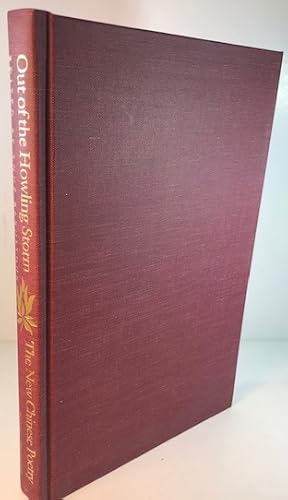
From the Beijing Spring of 1979 until the student uprisings of 1989 a new generation of poets flourished in China. Influenced by Western Modernism and increasingly daring in their challenges to state control of their art, these poets disguised political protest and social commentary in shadowy images and metaphors, earning them the name "Misty Poets." Rejecting the Social Realism prescribed by Maoist doctrine, they celebrated subjective experience and individuality, ushering in a new era of artistic expression that has been dampened but not extinguished by the Tiananmen Square massacre. This new anthology is the most comprehensive English sampling available of the work of the Misty Poets and their even younger proteges, many of whom now live in exile in the West, where they continue to reshape Chinese poetry and Literature. Editor Tony Barnstone offers a generous and representative sample of the work of more than a dozen poets. From more familiar writers such as Bei Dao and Duo Duo to such emerging figures as Zhang Zhen, Bei Ling, and Chou Ping (who composes many of his poems in English), these poets characterize the vibrant reawakening of Chinese poetry. Barnstone's substantial critical introduction places the poets in their cultural, historical, and political context.
Review
"In this sampling of 14 contemporary Chinese poets, Barnstone, who spent a year teaching at the Beijing Foreign Studies University in the mid-1980s, brings together the works of 'Misty Poets' and their successors. The 'Misty Poets' wrote from 1979 to 1989, when the political and literary climate in the People's Republic of China loosened up and allowed individualism, albeit often obscure in theme. The works of their successors, called the 'Post-Misty Poets' here, sometimes express new levels of internationalism and sensuality. A few of these poets have suffered imprisonment, and alienation and death are frequent themes in their poetry. The book includes an essay by Barnstone on translation, short biographical sketches of each of the poets, and an introduction to the political history of China in the 1980s, interwoven with an explanation of the departure from Marxist literature found in the poetry of that period. The translation is flowing and the sample chosen large enough to be representative, recommending this volume for both lay readers and specialists." --Library Journal "The most comprehensive collection of contemporary Chinese poetry, it's a rewarding, fascinating, compelling collection . . . The editor has gone the length here, not only bringing together first-rank translations, (some, his own), of the most representative poems of the widest range of voices, but also furnishing a really valuable, and readable, essay on the context out of which this truly remarkable body emerges, making it all the more marvelous. And the stance of his short note on the subject of translation itself is a refreshing breath of fresh air, in keeping with the vitality of the poets themselves. Risking a note of gravity, it is fair to say that the Nobel Committee would do well to peruse just this one book, having overlooked China for all these years. They may discover, along with the rest of us readers, some surprising additions to a 5000-year continuity of culture, a wealth of world-class voices, speaking to all of us today."--AsianWeek "The introductory section contains a thought-provoking essay by the editor, 'Translation as Forgery.' The biographical notes are just long enough to help the reader understand the poet's general background and concerns, and the 38-page introduction, 'Chinese Poetry Through the Looking Glass, ' is an ambitious attempt to integrate political, historical, biographical, literary, and cross-cultural perspectives on the poets and their works. The translation, done by pairs of translators, with Barnstone a participant in several, generally are readable and accurate. An important contribution to one's understanding of contemporary poetry in China."--Choice "I was pleasantly surprised to find Barnstone's [introduction] 'Chinese Poetry through the Looking Glass' to be as interesting as it is long. Some of it was necessarily the standard treatment, but much of it was new, witty, and thought-provoking. It actually may be somewhat discursive for the general reader, but at least it is not the old soup of conventional remarks. His note on translation, 'Translation As Forgery, ' is even odder and entirely unexpected; it is a very lyrical, abstract statement on the nature of text, reality, and value in art. Again not your standard 'I want to stay close to the text, but also offer the reader poems in English' (the great oxymoron of Chinese translation theory). As perplexing as I sometimes found Barnstone's remarks, they were nevertheless a breath of fresh air."--World Literature Today
"About this title" may belong to another edition of this title.