From
Loretta Lay Books, London, United Kingdom
Seller rating 5 out of 5 stars
AbeBooks Seller since 26 April 2002
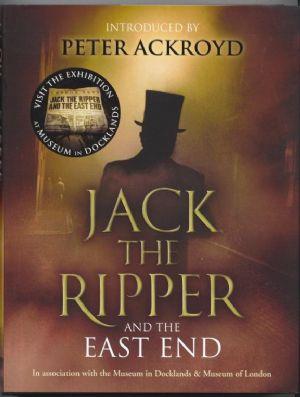
Hardback. Intro' by Peter Ackroyd. 'The words 'Jack the Ripper and the East End' conjure up a vision of the darker side of Victorian London - dimly lit alleys, foggy nights, prostitutes, poverty and horrific murder. How does this image square up with the facts? First published to coincide with a major exhibition at the Museum in Docklands, this book examines the Whitechapel Murders from many sides and delves into both the myth and the reality. It is not so much the crimes themselves that are under the microscope here but the intricate landscape of the East End. We discover how Whitechapel became, in the minds of Victorians, the site of disgust, danger and moral desolation. Previously unseen photographs from the Museum of London's collection capture the grim reality of everyday life in the East End. Leading historians throw fascinating new light on the inhabitants of Whitechapel and Spitalfields at the time of the murders. There are insights into prostitution, sexual violnce and policing. The Flower and Dean Street rookery, with its cheap lodging houses, associated with all the Whitechapel murder victims, is set alongside slum clearance. The new model dwellings that catered for respectable artisans and their families are shown actually to have made the situation worse for the poorest, including many who were deserving but unfortunate. The 'Ladies' who volunteered in the many charitable organisations and missions are examined as they fearlessly walked the streets at the time of the murders. An analysis of the area where Mary Jane Kelly was murdered makes use of Booth's famous colour-coded 'Map of Poverty' to uncover the true nature of London's dark ghetto. The shock and revulsion of the Whitechapel murders caused the public to look for a scapegoat. Attention fell on the immigrants in the area. This book discusses the impact on the Victorian East End of the Irish and, in particular, the large number of Jews who were recent arrrivals. Jack the Ripper inhabits the same world as Dr Jekyll and Mr Hyde and Sherlock Holmes: as man becomes beast, the forces of good and evil battle it out. Jack the Ripper's identity and the murders have been re-interpreted by each new generation in film, art and literature. This lavishly illustrated book reveals how they have shaped our reading and vision of the East End.' Profusely illus., Contributors, Notes, Further Reading, and Index. 288pp. 4to. h/back. F. in Nr. F. dw. A heavy book which will require additional postage if shipped overseas. Seller Inventory # 11980
In 1888, Whitechapel - at the heart of the inner East End - was the most (in)famous place in the country, widely imagined as a site of the blackest and deepest horror. Its streets and alleys were seen as violent and dangerous, overflowing with poverty and depravity. This book aims to uncover the reality of East End life. Sections look at slum housing, immigration, attitudes to women, poverty, violence and crime. The book examines how the brutal killings were reported and how the police tried to identify the murderer. A final section shows how Jack the Ripper has shaped our vision of London, and influenced our popular culture.
Jack the Ripper and the East End coincides with an exhibition organised by the Museum of London at their Museum in Docklands. Key surviving documents from the National Archives and the London Metropolitan Archives will be on display - in addition to material from the collections of the Museum of London such as photographs of the Whitechapel Mission. The illustrations for the book will include rare and unpublished photographs, sections of the 'master' Booth Map of Poverty, detectives' reports and original letters.
The introduction will be written by Peter Ackroyd, who is the acknowledged expert on London, its darker aspects and how its history has seeped into its very stones. Leading historians and curators will provide additional insights. This is a book which will be valued for years to come for its enduring and important portrait of the Victorian East End.
About the Author: Various
Title: JACK THE RIPPER AND THE EAST END
Publisher: Chattow & Windus
Publication Date: 2008
Binding: Hardcover / Hardback
Condition: Fine
Dust Jacket Condition: Fine
Edition: First edition.
Seller: Carmarthenshire Rare Books, Carmarthen, United Kingdom
Hardcover. Condition: Fine. Dust Jacket Condition: Near Fine. First Edition. original cloth hardcover,illustrated,288 pages,fine in near fine unclipped dustwrapper.We are a real bookshop with real books situated in the UK and shipping from the UK.Shelf B74. Seller Inventory # 114579
Seller: Loretta Lay Books, London, United Kingdom
Hardcover / Hardback. Condition: Fine. Dust Jacket Condition: Fine. First edition. Hardback. Intro' by Peter Ackroyd. 'The words 'Jack the Ripper and the East End' conjure up a vision of the darker side of Victorian London - dimly lit alleys, foggy nights, prostitutes, poverty and horrific murder. How does this image square up with the facts? First published to coincide with a major exhibition at the Museum in Docklands, this book examines the Whitechapel Murders from many sides and delves into both the myth and the reality. It is not so much the crimes themselves that are under the microscope here but the intricate landscape of the East End. We discover how Whitechapel became, in the minds of Victorians, the site of disgust, danger and moral desolation. Previously unseen photographs from the Museum of London's collection capture the grim reality of everyday life in the East End. Leading historians throw fascinating new light on the inhabitants of Whitechapel and Spitalfields at the time of the murders. There are insights into prostitution, sexual violnce and policing. The Flower and Dean Street rookery, with its cheap lodging houses, associated with all the Whitechapel murder victims, is set alongside slum clearance. The new model dwellings that catered for respectable artisans and their families are shown actually to have made the situation worse for the poorest, including many who were deserving but unfortunate. The 'Ladies' who volunteered in the many charitable organisations and missions are examined as they fearlessly walked the streets at the time of the murders. An analysis of the area where Mary Jane Kelly was murdered makes use of Booth's famous colour-coded 'Map of Poverty' to uncover the true nature of London's dark ghetto. The shock and revulsion of the Whitechapel murders caused the public to look for a scapegoat. Attention fell on the immigrants in the area. This book discusses the impact on the Victorian East End of the Irish and, in particular, the large number of Jews who were recent arrrivals. Jack the Ripper inhabits the same world as Dr Jekyll and Mr Hyde and Sherlock Holmes: as man becomes beast, the forces of good and evil battle it out. Jack the Ripper's identity and the murders have been re-interpreted by each new generation in film, art and literature. This lavishly illustrated book reveals how they have shaped our reading and vision of the East End.' Profusely illus., Contributors, Notes, Further Reading, and Index. 288pp. 4to. h/back. Includes 4 1.5"x 2" coloured 'portrait' 'photo's of Peter Ackroyd. (see image). V.v. sl. sunned edges o/w Nr. F. in F. protected dw. A heavy book which will require additional postage if shipped overseas. Seller Inventory # 20224
Seller: Loretta Lay Books, London, United Kingdom
Hardcover / Hardback. Condition: Fine. Dust Jacket Condition: Fine. First edition. Hardback. Intro' by Peter Ackroyd. 'The words 'Jack the Ripper and the East End' conjure up a vision of the darker side of Victorian London - dimly lit alleys, foggy nights, prostitutes, poverty and horrific murder. How does this image square up with the facts? First published to coincide with a major exhibition at the Museum in Docklands, this book examines the Whitechapel Murders from many sides and delves into both the myth and the reality. It is not so much the crimes themselves that are under the microscope here but the intricate landscape of the East End. We discover how Whitechapel became, in the minds of Victorians, the site of disgust, danger and moral desolation. Previously unseen photographs from the Museum of London's collection capture the grim reality of everyday life in the East End. Leading historians throw fascinating new light on the inhabitants of Whitechapel and Spitalfields at the time of the murders. There are insights into prostitution, sexual violnce and policing. The Flower and Dean Street rookery, with its cheap lodging houses, associated with all the Whitechapel murder victims, is set alongside slum clearance. The new model dwellings that catered for respectable artisans and their families are shown actually to have made the situation worse for the poorest, including many who were deserving but unfortunate. The 'Ladies' who volunteered in the many charitable organisations and missions are examined as they fearlessly walked the streets at the time of the murders. An analysis of the area where Mary Jane Kelly was murdered makes use of Booth's famous colour-coded 'Map of Poverty' to uncover the true nature of London's dark ghetto. The shock and revulsion of the Whitechapel murders caused the public to look for a scapegoat. Attention fell on the immigrants in the area. This book discusses the impact on the Victorian East End of the Irish and, in particular, the large number of Jews who were recent arrrivals. Jack the Ripper inhabits the same world as Dr Jekyll and Mr Hyde and Sherlock Holmes: as man becomes beast, the forces of good and evil battle it out. Jack the Ripper's identity and the murders have been re-interpreted by each new generation in film, art and literature. This lavishly illustrated book reveals how they have shaped our reading and vision of the East End.' Profusely Illus. + Map eps, Contributors, Notes, Further Reading, and Index. 288pp. 4to. h/back. F. in F. protected dw. A heavy book which will require additional postage if shipped overseas. Seller Inventory # 18749
Seller: Loretta Lay Books, London, United Kingdom
Hardcover / Hardback. Condition: As New. Dust Jacket Condition: As New. First edition. Hardback. Intro' by Peter Ackroyd. 'The words 'Jack the Ripper and the East End' conjure up a vision of the darker side of Victorian London - dimly-lit alleys, foggy nights, prostitutes, poverty and horrific murder. How does this image square up with the facts? First published to coincide with a major exhibition at the Museum in Docklands, this book examines the Whitechapel Murders from many sides and delves into both the myth and the reality. It is not so much the crimes themselves that are under the microscope here but the intricate landscape of the East End. We discover how Whitechapel became, in the minds of Victorians, the site of disgust, danger and moral desolation. Previously unseen photographs from the Museum of London's collection capture the grim reality of everyday life in the East End. Leading historians throw fascinating new light on the inhabitants of Whitechapel and Spitalfields at the time of the murders. There are insights into prostitution, sexual violence and policing. The Flower and Dean Street rookery, with its cheap lodging houses, associated with all the Whitechapel murder victims, is set alongside slum clearance. The new model dwellings that catered for respectable artisans and their families are shown actually to have made the situation worse for the poorest, including many who were deserving but unfortunate. The 'Ladies' who volunteered in the many charitable oganisations and missions are examined as they fearlessly walked the streets at the time of the murders. An analysis of the area where Mary Jane Kelly was murdered makes use of Booth's famous colour-coded 'Map of Poverty' to uncover the true nature of London's dark ghetto. The shock and revulsion of the Whitechapel murders caused the public to look for a scapegoat. Attention fell on the immigrants in the area. This book discusses the impact on the Victorian East End of the Irish and, in particular, the large number of Jews who were recent arrivals. Jack the Ripper inhabits the same world as Dr Jekyll and Mr Hyde and Sherlock Holmes: as man becomes beast, the forces of good and evil battle it out. Jack the Ripper's identity and the murders have been re-interpreted by each new generation in film, art and literature. This lavishly illustrated book reveals how they have shaped our reading and vision of the East End.' Profusely Illus., Contributors, Notes, Further Reading, and Index. 288pp. 4to. h/back. Includes loosely inserted : 2 tickets for 'Jack the Ripper and the East End' Exhibition at Museum in Docklands, June 2008; A newspaper cutting review of the exhibition; an illustrated promotional folding leaflet for the exhibition; a Museum of London & Museum in Docklands 'What's On' May-August 2008; and a Museum in Docklands 8pp. Illustrated 'London News' pamphlet. As New in dw. A heavy book which will require additional postage. Seller Inventory # 11531
Seller: Banfield House Booksellers, Gympie, QLD, Australia
Hardcover. Condition: Fine. Dust Jacket Condition: Fine. 1st Edition. 287 pages. Illustrated. Seller Inventory # 006399
Quantity: 1 available