

Order Total (1 Item Items):
Shipping Destination:

Science Museum by Riemsdijk John Paul Sharp (4 results)
Skip to main search results
Search filters
Product Type
- All Product Types
- Books (4)
- Magazines & Periodicals (No further results match this refinement)
- Comics (No further results match this refinement)
- Sheet Music (No further results match this refinement)
- Art, Prints & Posters (No further results match this refinement)
- Photographs (No further results match this refinement)
- Maps (No further results match this refinement)
- Manuscripts & Paper Collectibles (No further results match this refinement)
Condition Learn more
- New (No further results match this refinement)
- As New, Fine or Near Fine (1)
- Very Good or Good (3)
- Fair or Poor (No further results match this refinement)
- As Described (No further results match this refinement)
Binding
- All Bindings
- Hardcover (No further results match this refinement)
- Softcover (4)
Collectible Attributes
- First Edition (1)
- Signed (No further results match this refinement)
- Dust Jacket (No further results match this refinement)
- Seller-Supplied Images (3)
- Not Print on Demand (4)
Language (2)
Price
- Any Price
- Under £ 20
- £ 20 to £ 35 (No further results match this refinement)
- Over £ 35 (No further results match this refinement)
Free Shipping
- Free Shipping to U.S.A. (No further results match this refinement)
Seller Location
Seller Rating
-

Paperback. Condition: Good. There are books that explain science, and there are books that perform the rather more enchanting task of inviting you into the place where science has been stored, displayed, polished, labelled, and made available for public admiration. In The Science Museum , by John van Riemsdijk and Paul Sharp , is very much of the latter sort: a book not just about scientific ideas, but about the glorious institutional habit of collecting engines, instruments, inventions and contraptions, then arranging them in such a way that generations of visitors may wander about saying, ?Good heavens,? and pressing their faces closer to glass cases. Published in 1968 by HMSO , this volume comes from a particularly pleasing era in British public culture, when official publishing still managed to sound faintly authoritative about everything from transport to archaeology to the proper appreciation of a museum. There is something irresistible about a mid-century government publication devoted to the Science Museum. It suggests a national confidence that steam engines, telescopes, early aeroplanes, industrial machinery and baffling brass apparatus were not merely worth preserving, but worth presenting to the public in orderly form for their edification and delight. And what a subject the Science Museum is. A museum of science is never merely a building full of old machines. It is a monument to the human habit of fiddling with things until civilisation happens. Here are the remnants of trial, error, genius, smoke, gears, measurements, patents, optimism and the occasional catastrophic design flaw, all safely brought indoors and given captions. A book like this offers readers the chance to encounter that vast parade of ingenuity in paper form, which is ideal for those who enjoy machinery, history, or simply the reassuring fact that humanity has sometimes used its intelligence to invent devices more uplifting than modern app notifications. The title is beautifully matter-of-fact too: In The Science Museum . No flashy subtitle, no branding department trying to reposition scientific heritage as ?an immersive innovation journey.? You are simply in the Science Museum, and that is apparently considered sufficient inducement. Quite right too. It has the confidence of an institution that knows it contains locomotives, laboratories, engines, instruments and all manner of civilisational hardware, and therefore does not need to oversell itself with exclamation marks. One imagines the book taking the reader through galleries and displays with calm, intelligent enthusiasm, introducing the treasures of the museum in a style both informative and faintly reverent. There is a particular pleasure in older museum books because they often reflect a time when public instruction was allowed to be serious without becoming dull. The assumption was that readers could be trusted to care about engineering, astronomy, medicine, industry and invention if only someone sensible showed them the right objects in the right order. It was a nobler age, at least in print. Published in 1968 , the book also stands at an interesting historical angle. It looks back at the great history of invention while belonging to a period when the future itself still seemed thrillingly mechanical. This was the era of jets, rockets, modern design, optimistic engineering and the lingering confidence that technology might solve rather a lot. So the book likely carries not just a respect for scientific heritage, but a quiet excitement about the onward march of ingenuity. Reading it now, one gets the charm of double perspective: the museum?s old wonders seen through the eyes of a past future. There is, naturally, a gentle irony in the whole business. So many of the objects in a science museum were once the absolute cutting edge of practical modernity, and are now admired behind barriers by visitors buying postcards in the gift shop. Today?s breakthrough device is tomorrow?s lovingly dusted exhibit. The story of progress, it turns out, ends in display cabinets. Still, there are worse destinies than being remembered as the machine that changed everything. This Good copy, sold by the ever-deceptively named Crappy Old Books , feels exactly right for such a title. It has the reassuring solidity of a book meant to inform, survive, and perhaps accompany some long-ago museum visit by a curious reader in sensible shoes. A pristine copy would be lovely, certainly, but a good one suggests it has done what museum books are meant to do: been opened, consulted, perhaps revisited whenever someone wished to remember that Britain once put giant engines in public buildings and expected people to be grateful. A splendid little volume for readers interested in museums, invention, engineering, scientific heritage and that wonderfully old-fashioned belief that knowledge should be both accessible and dignified, In The Science Museum is a reminder that curiosity can be institutionalised to excellent effect. A book for anyone who has ever loved machinery, labels, and the slightly holy hush of a gallery full of things that once represented the future.
-
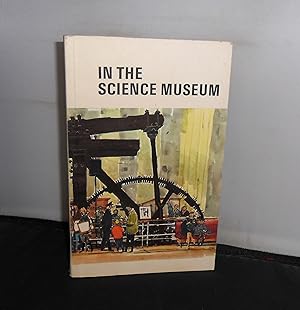
Soft cover. Condition: Fine. Paul Sharp (illustrator). 128 pages, colour and black and white illustrations by Paul Sharp, fine condition in paper covers.
-

In The Science Museum & separate Science Museum Guide
Published by Her Majesty's Stationery Office, 1968
First Edition
Soft cover. Condition: Very Good. No Jacket. Paul Sharp (illustrator). 1st Edition. Great example. Covers veyr slightly scuffed, but contents very clean bright and tight. Red Science Museum Guide folded inside. Please contact us for pictures and/or further details - only too pleased to help!
-

In the Science Museum.
Language: English
Published by London/Her Majesty's Stationary Office., 1968
Seller: Dobben-Antiquariat Dr. Volker Wendt, Oldenburg, Germany
Seller rating 5 out of 5 stars

Condition: Gut. 128 S. mit zahlreichen, auch mehrfarbigen Illustrationen. Gut erhaltenes Exemplar ohne Eintragungen. Bitte beachten: Lieferung nach Vorauszahlung. An Buchhandel, Antiquariate, Behörden, öffentliche Bibliotheken, Universitäten und Museen liefern wir auf Wunsch mit Rechnung. Sprache: Englisch Gewicht in Gramm: 220 21x13,5 cm, Softcover/Paperback.

