Order Total (1 Item Items):
Shipping Destination:

Lear Jet Helicopter Program Master Schedule by Learjet (1 results)
Skip to main search results
Search filters
Product Type
- All Product Types
- Books (1)
- Magazines & Periodicals (No further results match this refinement)
- Comics (No further results match this refinement)
- Sheet Music (No further results match this refinement)
- Art, Prints & Posters (No further results match this refinement)
- Photographs (No further results match this refinement)
- Maps (No further results match this refinement)
- Manuscripts & Paper Collectibles (No further results match this refinement)
Condition Learn more
- New (No further results match this refinement)
- As New, Fine or Near Fine (No further results match this refinement)
- Very Good or Good (1)
- Fair or Poor (No further results match this refinement)
- As Described (No further results match this refinement)
Binding
- All Bindings
- Hardcover (No further results match this refinement)
- Softcover (1)
Collectible Attributes
- First Edition (No further results match this refinement)
- Signed (No further results match this refinement)
- Dust Jacket (No further results match this refinement)
- Seller-Supplied Images (1)
- Not Print on Demand (1)
Language (1)
Price
- Any Price
- Under £ 20 (No further results match this refinement)
- £ 20 to £ 35 (No further results match this refinement)
- Over £ 35
Free Shipping
- Free Shipping to U.S.A. (No further results match this refinement)
Seller Location
Seller Rating
-
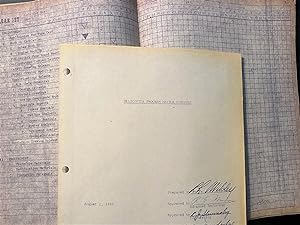
Lear-Jet Helicopter. Helicopter Program Master Schedule
Published by Learjet, Wichita, Kansas., 1969
Seller: JF Ptak Science Books, Hendersonville, NC, U.S.A.
Seller rating 5 out of 5 stars

Soft cover. Condition: Very Good. Lear-Jet Helicopter. Helicopter Program Master Schedule. Learjet, Wichita, Kansas. August 1, 1969. Mimeographed. 11"x 8.5", 9 folding sheets (11"x 17", folded in half). Cover letter plus introduction. The intro is paginated 1-2, and the folding charts seem to be paginated 3-11. No doubt there was a report to go with this (?), but as it stands now what I have here is the master schedule for construction of the twinjet helicopter for 1969-1972. This seems a timeline for the construction of the entire helicopter, listing the following categories (subsequent sections) including headings for Engineering (application for test cert, sales mock up, etc., analysis reports, plus 20 units); Manufacturing (25 units); Certification test program (5 units); Rotor Wheel Test Programs (5 units); Static Test Aircraft (5 units); Tie Down Test Aircraft (10 units); Components and Assemblies (fuselage, nose, cabin, tail.); Main Rotor (16 sub-categories); Main Rotor Control; Tail Rotor; Forward Landing Gear; Aft Landing; Power Plant (fuel, oil system, exhaust system, engine mounts, drive shaft); Flight Control (cockpit control assembly, 16 other units); Electrical System (11 units); Avionics (17 units). [++] "The Gales Twinjet helicopter, a twin-turbine ship designed for corporate transportation and utility applications, was 10 years and one recession ahead of its time. Unveiled as a mock-up craft on September 11, 1969, at the Gates LearJet plant in Wichita, Kansas, the pioneering helicopter was to cruise at 180 mph and carry eight to twelve passengers. The project gathered what some called the finest group of experts from throughout the helicopter industry, and drew upon the experience of engineers from Bell, Boeing Vertol, Hughes and Sikorsky. More than $4 million was spent on the project, with more than 100 full-time engineering personnel involved. Preliminary structural details announced in 1969 were for an aircraft that would sell for between $400,000 and $450,000 that could be used for office-to-airport travel. Range would be 400 miles. It was to have a fuselage that would be both aerodynamic and make maximum use of cabin space. It would have a low empty weight and an optimized rotor configuration that would provide the best lift/drag ratio for high performance at a gross weight of 6,000 lbs. The four-bladed main rotor's diameter was 40 feet, and the ship's overall length was 42 feet. Two 474-shp Garrett TSE turboshaft engines were to be mounted above the main cabin in stub wing fairings. The baggage compartment was to be 70 cubic feet. Complete preliminary layouts of all systems had been accomplished, and master tooling and major production facilities were nearly operational when the project was dropped because of the 1970-71 recession. The Gates Twinjet had been scheduled to make its first flight in 1971, with FAA type certification to have been completed in 1972."--Source: ROTOR, Spring 1997.