

Order Total (1 Item Items):
Shipping Destination:

Fundamentals Information Security Risk by Wright Christopher (5 results)
Skip to main search results
Search filters
Product Type
- All Product Types
- Books (5)
- Magazines & Periodicals (No further results match this refinement)
- Comics (No further results match this refinement)
- Sheet Music (No further results match this refinement)
- Art, Prints & Posters (No further results match this refinement)
- Photographs (No further results match this refinement)
- Maps (No further results match this refinement)
- Manuscripts & Paper Collectibles (No further results match this refinement)
Condition Learn more
- New (4)
- As New, Fine or Near Fine (No further results match this refinement)
- Very Good or Good (1)
- Fair or Poor (No further results match this refinement)
- As Described (No further results match this refinement)
Binding
- All Bindings
- Hardcover (No further results match this refinement)
- Softcover (5)
Collectible Attributes
- First Edition (No further results match this refinement)
- Signed (No further results match this refinement)
- Dust Jacket (No further results match this refinement)
- Seller-Supplied Images (4)
- Not Print on Demand (5)
Language (1)
Free Shipping
Seller Location
Seller Rating
-

Fundamentals of Information Security Risk Management Auditing: An introduction for managers and auditors
Language: English
Published by It Governance Publishing, 2016
ISBN 10: 1849288151 ISBN 13: 9781849288156
Seller: WorldofBooks, Goring-By-Sea, WS, United Kingdom
Seller rating 5 out of 5 stars

Paperback. Condition: Very Good. The book has been read, but is in excellent condition. Pages are intact and not marred by notes or highlighting. The spine remains undamaged.
-

Fundamentals of Information Security Risk Management Auditing
Language: English
Published by IT Governance Publishing, GB, 2016
ISBN 10: 1849288151 ISBN 13: 9781849288156
Seller: Rarewaves.com USA, London, LONDO, United Kingdom
Seller rating 5 out of 5 stars
Paperback. Condition: New. For any modern business to thrive, it must assess, control and audit the risks it faces in a manner appropriate to its risk appetite. As information-based risks and threats continue to proliferate, it is essential that they are addressed as an integral component of your enterprise's risk management strategy, not in isolation. They must be identified, documented, assessed and managed, and assigned to risk owners so that they can be mitigated and audited.Fundamentals of Information Risk Management Auditing provides insight and guidance on this practice for those considering a career in information risk management, and an introduction for non-specialists, such as those managing technical specialists. Product overviewFundamentals of Information Risk Management Auditing - An Introduction for Managers and Auditors has four main parts:What is risk and why is it important?An introduction to general risk management and information risk.Introduction to general IS and management risksAn overview of general information security controls, and controls over the operation and management of information security, plus risks and controls for the confidentiality, integrity and availability of information.Introduction to application controlsAn introduction to application controls, the controls built into systems to ensure that they process data accurately and completely.Life as an information risk management specialist/auditorA guide for those considering, or undergoing, a career in information risk management. Each chapter contains an overview of the risks and controls that you may encounter when performing an audit of information risk, together with suggested mitigation approaches based on those risks and controls.Chapter summaries provide an overview of the salient points for easy reference, and case studies illustrate how those points are relevant to businesses.The book concludes with an examination of the skills and qualifications necessary for an information risk management auditor, an overview of typical job responsibilities, and an examination of the professional and ethical standards that an information risk auditor should adhere to. Topics coveredFundamentals of Information Risk Management Auditing covers, among other subjects, the three lines of defence; change management; service management; disaster planning; frameworks and approaches, including Agile, COBIT®5, CRAMM, PRINCE2®, ITIL® and PMBOK; international standards, including ISO 31000, ISO 27001, ISO 22301 and ISO 38500; the UK Government's Cyber Essentials scheme; IT security controls; and application controls. ContentsPart I: What is risk and why is it important?Chapter 1: Risks and controls Chapter 2: Enterprise risk management (ERM) frameworks Chapter 3: Risk management assurance and audit Chapter 4: Information risks and frameworksPart II: Introduction to general IT and management risksChapter 5: Overview of general IT and management risks Chapter 6: Security and data privacy Chapter 7: System.
-

Fundamentals of Information Security Risk Management Auditing
Language: English
Published by IT Governance Publishing, GB, 2016
ISBN 10: 1849288151 ISBN 13: 9781849288156
Paperback. Condition: New. For any modern business to thrive, it must assess, control and audit the risks it faces in a manner appropriate to its risk appetite. As information-based risks and threats continue to proliferate, it is essential that they are addressed as an integral component of your enterprise's risk management strategy, not in isolation. They must be identified, documented, assessed and managed, and assigned to risk owners so that they can be mitigated and audited.Fundamentals of Information Risk Management Auditing provides insight and guidance on this practice for those considering a career in information risk management, and an introduction for non-specialists, such as those managing technical specialists. Product overviewFundamentals of Information Risk Management Auditing - An Introduction for Managers and Auditors has four main parts:What is risk and why is it important?An introduction to general risk management and information risk.Introduction to general IS and management risksAn overview of general information security controls, and controls over the operation and management of information security, plus risks and controls for the confidentiality, integrity and availability of information.Introduction to application controlsAn introduction to application controls, the controls built into systems to ensure that they process data accurately and completely.Life as an information risk management specialist/auditorA guide for those considering, or undergoing, a career in information risk management. Each chapter contains an overview of the risks and controls that you may encounter when performing an audit of information risk, together with suggested mitigation approaches based on those risks and controls.Chapter summaries provide an overview of the salient points for easy reference, and case studies illustrate how those points are relevant to businesses.The book concludes with an examination of the skills and qualifications necessary for an information risk management auditor, an overview of typical job responsibilities, and an examination of the professional and ethical standards that an information risk auditor should adhere to. Topics coveredFundamentals of Information Risk Management Auditing covers, among other subjects, the three lines of defence; change management; service management; disaster planning; frameworks and approaches, including Agile, COBIT®5, CRAMM, PRINCE2®, ITIL® and PMBOK; international standards, including ISO 31000, ISO 27001, ISO 22301 and ISO 38500; the UK Government's Cyber Essentials scheme; IT security controls; and application controls. ContentsPart I: What is risk and why is it important?Chapter 1: Risks and controls Chapter 2: Enterprise risk management (ERM) frameworks Chapter 3: Risk management assurance and audit Chapter 4: Information risks and frameworksPart II: Introduction to general IT and management risksChapter 5: Overview of general IT and management risks Chapter 6: Security and data privacy Chapter 7: System.
-
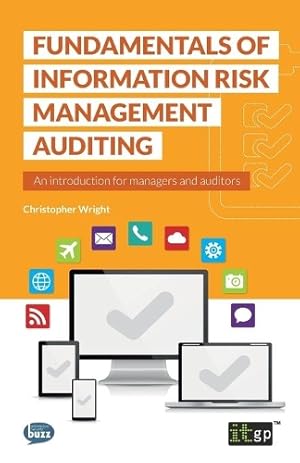
Fundamentals of Information Security Risk Management Auditing
Language: English
Published by IT Governance Publishing, GB, 2016
ISBN 10: 1849288151 ISBN 13: 9781849288156
Paperback. Condition: New. For any modern business to thrive, it must assess, control and audit the risks it faces in a manner appropriate to its risk appetite. As information-based risks and threats continue to proliferate, it is essential that they are addressed as an integral component of your enterprise's risk management strategy, not in isolation. They must be identified, documented, assessed and managed, and assigned to risk owners so that they can be mitigated and audited.Fundamentals of Information Risk Management Auditing provides insight and guidance on this practice for those considering a career in information risk management, and an introduction for non-specialists, such as those managing technical specialists. Product overviewFundamentals of Information Risk Management Auditing - An Introduction for Managers and Auditors has four main parts:What is risk and why is it important?An introduction to general risk management and information risk.Introduction to general IS and management risksAn overview of general information security controls, and controls over the operation and management of information security, plus risks and controls for the confidentiality, integrity and availability of information.Introduction to application controlsAn introduction to application controls, the controls built into systems to ensure that they process data accurately and completely.Life as an information risk management specialist/auditorA guide for those considering, or undergoing, a career in information risk management. Each chapter contains an overview of the risks and controls that you may encounter when performing an audit of information risk, together with suggested mitigation approaches based on those risks and controls.Chapter summaries provide an overview of the salient points for easy reference, and case studies illustrate how those points are relevant to businesses.The book concludes with an examination of the skills and qualifications necessary for an information risk management auditor, an overview of typical job responsibilities, and an examination of the professional and ethical standards that an information risk auditor should adhere to. Topics coveredFundamentals of Information Risk Management Auditing covers, among other subjects, the three lines of defence; change management; service management; disaster planning; frameworks and approaches, including Agile, COBIT®5, CRAMM, PRINCE2®, ITIL® and PMBOK; international standards, including ISO 31000, ISO 27001, ISO 22301 and ISO 38500; the UK Government's Cyber Essentials scheme; IT security controls; and application controls. ContentsPart I: What is risk and why is it important?Chapter 1: Risks and controls Chapter 2: Enterprise risk management (ERM) frameworks Chapter 3: Risk management assurance and audit Chapter 4: Information risks and frameworksPart II: Introduction to general IT and management risksChapter 5: Overview of general IT and management risks Chapter 6: Security and data privacy Chapter 7: System.
-

Fundamentals of Information Security Risk Management Auditing
Language: English
Published by IT Governance Publishing, GB, 2016
ISBN 10: 1849288151 ISBN 13: 9781849288156
Paperback. Condition: New. For any modern business to thrive, it must assess, control and audit the risks it faces in a manner appropriate to its risk appetite. As information-based risks and threats continue to proliferate, it is essential that they are addressed as an integral component of your enterprise's risk management strategy, not in isolation. They must be identified, documented, assessed and managed, and assigned to risk owners so that they can be mitigated and audited.Fundamentals of Information Risk Management Auditing provides insight and guidance on this practice for those considering a career in information risk management, and an introduction for non-specialists, such as those managing technical specialists. Product overviewFundamentals of Information Risk Management Auditing - An Introduction for Managers and Auditors has four main parts:What is risk and why is it important?An introduction to general risk management and information risk.Introduction to general IS and management risksAn overview of general information security controls, and controls over the operation and management of information security, plus risks and controls for the confidentiality, integrity and availability of information.Introduction to application controlsAn introduction to application controls, the controls built into systems to ensure that they process data accurately and completely.Life as an information risk management specialist/auditorA guide for those considering, or undergoing, a career in information risk management. Each chapter contains an overview of the risks and controls that you may encounter when performing an audit of information risk, together with suggested mitigation approaches based on those risks and controls.Chapter summaries provide an overview of the salient points for easy reference, and case studies illustrate how those points are relevant to businesses.The book concludes with an examination of the skills and qualifications necessary for an information risk management auditor, an overview of typical job responsibilities, and an examination of the professional and ethical standards that an information risk auditor should adhere to. Topics coveredFundamentals of Information Risk Management Auditing covers, among other subjects, the three lines of defence; change management; service management; disaster planning; frameworks and approaches, including Agile, COBIT®5, CRAMM, PRINCE2®, ITIL® and PMBOK; international standards, including ISO 31000, ISO 27001, ISO 22301 and ISO 38500; the UK Government's Cyber Essentials scheme; IT security controls; and application controls. ContentsPart I: What is risk and why is it important?Chapter 1: Risks and controls Chapter 2: Enterprise risk management (ERM) frameworks Chapter 3: Risk management assurance and audit Chapter 4: Information risks and frameworksPart II: Introduction to general IT and management risksChapter 5: Overview of general IT and management risks Chapter 6: Security and data privacy Chapter 7: System.
