

Order Total (1 Item Items):
Shipping Destination:

Cognitive Analytic Therapy Borderline by Ryle Anthony, First Edition (5 results)
Skip to main search results
Search filters
Product Type
- All Product Types
- Books (5)
- Magazines & Periodicals (No further results match this refinement)
- Comics (No further results match this refinement)
- Sheet Music (No further results match this refinement)
- Art, Prints & Posters (No further results match this refinement)
- Photographs (No further results match this refinement)
- Maps (No further results match this refinement)
- Manuscripts & Paper Collectibles (No further results match this refinement)
Condition Learn more
- New (4)
- As New, Fine or Near Fine (1)
- Very Good or Good (No further results match this refinement)
- Fair or Poor (No further results match this refinement)
- As Described (No further results match this refinement)
Binding
- All Bindings
- Hardcover (No further results match this refinement)
- Softcover (5)
Collectible Attributes
- First Edition (5)
- Signed (No further results match this refinement)
- Dust Jacket (No further results match this refinement)
- Seller-Supplied Images (1)
- Not Print on Demand (5)
Language (1)
Free Shipping
Seller Location
Seller Rating
-
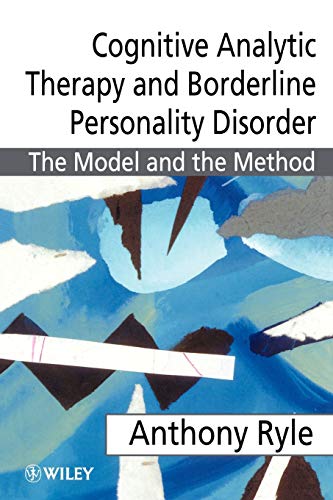
Cognitive Analytic Therapy and Borderline Personality Disorder (Paperback)
Language: English
Published by John Wiley & Sons Inc, New York, 1997
ISBN 10: 0471976180 ISBN 13: 9780471976189
First Edition
Paperback. Condition: new. Paperback. Borderline Personality Disorder patients are impulsive, unstable and destructive, hurting themselves and those around them, including those who seek to help them. This has resulted in a widespread reluctance to treat them and a pessimism about treatment. In the experience of the authors this pessimism is unjustified, because for many patients a relatively brief intervention can be effective in cost-benefit terms as well as human terms. The interventions illustrated here have been used to treat outpatients for 15 years. The results indicate that treatments can achieve clinically significant changes in the course of 16 24 sessions, in a substantial proportion of patients. While CAT shares some ideas and methods with other approaches, it introduces many new features and is uniquely integrated at both the theoretical and practical level. The early joint reformulation of patients problems serves to contain destructiveness and to create a working alliance. Also, the use of reformulation to teach self-reflection and avoid collusive responses from the therapist, throughout the therapy, represents a powerful new technique. The book offers a critical appraisal of current ideas and practices, contrasting with these the ways in which CAT mobilizes the patient s own resources. The authors argue that CAT should have a place in any service seeking to help these difficult patients. From a review of Cognitive Analytic Therapy: Developments in Theory and Practice (Anthony Ryle (Editor), 1995): "Ryle is surely the most original, productive and interesting writer in psychotherapy in Britain today, and CAT is a remarkable systematizing achievement which deserves to be better known on the other side of the Atlantic This book documenting CAT s recent theoretical and practical developments is a must for anyone interested in CAT itself and in integrative approaches, for those interested in brief, psychodynamically informed therapy, or indeed for those interested in developments in psychology generally." Robert Rentoul, British Journal of Medical Psychology Borderline personality disorder patients are impulsive, unstable and destructive, hurting themselves and those around them, including those who seek to help them. The use of cognitive analytic therapy (CAT) to treat patients with borderline personality disorder is a fairly recent (and successful) approach. Shipping may be from multiple locations in the US or from the UK, depending on stock availability.
-

Cognitive Analytic Therapy and Borderline Personality Disorder : The Model and the Method
Language: English
Published by John Wiley & Sons, 2, 1997
ISBN 10: 0471976180 ISBN 13: 9780471976189
First Edition
Soft Cover. Condition: Near Fine. 1st Edition. Text in English. 187 pp. Minor wear to the covers. Borderline Personality Disorder patients are impulsive, unstable and destructive, hurting themselves and those around them, including those who seek to help them. This has resulted in a widespread reluctance to treat them and a pessimism about treatment. In the experience of the authors this pessimism is unjustified, because for many patients a relatively brief intervention can be effective in cost-benefit terms as well as human terms, The interventions illustrated here have been used to treat outpatients for 15 years. The results indicate that treatments can achieve clinically significant changes in the course of 16-24 sessions, in a substantial proportion of patients. While CAT shares some ideas and methods with other approaches, it introduces many new features and is uniquely integrated at both the theoretical and practical level The early joint reformulation of patients' problems serves to contain destructiveness and to create a working alliance. Also, the use of reformulation to teach self-reflection and avoid collusive responses from the therapist, throughout the therapy represents a powerful new technique. The book offers a critical appraisal of current ideas and practices, contrasting with these the ways in which CAT mobilizes the patient's own resources. The authors argue that CAT should have a place in any service seeking to help these difficult patients.
-
Cognitive Analytic Therapy and Borderline Personality Disorder
Language: English
Published by John Wiley and Sons Ltd, 1997
ISBN 10: 0471976180 ISBN 13: 9780471976189
Seller: Kennys Bookshop and Art Galleries Ltd., Galway, GY, Ireland
Seller rating 5 out of 5 stars

First Edition
Condition: New. Borderline personality disorder patients are impulsive, unstable and destructive, hurting themselves and those around them, including those who seek to help them. The use of cognitive analytic therapy (CAT) to treat patients with borderline personality disorder is a fairly recent (and successful) approach. Num Pages: 206 pages, black & white illustrations. BIC Classification: JMR; MJN; MMH; MMJT. Category: (P) Professional & Vocational; (UP) Postgraduate, Research & Scholarly; (UU) Undergraduate. Dimension: 154 x 231 x 12. Weight in Grams: 296. . 1997. 1st Edition. Paperback. . . . .
-
Cognitive Analytic Therapy and Borderline Personality Disorder (Paperback)
Language: English
Published by John Wiley & Sons Inc, New York, 1997
ISBN 10: 0471976180 ISBN 13: 9780471976189
First Edition
Paperback. Condition: new. Paperback. Borderline Personality Disorder patients are impulsive, unstable and destructive, hurting themselves and those around them, including those who seek to help them. This has resulted in a widespread reluctance to treat them and a pessimism about treatment. In the experience of the authors this pessimism is unjustified, because for many patients a relatively brief intervention can be effective in cost-benefit terms as well as human terms. The interventions illustrated here have been used to treat outpatients for 15 years. The results indicate that treatments can achieve clinically significant changes in the course of 16 24 sessions, in a substantial proportion of patients. While CAT shares some ideas and methods with other approaches, it introduces many new features and is uniquely integrated at both the theoretical and practical level. The early joint reformulation of patients problems serves to contain destructiveness and to create a working alliance. Also, the use of reformulation to teach self-reflection and avoid collusive responses from the therapist, throughout the therapy, represents a powerful new technique. The book offers a critical appraisal of current ideas and practices, contrasting with these the ways in which CAT mobilizes the patient s own resources. The authors argue that CAT should have a place in any service seeking to help these difficult patients. From a review of Cognitive Analytic Therapy: Developments in Theory and Practice (Anthony Ryle (Editor), 1995): "Ryle is surely the most original, productive and interesting writer in psychotherapy in Britain today, and CAT is a remarkable systematizing achievement which deserves to be better known on the other side of the Atlantic This book documenting CAT s recent theoretical and practical developments is a must for anyone interested in CAT itself and in integrative approaches, for those interested in brief, psychodynamically informed therapy, or indeed for those interested in developments in psychology generally." Robert Rentoul, British Journal of Medical Psychology Borderline personality disorder patients are impulsive, unstable and destructive, hurting themselves and those around them, including those who seek to help them. The use of cognitive analytic therapy (CAT) to treat patients with borderline personality disorder is a fairly recent (and successful) approach. Shipping may be from our UK warehouse or from our Australian or US warehouses, depending on stock availability.
-
Cognitive Analytic Therapy and Borderline Personality Disorder (Paperback)
Language: English
Published by John Wiley & Sons Inc, New York, 1997
ISBN 10: 0471976180 ISBN 13: 9780471976189
First Edition
Paperback. Condition: new. Paperback. Borderline Personality Disorder patients are impulsive, unstable and destructive, hurting themselves and those around them, including those who seek to help them. This has resulted in a widespread reluctance to treat them and a pessimism about treatment. In the experience of the authors this pessimism is unjustified, because for many patients a relatively brief intervention can be effective in cost-benefit terms as well as human terms. The interventions illustrated here have been used to treat outpatients for 15 years. The results indicate that treatments can achieve clinically significant changes in the course of 16 24 sessions, in a substantial proportion of patients. While CAT shares some ideas and methods with other approaches, it introduces many new features and is uniquely integrated at both the theoretical and practical level. The early joint reformulation of patients problems serves to contain destructiveness and to create a working alliance. Also, the use of reformulation to teach self-reflection and avoid collusive responses from the therapist, throughout the therapy, represents a powerful new technique. The book offers a critical appraisal of current ideas and practices, contrasting with these the ways in which CAT mobilizes the patient s own resources. The authors argue that CAT should have a place in any service seeking to help these difficult patients. From a review of Cognitive Analytic Therapy: Developments in Theory and Practice (Anthony Ryle (Editor), 1995): "Ryle is surely the most original, productive and interesting writer in psychotherapy in Britain today, and CAT is a remarkable systematizing achievement which deserves to be better known on the other side of the Atlantic This book documenting CAT s recent theoretical and practical developments is a must for anyone interested in CAT itself and in integrative approaches, for those interested in brief, psychodynamically informed therapy, or indeed for those interested in developments in psychology generally." Robert Rentoul, British Journal of Medical Psychology Borderline personality disorder patients are impulsive, unstable and destructive, hurting themselves and those around them, including those who seek to help them. The use of cognitive analytic therapy (CAT) to treat patients with borderline personality disorder is a fairly recent (and successful) approach. Shipping may be from our Sydney, NSW warehouse or from our UK or US warehouse, depending on stock availability.
