Order Total (1 Item Items):
Shipping Destination:

Building Sunset Strip by Ruscha (32 results)
Skip to main search results
Search filters
Product Type
- All Product Types
- Books (32)
- Magazines & Periodicals (No further results match this refinement)
- Comics (No further results match this refinement)
- Sheet Music (No further results match this refinement)
- Art, Prints & Posters (No further results match this refinement)
- Photographs (No further results match this refinement)
- Maps (No further results match this refinement)
- Manuscripts & Paper Collectibles (No further results match this refinement)
Condition Learn more
- New (No further results match this refinement)
- As New, Fine or Near Fine (17)
- Very Good or Good (6)
- Fair or Poor (No further results match this refinement)
- As Described (9)
Binding
Collectible Attributes
Language (2)
Free Shipping
Seller Location
Seller Rating
-

Every Building on the Sunset Strip
Language: English
Published by Ed Ruscha, 1966
Seller: The Paper Hound Bookshop, Vancouver, BC, Canada
Seller rating 5 out of 5 stars

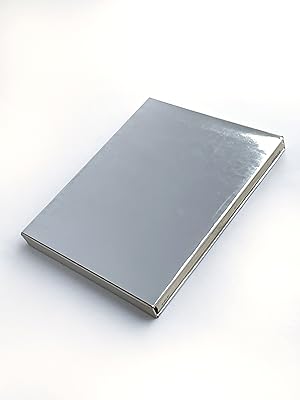
Soft cover. Condition: Near Fine. Concertina-fold artist's book housed in silver foil-covered slipcase; lacking original obi-strip. White card wraps are gently rubbed, with toning and light creasing to spine. Slipcase is cracked at bottom edge, otherwise bright and intact. This is the first issue of Ruscha's seminal photographic work, with 7.5cm stub on last page (this was cropped in the subsequent editions).
-
every building on the sunset strip
Language: English
Published by every building on the sunset strip, Los Angeles, 1966
Seller: studio montespecchio, Montespecchio, MO, Italy
Seller rating 4 out of 5 stars

First Edition Signed
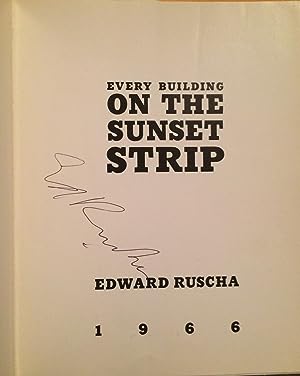
No Binding. Condition: Fine. Dust Jacket Condition: Fine. 1st Edition. Small octavo. White printed wrappers with pasted in a 52-page leporello (extended 760.7 cm) representing on the top and bottom of each page a continuous stretch of the buildings on both sides of 'sunset strip'. Near pristine in cardboard slip case with original wrapped around silver paper + original wraparound band. An unusual 'very fine' copy of one of the more spectacular artists books ever. - First edition, second issue (lacking flap). One of 1000 copies, signed by Ed Ruscha on title page. Signed by Author(s).
-
Every Building on the Sunset Strip
Published by [Edward Ruscha, Los Angeles, California, 1966
Seller: BIBLIOPE by Calvello Books, Oakland, CA, U.S.A.
Seller rating 4 out of 5 stars
Paperback. Condition: Fine. Edward Ruscha (illustrator). Second printing. Octavo in a metallic silver-backed cardboard slipcase; 7.5 x 6 inches; accordion-fold binding of 26 unnumbered double leaves; chiefly b&w photo reproductions; 19 cm. "Panoramic offset lithographic photographic strips documenting every building present on both sides of Sunset Strip in Los Angeles, California in 1966, printed on an accordion-folded strip of paper that opens to 27 feet. The photographic strips show buildings, intersections, parked cars, and signs along both sides of the Strip, viewed as if driving down the street. Captions below the photographs include the names of cross streets and house numbers for the buildings. By documenting the Sunset Strip objectively using a motorized Nikon mounted on the back of a pick-up truck and driving down the street, using a cheap printing process, providing no text other than factual street names and numbers, and packaging the images inside a plain white cover with simple title in gray, and reflective box with no title at all, Ruscha "created a new genre of art book designed for commercial distributors rather than art galleries. Ruscha's books, which became a staple of Conceptualism, were extremely influential to younger generations of artists" ? WorldCat. | Photography, Panoramic. Photography, Artistic. Pop'art. Photographie artistique. Photographie panoramique. printing-out paper. art photography. Pop (fine arts styles) Buildings Photography, Artistic Photography, Panoramic Pop art Named Person: Ruscha, Edward. Ruscha, Edward Artists' books (books) -- 1966. artists' books (books) photobooks. Artists' books Pictorial works Specimens Photobooks Artists' books. Photobooks. Accordion fold format (Binding) Slipcases (Binding). Artists' books -- California -- Los Angeles -- 20th century. Artists' books -- 1966. Accordion fold format. Livres d'artistes. Fine to fine(-) in very good original slipcase with one tiny air bubble and small fold cracks to top and bottom ends of opening. Small faded spot to spine. See photos.
-
hardcover. Condition: Very Good. First Edition. First Printing, limited to 1000 copies (with the extra 2-inch flap at the end of the last folded page, which was which Ruscha had removed for the second printing). Very Good- in slipcase. Silver-stamped white wraps; creasing and light tanning along spine; minor wear and creasing to wraps; internally very clean. Some wear (but no splitting) to slipcase; one small gouge and some dimpling to sides; small bump to bottom edge.
-
Every Building on the Sunset Strip
Published by Edward Ruscha, 1966
Seller: Bookbid, Beverly Hills, CA, U.S.A.
Seller rating 5 out of 5 stars
First Edition
softcover. Condition: near fine. first. First edition, second issue (without rear flap). Book near fine, some faint soiling to covers, spine slightly tanned and wrinkle along height of spine. In publisher's slipcase, wrapped in foil which is intact with some faint scratches, cardboard slightly worn at open edges.
-
Ed Ruscha: Every Building on the Sunset Strip (First Printing)
Published by Ed Ruscha, Los Angeles, 1966
Seller: Vincent Borrelli, Bookseller, Albuquerque, NM, U.S.A.
Seller rating 5 out of 5 stars
First Edition
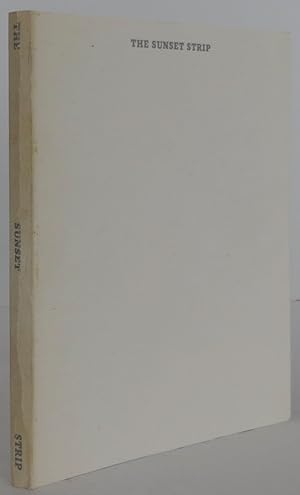
Soft cover. Condition: Fine. 1st Edition. First edition, first printing. Soft cover. White matt wrappers, with title printed in silver on cover and spine, no dust jacket as issued; with silver paper-covered cardstock slipcase. Photographs, artist's book concept and design by Ed Ruscha. Unpaginated accordion-fold, with numerous black and white panoramic plates printed as if one continuous photograph across the upper and lower sections of all of the pages. 7-1/16 x 5-5/8 inches (approximately 27 feet fully-extended). This first issue was limited to 1000 copies (with the extra 2-inch flap at the end of the last folded page, which was the result of the printer's miscalculation). [Cited in Andrew Roth, ed., The Book of 101 Books: Seminal Photographic Books of the Twentieth Century. (New York: PPP Editions in association with Roth Horowitz LLC, 2001), in Andrew Roth, ed., The Open Book. (Göteborg, Sweden: Hasselblad Center in association with Steidl Verlag, Göttingen, Germany, 2004), in Martin Parr and Gerry Badger, The Photobook: A History, Volume II. (London and New York: Phaidon, 2006).]. Fine (Minor glue residue near edge, from slipcase glue, else Mint) in Fine Mylar slipcase (slight rubbing to the mylar). Ed Ruscha took the photographs contained in this publication with a motorized Nikon camera mounted to the back of a pick-up truck. This allowed him to photograph every building on Sunset Boulevard (between Crescent Heights Boulevard in Hollywood and Doheny Drive in Beverly Hills), while driving -- first down one side of the street and then the other. The pictures were then pasted in order, the individual buildings were labeled with their respective addresses, and presented with the north side of the street at the top of the page, with the south side of the street inverted and aligned below it.
-
Every Building on the Sunset Strip
Published by Ed Ruscha, 1966
Seller: Bookbid, Beverly Hills, CA, U.S.A.
Seller rating 5 out of 5 stars
First Edition
wrappers. Condition: near fine. first. First edition, second issue. Small octavo, original stiff self-wrappers, original foil covered slipcase. Book near fine. Slipcase fine with publisher's band. All housed in supplied slipcase.
-

Every Building on the Sunset Strip.
Published by Los Angeles Edward Ruscha, 1966
Seller: Shapero Rare Books, London, United Kingdom
Association Member: ABA ILAB PBFA
Seller rating 4 out of 5 stars
First Edition
First edition, first issue, with a small extra flap at the end due to a miscalculation by the printer; (176 x 137 mm, 7 x 5½ in), accordion-fold sequence of offset-printed black & white photographs, attached to inside of upper wrapper; white wrappers, spine and upper side printed in silver, publisher's silver mylar-covered board slipcase, with the lightly toned rare original white wraparound band, fine; [52]pp. Ruscha's first attempt to photograph the strip on foot failed as parked cars got in the way. He resolved this problem by driving up and down Sunset Boulevard with a motor-driven 35mm camera fixed to his truck, photographing every building between Hollywood and Beverly Hills. The resulting photographs were laid out and joined together. The even-numbered south side runs along the top, the north side along the bottom, with the corresponding numbers printed below each building and names of cross streets. This accurate record of a period of extraordinary growth in Los Angeles is representative of the urban sprawl taking place throughout the United States. Sol Lewitt (writing in Artforum, Summer 1969) highlighted Every Building on Sunset Strip as a key work in his definition of Conceptual Art, a movement driven by ideas before form. Regards à travers Le Livre 138; Engberg & Phillpot, Edward Ruscha: Editions 1959-1999. Catalogue Raisonne (B4); The Book of 101 Books: Seminal Photographic Books of the Twentieth Century pp182-5; The Open Book: A History of the Photographic Book from 1878 to the Present pp198-9; The Photobook: A History II, pp142-3.
-
Soft cover. Condition: Near Fine. No Jacket. A New Fine copy of this Second Printing with a thin 2 inch vertical crease from top spine down in a Near Fine silver slipcase.
-
Every Building On the Sunset Strip
Published by Edward Ruscha, Los Angeles, CA, 1970
Seller: Jeff Hirsch Books, ABAA, Wadsworth, IL, U.S.A.
Association Member: ABAA ILAB MWABA
Seller rating 5 out of 5 stars
Second edition. Softcover. Printed in an edition of 5000 without the rear flap present in the original issue. Leporello that extends to nearly 27 feet and features black and white photographs of what is purported in the title. A clean near fine copy in white wrappers with a thin sliver of glue stain to the rear panel near the spine from the close to near fine slipcase that some very minor wear and some of the usual splitting at the edges. Still, a much nicer than usual copy of an inherently fragile book. (Parr & Badger v1, 142-143: Roth 182-185).
-
Every Building on the Sunset Strip
Published by Edward Ruscha, 1966
Seller: Books From California, Simi Valley, CA, U.S.A.
Seller rating 4 out of 5 stars
First Edition
hardcover. Condition: Very Good. First Edition. First edition, second issue. One continuous accordion-fold page composed of glued paper segments with black-and-white photographs of very building on the Sunset Strip. Near fine in like slipcase covered in silver with some light tanning to the spine.
-
Every building on the Sunset Strip.
Published by Los Angeles, Selbstverlag (1966)., 1966
Seller: Antiquariat Haufe & Lutz, Karlsruhe, BW, Germany
Seller rating 4 out of 5 stars
First Edition
8°. Leporello, [53] Bl. mit zahlr. Abb. (17,8 x 714 cm.). OKart. in silberfarb. Orig.-Pappschuber. Auer 463. Dickel 11 ff. Parr/Badger II, 142 f. Roth, The Book of 101 Books 182 f. - Erste Ausgabe; eines von 1000 Exemplaren. 1971 erschien eine nicht gekennzeichnete Neuausgabe (5000 Exemplare), erkennbar an dem bis an den Bildrand beschnittenen letzten Blatt. - "Bei einer Autofahrt entlang des Sunset Boulevard in Los Angeles hatte Ed Ruscha alle Gebäude der Hausnummern 8024-9176 bzw. 8101-9171 photographiert. Die Bilder von der Südseite des so genannten "Sunset Strip"; erscheinen in Ruschas Leporello an der oberen Kante, von Ost nach West, vom Sunset Boulevard 8024 (Schwab's Pharmacy) bis zur Hausnummer 9176 (einem Jaguar-Schauladen), die Bilder von der Nordseite gegenüber an der unteren Kante, von der Chevron Tankstelle (8101) bis Hausnummer 9171 vor einer Straßenkreuzung.' Für die typographische Gestaltung der Titelseite verwendete er wiederum eine serifenbetonte Linearantiqua. Der Silberglanz der Spiegelfolie des Schubers erscheint auch in Andy Warhols Index Book (1967)" (Hans Dickel). - "Every Building on the Sunset Strip, the fourth of sixteen selfdesigned and primarily self-published artist's books Ed Ruscha published between 1963 and 1978, is, like many of the others (Twentysix Gasoline Stations, Thirtyfour Parking Lots in Los Angeles, Nine Swimming Pools and a Broken Glass, Records), a compendium neatly defined by its title. Like nearly all of those other books, Sunset Strip is also quite compact-no bigger than the average religious pamphlet - and its silver mylar-covered slipcase makes it seem even more so. . Made with a motorized Nikon mounted to the back of a pickup truck, the Sunset Strip photos resemble nothing so much as real-estate ads (a late book in this vein was titled Real Estate Opportunities), they're butted up against one another with no attempt to disguise their seams or discontinuity. The effect is less like the fluid cinematic pan that one critic suggests than a series of jolting jump cuts. The book's subject matter- a ragged progression of gas stations, motels, apartment houses, parking lots, strip malls, and honky-tonk signage and itss imple typography are consistent with the imagery and the typefaces in the Ruscha paintings that helped define Pop art for the masses. But, perhaps because they straddle documentary and conceptual photo work so effortlessly, perhaps because they make his deadpan wit even more accessible, Ruscha's books and the photos in them have had a greater influence on Younger artists and photographers than his paintings. Like so many contemporary artists, Ruscha makes photographs without considering himself a photographer." I wanted to make a book," he told curator and critic Walter Hopps. "and I let photography be a secondary medium, an excuse to make a book. That's what I wanted to do most of all, really to make a book, not necessarily take photographs"." (Vince Aletti in Roth). - Umschlag etwas fingerfleckig, Rücken mit Knickspur, gutes Exemplar. Sprache: englisch.
-
Softcover. Condition: Sehr gut. 2. unnummerierte Auflage von 5000 Ex. Leporello. Format: 17,8 x 14,3 cm; ausgeklappt: 714 cm. 106 nn. Seiten. OKart. in mit Spiegelfolie kaschiertem OPapp-Schuber. [Edward Ruscha: Editions 1959-1999; B 4] Sehr gutes Exemplar.
-

Every Building on the Sunset Strip.
Published by Edward Ruscha, Los Angeles, California, 1966
First Edition Signed
First edition, first issue of Ruscha's self-published 27-foot accordion-folded photographic panorama of the iconic Los Angeles boulevard, a milestone in the history of artistâs books. First issue with a small flap as the final leaf. Octavo, original publisher's white wrappers with titles printed in silver to the spine and front panel, single accordion-folded panorama of both sides of the iconic Sunset Strip printed with offset lithography, opens to a length of 27 feet. Association copy, inscribed by the artist in the year of publication on the copyright page, "Merry Christmas Paton and Tillie! Ed Ruscha 1966." The recipient, actor and director Paton Price played a major role in developing Hollywood talents including Kirk Douglas, Jason Robards, and Jean Seburg. His directing credits include several episodes of "77 Sunset Strip," which ran from 1958-1964. He also directed episodes of Maverick (1961), Surfside 6 (1961) and The Partridge Family (1972). In very good condition with some bumping to the spine. Housed in the original publisher's foil-covered slipcase which is in very good condition. A very nice example, rare in this condition. In the 1960s, Ed Ruscha more or less reinvented the artist's book. By turning away from the craftsmanship and luxury status that typified the livre d'artiste in favor of the artistic idea or concept, expressed simply through photographs and text, Ruscha opened the genre to the possibilities of mass-production and distribution. The 27-foot length of the accordion-folded Every Building on the Sunset Strip affords the viewer two continuous photographic views of the mile and a half section of this landmark stretch of Sunset, one for each side of one of the city's landmark thoroughfare" (The Getty Research Institute). Roth 101; Parr & Badger, Photobook II.
-
EVERY BUILDING ON THE SUNSET STRIP
Published by Edward Ruscha, (Los Angeles), 1966
Seller: Brian Cassidy Books at Type Punch Matrix, Silver Spring, MD, U.S.A.
Association Member: ABAA ILAB IOBA
Seller rating 2 out of 5 stars

First Edition Signed
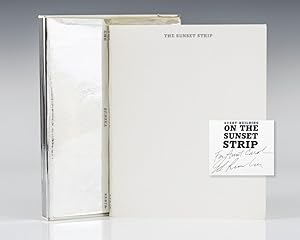
First edition. Signed first edition, second issue of this quintessentially Los Angeles book, one of the great photobooks of all time ? with the original wrap-around band intact. Ruscha's fourth book, and arguably his finest, captures the Sunset Strip at a particular moment in time. A monumental and continuous accordion-fold that opens to more than 25 feet, Ruscha documents ? as the title suggests ? the entirety of the Strip, with even-numbered addresses running along the top of the page and odd facing opposite along the bottom. "The effect is less like the fluid cinematic pan [?] than a series of jolting jump cuts [?] a ragged progression of gas stations, motels, apartment houses, parking lots, strip-malls, and honky-tonk signage" (Parr 182). A beautiful example of a notoriously fragile production. 7'' x 5.5''. Accordion-fold printed recto only and mounted in printed wrappers. Housed in original silver Mylar foil-covered slipcase with intact original plain white paper band. Signed by Ruscha along bottom edge of slipcase. PROVENANCE: From the collection of longtime MIT Press editor Roger Conover, who published several books by and about Ruscha. Spine lightly creased, with some unobtrusive glue offsetting to cover folds from slipcase, as common. Faintest crease to lower corner of last page. Light chipping and toning to edges of paper band. Near fine in near fine slipcase.
-
Every Building On The Sunset Strip
Published by The Artist, Los Angeles, 1970
Seller: William Allen Word & Image, London, United Kingdom
Seller rating 5 out of 5 stars
Paperback. Condition: Very Good+. Dust Jacket Condition: Very Good. Book. 185 x 150mm White card wrappers, housed in publisher's silver mylar-covered slipcase. Leporello with accordion fold-out pages, b/w photos. Dated 1966, but this is the second edition that was published in 1970. Condition : The book has the usual crease mark to spine. Some light foxing as seen to spine and covers. Minor handling to last page of concertina, otherwise concertina in excellent condition. As is often the case with this title, there is a closed tear to the bottom of the slipcase of 15mm on one corner, but overall the slipcase is in Very Good+ condition.
-

Every Building On The Sunset Strip.
Published by Edward Ruscha., (Los Angeles)., 1966
Seller: Sims Reed Ltd ABA ILAB, London, United Kingdom
Seller rating 5 out of 5 stars
First Edition Signed
8vo. (181 x 144 mm). pp. 52, comprised of a single narrow accordian-folded sheet. Printed title, copyright and 2 continuous strips of monochrome illustrations from photographs, across top and bottom of a folded sheet (nine conjoined sheets with the additional small folded flap at the end of the book at 9176 and 9171 Sunset Boulevard) in leporello format; total size: 181 x 7455 mm. Original publisher's printed wrappers, title in silver to front cover and spine, original reflective silver slipcase. The first edition first issue, signed by Ruscha on the title, of this famous and important leporello artist book. From the edition limited to 1000 copies, complete with the small folded flap at the end of the book (at 9176 and 9171 Sunset Boulevard); this copy signed on the title page by Ruscha. 'The Sunset Strip satisfied one of Ruscha's early ambitions: 'In Oklahoma City, I delivered newspapers riding along on my bicycle with my dog . I dreamed about making a model of all the houses on that route, a tiny but detailed model that I could study like an architect standing over a table and plotting a city". As a result of his subsequent fascination with the Sunset Strip, this unrealized youthful ides resurfaced in a different form. The accordion-fold structure of the book was an appropriate format for Ruscha's intended depiction of the famous Hollywood thoroughfare as a series of two-dimensional storefront facades, like those of a Western town'. (Clive Phillpot). [Engberg & Phillpot B4; Roth pp. 182 - 185].
-
Every Building on the Sunset Strip
Published by Edward Ruscha, Los Angeles, California, 1966
Seller: Midway Book Store (ABAA), St. Paul, MN, U.S.A.
Association Member: ABAA ILAB MWABA
Seller rating 5 out of 5 stars
Wraps. 18 x 14 cm. 12mo. Black and white panoramic photographic artist book. Accordion style binding bound in wrappers housed in silver foil covered slipcase. Folds-out to 27 feet. This is one of 5000 copies of the second issue which lacks the extra- 2-inch flap at the end of the last folded page to accommodate the full image. Ruscha was unhappy with this and the image was cropped in this issue. The 4th of Ruscha's 16 self-designed and published artist's books. Slipcase cracked at one fold. There is a vertical crease noticeable to the spine. "McGuire June '77" written in pen on the back cover of the wrappers. Reference: Andrew Roth - "Book of 101 Books". (pp 182-185). Near Fine in Very Good slipcase.
-
Every Building on the Sunset Strip
Published by Edward Ruscha, 1966
Seller: Bookbid, Beverly Hills, CA, U.S.A.
Seller rating 5 out of 5 stars
First Edition
softcover. Condition: near fine. first, second issue. First edition, second issue. Small octavo, original stiff self-wrappers, original slipcase. Book near fine. Slipcase very good, cut on one side, top end partially loose. Comes in custom foldout case.
-
Every Building on the Sunset Strip
Published by Edward Ruscha, 1966
Seller: Bookbid, Beverly Hills, CA, U.S.A.
Seller rating 5 out of 5 stars
First Edition
Soft cover. Condition: Fine. 1st Edition. The true first edition with the extra flap in the back, limited to 1,000 though not so stated, 5 3/4 inches x 7 1/8 in., accordion fold reproductions of black and white photographs of the buildings, with their printed addresses; folding out to 27 feet long. White paper card covers with the title: The Sunset Strip, printed in silver on the spine and front cover. Edward Ruscha (b. 1937) is an influential American artist associated with the Pop art movement. In Every Building On The Sunset Strip, Ruscha took continuous photographs for two and one half miles of the buildings along the "Strip" portion of Sunset Boulevard in Los Angeles, California. The photographs were printed in an accordion-fold style book. Ruscha oversaw the design and production of the book, which was part of a new artistic genre of art book. Fine in fine original silver slipcase. Housed in fold-out case.
-
Every Building on the Sunset Strip.
Published by Edward Ruscha, Los Angeles, 1966
First Edition Signed
First edition, second issue. Small octavo, original stiff self-wrappers, original slipcase. Inscribed by the artist on the title page, "For John Ed Ruscha." One continuous accordion-fold page composed of glued paper segments with black-and-white photographs of every building on the sunset strip. FineÂin a fine slipcase. Housed in a custom half morocco clamshell box. An exceptional example. In the 1960s, Ed Ruscha more or less reinvented the artistâs book. By turning away from the craftsmanship and luxury status that typified the livre dâartiste in favor of the artistic idea or concept, expressed simply through photographs and text, Ruscha opened the genre to the possibilities of mass-production and distribution. The 27-foot length of the accordion-folded Every Building on the Sunset Strip affords the viewer two continuous photographic views of the mile and a half section of this landmark stretch of Sunset, one for each side of one of the cityâs landmark thoroughfare" (The Getty Research Institute). Roth 101; Parr & Badger, Photobook II.
-
Soft cover. Condition: Very Good. 1st Edition. Signed by Ed Ruscha. First Issue. Limited to 1000 copies. Accordion fold format showing every building on both sides of the Sunset Strip in Los Angeles. When unfolded, book measures approximately 25 feet long. The folded accordion paper of Ruscha's "Sunset Strip" has an extra 2" flap of paper folded over behind the last page, showing that this is the true first state of this title. Book is very good plus. The silver paper covered box is very much intact but it lacks the top edge. Covers a bit rubbed. Quite scarce signed. See photos. Signed by Author(s).
-
EVERY BUILDING ON THE SUNSET STRIP - SIGNED BY EDWARD RUSCHA
Published by Self-Published, Los Angeles. 1966 (1970).
Seller: Arcana: Books on the Arts, Culver City, CA, U.S.A.
Association Member: ESA
Seller rating 5 out of 5 stars
Signed
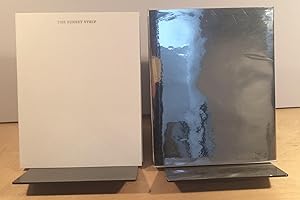
Leporello Wrappers in Slipcase. Condition: Fine. Second Printing 1/5000. One continuous accordion-fold page composed of glued paper segments extending to 296 ½" in length housed in a white paper and silver Mylar-over-cardboard slipcase. "Every Building on the Sunset Strip" is Ed Ruscha's innovative 1966 photographic study that pictures sequentially each architectural facade on both the North and South sides of the fabled Sunset Strip from 8101 - the still extant Jaguar dealership - to 9156 - the late, great Schwab's Pharmacy. Pandora's Box lives! A spectacularly bright white, most handsome example of the 1970 second printing (entry B4 in Siri Engberg's "Edward Ruscha: Editions 1959-1999", and whose 1966 edition is cited on pages 142-143 of Martin Parr and Gerry Badger's "The Photobook: A History Volume I", pages 198-199 of The Hasselblad Center's "The Open Book", and pages 182-185 of "The Book of 101 Books") limited to five thousand unnumbered copies additionally BOLDLY SIGNED "Ed Ruscha" in blue ink across the top of the publisher's still shiny, uncompromised slipcase showing none of the creasing, soiling, or adhesive transfer to the spine that is typical of this title. The publisher's exceedingly fragile and uncommon unprinted white paper wraparound band issued only with the second edition is laid in. Signed by the Artist. Artist's Book.
-
EVERY BUILDING ON THE SUNSET STRIP - SIGNED BY EDWARD RUSCHA
Published by Self-Published, Los Angeles. 1966 (1970).
Seller: Arcana: Books on the Arts, Culver City, CA, U.S.A.
Association Member: ESA
Seller rating 4 out of 5 stars
Signed
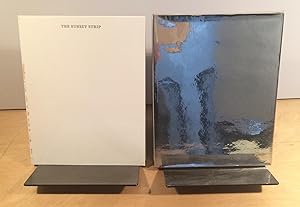
Leporello Wrappers in Slipcase. Condition: Near Fine. Second Printing 1/5000. One continuous accordion-fold page composed of glued paper segments extending to 296 ½" in length housed in a white paper and silver Mylar-over-cardboard slipcase. "Every Building on the Sunset Strip" is Ed Ruscha's innovative 1966 photographic study that pictures sequentially each architectural facade on both the North and South sides of the fabled Sunset Strip from 8101 - the still extant Jaguar dealership - to 9156 - the late, great Schwab's Pharmacy. Pandora's Box lives! A bright white, most handsome example of the 1970 second printing (entry B4 in Siri Engberg's "Edward Ruscha: Editions 1959-1999", and whose 1966 edition is cited on pages 142-143 of Martin Parr and Gerry Badger's "The Photobook: A History Volume I", pages 198-199 of The Hasselblad Center's "The Open Book", and pages 182-185 of "The Book of 101 Books") limited to five thousand unnumbered copies additionally BOLDLY SIGNED "Edward Ruscha" in black ink across the top of the slipcase showing a thin margin of adhesive transfer along the front and back of the covers at the spine as is typical of this printing. The slipcase's silver mylar overlay is shiny and bright, but showing some light soiling along the top as well as short separations to the white paper covering at the joints at the opening. The publisher's exceedingly fragile and uncommon unprinted white paper wraparound band issued only with the second edition is laid in. All in all, this is a lovely example of a stellar title. Signed by the Artist. Artist's Book.
-
EVERY BUILDING ON THE SUNSET STRIP - SIGNED BY EDWARD RUSCHA
Published by Self-Published, Los Angeles. 1966 (1970).
Seller: Arcana: Books on the Arts, Culver City, CA, U.S.A.
Association Member: ESA
Seller rating 4 out of 5 stars
Signed
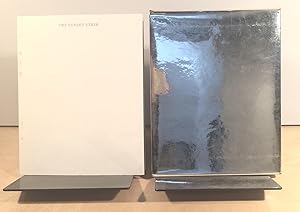
Leporello Wrappers in Slipcase. Condition: Near Fine. Second Printing 1/5000. One continuous accordion-fold page composed of glued paper segments extending to 296 ½" in length housed in a white paper and silver Mylar-over-cardboard slipcase. "Every Building on the Sunset Strip" is Ed Ruscha's innovative 1966 photographic study that pictures sequentially each architectural facade on both the North and South sides of the fabled Sunset Strip from 8101 - the still extant Jaguar dealership - to 9156 - the late, great Schwab's Pharmacy. Pandora's Box lives! A bright white, most handsome example of the 1970 second printing (entry B4 in Siri Engberg's "Edward Ruscha: Editions 1959-1999", and whose 1966 edition is cited on pages 142-143 of Martin Parr and Gerry Badger's "The Photobook: A History Volume I", pages 198-199 of The Hasselblad Center's "The Open Book", and pages 182-185 of "The Book of 101 Books") limited to five thousand unnumbered copies additionally BOLDLY SIGNED "Ed Ruscha" in black ink across the top of the slipcase showing a thin margin of adhesive transfer along the front and back of the covers at the spine as is typical of this printing. The slipcase's silver mylar overlay is shiny but lightly scuffed, there is some trivial soiling along the top and bottom edges, and some chipping and separations to the white paper covering at some of the corners of the joints. The publisher's exceedingly fragile and uncommon unprinted white paper wraparound band issued only with the second edition is laid in. It has been priced accordingly. Signed by the Artist. Artist's Book.
-
Every Building on the Sunset Strip.
Published by Edward Ruscha, Los Angeles, 1966
First Edition Signed
First edition, second issue of the artist's classic work. Small octavo, original stiff self-wrappers, original slipcase. Association copy, inscribed by Ruscha to his aunt, "For Aunt Carol Ed Ruscha." One continuous accordion-fold page composed of glued paper segments with black-and-white photographs of every building on the sunset strip. Near fineÂin a very good slipcase. An exceptional association. In the 1960s, Ed Ruscha more or less reinvented the artistâs book. By turning away from the craftsmanship and luxury status that typified the livre dâartiste in favor of the artistic idea or concept, expressed simply through photographs and text, Ruscha opened the genre to the possibilities of mass-production and distribution. The 27-foot length of the accordion-folded Every Building on the Sunset Strip affords the viewer two continuous photographic views of the mile and a half section of this landmark stretch of Sunset, one for each side of one of the cityâs landmark thoroughfare" (The Getty Research Institute). Roth 101; Parr & Badger, Photobook II.
-
Every Building on the Sunset Strip.
Published by Edward Ruscha, Los Angeles, California., 1971
Seller: Peter Keisogloff Rare Books, Inc., Brecksville, OH, U.S.A.
Seller rating 5 out of 5 stars
Soft cover. Condition: Fine. No Jacket. 2nd Edition. The second edition of a work originally published in 1966. Accordion-fold reproductions of black and white photographs of the buildings, with their printed addresses. White paper card covers with the title: The Sunset Strip, printed in silver on the spine and front cover. The spine shows a partial light crease, and a little very light tanning. In the silver mylar-covered slipcase with white paper top and bottom edges. The front edges of the slipcase show small splits. An exceptionally fine copy of a very fragile book. Mentioned in Andrew Roth's: Book of 101 Books: Seminal Photographic Books of the Twentieth Century. Ed Ruscha had a retrospective exhibition at the National Gallery of Art in Washington, DC, in 2006. This is Ruscha's most famous book, in part because of the differences between the first and the second editions. In the first, the last photo could not be fit on the page, so the page was extended to accommodate the full picture and the page was folded to preserve the flush edge. Ruscha however was unhappy with this solution, and in the second edition he made sure that the last photo was cropped to fit the regular page and eliminate the fold. See "The Works of Ed Ruscha" (1982); p. 169.
-
Every Building on the Sunset Strip.
Published by Edward Ruscha, Los Angeles, California., 1966
Seller: Peter Keisogloff Rare Books, Inc., Brecksville, OH, U.S.A.
Seller rating 5 out of 5 stars
First Edition
Soft cover. Condition: Fine. No Jacket. 1st Edition. First Edition with the flap on the last page present. 5 3/4 inches x 7 1/8 in., accordion fold reproductions of black and white photographs of the buildings, with their printed addresses; folding out to 27 feet long. White paper card covers with the title: The Sunset Strip, printed in silver on the spine and front cover. The spine and cover edges show some light tanning. There is a neat split between the title/copyright page and the first page of photographs and a tear to the upper margin of page six. Some of the upper page edges show small reinforcements with tape, probably from the book being displayed. In the silver mylar-covered slipcase with white paper top and bottom edges. The front edges of the slipcase show some small splits. Despite these aforementioned condition details, this is still a near fine copy of a very fragile book, usually found in lesser condition. Mentioned in Andrew Roth's: "Book of 101 Books: Seminal Photographic Books of the Twentieth Century." Ed Ruscha had a retrospective exhibition at the National Gallery of Art in Washington, DC, in 2006. This is Ruscha's most famous book. "The Works of Ed Ruscha" (1982); p. 169.
-
Every Building on the Sunset Strip
Published by Edward Ruscha, Los Angeles, 1966
Seller: DIAMOND HOLLOW BOOKS / MILES BELLAMY, ANDES, NY, U.S.A.
Seller rating 3 out of 5 stars

First Edition
Condition: VG. First. First Edition, first issue in Very Good condition all around with some wear to foot of spine and crease/crimp to rear cover at base while interior is flawless, though the extra panel flap shows a minuscule chip & a pinky-sized crease at bottom. Silver slipcase is extant but flattened & worn. Further images upon request, of course.
-
Every Building on the Sunset Strip
Published by Edward Ruscha, Los Angeles, 1970
Seller: DIAMOND HOLLOW BOOKS / MILES BELLAMY, ANDES, NY, U.S.A.
Seller rating 4 out of 5 stars
Condition: VG. 2nd. Very Good condition all around 2nd issue from 1970. Extending to a length of 27 feet, a book which quickly gained rightful iconic status. Further to condition: minor wear to card-covers and some discoloration while interior is spotless. The usual vertical crease to spine. Last page at bottom & upside down) is rubber stamp from Cochise Fine Arts, Bisbee Arizona. Lacks silver slipcase.