Order Total (1 Item Items):
Shipping Destination:

Binary First Edition (9 results)
Skip to main search results
Search filters
Product Type
- All Product Types
- Books (9)
- Magazines & Periodicals (No further results match this refinement)
- Comics (No further results match this refinement)
- Sheet Music (No further results match this refinement)
- Art, Prints & Posters (No further results match this refinement)
- Photographs (No further results match this refinement)
- Maps (No further results match this refinement)
- Manuscripts & Paper Collectibles (No further results match this refinement)
Condition Learn more
- New (2)
- As New, Fine or Near Fine (3)
- Very Good or Good (2)
- Fair or Poor (No further results match this refinement)
- As Described (2)
Binding
Collectible Attributes
Language (2)
Free Shipping
Seller Location
Seller Rating
-
I Used To Like You Until (How Binary Thinking Divides Us) [VINTAGE 2024] [FIRST EDITION, FIRST PRINTING]
Language: English
Published by Threshold Editions, an imprint of Simon & Schuster, New York, 2024
First Edition
Hardcover. Condition: As New. Dust Jacket Condition: As New. Griffith, Chad (jacket photograph); DiMauro, Melinda (author photograph) (illustrator). 1st Edition. As new condition black boards with silver spine lettering contained in an as new condition non price-clipped color photographic dust jacket. Includes List of Other Book(s) by Kat Timpf; Author Dedication; Preliminary Page Quote by John Updike, Rabbit Run (".hate suits him better than forgiveness. Immersed in hate, he doesn't have to do anything: he can be paralyzed, and the rigidity of hatred makes a kind of shelter for him" - John Updike, Rabbit Run); Introduction; Conclusion: Hate As a Shelter and Acknowledgments. "A lot of people have used some variation of the phrase 'I used to like you until.' on me: 'I used to like you until you told me how you voted' or 'I used to like you until you told that joke.' There are many legitimate reasons to write people off, but a never good one is on behalf of a partisan-political-power scheme that cares nothing for you. This scheme has, unfortunately, been increasingly successful. Blinded by outrage, we're missing the reality that it's rarely as simple as one side versus another. This book will remind you of this. It will show how the more divided, tribal, and polarized we become, the more we lose. I will help you avoid falling into that trap - opeining yourself up to a world of freethinking.and hating people only when they really deserve it." - from the Introduction and rear outer jacket. "In this whip-smart follow-up to the "ruthlessly honest exploration of comedy and cancellation" (Dr. Drew) You Can't Joke About That, New York Times bestselling author Kat Timpf examines the dangers of binary thinking and how it threatens to take over our institutions, relationships, and even our freedoms. For some reason, when it comes to complex issues, we've largely limited ourselves to just two options, resulting in a society of non-thinkers. After all, once you've picked a side, all the thinking has already been done for you. As an independent, libertarian voter who has spent the past ten years at Fox News, Kat has faced this issue too many times to count. She's learned that surprising things can happen when you refuse to choose a team, especially when you work at a place some people call an existential threat to America. Binary thinking is much more than just the enemy of critical thinking - it's also an immediate danger to our political discourse, our institutions, our way of consuming news, our relationships, our creativity, and even our freedoms. All too often we will let a single difference in viewpoint, an assumption, or an association be enough to write off another person entirely, even if we know nothing else about them. We miss out on opportunities to connect or even collaborate, while the people in power over us benefit from our division. Through humorous examples from her own life and insight only someone in her bizarre position can possess, Kat reminds us that the world doesn't have to be so black-and-white. In her signature witty voice, Kat inspires us to lean into thoughtful consideration, genuine conversation, and vulnerability." - from the inner front jacket flap.
-
Soft cover. Condition: Fine. 1st Edition. First paperback edition/printing (1973 Bantam Q7613) in Fine, unread condition. Technothriller by Lange/Crichton and filmed for TV as Pursuit.
-
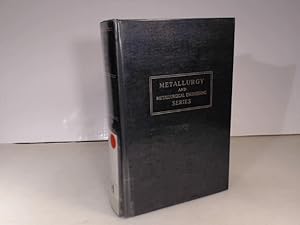
Constitution of Binary Alloys, Second edition. (= Metallurgy and Metallurgical Engineering Series). And: Shunk, Francis A. and Rodney P. Elliot: Constitution of Binary Alloys, First and Second Supplement. (= McGraw-Hill Series in Materials Science and Engineering). 2 Volumes, (2 Bände), McGraw-Hill, New York a.o. 1965 and 1969. 877 Seiten - 720 Seiten mit Abbildungen, Groß 8°, Original-Leinen (Hardcover), Bibliotheks-Exemplare (Privatbibliothek) mit Rückenschildern, Stempel auf Vorsatz und Titel, Einbände in selbstklebende transparente Schutzfolie eingeschlagen, insgesamt gute und innen saubere Exemplare, (library samples in good condition),
Language: English
Published by McGraw-Hill, New York 1958, 1965 and 1969., 1958
Seller: Antiquariat Silvanus - Inhaber Johannes Schaefer, Ahrbrück, Germany
Seller rating 5 out of 5 stars

1305 S. - 877 Seiten - 720 Seiten mit mit zahlreichen Figuren, (1305 pp. - 877 pp. - 720 pp. with a lot of figures), Sprache: Englisch Gewicht in Gramm: 4460 Groß 8°, Original-Leinen und privates Ganzleinen (Hardcover), Bibliotheks-Exemplare (Privatbibliothek) mit großen Rückenschildern, Stempel auf Vorsätzen und Titel, Einbände in selbstklebende transparente Schutzfolie eingeschlagen, insgesamt gute und innen saubere Exemplare, (library copies in good condition), Three Volumes (full set with both Supplement-Volumes).
-
None of the Above: Reflections on Life Beyond the Binary (Signed First Edition)
Published by Canongate Books, London, 2022
First Edition Signed
Hardcover. Condition: New. Dust Jacket Condition: New. 1st Edition. 1st Printing. Signed to the title page. Brand new copy. Signed by Author(s).
-

Binary. A Novel. First British Edition, Fine in Dust Jacket. London, 1972
Published by William Heinemann, London, 1972
First Edition
Condition: Fine. Dust Jacket Condition: Fine. First Edition. First Edition. Original cloth in dust jacket with the original price intact on the bottom of the front flap. No writing, no bookplates. A beautiful, clean copy of the Crichton novel published under the pseudonym of "John Lange." This is the first British edition.
-
paperback. Condition: Good. Binary apricot Spring bottom right corner of the Cultural Revolution. the first edition of lack of injury word].
-

Condition: good. A copy that has been read, remains in good condition. All pages are intact, and the cover is intact. The spine and cover show signs of wear. Pages can include notes and highlighting and show signs of wear, and the copy can include "From the library of" labels or previous owner inscriptions. 100% GUARANTEE! Shipped with delivery confirmation, if you're not satisfied with purchase please return item! Ships via media mail.
-
Hardcover. Condition: new. New Copy. Customer Service Guaranteed.
-
The Language of the Night: Essays by Ursula K. Le Guin, Including "Is Gender Necessary?" Interrogating the Gender Binary and The Left Hand of Darkness, Signed First Edition
Publication Date: 1979
Seller: Max Rambod Inc, Woodland Hills, CA, U.S.A.
Association Member: ABAA ILAB PADA
Seller rating 5 out of 5 stars
First Edition Signed
Dust Jacket Condition: dj. First Edition. [Sci-Fi][Feminism][Literature] [LGBTQ] Le Guin, Ursula K. The Language of the Night, 1979, collects essays in which the author articulates the intellectual foundations of modern science fiction and fantasy while examining how speculative literature can interrogate gender, sexuality, and social hierarchy. Written during a period when feminist scholarship and LGBTQ discourse were reshaping literary criticism, the volume contains Le Guin's influential essay "Is Gender Necessary?" in which she revisits her novel The Left Hand of Darkness (1969) and reexamines her own treatment of gender and language. Addressing the social transformations of the 1960s and 1970s feminist movement, Le Guin reflects on her evolving understanding of gender and political identity, writing: "I considered myself a feminist; I didn't see how you could be a thinking woman and not be a feminist; but I had never taken a step beyond the ground gained for us by Emmeline Pankhurst and Virginia Woolf." Through critical self-analysis and theoretical speculation, the essays situate science fiction as a literary form capable of examining the cultural construction of gender and imagining alternative social structures. Le Guin, Ursula K. The Language of the Night: Essays on Fantasy and Science Fiction. New York: Putnam, 1979. Edited and with introductions by Susan Wood. Signed by Le Guin on the front endpaper. First edition. Original binding in original illustrated dust jacket designed by Virginia Kidd. The volume gathers Le Guin's reflections on the aesthetics and social function of speculative fiction while engaging directly with feminist and gender theory emerging in late twentieth-century literary discourse. In "Is Gender Necessary?" she explains the speculative premise behind the ambisexual inhabitants of the planet Gethen in The Left Hand of Darkness, where individuals assume male or female characteristics only during a reproductive phase known as kemmer. Le Guin describes the experiment directly: "There is no physiological sex role. I eliminated gender, to find out what was left." By removing fixed biological roles, the thought experiment challenges entrenched dualisms such as man and woman, ruler and ruled, user and used. She also considers the ethical implications of such a society, observing that "Because the Gethenians cannot have sexual intercourse unless both partners are willing, because they cannot rape or be raped." The essay further critiques her own reliance on masculine pronouns in the novel and acknowledges the linguistic limitations of English for discussing gender at a time before widely adopted gender-neutral pronouns. Science fiction during the late twentieth century increasingly served as a forum for feminist and queer theoretical inquiry, and Le Guin's essays helped shape that conversation by framing speculative narrative as a tool for examining cultural assumptions. Her conclusion emphasizes the exploratory function of the genre: "Finally, the question arises, is the book a Utopia? It seems to me that it is quite clearly not; it sees no practicable alternative to contemporary society. What it tries to do is to open up a new viewpoint." Original binding in original illustrated dust jacket designed by Virginia Kidd. Light wear to dust jacket extremities, else clean and tight. Overall near fine in very good dust jacket. Signed first edition of Le Guin's major collection of literary criticism connecting feminist thought, speculative fiction, and debates over gender and language in late twentieth-century literature. Signed.
![Seller image for I Used To Like You Until (How Binary Thinking Divides Us) [VINTAGE 2024] [FIRST EDITION, FIRST PRINTING] for sale by Vero Beach Books](https://pictures.abebooks.com/inventory/md/md32267821287.jpg)