

Order Total (1 Item Items):
Shipping Destination:

Autograph Manuscript Notebook (10 results)
Skip to main search results
Search filters
Product Type
- All Product Types
- Books (9)
- Magazines & Periodicals (No further results match this refinement)
- Comics (No further results match this refinement)
- Sheet Music (No further results match this refinement)
- Art, Prints & Posters (No further results match this refinement)
- Photographs (No further results match this refinement)
- Maps (No further results match this refinement)
- Manuscripts & Paper Collectibles (1)
Condition Learn more
- New (No further results match this refinement)
- As New, Fine or Near Fine (2)
- Very Good or Good (2)
- Fair or Poor (No further results match this refinement)
- As Described (6)
Binding
Collectible Attributes
- First Edition (2)
- Signed (1)
- Dust Jacket (No further results match this refinement)
- Seller-Supplied Images (8)
- Not Print on Demand (10)
Language (1)
Free Shipping
Seller Location
Seller Rating
-

The Lost ' Eumaeus' Notebook James Joyce, Autograph Manuscript Of The ' Eumaeus' Episode Of ' Ulysses' Lot 197 In The Sale Of English Literature . 10 July 2001 Sale LO1317A
Published by Sotheby's, London, 2001
Seller: Willis Monie-Books, ABAA, Cooperstown, NY, U.S.A.
Association Member: ABAA ESA ILAB
Seller rating 5 out of 5 stars

Softcover. Condition: Very Good. Describes a previously unknown James Joyce manuscript, a single lot from this auction. ; 29 + pages.
-
![Seller image for The lost 'Eumaeus' notebook : James Joyce, autograph manuscript of the 'Eumaeus' episode of 'Ulysses.' [ Sotheby's, auction catalogue, sale date: 10 July, 2001 ]. for sale by Wykeham Books](https://pictures.abebooks.com/inventory/md/md31799963436.jpg)
The lost 'Eumaeus' notebook : James Joyce, autograph manuscript of the 'Eumaeus' episode of 'Ulysses.' [ Sotheby's, auction catalogue, sale date: 10 July, 2001 ].
Published by Sotheby's, London, separate auction catalogue for Lot 197 in the sale held on 10 July, 2001, 2001
Seller: Wykeham Books, LONDON, United Kingdom
Seller rating 4 out of 5 stars

First Edition
Laminated illustrated wrappers, 4to, 27 cm, 35 pp, ills, (some colour). 1 lot ( No 197). The opening of the description: "A heavily revised and substantially complete early working draft of the "Eumaeus" chapter, a largely continuous and fluent text written in Joyce's cursive and 'personal' hand in black ink (the earliest hand), with extensive revisions, insertions and additional passages, some interlinear, but the majority drafted i|I the margin or on facing (previously blank) pages, sometimes lengthwise, in (chiefly later hands of) red, black and green ink and pencil, every page heavily "deleted" by the author in characteristic fashion with large crosses in red or blue crayon or pencil" Minor creasing and scratches to wrappers, otherwise Very Good.
-

Soft cover. Condition: Fine. 35 pages, colour and black and white illustrations, fine condition in card covers. Loosely enclosed is the list of prices for the book sale on 10th July 2001 including the lost notebook which fetched £861,250.
-
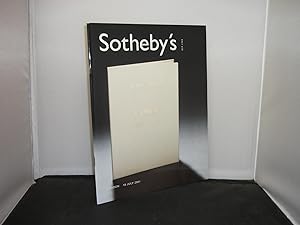
Sotheby's London The Lost "Eumaeus" Notebook : James Joyce, Autograph Manuscript of the "Eumaeus" episode of "Ulysses", 10 July 2001
Published by Sotheby's, London, 2001
Soft cover. Condition: Fine. 35 pages, colour and black and white illustrations, fine condition in card covers.
-
UNPUBLISHED MANUSCRIPT AUTOGRAPH NOTEBOOK COMPILED DURING THE GREAT WAR.
Published by Unpublished Xmas, 1917
Seller: HALEWOOD AND SONS ABA ILAB Est. 1867., PRESTON, United Kingdom
Association Member: ABA ILAB PBFA
Seller rating 2 out of 5 stars

Manuscript / Paper Collectible Signed
A Most Attractive oblong Crown 8vo leather-bound manuscript album. Illustrated with original sketches. Contributions include ;- Northern Command School , Farnley Park, Otley, Yorks -(2nd Duke of Wellingtons Regt.) 13 autographs and sketch of Micklegate Bar, York ;- Lieut. Burton, Tank Corps signed sketch ;- Lieut. E.G.Hill, Gloucestershire Regt. signed sketch ;- etc., etc.
-
Autograph Manuscript Notebook.
Published by c., 1715
Seller: Shapero Rare Books, London, United Kingdom
Association Member: ABA ILAB PBFA
Seller rating 5 out of 5 stars
Square 8vo (20.5 x 16.5 cm); annotated neatly in ink, 128 leaves (approx.), one additional folded page laid in, light spotting; full reverse calf, boards tooled in blind, worn with some areas of surface loss, some loss to head and foot of spine, corners exposed. An 18th century arithmetic manuscript notebook, previously belonging to a member of the Leycester family of Toft Hall.
-
Autograph Manuscript Notebook and Correspondence
Published by [n.p.], [Boston], 1879
Seller: Type Punch Matrix, Silver Spring, MD, U.S.A.
Seller rating 5 out of 5 stars
First Edition
Condition: Very good. First Edition. Original manuscript notebook (with related correspondence) from prolific American inventor George R. Carey, including original sketches for his "Selenium Electrical Camera," one of the earliest conceptions of what would become television. Live television was an entertainment perfectly suited to the nineteenth-century, so much so that the era's failure to fully develop it requires some explanation. By the late 1870s, Victorians had the camera, the telescope, the telegraph, the telephone, the phonograph, and the reasonable expectation of developing some kind of telectroscope (or telephonoscope, or electroscope) by the end of the century. As scholar Iwan Rhys Morus described the invention: "This was a machine which would do to human eyes what the telephone had already done to the voice." Bostonian surveyor George Carey was one of the first inventors (and the first American) to propose such a machine, patenting a series of selenium-based image-transmitters, influential precursor to modern broadcast television. This notebook and correspondence document his refinement of the selenium camera and numerous related devices, all dated and with witness signatures, and his later correspondence with SCIENTIFIC AMERICAN, which in 1880 published Carey's detailed description of the invention in the landmark article titled "Seeing by Electricity." Describing this article in his HISTORY OF TELEVISION, Albert Abramson writes: "What is of importance was that [Carey] conceived of a visual transmitter as a 'camera'" (11). Several similar, related collections of Carey and his invention have come to market in the last twenty years, including at the legendary "Origins of Cyberspace" sale at Christie's in 2005 ($19,200), and another at Bonham's in 2014 ($12,500). A fascinating archive, worthy of further study, and a milestone in the prehistory of modern transmission and broadcast from this "early pioneer of the television art" (Shiers 12). 5'' x 3.25''. Original memo pad, containing notes and sketches (in both pencil and pen) by Carey to recto and verso of all leaves (including wrappers). [74] pages. With: 3 postal cards, 2 registered letter receipts, and envelope of correspondence from The Scientific American. With 6'' x 5.5'' off-print of selenium camera illustration labeled Plate 2.
-
An Autograph Manuscript, perhaps from an Emerson notebook,
Published by discussing key figures of the French Enlightenment and the Academie, 241 x 182 mm, laid into a larger sheet, ink on light blue paper, one page, numbered "80" in upper right corner, [c.1853, 1853
discussing key figures of the French Enlightenment and the Academie, 241 x 182 mm, laid into a larger sheet, ink on light blue paper, one page, numbered "80" in upper right corner, [c.1853?], tape to verso at fold. Headed "Academie," the manuscript gives a brief relation of major French thinkers to the Academie Francaise: Richelieu "wd not have established it if he cd have seen revolution in it."; Saint-Pierre "induced the Acad to substitute Hope of great men for frivolous subjects"; Montesquieu "said, the academie had no other functions than to chatter without end." Emerson had visited Paris during the revolution of 1848 and held a high opinion of the French. It is possible that this manuscript was produced in 1853 in conjunction with an important series of lectures Emerson would give beginning in January 1854, including "France, or Urbanity." In Fine condition.
-
Autograph manuscript notebook of field experiments, 1890-91, 1891-92, and 1892-93. 130 leaves
Publication Date: 1890
Seller: Jeremy Norman's historyofscience, Novato, CA, U.S.A.
Seller rating 4 out of 5 stars
Raulin, Jules (1836-96). Champ d'expériences. Manuscript notebook. [130]pp., with diagrams and charts. N.p., 1890-93. 214 x 172 mm. Original embossed boards, cloth backstrip, some wear at spine and edges, a few leaves loose. Minor fraying at edges but very good. Scientific notebook written by plant physiologist Jules Raulin, who studied under Pasteur at the École Normale Supérieur and served as Pasteur's first laboratory assistant at the school. Raulin collaborated with Pasteur on the latter's investigations of fermentation, oxidation and silkworm disease; he also pursued his own research on the chemical role of minerals in plant nutrition, which led to important advances in agriculture. In 1876 Raulin was appointed professor of chemistry at the Faculté des Sciences in Lyon, and in 1883 he founded the École de Chimie Industrielle (School of Industrial Chemistry), where he spent most of his research time on agronomy and silk production. He was the first to identify the role of zinc in plant nutrition, and his experimental studies of the mold species Aspergillus niger led to the development of the nutritive medium known as Raulin's fluid. The present notebook contains extensive notes and diagrams detailing Raulin's agricultural researches in the early 1890s, including information on soil chemistry, fertilizers, pest control, etc. At the end of the notebook are several pages devoted to silkworm culture. Dictionary of Scientific Biography. .
-
"THE MAN FROM ARIEL" [short story]. AUTOGRAPH MANUSCRIPT, SIGNED (AMsS). Handwritten in pencil in a 6x9 inch stenographer's notebook dated 10 July 1933
Seller: Currey, L.W. Inc. ABAA/ILAB, Elizabethtown, NY, U.S.A.
Association Member: ILAB
Seller rating 4 out of 5 stars
16 leaves, rough draft dated 10 July 1933. Followed by "The Warriors of X Lanagar," 28 leaves, rough draft handwritten in pencil dated 15 January 1934. At the rear is an untitled third story, not dated, rough draft handwritten in pencil on 13 leaves. "Wollheim's first published story was "The Man from Ariel" for WONDER STORIES in January 1934 (for which Hugo Gernsback notoriously did not pay him until threatened with court action), but he did not begin to publish fiction with any regularity until the 1940s." - SFE (online). Bleiler, Science-Fiction: The Gernsback Years 1782. Covers stained, some stains to leaves, mostly minor save for first leaf of ARIEL; the manuscript is legible throughout. (#162873).


![Seller image for "THE MAN FROM ARIEL" [short story]. AUTOGRAPH MANUSCRIPT, SIGNED (AMsS). Handwritten in pencil in a 6x9 inch stenographer's notebook dated 10 July 1933 for sale by Currey, L.W. Inc. ABAA/ILAB](https://pictures.abebooks.com/inventory/md/md31363102518.jpg)