

Order Total (1 Item Items):
Shipping Destination:

9780306426537 - When Doctors Get Sick (11 results)
Skip to main search results
Search filters
Product Type
- All Product Types
- Books (11)
- Magazines & Periodicals (No further results match this refinement)
- Comics (No further results match this refinement)
- Sheet Music (No further results match this refinement)
- Art, Prints & Posters (No further results match this refinement)
- Photographs (No further results match this refinement)
- Maps (No further results match this refinement)
- Manuscripts & Paper Collectibles (No further results match this refinement)
Condition Learn more
- New (8)
- As New, Fine or Near Fine (No further results match this refinement)
- Very Good or Good (3)
- Fair or Poor (No further results match this refinement)
- As Described (No further results match this refinement)
Binding
- All Bindings
- Hardcover (11)
- Softcover (No further results match this refinement)
Collectible Attributes
- First Edition (No further results match this refinement)
- Signed (No further results match this refinement)
- Dust Jacket (No further results match this refinement)
- Seller-Supplied Images (5)
- Not Print on Demand (9)
Language (1)
Free Shipping
Seller Location
Seller Rating
-
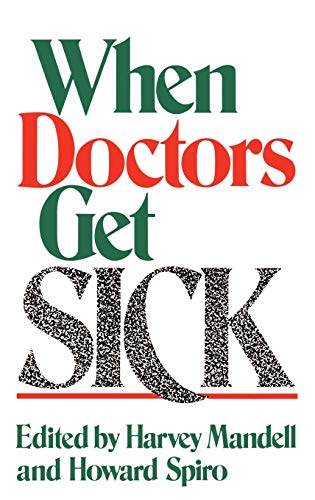
When Doctors Get Sick
Seller: WorldofBooks, Goring-By-Sea, WS, United Kingdom
Seller rating 5 out of 5 stars

Hardback. Condition: Very Good. The book has been read, but is in excellent condition. Pages are intact and not marred by notes or highlighting. The spine remains undamaged.
-
Hardcover. Condition: Good. No Jacket. Missing dust jacket; Pages can have notes/highlighting. Spine may show signs of wear. ~ ThriftBooks: Read More, Spend Less.
-
Hardcover. Condition: Good. No Jacket. Pages can have notes/highlighting. Spine may show signs of wear. ~ ThriftBooks: Read More, Spend Less.
-
hardcover. Condition: New. In shrink wrap. Looks like an interesting title!
-
Condition: New.
-
When Doctors Get Sick
Seller: Ria Christie Collections, Uxbridge, United Kingdom
Seller rating 5 out of 5 stars
£ 94.30
£ 11.98 shipping
Ships from United Kingdom to U.S.A.Quantity: Over 20 available
Add to basketCondition: New. In English.
-
Gebunden. Condition: New.
-

When Doctors Get Sick
Language: English
Published by Springer US, Springer US Sep 1987, 1987
ISBN 10: 0306426536 ISBN 13: 9780306426537
Seller: buchversandmimpf2000, Emtmannsberg, BAYE, Germany
Seller rating 5 out of 5 stars
Buch. Condition: Neu. Neuware -When a doctor gets sick, his status changes. No longer is his role de fined as deriving from doctus, i. e. , learned, but as from patiens, the present participle of the deponent verb, patior, i. e. , to suffer, with all the passive acceptance of pain the verb implies. From pass us, the past participle, we get the word passion, with its wide gamut of emotional allusions, ranging from animal lust to the sufferings of martyrs. It is the connotation, not the denotation, of the word that defines the change of status. When a doctor is sick enough to be admitted to a hospital, he can no longer write orders; orders are written about him, removing him from control of his own situation. One recalls a sonnet from W. H. Auden's sequence, The Quest, which closes with the lines: Unluckily they were their situation: One should not give a poisoner medicine, A conjuror fine apparatus, Nor a rifle to a melancholic bore. That is a reasonable expression of twentieth-century skepticism and ra tionalism. Almost all medical literature is written from the doctor's point of view. Only a few medically trained writers-one thinks of Chekhov's Ward Six-manage to incorporate the patient's response to his situa tion. Patients' voices were not much in evidence until well into the twentieth century, but an early example is John Donne's Devotions upon Emergent Occasions (1624).Springer Verlag GmbH, Tiergartenstr. 17, 69121 Heidelberg 488 pp. Englisch.
-
When Doctors Get Sick
Language: English
Published by Springer US, Springer US, 1987
ISBN 10: 0306426536 ISBN 13: 9780306426537
Buch. Condition: Neu. Druck auf Anfrage Neuware - Printed after ordering - When a doctor gets sick, his status changes. No longer is his role de fined as deriving from doctus, i. e. , learned, but as from patiens, the present participle of the deponent verb, patior, i. e. , to suffer, with all the passive acceptance of pain the verb implies. From pass us, the past participle, we get the word passion, with its wide gamut of emotional allusions, ranging from animal lust to the sufferings of martyrs. It is the connotation, not the denotation, of the word that defines the change of status. When a doctor is sick enough to be admitted to a hospital, he can no longer write orders; orders are written about him, removing him from control of his own situation. One recalls a sonnet from W. H. Auden's sequence, The Quest, which closes with the lines: Unluckily they were their situation: One should not give a poisoner medicine, A conjuror fine apparatus, Nor a rifle to a melancholic bore. That is a reasonable expression of twentieth-century skepticism and ra tionalism. Almost all medical literature is written from the doctor's point of view. Only a few medically trained writers-one thinks of Chekhov's Ward Six-manage to incorporate the patient's response to his situa tion. Patients' voices were not much in evidence until well into the twentieth century, but an early example is John Donne's Devotions upon Emergent Occasions (1624).
-
When Doctors Get Sick
Language: English
Published by Springer US Sep 1987, 1987
ISBN 10: 0306426536 ISBN 13: 9780306426537
Seller: BuchWeltWeit Ludwig Meier e.K., Bergisch Gladbach, Germany
Seller rating 5 out of 5 stars
Buch. Condition: Neu. This item is printed on demand - it takes 3-4 days longer - Neuware -When a doctor gets sick, his status changes. No longer is his role de fined as deriving from doctus, i. e. , learned, but as from patiens, the present participle of the deponent verb, patior, i. e. , to suffer, with all the passive acceptance of pain the verb implies. From pass us, the past participle, we get the word passion, with its wide gamut of emotional allusions, ranging from animal lust to the sufferings of martyrs. It is the connotation, not the denotation, of the word that defines the change of status. When a doctor is sick enough to be admitted to a hospital, he can no longer write orders; orders are written about him, removing him from control of his own situation. One recalls a sonnet from W. H. Auden's sequence, The Quest, which closes with the lines: Unluckily they were their situation: One should not give a poisoner medicine, A conjuror fine apparatus, Nor a rifle to a melancholic bore. That is a reasonable expression of twentieth-century skepticism and ra tionalism. Almost all medical literature is written from the doctor's point of view. Only a few medically trained writers-one thinks of Chekhov's Ward Six-manage to incorporate the patient's response to his situa tion. Patients' voices were not much in evidence until well into the twentieth century, but an early example is John Donne's Devotions upon Emergent Occasions (1624). 488 pp. Englisch.
-
Buch. Condition: Neu. When Doctors Get Sick | H. M. Spiro (u. a.) | Buch | xx | Englisch | 1987 | Springer US | EAN 9780306426537 | Verantwortliche Person für die EU: Springer Verlag GmbH, Tiergartenstr. 17, 69121 Heidelberg, juergen[dot]hartmann[at]springer[dot]com | Anbieter: preigu Print on Demand.


