

Order Total (1 Item Items):
Shipping Destination:

9780300054521 - Science as Writing by Locke, David Millard (11 results)
Skip to main search results
Search filters
Product Type
- All Product Types
- Books (11)
- Magazines & Periodicals (No further results match this refinement)
- Comics (No further results match this refinement)
- Sheet Music (No further results match this refinement)
- Art, Prints & Posters (No further results match this refinement)
- Photographs (No further results match this refinement)
- Maps (No further results match this refinement)
- Manuscripts & Paper Collectibles (No further results match this refinement)
Condition Learn more
- New (11)
- As New, Fine or Near Fine (No further results match this refinement)
- Very Good or Good (No further results match this refinement)
- Fair or Poor (No further results match this refinement)
- As Described (No further results match this refinement)
Binding
- All Bindings
- Hardcover (11)
- Softcover (No further results match this refinement)
Collectible Attributes
- First Edition (1)
- Signed (No further results match this refinement)
- Dust Jacket (1)
- Seller-Supplied Images (2)
- Not Print on Demand (7)
Language (1)
Free Shipping
Seller Location
Seller Rating
-
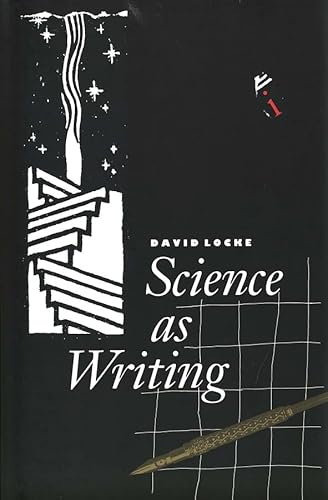
Science as Writing
Language: English
Published by Yale University Press, new Haven and London, 1992
ISBN 10: 0300054521 ISBN 13: 9780300054521
First Edition
Hardcover. Condition: New. Dust Jacket Condition: As New. 1st Edition. First printing. Gilt letterting on red covers in a black dust jacket. 8vo, 247pp.
-
Science as Writing
Language: English
Published by Yale University Press, 1992
ISBN 10: 0300054521 ISBN 13: 9780300054521
Seller: Ria Christie Collections, Uxbridge, United Kingdom
Seller rating 5 out of 5 stars

£ 56.16
£ 11.98 shipping
Ships from United Kingdom to U.S.A.Quantity: Over 20 available
Add to basketCondition: New. In.
-
Science as Writing
Language: English
Published by Yale University Press, 1992
ISBN 10: 0300054521 ISBN 13: 9780300054521
Seller: Kennys Bookshop and Art Galleries Ltd., Galway, GY, Ireland
Seller rating 5 out of 5 stars
Condition: New. It has been assumed that a gulf existed between science and the humanities and that the writings of scientists had no literary features. Locke argues that scientific language can be imaginative and expressive and shows how modes of literary criticism can be keys to the reading of scientific texts. Editor(s): Hitchcock, William I. Num Pages: 250 pages, black & white illustrations. BIC Classification: CBW; DSB; P. Category: (P) Professional & Vocational; (UP) Postgraduate, Research & Scholarly; (UU) Undergraduate. Dimension: 234 x 156 x 17. Weight in Grams: 564. . 1992. Hardback. . . . .
-
Science as Writing (Hardcover)
Language: English
Published by Yale University Press, New Haven, 1992
ISBN 10: 0300054521 ISBN 13: 9780300054521
Hardcover. Condition: new. Hardcover. For many years it has been assumed that a great gulf exists between science and the humanities, that the writings of science are simply the record of things scientists do and find and are devoid of literary features. Recently this assumption has been challenged by those who regard science and literature as companion endeavors, working side by side to describe, in their respective ways, the world of human experience. Now David Locke, a professor of literature who has also been a scientist, joins the debate, arguing that scientific language can be highly imaginative, expressive, and self-conscious and demonstrating for the first time how the major modes of literary criticism can be keys to the reading of scientific texts.Locke takes up in sequence six critical perspectives on reading. These view literary texts as: essentially a representation of the real world; an expression of its author's thoughts and feelings; an activator of response from its readers; a work of art, interesting in its purely formal properties; an artifact situated in a social milieu; or an instrument that brings the world of phenomena into being. Locke applies these perspectives to the reading of a variety of scientific texts, from works by Galileo and Darwin to writings in contemporary molecular biology and theoretical physics. Locke suggests that attention to the literary qualities of scientific discourse will aid in further opening up the literary canon and widening the practice of literary criticism, even as it sharpens science's growing interest in, and understanding of, its own mode of operation. It has been assumed that a gulf existed between science and the humanities and that the writings of scientists had no literary features. Locke argues that scientific language can be imaginative and expressive and shows how modes of literary criticism can be keys to the reading of scientific texts. Shipping may be from multiple locations in the US or from the UK, depending on stock availability.
-
Science as Writing
Language: English
Published by Yale University Press, 1992
ISBN 10: 0300054521 ISBN 13: 9780300054521
Condition: New. It has been assumed that a gulf existed between science and the humanities and that the writings of scientists had no literary features. Locke argues that scientific language can be imaginative and expressive and shows how modes of literary criticism can be keys to the reading of scientific texts. Editor(s): Hitchcock, William I. Num Pages: 250 pages, black & white illustrations. BIC Classification: CBW; DSB; P. Category: (P) Professional & Vocational; (UP) Postgraduate, Research & Scholarly; (UU) Undergraduate. Dimension: 234 x 156 x 17. Weight in Grams: 564. . 1992. Hardback. . . . . Books ship from the US and Ireland.
-

Condition: New. It has been assumed that a gulf existed between science and the humanities and that the writings of scientists had no literary features. Locke argues that scientific language can be imaginative and expressive and shows how modes of literary criticism can be.
-

Science as Writing
Language: English
Published by Yale University Press Okt 1992, 1992
ISBN 10: 0300054521 ISBN 13: 9780300054521
Buch. Condition: Neu. Neuware - For many years it has been assumed that a great gulf exists between science and the humanities, that the writings of science are simply the record of things scientists do and find and are devoid of literary features. Recently this assumption has been challenged by those who regard science and literature as companion endeavors, working side by side to describe, in their respective ways, the world of human experience. Now David Locke, a professor of literature who has also been a scientist, joins the debate, arguing that scientific language can be highly imaginative, expressive, and self-conscious and demonstrating for the first time how the major modes of literary criticism can be keys to the reading of scientific texts. Locke takes up in sequence six critical perspectives on reading. These view literary texts as: essentially representation of the real world; an expression of its author's thoughts and feelings; an activator of response from its readers; a work of art, interesting in its purely formal properties; an artifact situated in a social milieu; or an instrument that brings the world of phenomena into being. Locke applies these perspectives to the reading of a variety of scientific texts, from works by Galileo and Darwin to writings in contemporary molecular biology and theoretical physics. Locke suggests that attention to the literary qualities of scientific discourse will aid in further opening up the literary canon and widening the practice of literary criticism, even as it sharpens science's growing interest in, and understanding of, its own mode of operation.
-
Science as Writing
Language: English
Published by Yale University Press, 1992
ISBN 10: 0300054521 ISBN 13: 9780300054521
HRD. Condition: New. New Book. Shipped from UK. THIS BOOK IS PRINTED ON DEMAND. Established seller since 2000.
-
Science as Writing
Language: English
Published by Yale University Press, 1992
ISBN 10: 0300054521 ISBN 13: 9780300054521
Seller: PBShop.store UK, Fairford, GLOS, United Kingdom
Seller rating 5 out of 5 stars
£ 56.57
£ 5.02 shipping
Ships from United Kingdom to U.S.A.Quantity: Over 20 available
Add to basketHRD. Condition: New. New Book. Delivered from our UK warehouse in 4 to 14 business days. THIS BOOK IS PRINTED ON DEMAND. Established seller since 2000.
-
Science as Writing
Language: English
Published by Yale University Press, 1992
ISBN 10: 0300054521 ISBN 13: 9780300054521
Seller: THE SAINT BOOKSTORE, Southport, United Kingdom
Seller rating 5 out of 5 stars
£ 65.61
£ 17.23 shipping
Ships from United Kingdom to U.S.A.Quantity: Over 20 available
Add to basketHardback. Condition: New. This item is printed on demand. New copy - Usually dispatched within 5-9 working days.
-
Science as Writing (Hardcover)
Language: English
Published by Yale University Press, New Haven, 1992
ISBN 10: 0300054521 ISBN 13: 9780300054521
Hardcover. Condition: new. Hardcover. For many years it has been assumed that a great gulf exists between science and the humanities, that the writings of science are simply the record of things scientists do and find and are devoid of literary features. Recently this assumption has been challenged by those who regard science and literature as companion endeavors, working side by side to describe, in their respective ways, the world of human experience. Now David Locke, a professor of literature who has also been a scientist, joins the debate, arguing that scientific language can be highly imaginative, expressive, and self-conscious and demonstrating for the first time how the major modes of literary criticism can be keys to the reading of scientific texts.Locke takes up in sequence six critical perspectives on reading. These view literary texts as: essentially a representation of the real world; an expression of its author's thoughts and feelings; an activator of response from its readers; a work of art, interesting in its purely formal properties; an artifact situated in a social milieu; or an instrument that brings the world of phenomena into being. Locke applies these perspectives to the reading of a variety of scientific texts, from works by Galileo and Darwin to writings in contemporary molecular biology and theoretical physics. Locke suggests that attention to the literary qualities of scientific discourse will aid in further opening up the literary canon and widening the practice of literary criticism, even as it sharpens science's growing interest in, and understanding of, its own mode of operation. It has been assumed that a gulf existed between science and the humanities and that the writings of scientists had no literary features. Locke argues that scientific language can be imaginative and expressive and shows how modes of literary criticism can be keys to the reading of scientific texts. This item is printed on demand. Shipping may be from our UK warehouse or from our Australian or US warehouses, depending on stock availability.

