

Order Total (1 Item Items):
Shipping Destination:

Thewissen Stefan (4 results)
Skip to main search results
Search filters
Product Type
- All Product Types
- Books (4)
- Magazines & Periodicals (No further results match this refinement)
- Comics (No further results match this refinement)
- Sheet Music (No further results match this refinement)
- Art, Prints & Posters (No further results match this refinement)
- Photographs (No further results match this refinement)
- Maps (No further results match this refinement)
- Manuscripts & Paper Collectibles (No further results match this refinement)
Condition Learn more
- New (3)
- As New, Fine or Near Fine (No further results match this refinement)
- Very Good or Good (1)
- Fair or Poor (No further results match this refinement)
- As Described (No further results match this refinement)
Binding
- All Bindings
- Hardcover (No further results match this refinement)
- Softcover (4)
Collectible Attributes
- First Edition (No further results match this refinement)
- Signed (No further results match this refinement)
- Dust Jacket (No further results match this refinement)
- Seller-Supplied Images (3)
- Not Print on Demand (4)
Language (2)
Free Shipping
Seller Location
Seller Rating
-

Fair Progress?
Language: English
Published by World Bank Publications, US, 2018
ISBN 10: 1464812101 ISBN 13: 9781464812101
Paperback. Condition: New. Fair Progress? Economic Mobility across Generations will look at an issue that has gotten much attention in the developed world, but with, for the first time, new data and analysis covering most of the developing world.The analysis looks at whether those born in poverty or in prosperity are destined to remain in the same economic circumstances into which they were born and looks back over a half a century at whether children's lives are better or worse than their parents' in different parts of the world. It suggests local, national, and global actions and policies that can help break the cycle of poverty, paving the way for the next generation to realize their potential and improve their lives.
-
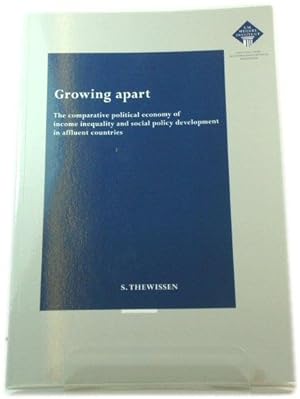
Growing Apart: The Comparative Political Economy of Income Inequality and Social Policy Development in Affluent Countries
Published by instituut voor rechtswetenschappelijk Onderzoek, 2015
ISBN 10: 946233031X ISBN 13: 9789462330313
Seller: PsychoBabel & Skoob Books, Didcot, United Kingdom
Seller rating 5 out of 5 stars

Paperback. Condition: Very Good. Paperback. Volume 248 of Meijers series. Very slightly warped item with the lightest of shelfwear at one or two points. One or two small marks on page block. Very good condition with clean and sound pages. CM. Used.
-

Fair Progress?: Economic Mobility across Generations around the World (Equity and development)
Seller: Ria Christie Collections, Uxbridge, United Kingdom
Seller rating 5 out of 5 stars
£ 41.30
£ 11.98 shipping
Ships from United Kingdom to U.S.A.Quantity: Over 20 available
Add to basketCondition: New. In English.
-

Fair Progress?
Language: English
Published by World Bank Publications, US, 2018
ISBN 10: 1464812101 ISBN 13: 9781464812101
Paperback. Condition: New. Fair Progress? Economic Mobility across Generations will look at an issue that has gotten much attention in the developed world, but with, for the first time, new data and analysis covering most of the developing world.The analysis looks at whether those born in poverty or in prosperity are destined to remain in the same economic circumstances into which they were born and looks back over a half a century at whether children's lives are better or worse than their parents' in different parts of the world. It suggests local, national, and global actions and policies that can help break the cycle of poverty, paving the way for the next generation to realize their potential and improve their lives.
