Order Total (1 Item Items):
Shipping Destination:

Sidney Buchman (19 results)
Skip to main search results
Search filters
Product Type
- All Product Types
- Books (17)
- Magazines & Periodicals (No further results match this refinement)
- Comics (No further results match this refinement)
- Sheet Music (No further results match this refinement)
- Art, Prints & Posters (No further results match this refinement)
- Photographs (No further results match this refinement)
- Maps (No further results match this refinement)
- Manuscripts & Paper Collectibles (2)
Condition Learn more
- New (No further results match this refinement)
- As New, Fine or Near Fine (1)
- Very Good or Good (3)
- Fair or Poor (No further results match this refinement)
- As Described (15)
Binding
- All Bindings
- Hardcover (No further results match this refinement)
- Softcover (2)
Collectible Attributes
- First Edition (No further results match this refinement)
- Signed (No further results match this refinement)
- Dust Jacket (No further results match this refinement)
- Seller-Supplied Images (16)
- Not Print on Demand (19)
Language (2)
Free Shipping
- Free Shipping to U.S.A. (No further results match this refinement)
Seller Location
Seller Rating
-
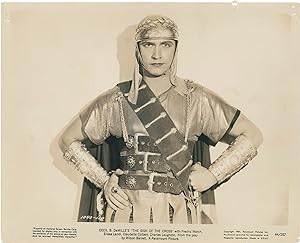
The Sign of the Cross (Three original photographs from the 1944 re-release of the 1932 film)
Published by Paramount Pictures, Los Angeles, 1944
Seller: Royal Books, Inc., ABAA, Baltimore, MD, U.S.A.
Seller rating 5 out of 5 stars

Three vintage studio still photographs from the 1944 re-release of the 1932 film. Based on the 1895 play by Wilson Barrett. After the emperor declares all Christians at fault for the Great Fire of Rome, a high-ranking military official frees two Christians from being shipped off, putting him in danger of persecution. Set in Ancient Rome, shot on location in Fresno, Palmdale, and Red Rock Canyon State Park in California. 10 x 8 inches. Very Good plus, with some creasing and pinholes at the corners. One photograph with a chip at the top right edge. McPadden, Heavy Metal Movies.
-
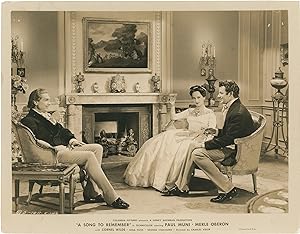
A Song to Remember (Original photograph from the 1945 film)
Published by Columbia Pictures, Culver City, CA, 1945
Seller: Royal Books, Inc., ABAA, Baltimore, MD, U.S.A.
Seller rating 5 out of 5 stars
Vintage studio still photograph from the 1945 film. A fictionalized account of Polish pianist Frederic Chopin. As a young child, Chopin is playing a piece by Mozart when he notices Polish people being taken prisoner by Russian authorities. Years later, he works in secret for Polish patriotism, including coming late to an important concert because of a secret meeting, then stops his performance when the Russian Governor of Poland enters, declaring that he does not play for Czarist butchers. He flees to Paris, where Franz Liszt recognizes his genius and George Sand takes him in. Nominated for six Academy Awards, including Best Actor. Set in Poland and Paris. 10 x 8 inches. Very Good plus, with pinholes and some creasing at the corners.
-
![Seller image for Academy Award-Winning Screenplay: 'Here Comes Mister Jordan' [Working title: Heaven Can Wait], Columbia No. 117 - Final Draft April 7, 1941 (+ draft revisions from April 28, 1941) for sale by Randall's Books](https://pictures.abebooks.com/inventory/md/md32077632790.jpg)
Academy Award-Winning Screenplay: 'Here Comes Mister Jordan' [Working title: Heaven Can Wait], Columbia No. 117 - Final Draft April 7, 1941 (+ draft revisions from April 28, 1941)
Language: English
Published by Columbia Pictures, 1941
Soft cover. Condition: Very Good. Columbia Pictures, Hollywood, 1941. Script by Sidney Buchman and Seton I. Miller. Please note: the screenwriters names are not present on this version of the script. The film was released as 'Here Comes Mr. Jordan', and garnered numerous Oscar nominations (and wins) at the 1941 Academy Awards, including Best Adapted Screenplay. The working title of Heaven Can Wait came from the fantasy stage play by Harry Segall on which it is based. When Warren Beatty re-made this movie in 1978 he used the play's original title. (Neither his movie nor this one has any connection to a 1943 20th Century Fox film with the same name). The first 21 pages of the script comprise the revisions of this draft, and are thus noted, and re-dated April 28, 1941 - and printed on yellow paper. The remainder of the script is printed on white paper. The finished film premiered at Radio City Music Hall on August 7, 1941. Very good condition generally, with a fragile front cover, unevenly faded, with tears and small repairs. Rear cover has a long chip at corner. Interior pages are clean and bright. Rare.
-

Script Format, reprint. Condition: Very Good. /SCREENPLAY BY SIDNEY BUCHMAN/ 1939 REVISED FINAL DRAFT /THE SCRIPT IS PRINTED ON THREE-HOLE PUNCHED PAPER AND BOUND WITH 2 BRASS BRADS/.
-
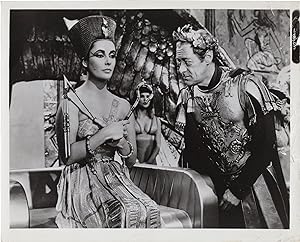
Cleopatra (Three photographs from the 1963 film)
Published by Twentieth Century-Fox, Los Angeles, 1963
Seller: Royal Books, Inc., ABAA, Baltimore, MD, U.S.A.
Seller rating 5 out of 5 stars
Collection of 3 vintage black-and-white still photographs (two studio stills, one reference still) from the 1963 film. This film featured Elizabeth Taylor and Richard Burton in their first pairing, beginning their tumultuous love-hate relationship. Based on the histories written by Plutarch, Suetonius, and Appian, and also based on the Carlo Maria Franzero book, and set in 48 B.C. in Egypt. Winner of several Academy Awards (Best Cinematography, Art Direction, Costume Design, Effects). Set in Egypt, shot on location in Spain, Italy, England, and the USA. 8 x 10 inches. Very Good plus, corner creases to all, studio stills toned, short closed tears, and a few tiny chips. The reference still has two larger tears at the right edge.
-
Script Format, reprint. Condition: As New. BASED ON THE ORIGINAL PLAY BY HARRY SEGAL /1941 REVISED DRAFT / I HAVE MORE TITLES, LET ME KNOW IF YOU ARE LOOKING FOR OTHER TITLES /THE SCRIPT IS PRINTED ON THREE-HOLE PUNCHED PAPER AND BOUND WITH 2 BRASS BRADS.
-
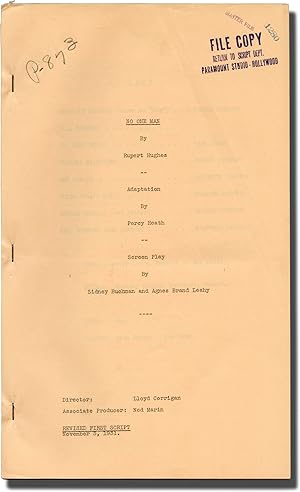
No One Man (Original screenplay for the 1932 film)
Published by Paramount Pictures, Hollywood, 1931
Seller: Royal Books, Inc., ABAA, Baltimore, MD, U.S.A.
Seller rating 5 out of 5 stars
Manuscript / Paper Collectible
Revised Final Script for the 1932 pre-Code film, an early starring role for Carole Lombard. Rubber stamped as a Paramount File Copy at the top right corner of the front wrapper. Penelope Newbold is a wealthy divorcee looking to remarry. She falls for her physician, Dr. Karl Bemis, but ends up marrying Bill Hanaway. Bill then has an affair with another woman. Tall peach side stapled self wrappers, noted as Third Buff Script on the front wrapper, dated October 6, 1931, with credits for writers Hughes, Heath, Buchman, and Leahy. 205 leaves on peach stock, mimeograph duplication, with annotations throughout.
-
Cleopatra (Original photograph from the 1963 film)
Published by N.p., N.p., 1963
Seller: Royal Books, Inc., ABAA, Baltimore, MD, U.S.A.
Seller rating 5 out of 5 stars
Vintage reference photograph from the 1963 film, showing Elizabeth Taylor as the titular pharaoh, taking a bath. Newspaper clipping with date stamp, annotations in manuscript pencil, and provenance label on the verso. Based on Carlo Maria Franzero's 1957 book "The Life and Times of Cleopatra." Twentieth Century-Fox's ambitious, bank-breaking venture, the most expensive production ever made at the time, and the first film to pair Taylor with Richard Burton, beginning their tumultuous love-hate relationship. Set in Egypt and Rome, and shot on location in Spain and Italy. 10 x 8 inches. Near Fine.
-
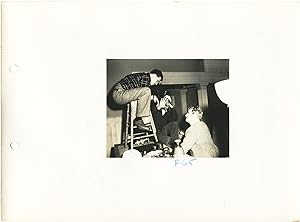
![Seller image for The Talk of the Town [Three's a Crowd] (Original photograph from the set of the 1942 film) for sale by Royal Books, Inc., ABAA](https://pictures.abebooks.com/inventory/md/md30825061453.jpg)
The Talk of the Town [Three's a Crowd] (Original photograph from the set of the 1942 film)
Published by Columbia Pictures, Culver City, CA, 1942
Seller: Royal Books, Inc., ABAA, Baltimore, MD, U.S.A.
Seller rating 5 out of 5 stars
Vintage reference photograph of a supine Cary Grant surrounded by Jean Arthur, director George Stevens, and crew from the set of the 1942 film. Mimeo snipe on verso, here under the working title "The Talk of the Town." Political activist Leopold Dilg (Cary Grant) is framed when a lumber mill burns down and a man is killed. Escaping prison, he hides out in former schoolmate (and sweetheart), Nora Shelley's (Jean Arthur) house, currently being rented to the newly arrived law professor Michael Lightcap (Ronald Coleman). Nominated for seven Academy Awards including Best Picture, Best Screenplay, and Best Cinematography. Set in fictional Lochester, New England. 8 x 10 inches. Very Good plus. Byrge & Miller, The Screwball Comedy Films: A History and Filmography (1934-1942).
-
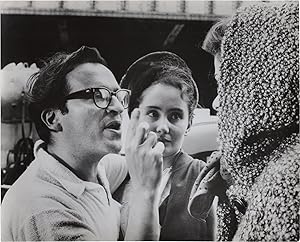
The Group (Original photograph of Sidney Lumet and Candice Bergen on the set of the 1966 film)
Published by N.p., N.p., 1966
Seller: Royal Books, Inc., ABAA, Baltimore, MD, U.S.A.
Seller rating 5 out of 5 stars
Vintage borderless reference photograph of director Sidney Lumet and actress Candice Bergen on the set of the 1966 film. Based on the 1963 novel. A satire following the lives of eight graduates of the fictional South Tower College, an all-women's university in Connecticut. Set and shot on location in Connecticut and New York. 10 x 8 inches. Near Fine.
-

From Hell to Heaven (Original pressbook for the 1933 film)
Published by Paramount Pictures, Hollywood, 1933
Seller: Royal Books, Inc., ABAA, Baltimore, MD, U.S.A.
Seller rating 5 out of 5 stars
Manuscript / Paper Collectible
Vintage pressbook for the 1933 pre-Code film. An attempt by Paramount to replicate the success of Metro-Goldwyn-Mayer's Academy Award-winning 1932 film "Grand Hotel," about the inhabitants of a resort hotel as they await the results of a horse race. 11 x 17 inches. 12 pages, unbound. Near Fine.
-
The King Steps Out (Five original photographs from the 1936 film)
Published by Columbia Pictures, Culver City, CA, 1936
Seller: Royal Books, Inc., ABAA, Baltimore, MD, U.S.A.
Seller rating 5 out of 5 stars
Five vintage reference photographs from the 1936 film. All five with studio stamps crediting photographer Ray Jones on the verso, and three with mimeo snipes on the same. From the archive of noted Hollywood still photographer Ray Jones. Born in Wisconsin on January 1, 1901, Jones worked for Paramount Pictures in the early 1930s, and went on to be the head of the still photography department at Universal Pictures in 1935, where he worked well into the 1950s. A dramatization of the early years of Empress Elisabeth of Austria, known as "Sissi," and her courtship and marriage to Franz Joseph I of Austria, following his previous engagement to her older sister Duchess Helene in Bavaria. 8 x 10 inches. Near Fine.
-

Cleopatra (Original photograph of Joseph L. Mankiewicz on the set of the 1963 film)
Published by N.p., N.p., 1963
Seller: Royal Books, Inc., ABAA, Baltimore, MD, U.S.A.
Seller rating 5 out of 5 stars
Vintage reference photograph from the 1963 film, showing director Joseph L. Mankiewicz sitting on the set, surrounded by crew members. Based on Carlo Maria Franzero's 1957 book "The Life and Times of Cleopatra." Twentieth Century-Fox's ambitious, bank-breaking venture, the most expensive production ever made at the time, and the first film to pair Elizabeth Taylor with Richard Burton, beginning their tumultuous love-hate relationship. Set in Egypt and Rome, and shot on location in Spain and Italy. 10 x 8 inches. Very Good plus, lightly creased at the corners.
-
She Married Her Boss (Collection of ten original photographs from the 1935 film)
Published by Columbia Pictures, Culver City, CA, 1935
Seller: Royal Books, Inc., ABAA, Baltimore, MD, U.S.A.
Seller rating 5 out of 5 stars
Collection of ten vintage photographs from the 1935 film, including one keybook photograph and six double-weight photographs, including one taken on the set. All photographs with studio stamps crediting photograph Ray Jones on the verso, and nine with mimeo snipes on the same. The collection includes one keybook photograph of Katherine Alexander, one double-weight photograph of Claudette Colbert and Michael Bartlett on the set, four publicity photographs of Edith Fellows (two being double-weight photographs), and four reference photographs (three being double-weight photographs). From the archive of noted Hollywood still photographer Ray Jones. Born in Wisconsin on January 1, 1901, Jones worked for Paramount Pictures in the early 1930s, and went on to be the head of the still photography department at Universal Pictures in 1935, where he worked well into the 1950s. Claudette Colbert stars as an extraordinarily competent secretary who marries her bossonly to discover taking care of him at home proves much more challenging than taking care of the office. 8 x 10 inches to 8 x 11 inches. Near Fine overall. Byrge and Miller. The Screwball Comedy Films: A History and Filmography 1934-1942.
-
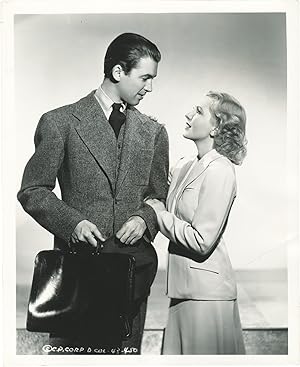
Mr. Smith Goes to Washington (Original photograph from the 1939 film)
Published by Columbia Pictures, Culver City, CA, 1939
Seller: Royal Books, Inc., ABAA, Baltimore, MD, U.S.A.
Seller rating 5 out of 5 stars
Vintage double weight photograph of James Stewart and Jean Arthur from the 1939 film. Mimeo snipe, stamp crediting photographer Al Schafer, and very faint "Approved" stamp on the verso. Controversial among the political American establishment at the time for its (accurate, then and now) depiction of the Senate as a group of dysfunctional, shallow egotists, the film was also banned in fascist countries Germany, Italy, Spain, and the USSR, and, later, Nazi occupied France. Set in and shot on location in Washington DC. 8 x 10 inches. Near Fine, with faint diagonal crease to lower right.
-
Mr. Smith Goes to Washington.
Published by [No place: no publisher], 9 November 1938, 1938
Seller: Peter Harrington. ABA/ ILAB., London, United Kingdom
Association Member: ABA ILAB PBFA
Seller rating 5 out of 5 stars
First draft of the screenplay, here titled The Gentleman from Montana. The script is dated 9 November 1938 on the title page and 23 January 1939 on the front wrapper. Buchman has signed a statement of authorship on the title page, noting that he was contracted on 1 March 1937. This statement is dated 7 February 1939. There are significant differences from the filmed version. A note on the title page details the distribution of 11 copies. It comprises 1. [Harry] Cohn of Columbia Pictures, 2. left blank, 3. Mendel Silverberg, the attorney for the Producers Association, 4. Frank Capra, 5. Samuel J. Briskin, film producer, 6. "?", 7. Sidney Buchman, 8. [Jack] Cohn of Columbia Pictures, 9. "Hays", comprising the Motion Picture Producers and Distributors of America, 10. "Files" (presumably comprising the present copy), and 11. "Hays". In January 1938 two studios submitted Lewis R. Foster's original story to the censors. Objections were raised to "the generally unflattering portrayal of our system of Government, which might well lead to such a picture being considered. as a covert attack on the Democratic form of government" (Breen). A later submission appears to have addressed these issues, for the censor reported "It is a grand yarn that will do a great deal of good for all those who see it and, in my judgment, it is particularly fortunate that this kind of story is to be made at this time. Out of all Senator Jeff's difficulties there has been evolved the importance of a democracy and there is splendidly emphasized the rich and glorious heritage which is ours and which comes when you have a government 'of the people, by the people, and for the people'" (Breen). The film was directed by Frank Capra and in production from 3 April to 7 July 1939. Capra noted that in pre-production "we had to digest the piles of Washington notes and incorporate them into a script that had a theme, made sense, told a believable story and. was entertaining. And here Sidney Buchman and I were alone, especially Buchman. Here not even an army of technical advisers can be of use. Only God can help you, and sometimes He has to. For script-writing is a lonely job of inventing and creating something that did not exist before - two hundred pages of dramatically constructed, imaginative, entertaining scenes that will justify spending two million dollars to film them. And do these scenes come out of a spigot, like tap water? No, indeed. They are created. By a talent. Yes, an extraordinary talent. But also they are created out of writing and rewriting, out of sweating and head-banging, out of the endurance and stamina that mark a decathlon champion. And Sidney Buchman came through with a gold medal performance in the writing of Mr Smith" (Capra, pp. 260-61). The film premiered in Washington D.C. on 17 October 1939 and caused controversy. Capra maintained that some senators walked out, and there were fears that the film would damage the political reputation of America. The film was nominated for 11 Academy Awards but won only one (for best original story). This was, however, in the year that Gone With the Wind dominated the Awards. Capra would state that "the significance [of Mr. Smith Goes to Washington] was the unprecedented number. of editorials and column which blasted or praised the film as a service or disservice to our American ideals of democracy" (Capra, p. 287). Joseph I. Breen, quoted in American Film Institute Catalog of Feature Films; Frank Capra, The Name Above the Title, 1971. Folio. Carbon typescript, 349 leaves (278 x 215 mm) on onionskin paper, printed one side only, p.19 notes date of 18 November 1938, p. 103 omitted, "187" for p. 178, pp. 189, 213, 214 and 215 duplicated (present in two different states). Original grey wrappers, front wrapper lettered in black with additional ink stamps ("Central Files. Vault Copy", etc.), two split pins. Housed in a custom blue cloth folding box. Wrappers worn with some loss and adhesive tape repairs, front wrapper and title page detached, tears and minor loss with adhesive tape repairs to title page, some creases to leaves: a good copy.
-
![Seller image for The Talk of the Town [Three's a Crowd] (Original photograph from the set of the 1942 film) for sale by Royal Books, Inc., ABAA](https://pictures.abebooks.com/inventory/md/md31598147156.jpg)
The Talk of the Town [Three's a Crowd] (Original photograph from the set of the 1942 film)
Published by N.p., N.p., 1942
Seller: Royal Books, Inc., ABAA, Baltimore, MD, U.S.A.
Seller rating 5 out of 5 stars
Vintage reference photograph of actors Cary Grant, Ronald Colman, and Jean Arthur with director George Stevens on the set of the 1942 film. Provenance label affixed to the verso. A political activist is framed when a lumber mill burns down and a man is killed. Escaping prison, he hides out in the house of a former schoolmate (and sweetheart(, currently being rented to a law professor. A romantic triangle soon develops. Nominated for seven Academy Awards, including Best Picture and Best Screenplay. Set in the fictional town of Lochester, New England. 8 x 10 inches. Near Fine, lightly creased at the bottom left edge. Byrge & Miller, The Screwball Comedy Films: A History and Filmography (1934-1942).
-
The Talk of the Town (Seven original keybook photographs from the 1942 film)
Published by Columbia Pictures, Culver City, CA, 1942
Seller: Royal Books, Inc., ABAA, Baltimore, MD, U.S.A.
Seller rating 5 out of 5 stars
Seven vintage keybook photographs from the 1942 film. Mimeo snipe and "Approved Advertising Advisory Council Apr 21 1942 Hollywood" stamp on verso of each. Political activist Leopold Dilg (Cary Grant) is framed when a lumber mill burns down and a man is killed. Escaping prison, he hides out in former schoolmate (and sweetheart), Nora Shelley's (Jean Arthur) house, currently being rented to the newly arrived law professor Michael Lightcap (Ronald Coleman). Nominated for seven Academy Awards including Best Picture, Best Screenplay, and Best Cinematography. Set in fictional Lochester, New England. 8 x 11 inches, images 4.5 x 3.5 inches. Near Fine. Byrge & Miller, The Screwball Comedy Films: A History and Filmography (1934-1942).
-
Unknown Binding. Condition: Good. Ex-Library Book with usual markings. Clean copy, sound binding. Quick dispatch from UK seller.