Order Total (1 Item Items):
Shipping Destination:

Rasch Bodo (59 results)
Skip to main search results
Search filters
Product Type
- All Product Types
- Books (58)
- Magazines & Periodicals (1)
- Comics (No further results match this refinement)
- Sheet Music (No further results match this refinement)
- Art, Prints & Posters (No further results match this refinement)
- Photographs (No further results match this refinement)
- Maps (No further results match this refinement)
- Manuscripts & Paper Collectibles (No further results match this refinement)
Condition Learn more
- New (19)
- As New, Fine or Near Fine (10)
- Very Good or Good (7)
- Fair or Poor (No further results match this refinement)
- As Described (23)
Binding
Collectible Attributes
Language (3)
Free Shipping
Seller Location
Seller Rating
-

Finding Form : Towards an Architecture of the Minimal
Language: English
Published by Edition Axel Menges GmbH, 1996
ISBN 10: 3930698668 ISBN 13: 9783930698660
Seller: Better World Books Ltd, Dunfermline, United Kingdom
Seller rating 5 out of 5 stars

Condition: Good. Former library copy. Pages intact with minimal writing/highlighting. The binding may be loose and creased. Dust jackets/supplements are not included. Includes library markings. Stock photo provided. Product includes identifying sticker. Better World Books: Buy Books. Do Good.
-
Finding Form : Towards an Architecture of the Minimal
Language: English
Published by Edition Axel Menges GmbH, 1996
ISBN 10: 3930698668 ISBN 13: 9783930698660
Seller: Better World Books Ltd, Dunfermline, United Kingdom
Seller rating 5 out of 5 stars
Condition: Very Good. Former library copy. Pages intact with possible writing/highlighting. Binding strong with minor wear. Dust jackets/supplements may not be included. Includes library markings. Stock photo provided. Product includes identifying sticker. Better World Books: Buy Books. Do Good.
-
Condition: New.
-

-

Condition: As New. Unread book in perfect condition.
-
Condition: As New. Unread copy in mint condition.
-
Hardcover. Condition: Fine. Dust Jacket Condition: Fine. 3rd Edition. This is a fine hardcover 3rd edition copy in a fine DJ, black spine.
-

Finding Form
Language: English
Published by Edition Axel Menges, DE, 1996
ISBN 10: 3930698668 ISBN 13: 9783930698660
Hardback. Condition: New. 2019 Edition "Primeval architecture is an architecture of necessity. Nothing is there to excess, no matter whether stone, clay, reeds or wood, animal skins or hair are used. It is minimal. It can be very beautiful even amidst poverty and is good in the ethical sense. Good architecture seems to be more important than beautiful architecture. Beautiful architecture is not necessarily good. Only buildings that are at the same time ethically good and aesthetically beautiful are worth preserving. We have too many buildings that have become useless and yet we still need new buildings, from pole to pole, in the cold and in the heat. Mans present areas of settlement are the new ecological system in which technology is indispensable, even in hot and cold areas. . Our age requires buildings that are lighter, more energy-saving, more mobile and more adaptable, in brief more natural, without disregarding the need for safety and security. This logically leads to the further development of light constructions, to the building of tents, shells, awnings and air-supported membranes. It also leads to a new mobility and changeability. A new understanding of nature is forming under one aspect of high performance form (also called classical form), which unites aesthetic and ethical viewpoints. Tomorrows architecture will again be minimal architecture, an architecture of the self-education and self-optimization processes suggested by human beings." (Frei Otto and Bodo Rasch in their foreword of this book) In 1992 the Bavarian branch of the Deutscher Werkbund awarded its first prize to Frei Otto, undoubtedly the most successful and many-sided protagonist of modern light construction, and with it a request to nominate a meritorious person to whom the prize could be passed on, and to design a joint exhibition with that person. Frei Otto chose his pupil Bodo Rasch, who had realized Ottos theories particularly in other cultures. The publication produced on this occasion provides information about scientific fundamentals and the working methods the two architects developed from these, which are characterized by "finding" not by "making". This is supposed to produce buildings that could not be more beautiful and can scarcely be improved in terms of materials and loadbearing capacity.
-

Finding Form
Language: English
Published by Edition Axel Menges, DE, 1996
ISBN 10: 3930698668 ISBN 13: 9783930698660
Seller: Rarewaves.com USA, London, LONDO, United Kingdom
Seller rating 5 out of 5 stars
Hardback. Condition: New. 2019 Edition "Primeval architecture is an architecture of necessity. Nothing is there to excess, no matter whether stone, clay, reeds or wood, animal skins or hair are used. It is minimal. It can be very beautiful even amidst poverty and is good in the ethical sense. Good architecture seems to be more important than beautiful architecture. Beautiful architecture is not necessarily good. Only buildings that are at the same time ethically good and aesthetically beautiful are worth preserving. We have too many buildings that have become useless and yet we still need new buildings, from pole to pole, in the cold and in the heat. Mans present areas of settlement are the new ecological system in which technology is indispensable, even in hot and cold areas. . Our age requires buildings that are lighter, more energy-saving, more mobile and more adaptable, in brief more natural, without disregarding the need for safety and security. This logically leads to the further development of light constructions, to the building of tents, shells, awnings and air-supported membranes. It also leads to a new mobility and changeability. A new understanding of nature is forming under one aspect of high performance form (also called classical form), which unites aesthetic and ethical viewpoints. Tomorrows architecture will again be minimal architecture, an architecture of the self-education and self-optimization processes suggested by human beings." (Frei Otto and Bodo Rasch in their foreword of this book) In 1992 the Bavarian branch of the Deutscher Werkbund awarded its first prize to Frei Otto, undoubtedly the most successful and many-sided protagonist of modern light construction, and with it a request to nominate a meritorious person to whom the prize could be passed on, and to design a joint exhibition with that person. Frei Otto chose his pupil Bodo Rasch, who had realized Ottos theories particularly in other cultures. The publication produced on this occasion provides information about scientific fundamentals and the working methods the two architects developed from these, which are characterized by "finding" not by "making". This is supposed to produce buildings that could not be more beautiful and can scarcely be improved in terms of materials and loadbearing capacity.
-

Kreuzverhör zu den fünf Kritiken. Zirkel 8.
Published by Stuttgart, Zirkel-Verlag,, 1979
Seller: Antiquariat Kunsthaus-Adlerstrasse, Stuttgart, Germany
Seller rating 5 out of 5 stars
Orig.-Karton. 62 S. mit Abb. Einb. etw. lichtverf. u. fl. - Gutes Exemplar. Sprache: Deutsch.
-
Finding Form: Towards an Architecture of the Minimal
Language: English
Published by Edition Axel Menges Publishing, 1996
ISBN 10: 3930698668 ISBN 13: 9783930698660
Condition: Very Good. Very Good in a Good dust jacket; Hardcover; 2001 printing; Dust jacket is moderately shelfworn and edgeworn with one edge-scuff, but is overall good and intact, and has not been price-clipped (Now fitted with a new, Brodart jacket protector); Light wear to the boards; Unblemished textblock edges; Small sticker to the last endpaper, otherwise the endpapers and all text pages are clean and unmarked; The binding is excellent with a straight spine; This book will be shipped in a sturdy cardboard box with foam padding; Medium-Large Format (Quatro, 9.75" - 10.75" tall); 2.4 lbs; Black dust jacket with title in white lettering; 1996, Edition Axel Menges Publishing; 240 pages; "Finding Form: Towards an Architecture of the Minimal," by Frei Otto & Bodo Rasch.
-

Condition: As New. Unread copy in mint condition.
-

Hardcover. First edition, thus, 1996. Near Fine hardcover with a stiff clear plastic front cover and linen-bound rear board and spine with only light scratching to the plastic, otherwise fine. BOOKS SHIP THE NEXT BUSINESS DAY, WRAPPED IN PADDING, IN A BOX. A facsimile reprint of a 1930 design journal which became influential in the field of commercial art and design. Twenty-five revolutionary designers were asked by the editors to contribute work and a statement, among them Lazlo Moholy-Nagy, El Lissitzky, Kurt Schwitters, Jan Tschichold, John Heartfield, Werner Graff, Hans Richter, Karl Teige, and Piet Zwart. Edited by Heinz Rasch & Bodo Rasch. 111 pages; b&w and 2-color illustrations throughout; 8.5 x 10.25 inches. Text in German.
-
Condition: New. Brand New.
-
Fünf Kritiken. städtebau. bilanz der erkenntnisse und zukunft.
Published by zirkel 7. Zirkel-Verlag Stuttgart. 1971. 118 Seiten. OKarton. 1976., 1976
Seller: Architektur-Antiquariat Petra Bewer, Stuttgart, Germany
Seller rating 4 out of 5 stars

-
Gefesselter Blick: 25 Monografien und Beiträge über neue Werbegestaltung
Language: German
Published by Lars Müller Publishers, 1999
ISBN 10: 3907044029 ISBN 13: 9783907044025
Hardcover. Condition: As New. Leichte Abnutzungen.
-
Grossrelais. Typenentwicklung für die städtebauliche Optimierung von Verkehrsknotenpunkten. Demonstriert an Hand von vier Projekten im Raum Stutgart.
Published by Stuttgart, "Zirkel" 6, 1970. Hrsg. vom Atelier Bodo Rasch. 21x21 cm. 56 Seiten mit Plänen, Zeichnungen und Schnitten. OKarton, etwas gebräunt. 1970., 1970
Seller: Architektur-Antiquariat Petra Bewer, Stuttgart, Germany
Seller rating 4 out of 5 stars
Inhalt: Überregionales Großstadtwachstum / Stuttgart und seine Entwicklungsachsen / Park + Ride System in der Region Stuttgart / Untersuchte Bebauungsstrukturen / Konstruktionssysteme / Großrelais-Projekte. - Die Stadtbeispiele: Leinfelden, Stuttgart-Vaihingen, Stuttgart-Westbahnhof, Ludwigsburg.
-

Finding Form
Language: English
Published by Edition Axel Menges, DE, 1996
ISBN 10: 3930698668 ISBN 13: 9783930698660
Hardback. Condition: New. 2019 Edition "Primeval architecture is an architecture of necessity. Nothing is there to excess, no matter whether stone, clay, reeds or wood, animal skins or hair are used. It is minimal. It can be very beautiful even amidst poverty and is good in the ethical sense. Good architecture seems to be more important than beautiful architecture. Beautiful architecture is not necessarily good. Only buildings that are at the same time ethically good and aesthetically beautiful are worth preserving. We have too many buildings that have become useless and yet we still need new buildings, from pole to pole, in the cold and in the heat. Mans present areas of settlement are the new ecological system in which technology is indispensable, even in hot and cold areas. . Our age requires buildings that are lighter, more energy-saving, more mobile and more adaptable, in brief more natural, without disregarding the need for safety and security. This logically leads to the further development of light constructions, to the building of tents, shells, awnings and air-supported membranes. It also leads to a new mobility and changeability. A new understanding of nature is forming under one aspect of high performance form (also called classical form), which unites aesthetic and ethical viewpoints. Tomorrows architecture will again be minimal architecture, an architecture of the self-education and self-optimization processes suggested by human beings." (Frei Otto and Bodo Rasch in their foreword of this book) In 1992 the Bavarian branch of the Deutscher Werkbund awarded its first prize to Frei Otto, undoubtedly the most successful and many-sided protagonist of modern light construction, and with it a request to nominate a meritorious person to whom the prize could be passed on, and to design a joint exhibition with that person. Frei Otto chose his pupil Bodo Rasch, who had realized Ottos theories particularly in other cultures. The publication produced on this occasion provides information about scientific fundamentals and the working methods the two architects developed from these, which are characterized by "finding" not by "making". This is supposed to produce buildings that could not be more beautiful and can scarcely be improved in terms of materials and loadbearing capacity.
-
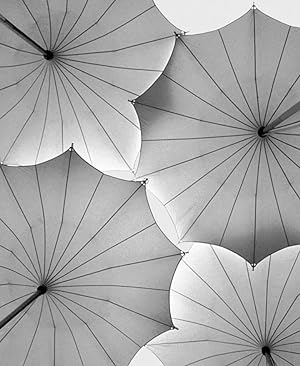
Condition: New. Primeval architecture is an architecture of necessity.Nothing is there to excess, no matter whetherstone, clay, reeds or wood, animal skins orhair are used. It is minimal. It can be very beautifuleven amidst poverty and is good in t.
-
hardcover. Condition: New. In shrink wrap. Looks like an interesting title!
-
Hardcover. Condition: Brand New. 240 pages. 10.00x9.00x0.75 inches. In Stock.
-

Condition: New. Frei Paul Otto, geboren 1925, war ein deutscher Architekt. Er entwarf das legendaere Dach des Muenchner Olympiastadions. Posthum wurde er mit dem Pritzker Preis geehrt. Frei Otto verstarb im Maerz 2015. Die Urarchitektur ist eine Architektur der Notwendigk.
-
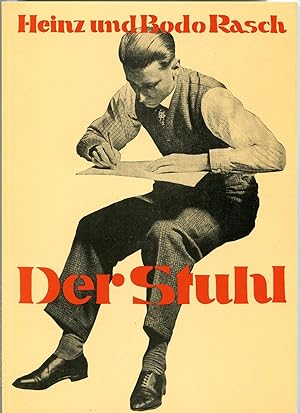
Der Stuhl
Language: English
Published by Vitra Design Museum, Weil am Rhein, 1992
ISBN 10: 3980253996 ISBN 13: 9783980253994
Soft cover. Condition: As New. Dust Jacket Condition: Very Good. 2nd Edition. Book as pamphlet as new. Paper case in very good condition; faint soiling; light to moderate rubbing top and bottom of case spine and points of light rubbing elsewhere along edges; faint damp stain top of spine reverse side; small soil spot top edge of interior fold. Facsimile edition. 57 numbered pages (book). Staple-bound Vitra Design Museum pamphlet supplement contains ten unnumbered pages. 9 5/8 x 6 7/8 in.
-

Buch. Condition: Neu. Frei Otto, Bodo Rasch: Finding Form | Towards an Architecture of the Minimal, Catalogue to the Exhibition Munich 1992 | Frei/Rasch, Bodo/Pfafferodt, Gerd et al Otto | Buch | 240 S. | Englisch | 2018 | Edition Axel Menges | EAN 9783930698660 | Verantwortliche Person für die EU: Edition Axel Menges, Esslingerstr. 24, 70736 Fellbach, axelmenges[at]aol[dot]com | Anbieter: preigu.
-

Finding Form
Language: English
Published by Edition Axel Menges, DE, 1996
ISBN 10: 3930698668 ISBN 13: 9783930698660
Hardback. Condition: New. 2019 Edition "Primeval architecture is an architecture of necessity. Nothing is there to excess, no matter whether stone, clay, reeds or wood, animal skins or hair are used. It is minimal. It can be very beautiful even amidst poverty and is good in the ethical sense. Good architecture seems to be more important than beautiful architecture. Beautiful architecture is not necessarily good. Only buildings that are at the same time ethically good and aesthetically beautiful are worth preserving. We have too many buildings that have become useless and yet we still need new buildings, from pole to pole, in the cold and in the heat. Mans present areas of settlement are the new ecological system in which technology is indispensable, even in hot and cold areas. . Our age requires buildings that are lighter, more energy-saving, more mobile and more adaptable, in brief more natural, without disregarding the need for safety and security. This logically leads to the further development of light constructions, to the building of tents, shells, awnings and air-supported membranes. It also leads to a new mobility and changeability. A new understanding of nature is forming under one aspect of high performance form (also called classical form), which unites aesthetic and ethical viewpoints. Tomorrows architecture will again be minimal architecture, an architecture of the self-education and self-optimization processes suggested by human beings." (Frei Otto and Bodo Rasch in their foreword of this book) In 1992 the Bavarian branch of the Deutscher Werkbund awarded its first prize to Frei Otto, undoubtedly the most successful and many-sided protagonist of modern light construction, and with it a request to nominate a meritorious person to whom the prize could be passed on, and to design a joint exhibition with that person. Frei Otto chose his pupil Bodo Rasch, who had realized Ottos theories particularly in other cultures. The publication produced on this occasion provides information about scientific fundamentals and the working methods the two architects developed from these, which are characterized by "finding" not by "making". This is supposed to produce buildings that could not be more beautiful and can scarcely be improved in terms of materials and loadbearing capacity.
-

Buch. Condition: Neu. Gestalt finden | Auf dem Weg zu einer Baukunst des Minimalen | Otto/Rasch, Bodo Frei | Buch | 240 S. | Deutsch | 1995 | Edition Axel Menges | EAN 9783930698653 | Verantwortliche Person für die EU: Edition Axel Menges, Esslingerstr. 24, 70736 Fellbach, axelmenges[at]aol[dot]com | Anbieter: preigu.
-
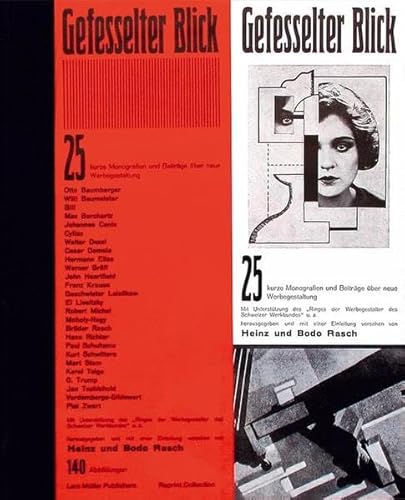
Hardcover. Condition: Near Fine. Interior like new. Pages clean and unmarked with no rips or creases. Text in German. Binding tight. Dark blue cloth on rear board and spine is clean and sturdy; front board is clear plastic, which is clean and sturdy with light scratching. Quick, secure shipping with free delivery confirmation from Los Angeles bookstore. Photos available upon request. International shipping may be extra due to weight.
-
Gefesselter Blick
Language: German
Published by Lars Müller Publishers, 1999
ISBN 10: 3907044029 ISBN 13: 9783907044025
hardcover. Condition: Good. Ex-library book with usual stamps and stickers. A bright and attractive copy with no internal markings. Open Books is a nonprofit social venture that provides literacy experiences for thousands of readers each year through inspiring programs and creative capitalization of books.
-

Gestalt finden. Auf dem Weg zu einer Baukunst des Minimalen. Katalog, wissenschaftliche Beiträge und Bibliographie bearbeitet von Sabine Schanz.
Language: English
Published by Edition Axel Menges, o. O.,, 1995
ISBN 10: 393069865X ISBN 13: 9783930698653
Seller: Antiquariat Christoph Wilde, Düsseldorf, Germany
Seller rating 5 out of 5 stars
239, (1) S. Orig.-Leinenband mit ill. Orig.-Umschlag. - Umschlag etwas gerändert und am Rücken leicht verfärbt. Ansonsten sehr gut erhaltenes Exemplar. Innen absolut sauber. - Publikation zur Ausstellung in der Villa Stuck, München, anläßlich der Preisverleihung des Deutschen Werkbundes Bayern 1992 an Frei Otto und Bodo Rasch.
-
Ideen. Projekte. Bauten. Werkbericht 1924 bis 1984. Ausstellung in der Architekturgalerie am Weißenhof. Zirkel 9.
Published by Stuttgart, Zirkel-Verlag,, 1984
Seller: Antiquariat Kunsthaus-Adlerstrasse, Stuttgart, Germany
Seller rating 5 out of 5 stars
ill. Orig.-Karton. 80 S. mit zahlr. Abb. Minimale Gebrauchsspuren. Gutes Exemplar. Sprache: Deutsch.