

Order Total (1 Item Items):
Shipping Destination:

Oleschuk Merin (20 results)
Skip to main search results
Search filters
Product Type
- All Product Types
- Books (20)
- Magazines & Periodicals (No further results match this refinement)
- Comics (No further results match this refinement)
- Sheet Music (No further results match this refinement)
- Art, Prints & Posters (No further results match this refinement)
- Photographs (No further results match this refinement)
- Maps (No further results match this refinement)
- Manuscripts & Paper Collectibles (No further results match this refinement)
Condition Learn more
- New (16)
- As New, Fine or Near Fine (4)
- Very Good or Good (No further results match this refinement)
- Fair or Poor (No further results match this refinement)
- As Described (No further results match this refinement)
Binding
Collectible Attributes
- First Edition (No further results match this refinement)
- Signed (No further results match this refinement)
- Dust Jacket (No further results match this refinement)
- Seller-Supplied Images (14)
- Not Print on Demand (18)
Language (1)
Free Shipping
Seller Location
Seller Rating
-

Happy Meat : The Sadness and Joy of a Paradoxical Idea
Language: English
Published by Stanford University Press, 2025
ISBN 10: 1503642836 ISBN 13: 9781503642836
Condition: New.
-

Happy Meat : The Sadness and Joy of a Paradoxical Idea
Language: English
Published by Stanford University Press, 2025
ISBN 10: 1503642836 ISBN 13: 9781503642836
Condition: As New. Unread book in perfect condition.
-

Happy Meat
Language: English
Published by Stanford University Press, US, 2025
ISBN 10: 1503642836 ISBN 13: 9781503642836
Seller: Rarewaves.com USA, London, LONDO, United Kingdom
Seller rating 5 out of 5 stars

Paperback. Condition: New. North Americans love eating meat. Despite the increased awareness of the meat industry's harms-violence against animals, health problems, and associations with environmental degradation-the rate of meat eating hasn't changed significantly in recent years. Instead, what has emerged is an uncomfortable paradox: a need to square one's values with the behaviors that contradict those values. Using a large-scale, multidimensional, and original dataset, Happy Meat explores the thoughts and emotions that underpin our moral decision-making in this meat paradox. Conscientious meat-eaters turn to the notion of "happy meat" to make sense of their behaviors by consuming meat they see as more healthy, ethical, and sustainable. Happy meat might be labeled grass fed, free-range, antibiotic free, naturally raised, or humane. The people who produce and consume it, together, make up the complex landscape of conscientious meat-eating in modern Western societies. The discourse of happy meat ultimately may not be a sufficient response to all the critiques of meat eating, rife as it is with contradictions. However, it offers a powerful case for understanding how moral boundaries and notions of the 'good eater' are constructed through negotiations of values, identity, and status.
-

Happy Meat: The Sadness and Joy of a Paradoxical Idea (Culture and Economic Life)
Language: English
Published by Stanford University Press, 2025
ISBN 10: 1503642836 ISBN 13: 9781503642836
paperback. Condition: New.
-

Happy Meat : The Sadness and Joy of a Paradoxical Idea
Language: English
Published by Stanford University Press, 2025
ISBN 10: 1503642836 ISBN 13: 9781503642836
Seller: GreatBookPricesUK, Woodford Green, United Kingdom
Seller rating 5 out of 5 stars
Condition: New.
-

Happy Meat : The Sadness and Joy of a Paradoxical Idea
Language: English
Published by Stanford University Press, 2025
ISBN 10: 1503642836 ISBN 13: 9781503642836
Seller: GreatBookPricesUK, Woodford Green, United Kingdom
Seller rating 5 out of 5 stars
Condition: As New. Unread book in perfect condition.
-
Paperback. Condition: Brand New. 312 pages. 9.00x6.00x9.00 inches. In Stock.
-

Happy Meat The Sadness and Joy of a Paradoxical Idea
Language: English
Published by Stanford University Press, 2025
ISBN 10: 1503642836 ISBN 13: 9781503642836
Condition: New.
-

Happy Meat
Language: English
Published by Stanford University Press, US, 2025
ISBN 10: 1503642836 ISBN 13: 9781503642836
Paperback. Condition: New. North Americans love eating meat. Despite the increased awareness of the meat industry's harms-violence against animals, health problems, and associations with environmental degradation-the rate of meat eating hasn't changed significantly in recent years. Instead, what has emerged is an uncomfortable paradox: a need to square one's values with the behaviors that contradict those values. Using a large-scale, multidimensional, and original dataset, Happy Meat explores the thoughts and emotions that underpin our moral decision-making in this meat paradox. Conscientious meat-eaters turn to the notion of "happy meat" to make sense of their behaviors by consuming meat they see as more healthy, ethical, and sustainable. Happy meat might be labeled grass fed, free-range, antibiotic free, naturally raised, or humane. The people who produce and consume it, together, make up the complex landscape of conscientious meat-eating in modern Western societies. The discourse of happy meat ultimately may not be a sufficient response to all the critiques of meat eating, rife as it is with contradictions. However, it offers a powerful case for understanding how moral boundaries and notions of the 'good eater' are constructed through negotiations of values, identity, and status.
-

Happy Meat : The Sadness and Joy of a Paradoxical Idea
Language: English
Published by Stanford University Press, 2025
ISBN 10: 1503638332 ISBN 13: 9781503638334
Seller: GreatBookPricesUK, Woodford Green, United Kingdom
Seller rating 5 out of 5 stars
£ 100.08
£ 15 shipping
Ships from United Kingdom to U.S.A.Quantity: Over 20 available
Add to basketCondition: New.
-

Happy Meat: The Sadness and Joy of a Paradoxical Idea (Culture and Economic Life)
Language: English
Published by Stanford University Press, 2025
ISBN 10: 1503638332 ISBN 13: 9781503638334
hardcover. Condition: New.
-
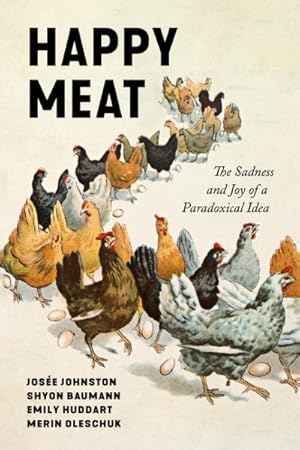
Happy Meat : The Sadness and Joy of a Paradoxical Idea
Language: English
Published by Stanford University Press, 2025
ISBN 10: 1503638332 ISBN 13: 9781503638334
Condition: New.
-

Happy Meat : The Sadness and Joy of a Paradoxical Idea
Language: English
Published by Stanford University Press, 2025
ISBN 10: 1503638332 ISBN 13: 9781503638334
Condition: As New. Unread book in perfect condition.
-

Happy Meat : The Sadness and Joy of a Paradoxical Idea
Language: English
Published by Stanford University Press, 2025
ISBN 10: 1503638332 ISBN 13: 9781503638334
Seller: GreatBookPricesUK, Woodford Green, United Kingdom
Seller rating 5 out of 5 stars
£ 112.88
£ 15 shipping
Ships from United Kingdom to U.S.A.Quantity: Over 20 available
Add to basketCondition: As New. Unread book in perfect condition.
-

Happy Meat
Language: English
Published by Stanford University Press, US, 2025
ISBN 10: 1503638332 ISBN 13: 9781503638334
Seller: Rarewaves.com USA, London, LONDO, United Kingdom
Seller rating 5 out of 5 stars
Hardback. Condition: New. North Americans love eating meat. Despite the increased awareness of the meat industry's harms-violence against animals, health problems, and associations with environmental degradation-the rate of meat eating hasn't changed significantly in recent years. Instead, what has emerged is an uncomfortable paradox: a need to square one's values with the behaviors that contradict those values. Using a large-scale, multidimensional, and original dataset, Happy Meat explores the thoughts and emotions that underpin our moral decision-making in this meat paradox. Conscientious meat-eaters turn to the notion of "happy meat" to make sense of their behaviors by consuming meat they see as more healthy, ethical, and sustainable. Happy meat might be labeled grass fed, free-range, antibiotic free, naturally raised, or humane. The people who produce and consume it, together, make up the complex landscape of conscientious meat-eating in modern Western societies. The discourse of happy meat ultimately may not be a sufficient response to all the critiques of meat eating, rife as it is with contradictions. However, it offers a powerful case for understanding how moral boundaries and notions of the 'good eater' are constructed through negotiations of values, identity, and status.
-

Happy Meat The Sadness and Joy of a Paradoxical Idea
Language: English
Published by Stanford University Press, 2025
ISBN 10: 1503638332 ISBN 13: 9781503638334
Condition: New.
-
Hardcover. Condition: Brand New. 312 pages. 9.00x6.00x9.24 inches. In Stock.
-

Happy Meat
Language: English
Published by Stanford University Press, US, 2025
ISBN 10: 1503638332 ISBN 13: 9781503638334
Hardback. Condition: New. North Americans love eating meat. Despite the increased awareness of the meat industry's harms-violence against animals, health problems, and associations with environmental degradation-the rate of meat eating hasn't changed significantly in recent years. Instead, what has emerged is an uncomfortable paradox: a need to square one's values with the behaviors that contradict those values. Using a large-scale, multidimensional, and original dataset, Happy Meat explores the thoughts and emotions that underpin our moral decision-making in this meat paradox. Conscientious meat-eaters turn to the notion of "happy meat" to make sense of their behaviors by consuming meat they see as more healthy, ethical, and sustainable. Happy meat might be labeled grass fed, free-range, antibiotic free, naturally raised, or humane. The people who produce and consume it, together, make up the complex landscape of conscientious meat-eating in modern Western societies. The discourse of happy meat ultimately may not be a sufficient response to all the critiques of meat eating, rife as it is with contradictions. However, it offers a powerful case for understanding how moral boundaries and notions of the 'good eater' are constructed through negotiations of values, identity, and status.
-
Paperback. Condition: Brand New. 312 pages. 9.00x6.00x9.00 inches. In Stock. This item is printed on demand.
-
Hardcover. Condition: Brand New. 312 pages. 9.00x6.00x9.24 inches. In Stock. This item is printed on demand.

