

Order Total (1 Item Items):
Shipping Destination:

Miszkiewicz Justyna J (20 results)
Skip to main search results
Search filters
Product Type
- All Product Types
- Books (20)
- Magazines & Periodicals (No further results match this refinement)
- Comics (No further results match this refinement)
- Sheet Music (No further results match this refinement)
- Art, Prints & Posters (No further results match this refinement)
- Photographs (No further results match this refinement)
- Maps (No further results match this refinement)
- Manuscripts & Paper Collectibles (No further results match this refinement)
Condition Learn more
- New (19)
- As New, Fine or Near Fine (No further results match this refinement)
- Very Good or Good (No further results match this refinement)
- Fair or Poor (No further results match this refinement)
- As Described (1)
Binding
Collectible Attributes
- First Edition (1)
- Signed (No further results match this refinement)
- Dust Jacket (No further results match this refinement)
- Seller-Supplied Images (10)
- Not Print on Demand (8)
Language (1)
Free Shipping
- Free Shipping to U.S.A. (No further results match this refinement)
Seller Location
Seller Rating
-

Bone Health: A Reflection of the Social Mosaic
First Edition
Hardcover. Condition: Very Good. 1. Auflage. Unread, with a mimimum of shelfwear. Immediately dispatched from Germany.
-

Condition: New. pp. 186 2019th edition NO-PA16APR2015-KAP.
-

Taschenbuch. Condition: Neu. Bone Health | A Reflection of the Social Mosaic | Justyna J. Miszkiewicz (u. a.) | Taschenbuch | xxii | Englisch | 2020 | Springer | EAN 9789811372582 | Verantwortliche Person für die EU: Springer Verlag GmbH, Tiergartenstr. 17, 69121 Heidelberg, juergen[dot]hartmann[at]springer[dot]com | Anbieter: preigu.
-

Bone Health : A Reflection of the Social Mosaic
Language: English
Published by Springer Nature Singapore, Springer Nature Singapore, 2020
ISBN 10: 9811372586 ISBN 13: 9789811372582
Taschenbuch. Condition: Neu. Druck auf Anfrage Neuware - Printed after ordering - This multidisciplinary book addresses three lines of evidence (medieval, contemporary, and epigenetic) regarding the effect of human socio-economic status on bone health. It provides an overview of the extent to which human social background affects adult bone quality and quantity, and makes recommendations for future skeletal biology research into lifestyle-related musculoskeletal disorders. The book is divided into three major parts, the first of which discusses bone and dental health in medieval human skeletal remains from distinct socio-economic status groups. In turn, Part 2 reviews bone health in contemporary human populations with a range of social backgrounds; in addition, a conceptual model proposing a social gradient of osteoporosis and fracture risk related to biological mechanisms and cumulative stressors throughout the human lifecycle is presented. Lastly, Part 3 highlights the role of epigenetics in socially patterned risk factors for skeletal disorders, and discusses how epigenetic mechanisms transduce the psychosocial environment and increase the risk of developing conditions such as osteoporosis. Overall, the book highlights the importance of considering the social-biological nexus in future skeletal biology research and future treatment of bone disease. Increased awareness of this nexus can potentially improve individual and population-level bone health interventions, reducing the social inequities observed in fracture risk. Given its scope, the book offers a valuable resource for researchers, academics, and students in the fields of medicine, epidemiology, the health sciences, biological anthropology, human anatomy and adaptation, developmental studies of human societies, human biology, and any field concerning musculoskeletal disorders and health. It will also benefit clinical practitioners evaluating osteoporosis, osteopenia, fracture risk, bone quality and quantity.
-
Condition: New.
-
Condition: New.
-

Bone Health : A Reflection of the Social Mosaic
Language: English
Published by Springer Nature Singapore, Springer Nature Singapore, 2019
ISBN 10: 9811372551 ISBN 13: 9789811372551
Buch. Condition: Neu. Druck auf Anfrage Neuware - Printed after ordering - This multidisciplinary book addresses three lines of evidence (medieval, contemporary, and epigenetic) regarding the effect of human socio-economic status on bone health. It provides an overview of the extent to which human social background affects adult bone quality and quantity, and makes recommendations for future skeletal biology research into lifestyle-related musculoskeletal disorders. The book is divided into three major parts, the first of which discusses bone and dental health in medieval human skeletal remains from distinct socio-economic status groups. In turn, Part 2 reviews bone health in contemporary human populations with a range of social backgrounds; in addition, a conceptual model proposing a social gradient of osteoporosis and fracture risk related to biological mechanisms and cumulative stressors throughout the human lifecycle is presented. Lastly, Part 3 highlights the role of epigenetics in socially patterned risk factors for skeletal disorders, and discusses how epigenetic mechanisms transduce the psychosocial environment and increase the risk of developing conditions such as osteoporosis. Overall, the book highlights the importance of considering the social-biological nexus in future skeletal biology research and future treatment of bone disease. Increased awareness of this nexus can potentially improve individual and population-level bone health interventions, reducing the social inequities observed in fracture risk. Given its scope, the book offers a valuable resource for researchers, academics, and students in the fields of medicine, epidemiology, the health sciences, biological anthropology, human anatomy and adaptation, developmental studies of human societies, human biology, and any field concerning musculoskeletal disorders and health. It will also benefit clinical practitioners evaluating osteoporosis, osteopenia, fracture risk, bone quality and quantity.
-
Hardcover. Condition: New. NEW. SHIPS FROM MULTIPLE LOCATIONS. book.
-
Condition: new. Questo è un articolo print on demand.
-
Condition: new. Questo è un articolo print on demand.
-
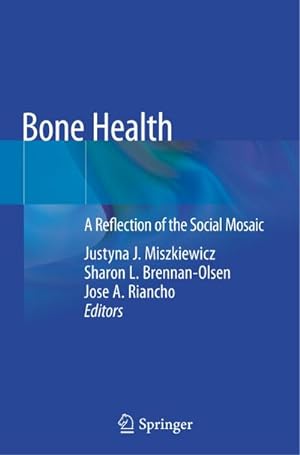
Bone Health
Language: English
Published by Springer Nature Singapore Aug 2020, 2020
ISBN 10: 9811372586 ISBN 13: 9789811372582
Seller: BuchWeltWeit Ludwig Meier e.K., Bergisch Gladbach, Germany
Seller rating 5 out of 5 stars

Taschenbuch. Condition: Neu. This item is printed on demand - it takes 3-4 days longer - Neuware -This multidisciplinary book addresses three lines of evidence (medieval, contemporary, and epigenetic) regarding the effect of human socio-economic status on bone health. It provides an overview of the extent to which human social background affects adult bone quality and quantity, and makes recommendations for future skeletal biology research into lifestyle-related musculoskeletal disorders. The book is divided into three major parts, the first of which discusses bone and dental health in medieval human skeletal remains from distinct socio-economic status groups. In turn, Part 2 reviews bone health in contemporary human populations with a range of social backgrounds; in addition, a conceptual model proposing a social gradient of osteoporosis and fracture risk related to biological mechanisms and cumulative stressors throughout the human lifecycle is presented. Lastly, Part 3 highlights the role of epigenetics in socially patterned risk factors for skeletal disorders, and discusses how epigenetic mechanisms transduce the psychosocial environment and increase the risk of developing conditions such as osteoporosis. Overall, the book highlights the importance of considering the social-biological nexus in future skeletal biology research and future treatment of bone disease. Increased awareness of this nexus can potentially improve individual and population-level bone health interventions, reducing the social inequities observed in fracture risk. Given its scope, the book offers a valuable resource for researchers, academics, and students in the fields of medicine, epidemiology, the health sciences, biological anthropology, human anatomy and adaptation, developmental studies of human societies, human biology, and any field concerning musculoskeletal disorders and health. It will also benefit clinical practitioners evaluating osteoporosis, osteopenia, fracture risk, bone quality and quantity. 208 pp. Englisch.
-

Condition: New. Dieser Artikel ist ein Print on Demand Artikel und wird nach Ihrer Bestellung fuer Sie gedruckt. Provides inter-disciplinary perspectives of biological anthropologists, medical researchers, social epidemiologists and genetic epidemiologists on bone health Covers three lines of evidence: ancient, contemporary, and epigenetic .
-

Bone Health
Language: English
Published by Springer Nature Singapore Jul 2019, 2019
ISBN 10: 9811372551 ISBN 13: 9789811372551
Seller: BuchWeltWeit Ludwig Meier e.K., Bergisch Gladbach, Germany
Seller rating 5 out of 5 stars
Buch. Condition: Neu. This item is printed on demand - it takes 3-4 days longer - Neuware -This multidisciplinary book addresses three lines of evidence (medieval, contemporary, and epigenetic) regarding the effect of human socio-economic status on bone health. It provides an overview of the extent to which human social background affects adult bone quality and quantity, and makes recommendations for future skeletal biology research into lifestyle-related musculoskeletal disorders. The book is divided into three major parts, the first of which discusses bone and dental health in medieval human skeletal remains from distinct socio-economic status groups. In turn, Part 2 reviews bone health in contemporary human populations with a range of social backgrounds; in addition, a conceptual model proposing a social gradient of osteoporosis and fracture risk related to biological mechanisms and cumulative stressors throughout the human lifecycle is presented. Lastly, Part 3 highlights the role of epigenetics in socially patterned risk factors for skeletal disorders, and discusses how epigenetic mechanisms transduce the psychosocial environment and increase the risk of developing conditions such as osteoporosis. Overall, the book highlights the importance of considering the social-biological nexus in future skeletal biology research and future treatment of bone disease. Increased awareness of this nexus can potentially improve individual and population-level bone health interventions, reducing the social inequities observed in fracture risk. Given its scope, the book offers a valuable resource for researchers, academics, and students in the fields of medicine, epidemiology, the health sciences, biological anthropology, human anatomy and adaptation, developmental studies of human societies, human biology, and any field concerning musculoskeletal disorders and health. It will also benefit clinical practitioners evaluating osteoporosis, osteopenia, fracture risk, bone quality and quantity. 208 pp. Englisch.
-

Condition: New. Dieser Artikel ist ein Print on Demand Artikel und wird nach Ihrer Bestellung fuer Sie gedruckt. Provides inter-disciplinary perspectives of biological anthropologists, medical researchers, social epidemiologists and genetic epidemiologists on bone health Covers three lines of evidence: ancient, contemporary, and epigenetic .
-
Condition: New. Print on Demand pp. 186.
-

Bone Health
Language: English
Published by Springer, Springer Aug 2020, 2020
ISBN 10: 9811372586 ISBN 13: 9789811372582
Seller: buchversandmimpf2000, Emtmannsberg, BAYE, Germany
Seller rating 5 out of 5 stars
Taschenbuch. Condition: Neu. This item is printed on demand - Print on Demand Titel. Neuware -This multidisciplinary book addresses three lines of evidence (medieval, contemporary, and epigenetic) regarding the effect of human socio-economic status on bone health. It provides an overview of the extent to which human social background affects adult bone quality and quantity, and makes recommendations for future skeletal biology research into lifestyle-related musculoskeletal disorders.The book is divided into three major parts, the first of which discusses bone and dental health in medieval human skeletal remains from distinct socio-economic status groups. In turn, Part 2 reviews bone health in contemporary human populations with a range of social backgrounds; in addition, a conceptual model proposing a social gradient of osteoporosis and fracture risk related to biological mechanisms and cumulative stressors throughout the human lifecycle is presented. Lastly, Part 3 highlights the role of epigenetics in socially patterned risk factors for skeletal disorders, and discusses how epigenetic mechanisms transduce the psychosocial environment and increase the risk of developing conditions such as osteoporosis.Overall, the book highlights the importance of considering the social-biological nexus in future skeletal biology research and future treatment of bone disease. Increased awareness of this nexus can potentially improve individual and population-level bone health interventions, reducing the social inequities observed in fracture risk.Given its scope, the book offers a valuable resource for researchers, academics, and students in the fields of medicine, epidemiology, the health sciences, biological anthropology, human anatomy and adaptation, developmental studies of human societies, human biology, and any field concerning musculoskeletal disorders and health. It will also benefit clinical practitioners evaluating osteoporosis, osteopenia, fracture risk, bone quality and quantity.Springer-Verlag KG, Sachsenplatz 4-6, 1201 Wien 208 pp. Englisch.
-
Condition: New. PRINT ON DEMAND pp. 186.
-

Buch. Condition: Neu. Bone Health | A Reflection of the Social Mosaic | Justyna J. Miszkiewicz (u. a.) | Buch | xxii | Englisch | 2019 | Springer | EAN 9789811372551 | Verantwortliche Person für die EU: Springer Verlag GmbH, Tiergartenstr. 17, 69121 Heidelberg, juergen[dot]hartmann[at]springer[dot]com | Anbieter: preigu Print on Demand.
-

Bone Health
Language: English
Published by Springer, Springer Jul 2019, 2019
ISBN 10: 9811372551 ISBN 13: 9789811372551
Seller: buchversandmimpf2000, Emtmannsberg, BAYE, Germany
Seller rating 5 out of 5 stars
Buch. Condition: Neu. This item is printed on demand - Print on Demand Titel. Neuware -This multidisciplinary book addresses three lines of evidence (medieval, contemporary, and epigenetic) regarding the effect of human socio-economic status on bone health. It provides an overview of the extent to which human social background affects adult bone quality and quantity, and makes recommendations for future skeletal biology research into lifestyle-related musculoskeletal disorders.The book is divided into three major parts, the first of which discusses bone and dental health in medieval human skeletal remains from distinct socio-economic status groups. In turn, Part 2 reviews bone health in contemporary human populations with a range of social backgrounds; in addition, a conceptual model proposing a social gradient of osteoporosis and fracture risk related to biological mechanisms and cumulative stressors throughout the human lifecycle is presented. Lastly, Part 3 highlights the role of epigenetics in socially patterned risk factors for skeletal disorders, and discusses how epigenetic mechanisms transduce the psychosocial environment and increase the risk of developing conditions such as osteoporosis.Overall, the book highlights the importance of considering the social-biological nexus in future skeletal biology research and future treatment of bone disease. Increased awareness of this nexus can potentially improve individual and population-level bone health interventions, reducing the social inequities observed in fracture risk.Given its scope, the book offers a valuable resource for researchers, academics, and students in the fields of medicine, epidemiology, the health sciences, biological anthropology, human anatomy and adaptation, developmental studies of human societies, human biology, and any field concerning musculoskeletal disorders and health. It will also benefit clinical practitioners evaluating osteoporosis, osteopenia, fracture risk, bone quality and quantity.Springer-Verlag KG, Sachsenplatz 4-6, 1201 Wien 208 pp. Englisch.
-
Condition: New. PRINT ON DEMAND.


