

Order Total (1 Item Items):
Shipping Destination:

Jim Pomeroy (43 results)
Skip to main search results
Search filters
Product Type
- All Product Types
- Books (42)
- Magazines & Periodicals (No further results match this refinement)
- Comics (No further results match this refinement)
- Sheet Music (No further results match this refinement)
- Art, Prints & Posters (1)
- Photographs (No further results match this refinement)
- Maps (No further results match this refinement)
- Manuscripts & Paper Collectibles (No further results match this refinement)
Condition Learn more
- New (19)
- As New, Fine or Near Fine (5)
- Very Good or Good (12)
- Fair or Poor (No further results match this refinement)
- As Described (7)
Binding
Collectible Attributes
- First Edition (6)
- Signed (No further results match this refinement)
- Dust Jacket (No further results match this refinement)
- Seller-Supplied Images (22)
- Not Print on Demand (43)
Language (2)
Free Shipping
Seller Location
Seller Rating
-

Alliances Armor Communist Dip
Seller: World of Books (was SecondSale), Montgomery, IL, U.S.A.
Seller rating 5 out of 5 stars

Condition: Good. Item in good condition. Textbooks may not include supplemental items i.e. CDs, access codes etc.
-

Condition: very_good. Book has little sign of wear or use.
-

AMERICAN BASSES An Illustrated History and Player's Guide to the Bass Guitar
Seller: AVON HILL BOOKS, Cambridge, MA, U.S.A.
Association Member: SNEAB
Seller rating 5 out of 5 stars
Softcover. Condition: Very Good+. Light wear to covers. ; Clean and tight. Color photos, comprehensive text. Due to size, ships within US only and only by media rate mail. ; Small 4to 9" - 11" tall; 210 pp.
-

-
Hardcover. Condition: new. Hardcover. How diplomatic relations between North Vietnam and its benefactors, the People's Republic of China and the Soviet Union, affected PAVN strategy and tactics during the Vietnam War. The People's Army of Vietnamese's decision to utilize armor as part of its warfighting strategy was a product of various geopolitical factors that surrounded Hanoi during various parts of the Vietnam War. During the First Indochina War, the People's Republic of China (PRC) emerged as the foremost communist benefactor of North Vietnam. The Soviet Union however, largely stood by. While worried by the PRC's and Soviet Union's actions during the Geneva Conference of 1954, Hanoi still felt the need to maintain good relations with both countries. This was reinforced when the Sino-Soviet split occurred in 1956 and Hanoi was forced to walk a tight rope between Beijing and Moscow. As the United States escalated its war in Vietnam, Moscow (now under new leadership) sought to increase its material support for Hanoi. As the war progressed, Hanoi sought to fight larger battles against the Americans and their South Vietnamese allies. In order to fight larger battles, the PAVN needed more modern military equipment that only the Soviet Union could provide. This, paired with the chaos of the ongoing Cultural Revolution in China, led Hanoi to lean more towards Moscow in the latter years of the Vietnam War. As part of this newly blossomed relationship, Moscow began to furnish the PAVN with more modern weapons including Soviet armor. Initially, the PAVN's use of armor at Lang Vei (1968) and Laos (1971) was met with some success. However, in 1972, Hanoi panicked as the United States began to reach detente with Beijing and Moscow. This led to fears of another Geneva and thus lead Hanoi to pursue a rushed Easter Offensive in March 1972 which saw ill-trained PAVN tank crews fall prey to poor planning and bad strategy. This changed in 1975 when following the Paris Peace Accords and subsequent combined arms training in the Soviet Union, the PAVN victoriously drove its Soviet armor into Saigon. AUTHOR: Jim Pomeroy has a BA in History & Political Science from James Madison University and a Master's in History with a Master's Certificate in Strategic Studies from Texas Tech University. He has also worked in the U.S. House of Representatives as a Congressional staffer. He currently lives in Roanoke, VA. How diplomatic relations between North Vietnam and its benefactors, the Peoples Republic of China and the Soviet Union, affected PAVN strategy and tactics during the Vietnam War. Shipping may be from multiple locations in the US or from the UK, depending on stock availability.
-
Condition: New. Brand New.
-

Condition: As New. Unread book in perfect condition.
-

Alliances and Armor
Language: English
Published by Casemate Publishers, US, 2025
ISBN 10: 1636245366 ISBN 13: 9781636245362
Hardback. Condition: New. The People's Army of Vietnam's decision to utilize armor as part of its warfighting strategy was a product of various geopolitical factors that surrounded Hanoi during various parts of the Vietnam War. During the First Indochina War, the People's Republic of China (PRC) emerged as the foremost communist benefactor of North Vietnam. The Soviet Union however, largely stood by. While worried by the PRC's and Soviet Union's actions during the Geneva Conference of 1954, Hanoi still felt the need to maintain good relations with both countries. This was reinforced when the Sino-Soviet split occurred in 1956 and Hanoi was forced to walk a tight rope between Beijing and Moscow. As the United States escalated its war in Vietnam, Moscow (now under new leadership) sought to increase its material support for Hanoi.As the war progressed, Hanoi sought to fight larger battles against the Americans and their South Vietnamese allies. In order to fight larger battles, the PAVN needed more modern military equipment that only the Soviet Union could provide. This, paired with the chaos of the ongoing Cultural Revolution in China, led Hanoi to lean more towards Moscow in the latter years of the Vietnam War.As part of this newly blossomed relationship, Moscow began to furnish the PAVN with more modern weapons including Soviet armor. Initially, the PAVN's use of armor at Lang Vei (1968) and Laos (1971) was met with some success. However, in 1972, Hanoi panicked as the United States began to reach "détente" with Beijing and Moscow. This led to fears of another Geneva and thus lead Hanoi to pursue a rushed "Easter Offensive" in March 1972 which saw ill-trained PAVN tank crews fall prey to poor planning and bad strategy. This changed in 1975 when following the Paris Peace Accords and subsequent combined arms training in the Soviet Union, the PAVN victoriously drove its Soviet armor into Saigon.
-
paperback. Condition: New. *Brand new* Ships from USA.
-

Soft cover. Condition: Very good. No jacket. Great condition. Inside is clean and unmarked.
-

Alliances and Armor
Language: English
Published by Casemate Publishers, US, 2025
ISBN 10: 1636245366 ISBN 13: 9781636245362
Seller: Rarewaves.com USA, London, LONDO, United Kingdom
Seller rating 5 out of 5 stars
Hardback. Condition: New. The People's Army of Vietnam's decision to utilize armor as part of its warfighting strategy was a product of various geopolitical factors that surrounded Hanoi during various parts of the Vietnam War. During the First Indochina War, the People's Republic of China (PRC) emerged as the foremost communist benefactor of North Vietnam. The Soviet Union however, largely stood by. While worried by the PRC's and Soviet Union's actions during the Geneva Conference of 1954, Hanoi still felt the need to maintain good relations with both countries. This was reinforced when the Sino-Soviet split occurred in 1956 and Hanoi was forced to walk a tight rope between Beijing and Moscow. As the United States escalated its war in Vietnam, Moscow (now under new leadership) sought to increase its material support for Hanoi.As the war progressed, Hanoi sought to fight larger battles against the Americans and their South Vietnamese allies. In order to fight larger battles, the PAVN needed more modern military equipment that only the Soviet Union could provide. This, paired with the chaos of the ongoing Cultural Revolution in China, led Hanoi to lean more towards Moscow in the latter years of the Vietnam War.As part of this newly blossomed relationship, Moscow began to furnish the PAVN with more modern weapons including Soviet armor. Initially, the PAVN's use of armor at Lang Vei (1968) and Laos (1971) was met with some success. However, in 1972, Hanoi panicked as the United States began to reach "détente" with Beijing and Moscow. This led to fears of another Geneva and thus lead Hanoi to pursue a rushed "Easter Offensive" in March 1972 which saw ill-trained PAVN tank crews fall prey to poor planning and bad strategy. This changed in 1975 when following the Paris Peace Accords and subsequent combined arms training in the Soviet Union, the PAVN victoriously drove its Soviet armor into Saigon.
-
HRD. Condition: New. New Book. Shipped from UK. Established seller since 2000.
-
Alliances and Armor
Seller: PBShop.store UK, Fairford, GLOS, United Kingdom
Seller rating 4 out of 5 stars

HRD. Condition: New. New Book. Shipped from UK. Established seller since 2000.
-

CONTACT SHEET 68.
Published by (Syracuse, NY: Light Work), circa [1991]. [1991]., 1991
Seller: Blue Mountain Books & Manuscripts, Ltd., Cadyville, NY, U.S.A.
Seller rating 5 out of 5 stars
Condition: Very good. - Small quarto [approximately 8-1/2 inches square], softcover bound in pictorial wrappers. The wraps are very lightly bumped with some minor soiling to the front wrap & with a mailing label on the rear wrap. [18] pages, including inside wraps. Photographic illustrations in color and black & white. There is a minor ink mark to the margin of 1 page. Very good. Light Work, director Jeffrey Hoone, associate director Gina Murtagh, supports photographers and fosters the appreciation and understanding of photographic arts in Central New York through a grant program, an artist-in-residence program, exhibitions and the publication "Contact Sheet".
-

Jim Pomeroy 3-D Photos
Published by CEPA Gallery, Buffalo, NY, 1981
Seller: Jeff Hirsch Books, ABAA, Wadsworth, IL, U.S.A.
Association Member: ABAA ILAB MWABA
Seller rating 5 out of 5 stars
First Edition
First edition. Softcover. 10 pages. Exhibition catalog for a show that ran January 9-31, 1981. Features an introduction and acknowledgements Susan Krane and with the text of her interview of Pomeroy. Includes 2 images, list of previous exhibitions, list of selected performances, selected bibliography, list of public collections and commissions. A near fine copy in stapled wrappers and with laid in checklist but lacking the 3-D glasses.
-
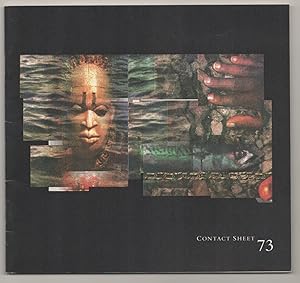
Contact Sheet 73
Published by Light Work, Syracuse, NY, 1992
Seller: Jeff Hirsch Books, ABAA, Wadsworth, IL, U.S.A.
Association Member: ABAA ILAB MWABA
Seller rating 5 out of 5 stars
First Edition
First edition. Small oblong softcover. Features text by Jeffrey Hoone and Amy Hufnagel. Includes color and black and white images by Keith Piper, Sharon Stewart, Biff Henrich, Mona Jimenez, Patti Ambrogi, Tony Gleaton and Jim Pomeroy. A fine copy in stapled wrappers. Uncommon.
-
Alliances & Armor: Communist Diplomacy and Armored Warfare During the War in Vietnam
Language: English
Published by Casemate Pub & Book Dist Llc, 2025
ISBN 10: 1636245366 ISBN 13: 9781636245362
Paperback. Condition: Brand New. 174 pages. 9.00x6.00x9.02 inches. In Stock.
-
Alliances & Armor: Communist Diplomacy and Armored Warfare during the War in Vietnam
Seller: Ria Christie Collections, Uxbridge, United Kingdom
Seller rating 5 out of 5 stars
Condition: New. In.
-
Alliances & Armor: Communist Diplomacy and Armored Warfare during the War in Vietnam
Language: English
Published by Casemate Publishers -, 2025
ISBN 10: 1636245366 ISBN 13: 9781636245362
paperback. Condition: New.
-
![Seller image for [Exhibition Catalogue] Jim Pomeroy 3-D Photos. January 9 -January 31, 1981. CEPA Gallery, Buffalo, New York. for sale by G. F. Wilkinson Books, member IOBA](https://pictures.abebooks.com/inventory/md/md31748720517.jpg)
[Exhibition Catalogue] Jim Pomeroy 3-D Photos. January 9 -January 31, 1981. CEPA Gallery, Buffalo, New York.
Published by Buffalo Fine Arts Academy, Buffalo, 1981
Seller: G. F. Wilkinson Books, member IOBA, GRASS VALLEY, CA, U.S.A.
Association Member: IOBA
Seller rating 5 out of 5 stars
Softcover. Condition: Fine. Stapled gray wrappers lettered in white; 4 b&w photographs including 2 full page 3-D; glasses in plastic pouch attached inside front cover. One legal size printed checklist folded and laid in. ; Small 4to 9" - 11" tall; 10 pages.
-
paperback. Condition: New. Special order direct from the distributor.
-

Alliances & Armor : Communist Diplomacy and Armored Warfare During the War in Vietnam
Seller: GreatBookPricesUK, Woodford Green, United Kingdom
Seller rating 5 out of 5 stars
Condition: New.
-

Alliances & Armor : Communist Diplomacy and Armored Warfare During the War in Vietnam
Seller: GreatBookPricesUK, Woodford Green, United Kingdom
Seller rating 5 out of 5 stars
Condition: As New. Unread book in perfect condition.
-
reading lessons and eye exercises / ethical idiocy esthetic blindness
Published by u of california, 1985
Seller: Thylacine Books, Fort Worth, TX, U.S.A.
Association Member: TXBA
Seller rating 5 out of 5 stars
Soft cover. Condition: Fine. No Jacket. quarto pamphlet unpaginated roughly 20 pages fine. two pamphlets in one binding. you can treat either end as the front cover Language: eng.
-
Jim Pomeroy - A Retrospective
Language: English
Published by New Langton Arts, San Francisco, CA, 1999
ISBN 10: 0962701025 ISBN 13: 9780962701023
Seller: Fahrenheit's Books, Denver, CO, U.S.A.
Association Member: RMABA
Seller rating 5 out of 5 stars
First Edition
Softcover. Condition: Very Good. First Edition. First edition, softcover with French flaps, a pair of folded 3-D glasses is laid in, the book has a slight lean to the binding, a shallow pause in the text block where the glasses have been laid, light bumps to the spine ends and corners, a slight crease to the upper corner of about half of the pages, rubbing with a few small scrapes and smudges to the covers, and mild wear to the edges. Otherwise, this is a solid, tight, internally bright, Very Good copy.
-
Jim Pomeroy: A Retrospective
Language: English
Published by San Francisco: New Langton Arts, 1999
ISBN 10: 0962701025 ISBN 13: 9780962701023
Softcover, 68 pages, very good condition, light rubbing to covers; no internal marks. 3-D glasses laid in.
-
Miscellaneous notes on music, stereography, and performance
Published by J. Pomeroy, 1980
Seller: The Second Reader Bookshop, Buffalo, NY, U.S.A.
Seller rating 5 out of 5 stars
Hardcover. Condition: Very Good. First Printing. 22 8.5" x 11" pages strip bound in gray paper covers. Very Good with moderate wear to covers and no marks to text. BRC C1 Box ; 4to 11" - 13" tall; 22 pages.
-
Hardcover. Condition: new. Hardcover. How diplomatic relations between North Vietnam and its benefactors, the People's Republic of China and the Soviet Union, affected PAVN strategy and tactics during the Vietnam War. The People's Army of Vietnamese's decision to utilize armor as part of its warfighting strategy was a product of various geopolitical factors that surrounded Hanoi during various parts of the Vietnam War. During the First Indochina War, the People's Republic of China (PRC) emerged as the foremost communist benefactor of North Vietnam. The Soviet Union however, largely stood by. While worried by the PRC's and Soviet Union's actions during the Geneva Conference of 1954, Hanoi still felt the need to maintain good relations with both countries. This was reinforced when the Sino-Soviet split occurred in 1956 and Hanoi was forced to walk a tight rope between Beijing and Moscow. As the United States escalated its war in Vietnam, Moscow (now under new leadership) sought to increase its material support for Hanoi. As the war progressed, Hanoi sought to fight larger battles against the Americans and their South Vietnamese allies. In order to fight larger battles, the PAVN needed more modern military equipment that only the Soviet Union could provide. This, paired with the chaos of the ongoing Cultural Revolution in China, led Hanoi to lean more towards Moscow in the latter years of the Vietnam War. As part of this newly blossomed relationship, Moscow began to furnish the PAVN with more modern weapons including Soviet armor. Initially, the PAVN's use of armor at Lang Vei (1968) and Laos (1971) was met with some success. However, in 1972, Hanoi panicked as the United States began to reach detente with Beijing and Moscow. This led to fears of another Geneva and thus lead Hanoi to pursue a rushed Easter Offensive in March 1972 which saw ill-trained PAVN tank crews fall prey to poor planning and bad strategy. This changed in 1975 when following the Paris Peace Accords and subsequent combined arms training in the Soviet Union, the PAVN victoriously drove its Soviet armor into Saigon. AUTHOR: Jim Pomeroy has a BA in History & Political Science from James Madison University and a Master's in History with a Master's Certificate in Strategic Studies from Texas Tech University. He has also worked in the U.S. House of Representatives as a Congressional staffer. He currently lives in Roanoke, VA. How diplomatic relations between North Vietnam and its benefactors, the Peoples Republic of China and the Soviet Union, affected PAVN strategy and tactics during the Vietnam War. Shipping may be from our UK warehouse or from our Australian or US warehouses, depending on stock availability.
-

Alliances and Armor
Language: English
Published by Casemate Publishers, US, 2025
ISBN 10: 1636245366 ISBN 13: 9781636245362
Hardback. Condition: New. The People's Army of Vietnam's decision to utilize armor as part of its warfighting strategy was a product of various geopolitical factors that surrounded Hanoi during various parts of the Vietnam War. During the First Indochina War, the People's Republic of China (PRC) emerged as the foremost communist benefactor of North Vietnam. The Soviet Union however, largely stood by. While worried by the PRC's and Soviet Union's actions during the Geneva Conference of 1954, Hanoi still felt the need to maintain good relations with both countries. This was reinforced when the Sino-Soviet split occurred in 1956 and Hanoi was forced to walk a tight rope between Beijing and Moscow. As the United States escalated its war in Vietnam, Moscow (now under new leadership) sought to increase its material support for Hanoi.As the war progressed, Hanoi sought to fight larger battles against the Americans and their South Vietnamese allies. In order to fight larger battles, the PAVN needed more modern military equipment that only the Soviet Union could provide. This, paired with the chaos of the ongoing Cultural Revolution in China, led Hanoi to lean more towards Moscow in the latter years of the Vietnam War.As part of this newly blossomed relationship, Moscow began to furnish the PAVN with more modern weapons including Soviet armor. Initially, the PAVN's use of armor at Lang Vei (1968) and Laos (1971) was met with some success. However, in 1972, Hanoi panicked as the United States began to reach "détente" with Beijing and Moscow. This led to fears of another Geneva and thus lead Hanoi to pursue a rushed "Easter Offensive" in March 1972 which saw ill-trained PAVN tank crews fall prey to poor planning and bad strategy. This changed in 1975 when following the Paris Peace Accords and subsequent combined arms training in the Soviet Union, the PAVN victoriously drove its Soviet armor into Saigon.
-
Ethical Idiocy Esthetic Blindness / Reading Lessons and Eye Exercises
Published by California Museum of Photography, 1985
First Edition
Soft cover. Condition: Near Fine. 1st Edition. In excellent condition. 32 pages, softcover in stapled wraps, 9.75" by 8.5". Scarce split photo publication by avant-garde artists Pomeroy and Schorr, the book designed to be viewed in both directions, one showcasing Pomeroys's black and white photocollages, the other Schorr's 3D photomontages with floating texts. Scarce.


