

Order Total (1 Item Items):
Shipping Destination:

Grine Frederick Fleagle John Leakey (32 results)
Skip to main search results
Search filters
Product Type
- All Product Types
- Books (32)
- Magazines & Periodicals (No further results match this refinement)
- Comics (No further results match this refinement)
- Sheet Music (No further results match this refinement)
- Art, Prints & Posters (No further results match this refinement)
- Photographs (No further results match this refinement)
- Maps (No further results match this refinement)
- Manuscripts & Paper Collectibles (No further results match this refinement)
Condition Learn more
- New (32)
- As New, Fine or Near Fine (No further results match this refinement)
- Very Good or Good (No further results match this refinement)
- Fair or Poor (No further results match this refinement)
- As Described (No further results match this refinement)
Binding
Collectible Attributes
- First Edition (No further results match this refinement)
- Signed (No further results match this refinement)
- Dust Jacket (No further results match this refinement)
- Seller-Supplied Images (20)
- Not Print on Demand (14)
Language (1)
Free Shipping
- Free Shipping to U.S.A. (No further results match this refinement)
Seller Location
Seller Rating
-
-
Condition: New. pp. 232.
-
-
Condition: New. pp. 232.
-
Taschenbuch. Condition: Neu. Out of Africa I | The First Hominin Colonization of Eurasia | John G Fleagle (u. a.) | Taschenbuch | x | Englisch | 2012 | Springer Netherland | EAN 9789400733084 | Verantwortliche Person für die EU: Springer Verlag GmbH, Tiergartenstr. 17, 69121 Heidelberg, juergen[dot]hartmann[at]springer[dot]com | Anbieter: preigu.
-
Paperback. Condition: Brand New. 2010 edition. 304 pages. 10.98x8.27x0.72 inches. In Stock.
-

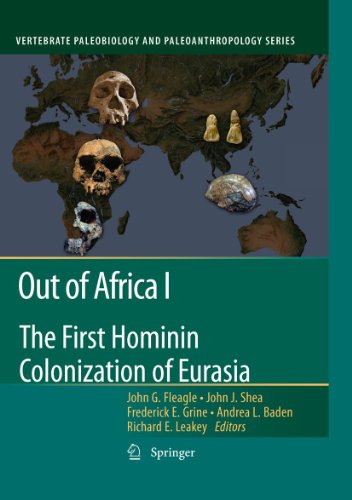
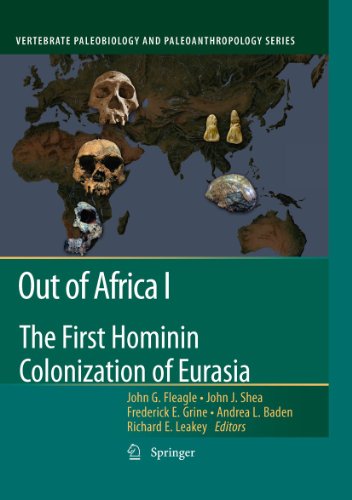
Out of Africa I
Book 13 of 46: Vertebrate Paleobiology and PaleoanthropologyLanguage: English
Published by Springer Netherlands, Springer Netherlands Aug 2010, 2010
ISBN 10: 9048190355 ISBN 13: 9789048190355
Seller: buchversandmimpf2000, Emtmannsberg, BAYE, Germany
Seller rating 5 out of 5 stars

Buch. Condition: Neu. Neuware -For the first two thirds of our evolutionary history, we hominins were restricted to Africa. Dating from about two million years ago, hominin fossils first appear in Eurasia. This volume addresses many of the issues surrounding this initial hominin intercontinental dispersal. Why did hominins first leave Africa in the early Pleistocene and not earlier What do we know about the adaptations of the hominins that dispersed - their diet, locomotor abilities, cultural abilities Was there a single dispersal event or several Was the hominin dispersal part of a broader faunal expansion of African mammals northward What route or routes did dispersing populations take Springer Verlag GmbH, Tiergartenstr. 17, 69121 Heidelberg 304 pp. Englisch.
-
Out of Africa I : The First Hominin Colonization of Eurasia
Book 13 of 46: Vertebrate Paleobiology and PaleoanthropologyLanguage: English
Published by Springer Netherlands, Springer Netherlands, 2012
ISBN 10: 9400733089 ISBN 13: 9789400733084
Taschenbuch. Condition: Neu. Druck auf Anfrage Neuware - Printed after ordering - For the first two thirds of our evolutionary history, we hominins were restricted to Africa. Dating from about two million years ago, hominin fossils first appear in Eurasia. This volume addresses many of the issues surrounding this initial hominin intercontinental dispersal. Why did hominins first leave Africa in the early Pleistocene and not earlier What do we know about the adaptations of the hominins that dispersed - their diet, locomotor abilities, cultural abilities Was there a single dispersal event or several Was the hominin dispersal part of a broader faunal expansion of African mammals northward What route or routes did dispersing populations take.
-

Out of Africa I : The First Hominin Colonization of Eurasia
Book 13 of 46: Vertebrate Paleobiology and PaleoanthropologyLanguage: English
Published by Springer Netherlands, Springer, 2010
ISBN 10: 9048190355 ISBN 13: 9789048190355
Buch. Condition: Neu. Druck auf Anfrage Neuware - Printed after ordering - For the first two thirds of our evolutionary history, we hominins were restricted to Africa. Dating from about two million years ago, hominin fossils first appear in Eurasia. This volume addresses many of the issues surrounding this initial hominin intercontinental dispersal. Why did hominins first leave Africa in the early Pleistocene and not earlier What do we know about the adaptations of the hominins that dispersed - their diet, locomotor abilities, cultural abilities Was there a single dispersal event or several Was the hominin dispersal part of a broader faunal expansion of African mammals northward What route or routes did dispersing populations take.
-
Taschenbuch. Condition: Neu. The First Humans | Origin and Early Evolution of the Genus Homo | Frederick E. Grine (u. a.) | Taschenbuch | xii | Englisch | 2010 | Springer Netherland | EAN 9789048182336 | Verantwortliche Person für die EU: Springer Verlag GmbH, Tiergartenstr. 17, 69121 Heidelberg, juergen[dot]hartmann[at]springer[dot]com | Anbieter: preigu.
-

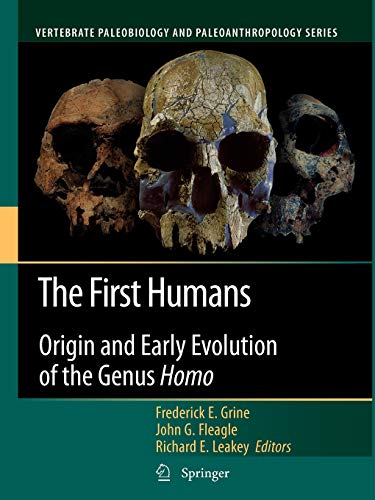
The First Humans
Book 10 of 46: Vertebrate Paleobiology and PaleoanthropologyLanguage: English
Published by Springer Netherlands, Springer Netherlands Jun 2009, 2009
ISBN 10: 1402099797 ISBN 13: 9781402099793
Seller: buchversandmimpf2000, Emtmannsberg, BAYE, Germany
Seller rating 5 out of 5 stars
Buch. Condition: Neu. Neuware -There are some issues in human paleontology that seem to be timeless. Most deal with the origin and early evolution of our own genus ¿ something about which we should care. Some of these issues pertain to taxonomy and systematics. How many species of Homo were there in the Pliocene and Pleistocene How do we identify the earliest members the genus Homo If there is more than one Plio-Pleistocene species, how do they relate to one another, and where and when did they evolve Other issues relate to questions about body size, proportions and the functional adaptations of the locomotor skeleton. When did the human postcranial ¿Bauplan¿ evolve, and for what reasons What behaviors (and what behavioral limitations) can be inferred from the postcranial bones that have been attributed to Homo habilis and Homo erectus Still other issues relate to growth, development and life history strategies, and the biological and archeological evidence for diet and behavior in early Homo. It is often argued that dietary change played an important role in the origin and early evolution of our genus, with stone tools opening up scavenging and hunting opportunities that would have added meat protein to the diet of Homo. Still other issues relate to the environmental and climatic context in which this genus evolved.Springer Verlag GmbH, Tiergartenstr. 17, 69121 Heidelberg 232 pp. Englisch.
-

The First Humans : Origin and Early Evolution of the Genus Homo
Book 10 of 46: Vertebrate Paleobiology and PaleoanthropologyLanguage: English
Published by Springer Netherlands, Springer, 2009
ISBN 10: 1402099797 ISBN 13: 9781402099793
Buch. Condition: Neu. Druck auf Anfrage Neuware - Printed after ordering - There are some issues in human paleontology that seem to be timeless. Most deal with the origin and early evolution of our own genus - something about which we should care. Some of these issues pertain to taxonomy and systematics. How many species of Homo were there in the Pliocene and Pleistocene How do we identify the earliest members the genus Homo If there is more than one Plio-Pleistocene species, how do they relate to one another, and where and when did they evolve Other issues relate to questions about body size, proportions and the functional adaptations of the locomotor skeleton. When did the human postcranial 'Bauplan' evolve, and for what reasons What behaviors (and what behavioral limitations) can be inferred from the postcranial bones that have been attributed to Homo habilis and Homo erectus Still other issues relate to growth, development and life history strategies, and the biological and archeological evidence for diet and behavior in early Homo. It is often argued that dietary change played an important role in the origin and early evolution of our genus, with stone tools opening up scavenging and hunting opportunities that would have added meat protein to the diet of Homo. Still other issues relate to the environmental and climatic context in which this genus evolved.
-

The First Humans : Origin and Early Evolution of the Genus Homo
Book 10 of 46: Vertebrate Paleobiology and PaleoanthropologyLanguage: English
Published by Springer Netherlands, Springer Netherlands, 2010
ISBN 10: 9048182336 ISBN 13: 9789048182336
Taschenbuch. Condition: Neu. Druck auf Anfrage Neuware - Printed after ordering - There are some issues in human paleontology that seem to be timeless. Most deal with the origin and early evolution of our own genus - something about which we should care. Some of these issues pertain to taxonomy and systematics. How many species of Homo were there in the Pliocene and Pleistocene How do we identify the earliest members the genus Homo If there is more than one Plio-Pleistocene species, how do they relate to one another, and where and when did they evolve Other issues relate to questions about body size, proportions and the functional adaptations of the locomotor skeleton. When did the human postcranial 'Bauplan' evolve, and for what reasons What behaviors (and what behavioral limitations) can be inferred from the postcranial bones that have been attributed to Homo habilis and Homo erectus Still other issues relate to growth, development and life history strategies, and the biological and archeological evidence for diet and behavior in early Homo. It is often argued that dietary change played an important role in the origin and early evolution of our genus, with stone tools opening up scavenging and hunting opportunities that would have added meat protein to the diet of Homo. Still other issues relate to the environmental and climatic context in which this genus evolved.
-
Paperback. Condition: Brand New. reprint edition. 232 pages. 10.98x8.27x0.55 inches. In Stock.
-
Condition: new. Questo è un articolo print on demand.
-
Condition: new. Questo è un articolo print on demand.
-
Condition: new. Questo è un articolo print on demand.
-
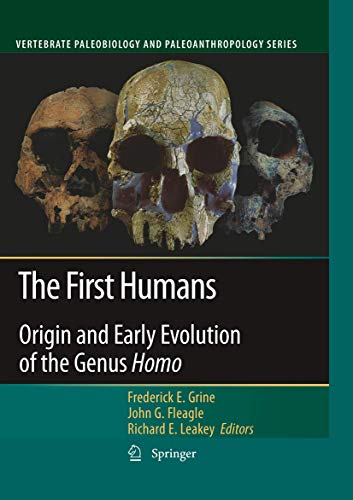
Condition: new. Questo è un articolo print on demand.
-

The First Humans
Book 10 of 46: Vertebrate Paleobiology and PaleoanthropologyLanguage: English
Published by Springer Netherlands Okt 2010, 2010
ISBN 10: 9048182336 ISBN 13: 9789048182336
Seller: BuchWeltWeit Ludwig Meier e.K., Bergisch Gladbach, Germany
Seller rating 5 out of 5 stars
Taschenbuch. Condition: Neu. This item is printed on demand - it takes 3-4 days longer - Neuware -There are some issues in human paleontology that seem to be timeless. Most deal with the origin and early evolution of our own genus - something about which we should care. Some of these issues pertain to taxonomy and systematics. How many species of Homo were there in the Pliocene and Pleistocene How do we identify the earliest members the genus Homo If there is more than one Plio-Pleistocene species, how do they relate to one another, and where and when did they evolve Other issues relate to questions about body size, proportions and the functional adaptations of the locomotor skeleton. When did the human postcranial 'Bauplan' evolve, and for what reasons What behaviors (and what behavioral limitations) can be inferred from the postcranial bones that have been attributed to Homo habilis and Homo erectus Still other issues relate to growth, development and life history strategies, and the biological and archeological evidence for diet and behavior in early Homo. It is often argued that dietary change played an important role in the origin and early evolution of our genus, with stone tools opening up scavenging and hunting opportunities that would have added meat protein to the diet of Homo. Still other issues relate to the environmental and climatic context in which this genus evolved. 232 pp. Englisch.
-
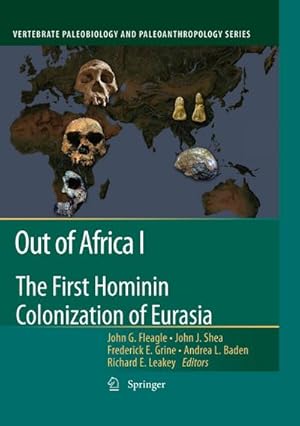
Out of Africa I
Book 13 of 46: Vertebrate Paleobiology and PaleoanthropologyLanguage: English
Published by Springer Netherlands Okt 2012, 2012
ISBN 10: 9400733089 ISBN 13: 9789400733084
Seller: BuchWeltWeit Ludwig Meier e.K., Bergisch Gladbach, Germany
Seller rating 5 out of 5 stars
Taschenbuch. Condition: Neu. This item is printed on demand - it takes 3-4 days longer - Neuware -For the first two thirds of our evolutionary history, we hominins were restricted to Africa. Dating from about two million years ago, hominin fossils first appear in Eurasia. This volume addresses many of the issues surrounding this initial hominin intercontinental dispersal. Why did hominins first leave Africa in the early Pleistocene and not earlier What do we know about the adaptations of the hominins that dispersed - their diet, locomotor abilities, cultural abilities Was there a single dispersal event or several Was the hominin dispersal part of a broader faunal expansion of African mammals northward What route or routes did dispersing populations take 304 pp. Englisch.
-

Out of Africa I
Book 13 of 46: Vertebrate Paleobiology and PaleoanthropologyLanguage: English
Published by Springer Netherlands Aug 2010, 2010
ISBN 10: 9048190355 ISBN 13: 9789048190355
Seller: BuchWeltWeit Ludwig Meier e.K., Bergisch Gladbach, Germany
Seller rating 5 out of 5 stars
Buch. Condition: Neu. This item is printed on demand - it takes 3-4 days longer - Neuware -For the first two thirds of our evolutionary history, we hominins were restricted to Africa. Dating from about two million years ago, hominin fossils first appear in Eurasia. This volume addresses many of the issues surrounding this initial hominin intercontinental dispersal. Why did hominins first leave Africa in the early Pleistocene and not earlier What do we know about the adaptations of the hominins that dispersed - their diet, locomotor abilities, cultural abilities Was there a single dispersal event or several Was the hominin dispersal part of a broader faunal expansion of African mammals northward What route or routes did dispersing populations take 304 pp. Englisch.
-
Out of Africa I
Book 13 of 46: Vertebrate Paleobiology and PaleoanthropologyLanguage: English
Published by Springer Netherlands, 2012
ISBN 10: 9400733089 ISBN 13: 9789400733084
Condition: New. Dieser Artikel ist ein Print on Demand Artikel und wird nach Ihrer Bestellung fuer Sie gedruckt. - Addresses the many facets of the first hominin range expansion from Africa into Eurasia- Discusses aspects as geography, climate, faunal composition and hominin culture that enabled or led to the initial dispersal of hominins into Eurasia- Contains indivi.
-
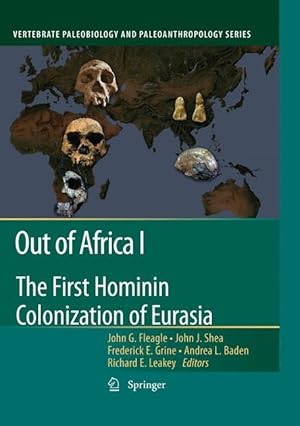
Out of Africa I
Book 13 of 46: Vertebrate Paleobiology and PaleoanthropologyLanguage: English
Published by Springer Netherlands, 2010
ISBN 10: 9048190355 ISBN 13: 9789048190355
Gebunden. Condition: New. Dieser Artikel ist ein Print on Demand Artikel und wird nach Ihrer Bestellung fuer Sie gedruckt. - Addresses the many facets of the first hominin range expansion from Africa into Eurasia- Discusses aspects as geography, climate, faunal composition and hominin culture that enabled or led to the initial dispersal of hominins into Eurasia- Contains indivi.
-
Condition: New. pp. 232 15 Illus. This item is printed on demand.
-
Condition: New. PRINT ON DEMAND pp. 540.
-

Buch. Condition: Neu. Out of Africa I | The First Hominin Colonization of Eurasia | John G Fleagle (u. a.) | Buch | x | Englisch | 2010 | Springer | EAN 9789048190355 | Verantwortliche Person für die EU: Springer Verlag GmbH, Tiergartenstr. 17, 69121 Heidelberg, juergen[dot]hartmann[at]springer[dot]com | Anbieter: preigu Print on Demand.
-

Out of Africa I
Book 13 of 46: Vertebrate Paleobiology and PaleoanthropologyLanguage: English
Published by Springer Netherlands, Springer Netherlands Okt 2012, 2012
ISBN 10: 9400733089 ISBN 13: 9789400733084
Seller: buchversandmimpf2000, Emtmannsberg, BAYE, Germany
Seller rating 5 out of 5 stars
Taschenbuch. Condition: Neu. This item is printed on demand - Print on Demand Titel. Neuware -For the first two thirds of our evolutionary history, we hominins were restricted to Africa. Dating from about two million years ago, hominin fossils first appear in Eurasia. This volume addresses many of the issues surrounding this initial hominin intercontinental dispersal. Why did hominins first leave Africa in the early Pleistocene and not earlier What do we know about the adaptations of the hominins that dispersed - their diet, locomotor abilities, cultural abilities Was there a single dispersal event or several Was the hominin dispersal part of a broader faunal expansion of African mammals northward What route or routes did dispersing populations take Springer Verlag GmbH, Tiergartenstr. 17, 69121 Heidelberg 304 pp. Englisch.
-

The First Humans
Book 10 of 46: Vertebrate Paleobiology and PaleoanthropologyLanguage: English
Published by Springer Netherlands Jun 2009, 2009
ISBN 10: 1402099797 ISBN 13: 9781402099793
Seller: BuchWeltWeit Ludwig Meier e.K., Bergisch Gladbach, Germany
Seller rating 5 out of 5 stars
Buch. Condition: Neu. This item is printed on demand - it takes 3-4 days longer - Neuware -There are some issues in human paleontology that seem to be timeless. Most deal with the origin and early evolution of our own genus - something about which we should care. Some of these issues pertain to taxonomy and systematics. How many species of Homo were there in the Pliocene and Pleistocene How do we identify the earliest members the genus Homo If there is more than one Plio-Pleistocene species, how do they relate to one another, and where and when did they evolve Other issues relate to questions about body size, proportions and the functional adaptations of the locomotor skeleton. When did the human postcranial 'Bauplan' evolve, and for what reasons What behaviors (and what behavioral limitations) can be inferred from the postcranial bones that have been attributed to Homo habilis and Homo erectus Still other issues relate to growth, development and life history strategies, and the biological and archeological evidence for diet and behavior in early Homo. It is often argued that dietary change played an important role in the origin and early evolution of our genus, with stone tools opening up scavenging and hunting opportunities that would have added meat protein to the diet of Homo. Still other issues relate to the environmental and climatic context in which this genus evolved. 232 pp. Englisch.
-

The First Humans
Book 10 of 46: Vertebrate Paleobiology and PaleoanthropologyLanguage: English
Published by Springer Netherlands, 2009
ISBN 10: 1402099797 ISBN 13: 9781402099793
Condition: New. Dieser Artikel ist ein Print on Demand Artikel und wird nach Ihrer Bestellung fuer Sie gedruckt. Addresses the origin and early evolution of the human genus HomoNew techniques and interpretations have opened up other avenues of enquiry and have led to new questionsIs an effort to update, address and synthesize our current understanding.
-

The First Humans
Book 10 of 46: Vertebrate Paleobiology and PaleoanthropologyLanguage: English
Published by Springer Netherlands, 2010
ISBN 10: 9048182336 ISBN 13: 9789048182336
Condition: New. Dieser Artikel ist ein Print on Demand Artikel und wird nach Ihrer Bestellung fuer Sie gedruckt. Addresses the origin and early evolution of the human genus HomoNew techniques and interpretations have opened up other avenues of enquiry and have led to new questionsIs an effort to update, address and synthesize our current understanding.


