

Order Total (1 Item Items):
Shipping Destination:

Gary Mortensen (23 results)
Skip to main search results
Search filters
Product Type
- All Product Types
- Books (23)
- Magazines & Periodicals (No further results match this refinement)
- Comics (No further results match this refinement)
- Sheet Music (No further results match this refinement)
- Art, Prints & Posters (No further results match this refinement)
- Photographs (No further results match this refinement)
- Maps (No further results match this refinement)
- Manuscripts & Paper Collectibles (No further results match this refinement)
Condition Learn more
- New (13)
- As New, Fine or Near Fine (3)
- Very Good or Good (3)
- Fair or Poor (No further results match this refinement)
- As Described (4)
Binding
Collectible Attributes
- First Edition (4)
- Signed (No further results match this refinement)
- Dust Jacket (1)
- Seller-Supplied Images (12)
- Not Print on Demand (15)
Language (2)
Free Shipping
Seller Location
Seller Rating
-

Hard Cover. Condition: As New. Still in shrinkwrap; 4to - over 9¾" - 12" tall.
-

The Art of Collecting Acquisitions At the Minneapolis Institute of Arts 1980-1985
Language: English
Published by The Minneapolis Institute of Arts, 1986
ISBN 10: 0912964286 ISBN 13: 9780912964287
First Edition
Paperback. Condition: Very Good+. Illustrated by Gary Mortensen (illustrator). 1st. Previous owner's name on half-title page - otherwise Excellent condition. ; The main purpose of this catalogue is "to examine the history of the collection and the motivation behind purchases, the philosophy of acquisition which goverened or influenced the museum's decision." 10-page brochure listing courses, lectures and a floor-plan is laid in. ; B&W Photographs; 4to 11" - 13" tall; 115 pages.
-
![Stock image for Antimicrobial Resistance: A Crisis in Health Care [Advances in Experimental Medicine and Biology, Volume 390] for sale by Tiber Books](https://pictures.abebooks.com/isbn/9780306452079-uk-300.jpg)
Antimicrobial Resistance: A Crisis in Health Care [Advances in Experimental Medicine and Biology, Volume 390]
Language: English
Published by Plenum Press, New York., 1995
ISBN 10: 0306452073 ISBN 13: 9780306452079
Hardcover. Condition: Very Good. 8vo, hardcover. No dj. Vg condition. Prev. owner's name-labels removed from endpaper, contents bright & clean, binding tight; rear cover lightly smudged. x, 248 p., illus. Based on the proceedings of the Eastern Pennsylvania Branch of the American Society of Microbiology Symposium on Antimicrobial Resistance: a Crisis in Healthcare--Clinical Laboratory and Epidemiologic Considerations, held November 11-12, 1993 in Philadelphia, Pennsylvania.
-
Hardcover. Condition: Good. Connecting readers with great books since 1972! Used textbooks may not include companion materials such as access codes, etc. May have some wear or writing/highlighting. We ship orders daily and Customer Service is our top priority!
-
Treasures from the Minneapolis Institute of Arts
Language: English
Published by The Minnapolis Institute of Arts, 1998
ISBN 10: 0912964642 ISBN 13: 9780912964645
Soft cover. Condition: As New. As new in publisher's shrinkwrap.****.
-
Otsu-e: Japanese Folk Paintings (1994) - Spencer Collection, Minneapolis Institute
Language: English
Published by Minneapolis Institute of Arts, 1994
First Edition
Soft cover. Condition: Near Fine. No Jacket. Photography by Gary Mortensen and Robert Fogt (illustrator). 1st Edition, Limited Edition. Published in conjunction with the 1994 Minneapolis Institute of Arts exhibition Otsu-e: Japanese Folk Paintings from the Harriet and Edson Spencer Collection, this beautifully produced softcover catalog remains one of the most informative English-language resources on Otsu-e - the lively popular paintings once sold as traveler's souvenirs along the T?kaid? road in the Edo period (1600-1868). Essays provide a clear historical overview, explore characteristic themes and motifs, and situate these playful, sometimes satirical images within broader Japanese folk and woodblock traditions. High-quality photographic plates and detailed object entries offer a strong visual and scholarly foundation for students, collectors, and curators. This copy is in Near Fine condition, unusually well-preserved for a museum-issued softcover. The covers remain clean and bright, with only the faintest touches of surface rubbing to the rear green panel and minimal edge wear. Interior pages are crisp, unmarked, and fresh, and the binding is tight with no signs of use beyond very gentle handling. A superior example of a title often found with heavier wear. A first and only edition (1994), the catalog was designed by Ruth Dean and typeset by Patrick Atherton, with photographic contributions by Gary Mortensen and Robert Fogt. It documents key works from the Spencer Collection, including 18th- and 19th-century images of Buddhist figures, demons, legendary characters, humorous genre scenes, and classic motifs such as Daikoku shaving Fukurokuju and symbolic pagoda forms - hallmarks of the Otsu-e tradition. Because the Spencer Collection represents one of the most significant assemblages of Otsu-e in the West, this publication remains a sought-after reference for those studying Japanese folk art, Edo-period visual culture, and the intersection of vernacular creativity with religious, social, and humorous narrative imagery. Matthew Welch is a curator and scholar specializing in Asian art, long affiliated with the Minneapolis Institute of Arts. His publications focus on Japanese painting, decorative arts, and visual culture, emphasizing accessible scholarship supported by close object analysis. Welch's work has helped introduce Otsu-e and other vernacular traditions to a wider international audience.
-
![Seller image for 7 [Seven] for sale by Bolerium Books Inc.](https://pictures.abebooks.com/inventory/md/md32219621235.jpg)
7 [Seven]
Published by Visual Aid, San Francisco, 1989
Seller: Bolerium Books Inc., San Francisco, CA, U.S.A.
Seller rating 5 out of 5 stars

First Edition
[16p] 6.5x12 inches, introduction, color illustrations, a very good first edition booklet in stapled deep purple wraps with white hands on cover expressing the number 7. The story of Belew's career as a graphic designed and AIDS activist illustrated by t artists.
-

Imperial Silks: Ch'ing Dynasty Textiles in the Minneapolis Institute of Arts
Language: English
Published by Minneapolis Institute of Art, Minneapolis, MN, 2000
ISBN 10: 1878529722 ISBN 13: 9781878529725
Seller: Mullen Books, ABAA, Marietta, PA, U.S.A.
Seller rating 4 out of 5 stars

Hardcover. Quarto. Two volumes in illustrated slipcase. Bound in black cloth with stamped titles in illustrated jacket. 2 volumes (1182 pages) : illustrations (some color) ; 35 cm. "This stunning two-volume book is the long-awaited catalogue of the exquisite collection of Ch'ing (Qing) dynasty imperial textiles and costumes from the collection of The Minneapolis Institute of Arts. This collection has a rich history. Approximately half of it belonged to the San Francisco attorney William E. Colby, who had amassed the collection throughout the opportunistic decades of the 1920's and 1930's, and was acquired by The Minneapolis Institute of Arts under the advice of Alfred Pillsbury. Now consisting of over 600 items, it is considered one of the finest and most comprehensive holdings of Ch'ing textiles outside of China."--Publisher's description. VG. Light rubbing / shelfwear to slipcase.
-
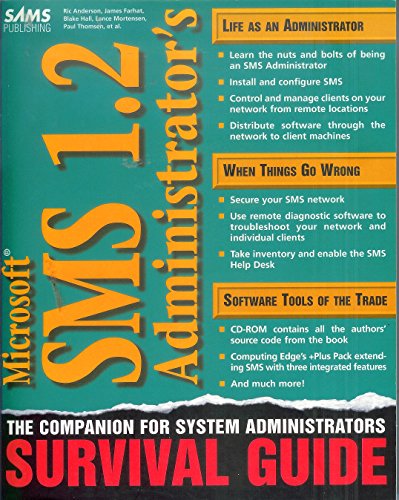
Paperback. Condition: Collectible-Very Good.
-

Antimicrobial Resistance: A Crisis in Health Care (Advances in Experimental Medicine and Biology)
Seller: Ria Christie Collections, Uxbridge, United Kingdom
Seller rating 5 out of 5 stars
£ 134.30
£ 11.98 shipping
Ships from United Kingdom to U.S.A.Quantity: Over 20 available
Add to basketCondition: New. In.
-
Antimicrobial Resistance: A Crisis in Health Care (Advances in Experimental Medicine and Biology, 390)
Seller: Ria Christie Collections, Uxbridge, United Kingdom
Seller rating 5 out of 5 stars
£ 134.30
£ 11.98 shipping
Ships from United Kingdom to U.S.A.Quantity: Over 20 available
Add to basketCondition: New. In.
-

Antimicrobial Resistance : A Crisis in Health Care
Language: English
Published by Springer US, Springer US, 2013
ISBN 10: 1475792050 ISBN 13: 9781475792058
Taschenbuch. Condition: Neu. Druck auf Anfrage Neuware - Printed after ordering - Development and Implications of Antimicrobial Resistance One of the most ominous trends in the field of antimicrobial chemotherapy over the past decade has been the increasing pace of development of antimicrobial resistance among microbial pathogens. The hypothesis that man can discover a magic bullet to always cure a particular infection has proved false. Physicians are now seeing and treating patients for which there are few therapeutic alternatives, and in some cases, none at all. Until recently there was little concern that physicians might be losing the war in our ability to compete with the evolving resistance patterns of microbial pathogens. Now the general public is very aware of the threat to them if they become infected, thanks to cover story articles in major magazines such as Time, Newsweek, newspapers, and other news sources. Antimicrobial resistance is not a novel problem. Shortly after the widespread introduction of penicillin in the early 1940s, the first strains of penicillin-resistant staphylococci were described. Today it is an uncommon event for a clinical laboratory to isolate an S. aureus that is sensitive to penicillin. Other gram-positive strains of bacteria have become resistant, including the exquisitely sensitive Streptococcus pneumoniae. Sensitivity to vancomycin was once so uniform that it was used in routine clinical laboratories as a surrogate marker for whether an organism should be classified as a gram-positive. That criterion can no longer be relied upon because of emerging resistance among some species. Gram-negative bacteria, viruses, fungi, and parasites all have succeeded in developing resistance.
-

Antimicrobial Resistance : A Crisis in Health Care
Language: English
Published by Springer US, Springer US, 1996
ISBN 10: 0306452073 ISBN 13: 9780306452079
Buch. Condition: Neu. Druck auf Anfrage Neuware - Printed after ordering - Development and Implications of Antimicrobial Resistance One of the most ominous trends in the field of antimicrobial chemotherapy over the past decade has been the increasing pace of development of antimicrobial resistance among microbial pathogens. The hypothesis that man can discover a magic bullet to always cure a particular infection has proved false. Physicians are now seeing and treating patients for which there are few therapeutic alternatives, and in some cases, none at all. Until recently there was little concern that physicians might be losing the war in our ability to compete with the evolving resistance patterns of microbial pathogens. Now the general public is very aware of the threat to them if they become infected, thanks to cover story articles in major magazines such as Time, Newsweek, newspapers, and other news sources. Antimicrobial resistance is not a novel problem. Shortly after the widespread introduction of penicillin in the early 1940s, the first strains of penicillin-resistant staphylococci were described. Today it is an uncommon event for a clinical laboratory to isolate an S. aureus that is sensitive to penicillin. Other gram-positive strains of bacteria have become resistant, including the exquisitely sensitive Streptococcus pneumoniae. Sensitivity to vancomycin was once so uniform that it was used in routine clinical laboratories as a surrogate marker for whether an organism should be classified as a gram-positive. That criterion can no longer be relied upon because of emerging resistance among some species. Gram-negative bacteria, viruses, fungi, and parasites all have succeeded in developing resistance.
-
Paperback. Condition: Brand New. reprint edition. 259 pages. 9.25x6.10x0.60 inches. In Stock.
-

Classical Chinese Furniture in the Minneapolis Institute of Arts [AS NEW IN SHRINKWRAP]
Published by Minneapolis Institute of Arts, Minneapolis, 1999
Seller: ERIC CHAIM KLINE, BOOKSELLER (ABAA ILAB), Santa Monica, CA, U.S.A.
Seller rating 4 out of 5 stars
First Edition
Hardcover. Condition: As new in shrink wrap. Dust Jacket Condition: new. First edition. Quarto (9½" x 11¾"), 247pp. Black and burgundy photo-illustrated slipcase with white lettering. Matching photo-illustrated dust jacket with white lettering on the spine. Burgundy cloth boards with gilt stamped lettering on the front cover and spine. This volume presents nearly one hundred examples of classical Chinese furniture donated to The Minneapolis Institute of Arts by Ruth and Bruce Dayton. The catalogue includes over 150 illustrations and provides historical and social context for hardwood and lacquer furniture produced primarily during the late Ming and early Qing periods. The entries, written by Robert Jacobsen, are accompanied by construction analysis and commentary from Nicholas Grindley. The book also features an introduction by Lark Mason and an essay by Mr. Jacobsen exploring the relationship between classical furniture and traditional Chinese architecture. Footnotes and a bibliography provide additional references for further study. "Produced in conjunction with the symposium Classical Chinese furniture and the built environment, The Minneapolis Institute of Arts, Minneapolis, Minnesota June 10-12, 1999" (from title page). Slipcase still protected with publishers original shrinkwrap. Only torn to allow access to the book.
-
Condition: new. Questo è un articolo print on demand.
-

Antimicrobial Resistance
Language: English
Published by Springer US Feb 1996, 1996
ISBN 10: 0306452073 ISBN 13: 9780306452079
Seller: BuchWeltWeit Ludwig Meier e.K., Bergisch Gladbach, Germany
Seller rating 5 out of 5 stars
Buch. Condition: Neu. This item is printed on demand - it takes 3-4 days longer - Neuware -Development and Implications of Antimicrobial Resistance One of the most ominous trends in the field of antimicrobial chemotherapy over the past decade has been the increasing pace of development of antimicrobial resistance among microbial pathogens. The hypothesis that man can discover a magic bullet to always cure a particular infection has proved false. Physicians are now seeing and treating patients for which there are few therapeutic alternatives, and in some cases, none at all. Until recently there was little concern that physicians might be losing the war in our ability to compete with the evolving resistance patterns of microbial pathogens. Now the general public is very aware of the threat to them if they become infected, thanks to cover story articles in major magazines such as Time, Newsweek, newspapers, and other news sources. Antimicrobial resistance is not a novel problem. Shortly after the widespread introduction of penicillin in the early 1940s, the first strains of penicillin-resistant staphylococci were described. Today it is an uncommon event for a clinical laboratory to isolate an S. aureus that is sensitive to penicillin. Other gram-positive strains of bacteria have become resistant, including the exquisitely sensitive Streptococcus pneumoniae. Sensitivity to vancomycin was once so uniform that it was used in routine clinical laboratories as a surrogate marker for whether an organism should be classified as a gram-positive. That criterion can no longer be relied upon because of emerging resistance among some species. Gram-negative bacteria, viruses, fungi, and parasites all have succeeded in developing resistance. 264 pp. Englisch.
-

Antimicrobial Resistance
Language: English
Published by Springer US Apr 2013, 2013
ISBN 10: 1475792050 ISBN 13: 9781475792058
Seller: BuchWeltWeit Ludwig Meier e.K., Bergisch Gladbach, Germany
Seller rating 5 out of 5 stars
Taschenbuch. Condition: Neu. This item is printed on demand - it takes 3-4 days longer - Neuware -Development and Implications of Antimicrobial Resistance One of the most ominous trends in the field of antimicrobial chemotherapy over the past decade has been the increasing pace of development of antimicrobial resistance among microbial pathogens. The hypothesis that man can discover a magic bullet to always cure a particular infection has proved false. Physicians are now seeing and treating patients for which there are few therapeutic alternatives, and in some cases, none at all. Until recently there was little concern that physicians might be losing the war in our ability to compete with the evolving resistance patterns of microbial pathogens. Now the general public is very aware of the threat to them if they become infected, thanks to cover story articles in major magazines such as Time, Newsweek, newspapers, and other news sources. Antimicrobial resistance is not a novel problem. Shortly after the widespread introduction of penicillin in the early 1940s, the first strains of penicillin-resistant staphylococci were described. Today it is an uncommon event for a clinical laboratory to isolate an S. aureus that is sensitive to penicillin. Other gram-positive strains of bacteria have become resistant, including the exquisitely sensitive Streptococcus pneumoniae. Sensitivity to vancomycin was once so uniform that it was used in routine clinical laboratories as a surrogate marker for whether an organism should be classified as a gram-positive. That criterion can no longer be relied upon because of emerging resistance among some species. Gram-negative bacteria, viruses, fungi, and parasites all have succeeded in developing resistance. 264 pp. Englisch.
-
Condition: New. Dieser Artikel ist ein Print on Demand Artikel und wird nach Ihrer Bestellung fuer Sie gedruckt. Development and Implications of Antimicrobial Resistance One of the most ominous trends in the field of antimicrobial chemotherapy over the past decade has been the increasing pace of development of antimicrobial resistance among microbial pathogens. The hy.
-
Gebunden. Condition: New. Dieser Artikel ist ein Print on Demand Artikel und wird nach Ihrer Bestellung fuer Sie gedruckt. Development and Implications of Antimicrobial Resistance One of the most ominous trends in the field of antimicrobial chemotherapy over the past decade has been the increasing pace of development of antimicrobial resistance among microbial pathogens. The hy.
-

Buch. Condition: Neu. Antimicrobial Resistance | A Crisis in Health Care | Donald L. Jungkind (u. a.) | Buch | xi | Englisch | 1996 | Springer US | EAN 9780306452079 | Verantwortliche Person für die EU: Springer Verlag GmbH, Tiergartenstr. 17, 69121 Heidelberg, juergen[dot]hartmann[at]springer[dot]com | Anbieter: preigu Print on Demand.
-

Antimicrobial Resistance
Language: English
Published by Springer US, Springer US Feb 1996, 1996
ISBN 10: 0306452073 ISBN 13: 9780306452079
Seller: buchversandmimpf2000, Emtmannsberg, BAYE, Germany
Seller rating 5 out of 5 stars
Buch. Condition: Neu. This item is printed on demand - Print on Demand Titel. Neuware -Development and Implications of Antimicrobial Resistance One of the most ominous trends in the field of antimicrobial chemotherapy over the past decade has been the increasing pace of development of antimicrobial resistance among microbial pathogens. The hypothesis that man can discover a magic bullet to always cure a particular infection has proved false. Physicians are now seeing and treating patients for which there are few therapeutic alternatives, and in some cases, none at all. Until recently there was little concern that physicians might be losing the war in our ability to compete with the evolving resistance patterns of microbial pathogens. Now the general public is very aware of the threat to them if they become infected, thanks to cover story articles in major magazines such as Time, Newsweek, newspapers, and other news sources. Antimicrobial resistance is not a novel problem. Shortly after the widespread introduction of penicillin in the early 1940s, the first strains of penicillin-resistant staphylococci were described. Today it is an uncommon event for a clinical laboratory to isolate an S. aureus that is sensitive to penicillin. Other gram-positive strains of bacteria have become resistant, including the exquisitely sensitive Streptococcus pneumoniae. Sensitivity to vancomycin was once so uniform that it was used in routine clinical laboratories as a surrogate marker for whether an organism should be classified as a gram-positive. That criterion can no longer be relied upon because of emerging resistance among some species. Gram-negative bacteria, viruses, fungi, and parasites all have succeeded in developing resistance.Springer Verlag GmbH, Tiergartenstr. 17, 69121 Heidelberg 264 pp. Englisch.
-

Antimicrobial Resistance
Language: English
Published by Springer US, Springer US Apr 2013, 2013
ISBN 10: 1475792050 ISBN 13: 9781475792058
Seller: buchversandmimpf2000, Emtmannsberg, BAYE, Germany
Seller rating 5 out of 5 stars
Taschenbuch. Condition: Neu. This item is printed on demand - Print on Demand Titel. Neuware -Development and Implications of Antimicrobial Resistance One of the most ominous trends in the field of antimicrobial chemotherapy over the past decade has been the increasing pace of development of antimicrobial resistance among microbial pathogens. The hypothesis that man can discover a magic bullet to always cure a particular infection has proved false. Physicians are now seeing and treating patients for which there are few therapeutic alternatives, and in some cases, none at all. Until recently there was little concern that physicians might be losing the war in our ability to compete with the evolving resistance patterns of microbial pathogens. Now the general public is very aware of the threat to them if they become infected, thanks to cover story articles in major magazines such as Time, Newsweek, newspapers, and other news sources. Antimicrobial resistance is not a novel problem. Shortly after the widespread introduction of penicillin in the early 1940s, the first strains of penicillin-resistant staphylococci were described. Today it is an uncommon event for a clinical laboratory to isolate an S. aureus that is sensitive to penicillin. Other gram-positive strains of bacteria have become resistant, including the exquisitely sensitive Streptococcus pneumoniae. Sensitivity to vancomycin was once so uniform that it was used in routine clinical laboratories as a surrogate marker for whether an organism should be classified as a gram-positive. That criterion can no longer be relied upon because of emerging resistance among some species. Gram-negative bacteria, viruses, fungi, and parasites all have succeeded in developing resistance.Springer Verlag GmbH, Tiergartenstr. 17, 69121 Heidelberg 264 pp. Englisch.


