

Order Total (1 Item Items):
Shipping Destination:

Carroll Michael Lopes Rosaly (46 results)
Skip to main search results
Search filters
Product Type
- All Product Types
- Books (46)
- Magazines & Periodicals (No further results match this refinement)
- Comics (No further results match this refinement)
- Sheet Music (No further results match this refinement)
- Art, Prints & Posters (No further results match this refinement)
- Photographs (No further results match this refinement)
- Maps (No further results match this refinement)
- Manuscripts & Paper Collectibles (No further results match this refinement)
Condition Learn more
- New (32)
- As New, Fine or Near Fine (5)
- Very Good or Good (8)
- Fair or Poor (No further results match this refinement)
- As Described (1)
Binding
Collectible Attributes
- First Edition (3)
- Signed (No further results match this refinement)
- Dust Jacket (3)
- Seller-Supplied Images (18)
- Not Print on Demand (30)
Language (1)
Free Shipping
Seller Location
Seller Rating
-

Alien Volcanoes
Language: English
Published by Johns Hopkins University Press, 2008
ISBN 10: 0801886732 ISBN 13: 9780801886737
Condition: Good. 0th Edition. Former library copy. Pages intact with minimal writing/highlighting. The binding may be loose and creased. Dust jackets/supplements are not included. Includes library markings. Stock photo provided. Product includes identifying sticker. Better World Books: Buy Books. Do Good.
-
Alien Volcanoes
Language: English
Published by Johns Hopkins University Press, Baltimore, MD, 2008
ISBN 10: 0801886732 ISBN 13: 9780801886737
First Edition
Hardcover. Condition: Very Good. Michael W. Carroll (illustrator). 1st Edition. 150 pp. Tightly bound. Light bump to lower right corner front board. Text is free of markings. No ownership markings. Very good dust jacket that shows light foxing on the reverse side. First Edition / First Printing. 9,8,7,6,5,4,3,2,1. This copy is smyth sewn. Smyth sewing is a method of bookbinding where groups of folded pages (referred to as signatures) are stitched together using binder thread. Each folded signature is sewn together individually with multiple stitches and then joined with other signatures to create the complete book block. This is the traditional and best method of bookbinding.
-
Alien Volcanoes
Language: English
Published by Johns Hopkins University Press, 2008
ISBN 10: 0801886732 ISBN 13: 9780801886737
Seller: Books From California, Simi Valley, CA, U.S.A.
Seller rating 4 out of 5 stars

hardcover. Condition: Very Good.
-
Alien Volcanoes
Language: English
Published by Johns Hopkins University Press, 2008
ISBN 10: 0801886732 ISBN 13: 9780801886737
Seller: Midtown Scholar Bookstore, Harrisburg, PA, U.S.A.
Seller rating 5 out of 5 stars

Hardcover. Condition: Very Good. Very Good - Crisp, clean, unread book with some shelfwear/edgewear, may have a remainder mark - NICE Standard-sized.
-
Alien Volcanoes
Language: English
Published by Johns Hopkins University Press, 2008
ISBN 10: 0801886732 ISBN 13: 9780801886737
Seller: Midtown Scholar Bookstore, Harrisburg, PA, U.S.A.
Seller rating 5 out of 5 stars
Hardcover. Condition: Good. torn/chipped dj, some wear, still NICE - may have remainder mark or previous owner's name Oversized.
-
Alien Volcanoes
Language: English
Published by Johns Hopkins University Pre, Baltimore, 2008
ISBN 10: 0801886732 ISBN 13: 9780801886737
First Edition
Condition: Near Fine/VG+. 1st. 4to. 150pp. NO INTERNATIONAL OR PRIORITY. Light shelfwear to DJ.
-

Condition: Very Good. Former library copy. Pages intact with possible writing/highlighting. Binding strong with minor wear. Dust jackets/supplements may not be included. Includes library markings. Stock photo provided. Product includes identifying sticker. Better World Books: Buy Books. Do Good.
-

Alien Seas: Oceans in Space
Seller: The Happy Book Stack, Murfreesboro, TN, U.S.A.
Seller rating 5 out of 5 stars
Condition: very_good. The book is in very good condition. Cover may have minor imperfections. Book has little or no highlighting underlining inside. Fast shipping!
-
Alien Volcanoes
Language: English
Published by Johns Hopkins University Press, 2008
ISBN 10: 0801886732 ISBN 13: 9780801886737
First Edition
Hardcover. Condition: As New. Dust Jacket Condition: As New. 1st Edition. Still in shrink wrap.
-

Paperback. Condition: Very Good. No Jacket. May have limited writing in cover pages. Pages are unmarked. ~ ThriftBooks: Read More, Spend Less.
-

Condition: New.
-

Paperback or Softback. Condition: New. Alien Seas: Oceans in Space. Book.
-

Condition: As New. Unread book in perfect condition.
-

Laminated Boards. Condition: As New. Good account of current work in Antarctica. pp189, illus.
-

Alien Seas: Oceans in Space
Seller: Ria Christie Collections, Uxbridge, United Kingdom
Seller rating 5 out of 5 stars
£ 40.27
£ 11.98 shipping
Ships from United Kingdom to U.S.A.Quantity: Over 20 available
Add to basketCondition: New. In.
-
PF. Condition: New.
-

Alien Seas : Oceans in Space
Seller: GreatBookPricesUK, Woodford Green, United Kingdom
Seller rating 5 out of 5 stars
Condition: New.
-
Condition: New. pp. 200.
-
Alien Seas (Paperback)
Language: English
Published by Springer-Verlag New York Inc., New York, 2016
ISBN 10: 1493942123 ISBN 13: 9781493942121
Paperback. Condition: new. Paperback. Oceans were long thought to exist in all corners of the Solar System, from carbonated seas percolating beneath the clouds of Venus to features on the Moon's surface given names such as "the Bay of Rainbows and the "Ocean of Storms." With the advent of modern telescopes and spacecraft exploration these ancient concepts of planetary seas have, for the most part, evaporated. But they have been replaced by the reality of something even more exotic. For example, although it is still uncertain whether Mars ever had actual oceans, it now seems that a web of waterways did indeed at one time spread across its surface. The "water" in many places in our Solar System is a poisoned brew mixed with ammonia or methane. Even that found on Jupiter's watery satellite Europa is believed similar to battery acid. Beyond the Galilean satellites may lie even more "alien oceans." Saturn's planet-sized moon Titan seems to be subject to methane or ethane rainfall. This creates methane pools that, in turn, become vast lakes and, perhaps, seasonal oceans. Titan has other seas in a sense, as large shifting areas of sand covering vast plains have been discovered. Mars also has these sand seas, and Venus may as well, along with oceans of frozen lava. Do super-chilled concoctions of ammonia, liquid nitrogen, and water percolate beneath the surfaces of Enceladus and Triton? For now we can only guess at the possibilities. 'Alien Seas' serves up part history, part current research, and part theory as it offers a rich buffet of "seas" on other worlds. It is organized by location and by the material of which various oceans consist, with guest authors penning specific chapters. Each chapter features new original art depicting alien seas, as well as the latest ground-based and spacecraft images. Original diagrams presents details of planetary oceans and related processes. Oceans were long thought to exist in all corners of the Solar System, from carbonated seas percolating beneath the clouds of Venus to features on the Moon's surface given names such as "the Bay of Rainbows and the "Ocean of Storms." Shipping may be from multiple locations in the US or from the UK, depending on stock availability.
-

-

Alien Seas : Oceans in Space
Seller: GreatBookPricesUK, Woodford Green, United Kingdom
Seller rating 5 out of 5 stars
Condition: As New. Unread book in perfect condition.
-
Paperback. Condition: Brand New. reprint edition. 130 pages. 9.25x6.10x0.30 inches. In Stock.
-

Antarctica: Earth\ s Own Ice World
Book 9 of 16: Popular ScienceLanguage: English
Published by Springer International Publishing, 2018
ISBN 10: 3319746235 ISBN 13: 9783319746234
Condition: New.
-

Antarctica: Earth\ s Own Ice World
Book 9 of 16: Popular ScienceLanguage: English
Published by Springer International Publishing, 2018
ISBN 10: 3030090388 ISBN 13: 9783030090388
Condition: New.
-

Alien Seas
Language: English
Published by Springer New York, Springer US Jul 2013, 2013
ISBN 10: 1461474728 ISBN 13: 9781461474722
Seller: buchversandmimpf2000, Emtmannsberg, BAYE, Germany
Seller rating 5 out of 5 stars
Buch. Condition: Neu. Neuware -Oceans were long thought to exist in all corners of the Solar System, from carbonated seas percolating beneath the clouds of Venus to features on the Moon's surface given names such as 'the Bay of Rainbows¿ and the 'Ocean of Storms.' With the advent of modern telescopes and spacecraft exploration these ancient concepts of planetary seas have, for the most part, evaporated. But they have been replaced by the reality of something even more exotic. For example, although it is still uncertain whether Mars ever had actual oceans, it now seems that a web of waterways did indeed at one time spread across its surface.The 'water' in many places in our Solar System is a poisoned brew mixed with ammonia or methane. Even that found on Jupiter's watery satellite Europa is believed similar to battery acid. Beyond the Galilean satellites may lie even more 'alien oceans.' Saturn's planet-sized moon Titan seems to be subject to methane or ethane rainfall. This creates methane pools that, in turn, become vast lakes and, perhaps, seasonal oceans. Titan has other seas in a sense, as large shifting areas of sand covering vast plains have been discovered. Mars also has these sand seas, and Venus may as well, along with oceans of frozen lava. Do super-chilled concoctions of ammonia, liquid nitrogen, and water percolate beneath the surfaces of Enceladus and Triton For now we can only guess at the possibilities.'Alien Seas' serves up part history, part current research, and part theory as it offers a rich buffet of 'seas' on other worlds. It is organized by location and by the material of which various oceans consist, with guest authors penning specific chapters. Each chapter features new original art depicting alien seas, as well as the latest ground-based and spacecraft images. Original diagrams presents details of planetary oceans and related processes.Springer Verlag GmbH, Tiergartenstr. 17, 69121 Heidelberg 132 pp. Englisch.
-

Taschenbuch. Condition: Neu. Druck auf Anfrage Neuware - Printed after ordering - Oceans were long thought to exist in all corners of the Solar System, from carbonated seas percolating beneath the clouds of Venus to features on the Moon's surface given names such as 'the Bay of Rainbows' and the 'Ocean of Storms.' With the advent of modern telescopes and spacecraft exploration these ancient concepts of planetary seas have, for the most part, evaporated. But they have been replaced by the reality of something even more exotic. For example, although it is still uncertain whether Mars ever had actual oceans, it now seems that a web of waterways did indeed at one time spread across its surface. The 'water' in many places in our Solar System is a poisoned brew mixed with ammonia or methane. Even that found on Jupiter's watery satellite Europa is believed similar to battery acid. Beyond the Galilean satellites may lie even more 'alien oceans.' Saturn's planet-sized moon Titan seems to be subject to methane or ethane rainfall. This creates methane pools that, in turn, become vast lakes and, perhaps, seasonal oceans. Titan has other seas in a sense, as large shifting areas of sand covering vast plains have been discovered. Mars also has these sand seas, and Venus may as well, along with oceans of frozen lava. Do super-chilled concoctions of ammonia, liquid nitrogen, and water percolate beneath the surfaces of Enceladus and Triton For now we can only guess at the possibilities. 'Alien Seas' serves up part history, part current research, and part theory as it offers a rich buffet of 'seas' on other worlds. It is organized by location and by the material of which various oceans consist, with guest authors penning specific chapters. Each chapter features new original art depicting alien seas, as well as the latest ground-based and spacecraft images. Original diagrams presents details of planetary oceans and related processes.
-
Taschenbuch. Condition: Neu. Alien Seas | Oceans in Space | Michael Carroll (u. a.) | Taschenbuch | xi | Englisch | 2016 | Springer New York | EAN 9781493942121 | Verantwortliche Person für die EU: Springer Verlag GmbH, Tiergartenstr. 17, 69121 Heidelberg, juergen[dot]hartmann[at]springer[dot]com | Anbieter: preigu.
-
Alien Seas : Oceans in Space
Language: English
Published by Springer New York, Springer US, 2013
ISBN 10: 1461474728 ISBN 13: 9781461474722
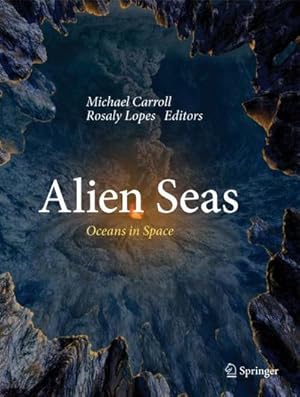
Buch. Condition: Neu. Druck auf Anfrage Neuware - Printed after ordering - Oceans were long thought to exist in all corners of the Solar System, from carbonated seas percolating beneath the clouds of Venus to features on the Moon's surface given names such as 'the Bay of Rainbows' and the 'Ocean of Storms.' With the advent of modern telescopes and spacecraft exploration these ancient concepts of planetary seas have, for the most part, evaporated. But they have been replaced by the reality of something even more exotic. For example, although it is still uncertain whether Mars ever had actual oceans, it now seems that a web of waterways did indeed at one time spread across its surface. The 'water' in many places in our Solar System is a poisoned brew mixed with ammonia or methane. Even that found on Jupiter's watery satellite Europa is believed similar to battery acid. Beyond the Galilean satellites may lie even more 'alien oceans.' Saturn's planet-sized moon Titan seems to be subject to methane or ethane rainfall. This creates methane pools that, in turn, become vast lakes and, perhaps, seasonal oceans. Titan has other seas in a sense, as large shifting areas of sand covering vast plains have been discovered. Mars also has these sand seas, and Venus may as well, along with oceans of frozen lava. Do super-chilled concoctions of ammonia, liquid nitrogen, and water percolate beneath the surfaces of Enceladus and Triton For now we can only guess at the possibilities. 'Alien Seas' serves up part history, part current research, and part theory as it offers a rich buffet of 'seas' on other worlds. It is organized by location and by the material of which various oceans consist, with guest authors penning specific chapters. Each chapter features new original art depicting alien seas, as well as the latest ground-based and spacecraft images. Original diagrams presents details of planetary oceans and related processes.
-
Hardcover. Condition: Like New. LIKE NEW. SHIPS FROM MULTIPLE LOCATIONS. book.
-
Alien Seas (Paperback)
Language: English
Published by Springer-Verlag New York Inc., New York, 2016
ISBN 10: 1493942123 ISBN 13: 9781493942121
Paperback. Condition: new. Paperback. Oceans were long thought to exist in all corners of the Solar System, from carbonated seas percolating beneath the clouds of Venus to features on the Moon's surface given names such as "the Bay of Rainbows and the "Ocean of Storms." With the advent of modern telescopes and spacecraft exploration these ancient concepts of planetary seas have, for the most part, evaporated. But they have been replaced by the reality of something even more exotic. For example, although it is still uncertain whether Mars ever had actual oceans, it now seems that a web of waterways did indeed at one time spread across its surface. The "water" in many places in our Solar System is a poisoned brew mixed with ammonia or methane. Even that found on Jupiter's watery satellite Europa is believed similar to battery acid. Beyond the Galilean satellites may lie even more "alien oceans." Saturn's planet-sized moon Titan seems to be subject to methane or ethane rainfall. This creates methane pools that, in turn, become vast lakes and, perhaps, seasonal oceans. Titan has other seas in a sense, as large shifting areas of sand covering vast plains have been discovered. Mars also has these sand seas, and Venus may as well, along with oceans of frozen lava. Do super-chilled concoctions of ammonia, liquid nitrogen, and water percolate beneath the surfaces of Enceladus and Triton? For now we can only guess at the possibilities. 'Alien Seas' serves up part history, part current research, and part theory as it offers a rich buffet of "seas" on other worlds. It is organized by location and by the material of which various oceans consist, with guest authors penning specific chapters. Each chapter features new original art depicting alien seas, as well as the latest ground-based and spacecraft images. Original diagrams presents details of planetary oceans and related processes. Oceans were long thought to exist in all corners of the Solar System, from carbonated seas percolating beneath the clouds of Venus to features on the Moon's surface given names such as "the Bay of Rainbows and the "Ocean of Storms." Shipping may be from our Sydney, NSW warehouse or from our UK or US warehouse, depending on stock availability.


